 Blaine Siding
 Deck Replacement in Sumas, Built for Whatcom County Weather
A deck in Sumas takes a beating that a lot of homeowners underestimate until they're standing on soft boards or looking at a railing post that wobbles more than it should. Whatcom County's mix of salt-tinged air, long stretches of driving rain, and a moss season that can run from fall through spring puts real, ongoing stress on any structure that sits outdoors year-round. A deck isn't just outdoor furniture — it's a load-bearing structure with footings in the ground, framing exposed to moisture cycling, and a surface that's constantly fighting against water intrusion and organic growth. When that structure starts to fail, it fails at the connections and the framing first, long before the surface boards look bad enough to worry most people.
We're a Blaine-based crew that already works in Sumas and the surrounding Whatcom County communities, so we're not learning the local conditions on your project. We know how this climate ages lumber, how moss establishes itself on north-facing and shaded deck surfaces, and where water tends to pool on decks that weren't built with enough drainage slope from day one. This page is specifically about deck replacement — not general repair, not a quick board swap — because there's a point where patching a deck costs more in the long run than doing the job right, once.
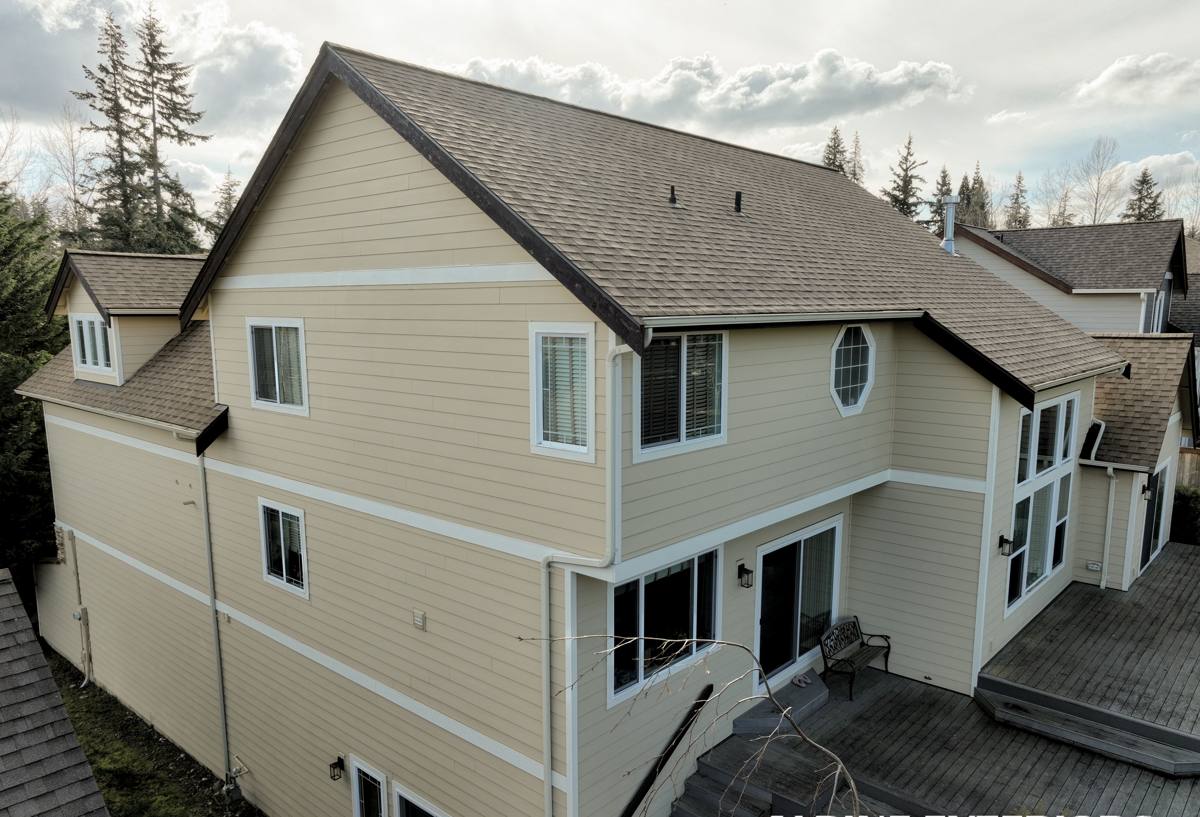
Signs a Sumas Deck Needs Replacing, Not Just Repair
Not every tired-looking deck needs to come out. But there's a difference between a deck with cosmetic wear and one with structural problems that repair work won't actually fix. Knowing which category your deck falls into matters, because spending money on surface repairs over a failing frame just delays the real cost.
Structural red flags
- Soft, spongy, or bouncy spots underfoot, especially near the house connection or stair landing
- Ledger board separating from the house, or visible gaps where the deck meets the siding or foundation
- Posts or footings that have shifted, settled unevenly, or show rot at the base where they meet the ground
- Railings that flex or move when leaned on — this is a safety issue, not a cosmetic one
- Persistent moss or algae growth in the same spots every year, which usually means water isn't draining and is sitting against wood fibers
- Fasteners that have rusted, backed out, or left dark staining streaks down the framing
Cosmetic wear that doesn't require full replacement
Faded finish, minor surface graying, small splits in individual boards, or a railing that just needs re-fastening are usually repair-level issues. The honest answer is often "clean it, treat it, replace a few boards" rather than a full tear-out — we'll tell you that directly if that's what we find during an inspection.
What a Correct Deck Replacement Actually Involves
A deck replacement done right is mostly invisible once it's finished — the parts that matter most are underneath the decking boards. Skipping steps here is exactly how a deck ends up needing replacement again in eight years instead of lasting decades.
Tear-out and honest inspection
We remove the old decking and railings and inspect the framing, ledger connection, and footings before deciding what stays and what gets rebuilt. In this climate, hidden rot at the ledger-to-house connection is common, since that's a spot where water can get trapped against the house if flashing wasn't installed correctly the first time.
Footings and framing
Footings need to sit below the local frost line and rest on undisturbed or properly compacted soil — this is a code requirement, not a preference, and Whatcom County building officials will check it. Framing lumber should be rated for ground contact or exterior exposure where relevant, and every ledger connection needs proper flashing and structural fasteners, not just nails toe-driven into the siding.
Drainage and slope
A deck surface should have a slight slope away from the house so water sheds instead of pooling. This single detail is one of the most common things we find missing on older decks, and it's a major reason certain boards develop moss and soft spots while the rest of the deck looks fine.
Railings, stairs, and code compliance
Railing height, baluster spacing, and stair rise/run all have to meet current building code, even on a replacement of an existing deck. This matters both for safety and because an out-of-code deck can complicate a home sale or insurance claim down the line.
Choosing Decking Material for Sumas Conditions
There's no single "best" decking material — there's a best fit for your budget, your maintenance appetite, and how much shade and moisture exposure your specific deck deals with. Here's how the common options actually compare in this climate.
| Material | Upfront Cost | Maintenance | How It Handles This Climate |
|---|---|---|---|
| Pressure-treated wood | Lowest | Annual cleaning, periodic re-staining/sealing | Performs well if sealed regularly; neglected boards absorb moisture and grow moss faster than composite |
| Cedar | Moderate | Regular sealing to maintain color and resist moisture | Naturally moisture-resistant but still needs upkeep in a wet, shaded yard |
| Composite decking | Moderate to high | Periodic washing, no staining or sealing | Resists rot and moisture absorption well; can still develop surface moss/mildew in constant shade and needs washing |
| PVC decking | Highest | Lowest — occasional washing | Best overall moisture and moss resistance; higher upfront investment |
Our professional standard is to walk homeowners through these trade-offs honestly rather than push whatever has the best margin. A shaded, damp side of a Sumas property that stays wet most of the year is a very different decision than a sun-exposed deck that dries out between rain events — the right material can differ even between two decks on the same house.
Our Process, Start to Finish
- On-site assessment. We inspect the existing deck, footings, and ledger connection and give you a straight answer on repair versus replacement.
- Written estimate. You get a clear scope of work and pricing before anything is scheduled — no surprise add-ons mid-project.
- Permitting. We handle the Whatcom County or applicable local permit process for structural deck work, since most full replacements require one.
- Tear-out and framing. Old materials are removed, footings and framing are inspected and rebuilt or reinforced as needed, and flashing is installed correctly at the house connection.
- Decking, railings, and stairs installed. Built to current code with proper drainage slope.
- Final walkthrough. We check the finished deck with you before considering the job done.
Permits and Working With Whatcom County
Most structural deck replacements — as opposed to a simple like-for-like board swap on an existing, sound frame — require a building permit in Whatcom County. This isn't paperwork for its own sake: it means an inspector confirms footing depth, framing connections, and railing code compliance before it's covered up or considered finished. We handle this as part of the job rather than leaving it for the homeowner to sort out, and we build to the code that applies at the time of construction, not the shortcuts sometimes used on older decks.
Moss, Moisture, and Keeping a New Deck Lasting
A well-built deck in this region will still need some seasonal attention. The goal of a correct build is to make that maintenance manageable instead of constant.
- Sweep leaves and debris off the deck surface regularly in fall, especially between boards where organic matter traps moisture
- Keep gutters and downspouts near the deck clear so runoff isn't dumping extra water onto or under the structure
- Trim back overhanging vegetation to let more sun and airflow reach shaded sections prone to moss
- Rinse composite or PVC decking periodically to prevent surface mildew, even though it won't rot
- Re-seal or re-stain wood decking on the schedule the product actually calls for, not just when it looks faded
- Check railing posts and stair connections once a year for movement, since that's usually the earliest sign of a problem
Why Hire a Crew That Already Works in Sumas and Blaine
Deck framing that's correct in a dry inland climate isn't automatically correct here. A crew that hasn't worked this specific stretch of Whatcom County can miss the details that matter most in this climate — sizing drainage slope for actual rainfall patterns, knowing which decking performs poorly in heavy shade, or under-flashing a ledger connection because that's what passes in a drier region. We work Sumas, Blaine, and the surrounding area regularly, so the footing depths, code expectations, and material recommendations we give you come from what's actually held up here, not a generic national playbook.
There's also a practical side to hiring local: a crew based nearby is realistically available if something needs a look after the job is done, and we're not disappearing to the next region once the final board is nailed down.
What Replacement Typically Costs
Deck replacement pricing depends on size, material choice, framing condition, and site access, so any number given without seeing the deck is a guess. As a general guide, straightforward wood-decking replacements on an existing, sound frame tend to sit at the lower end of the range, while full tear-outs with new footings, framing, and composite or PVC decking sit at the higher end. Railings, stairs, and multi-level decks each add cost. The only way to get an accurate number is a site visit, which is why our estimates are based on an actual look at your deck, not a phone quote.
If your Sumas deck is showing soft spots, moss that won't quit, or just isn't safe to fully trust anymore, we're happy to take a look. Reach out for a free, no-pressure estimate using the form below — we'll give you an honest read on whether you're looking at a repair or a full replacement before any work is scheduled.