 Blaine Siding
 Exterior Work in Peace Arch: A Different Kind of Weather Test
The Peace Arch area sits right where Blaine meets the border, close enough to Semiahmoo Bay and Boundary Bay that the air itself is part of the local building challenge. Homes here don't just deal with Pacific Northwest rain — they deal with rain carried on salt-laden marine wind, day after day, most of the year. That combination is harder on an exterior than inland rainfall alone, and it shows up first in the siding, trim, and anything painted or coated.
We've worked on homes throughout Whatcom County long enough to know that what works in a drier inland town doesn't always hold up two miles from the water. Peace Arch is one of the areas where we're the most particular about material choice, because the margin for error is smaller here than almost anywhere else we work.
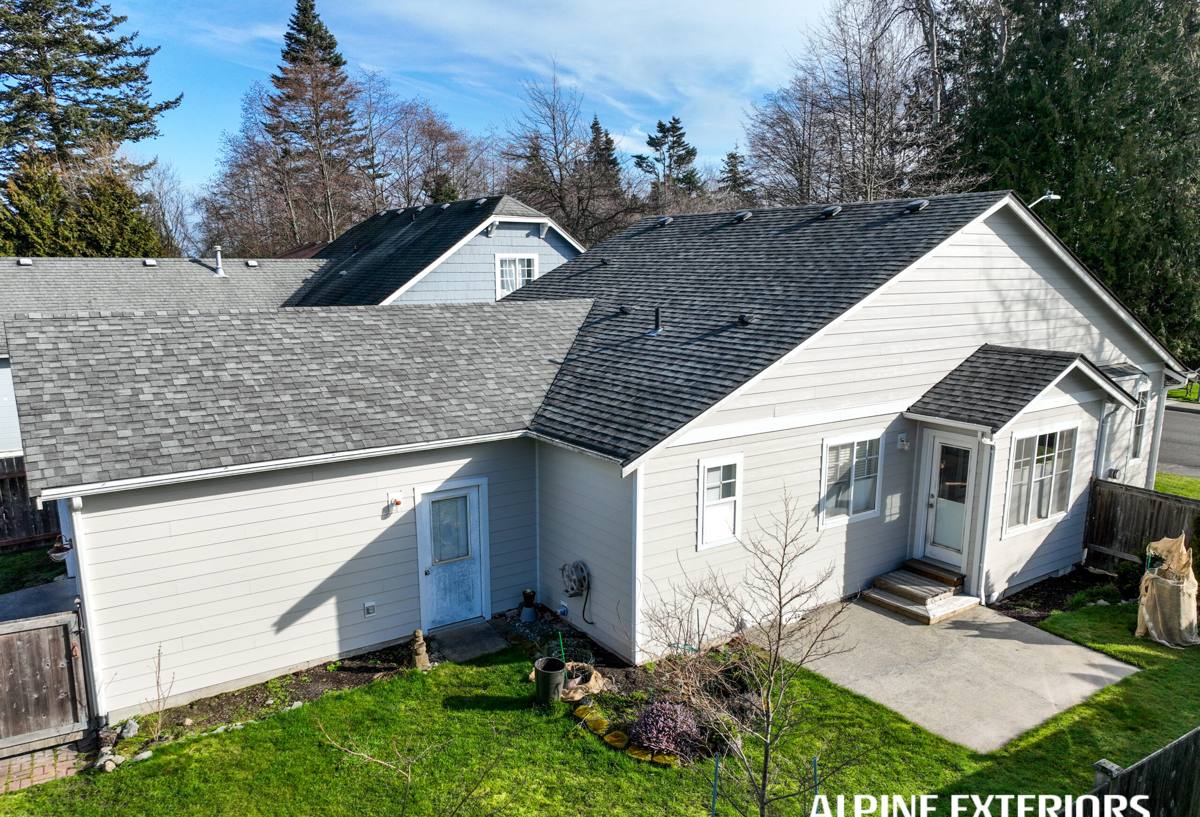
Salt Air and Wind-Driven Rain: The Two Big Stressors
Salt air isn't just a coastal cliché — it's a chemical reality. Airborne salt accelerates corrosion on fasteners, flashing, and any metal component on the exterior. It also settles on siding surfaces, where it can degrade cheaper paint films and cause premature fading, chalking, or cracking over time. On top of that, wind coming off the water tends to drive rain sideways into walls rather than letting it run straight down, which puts extra pressure on seams, laps, and butt joints that a still-air rain never has to face.
The practical result: siding materials and finishes that are rated for "average" rainfall performance often underperform in Peace Arch. Paint that would last 10-12 years in a sheltered inland lot might start failing in half that time here. Wood-based products that swell and dry with humidity cycles even faster near the water. This is one of the main reasons we don't build with materials that depend on a field-applied paint job or an absorbent wood substrate to keep moisture out.
What This Means for Trim and Fasteners
It's not just the siding panels themselves. Trim boards, corner posts, and fastener heads are all exposed to the same salt and wind. We spec corrosion-resistant fasteners and factory-finished trim wherever possible on homes in this area, because field-touch-up paint on cut edges and fastener heads is exactly where premature failure tends to start.
Moss, Shade, and the Long Wet Season
Whatcom County's wet season runs long, and Peace Arch's tree cover and proximity to water keep humidity high even between rain events. North-facing walls, shaded lots, and anything tucked under overhangs stay damp longer than they would in full sun. That's a recipe for moss and algae growth on siding, roofing, and decking — not just a cosmetic nuisance, but a moisture trap that keeps surfaces wet longer and accelerates whatever degradation is already happening underneath.
Non-combustible, moisture-resistant siding with a factory-cured finish holds up to pressure washing and periodic cleaning far better than a porous or absorbent substrate. That matters in a climate where moss removal is a normal part of home maintenance, not an occasional chore.
Why We Install James Hardie — and Nothing Else
We made a decision a while back to install James Hardie fiber cement siding exclusively. No vinyl, no LP SmartSide, no Cemplank or Allura, no primed spruce or cedar. That's a narrower lineup than most exterior contractors offer, and it's intentional.
Fiber cement is non-combustible, which matters both for wildfire-adjacent building codes and for basic long-term peace of mind. James Hardie's ColorPlus finish is baked on at the factory under controlled conditions, not brushed or sprayed on-site — which means better adhesion and a finish that's engineered to resist exactly the kind of salt-air fading and chalking we see near the water. Hardie also builds climate-specific HZ product lines, so the boards installed on a Peace Arch home are engineered for a moisture-heavy marine climate, not a generic national spec.
Vinyl siding can work loose or warp under repeated wind-driven rain and temperature swings, and its seams rely on lap and overlap rather than a sealed, factory-cured surface. LP SmartSide and other engineered wood products are strand-based and, despite treatment, remain more moisture-sensitive at cut edges and fastener penetrations than fiber cement — a real liability in a climate where wall assemblies rarely get a long dry stretch. Primed spruce and cedar are honest, traditional materials, but they ask a homeowner to keep up with a paint and caulking schedule that a coastal microclimate makes tighter and less forgiving. We'd rather not sell a product whose long-term performance here depends on a maintenance routine most homeowners don't have time for.
None of this means those products are junk — they're reasonable choices in the right climate and budget. It means we've looked at what Peace Arch's air and rain actually do to an exterior over 10, 20, 30 years, and we only want our name on installations we're confident will hold up.
How We Approach a Siding Job Near the Border
Assessment First
Every project starts with a walk-around assessment — checking for moisture intrusion, rot at trim and penetrations, moss buildup, and flashing condition. In a marine climate, what's happening behind the siding matters as much as what's visible on the surface.
Water Management Details
Correct installation in this area leans heavily on flashing, kick-out flashing at rooflines, proper weather-resistive barrier integration, and rain-screen gapping where it's called for. Hardie performs well as a material, but a siding job is only as good as the water management behind it — that's true anywhere, and doubly true where wind-driven rain is routine.
Fastening and Finish
We follow James Hardie's published fastening and clearance specs precisely — nail placement, butt joint treatment, and ground clearance all affect how the product performs over decades, not just how it looks on install day.
Full Exterior Protection: Roofing, Windows, and Decks
Siding doesn't work in isolation. On a home exposed to salt air and driving rain, the roof, windows, and any exterior decking are fighting the same battle, and problems in one area often show up as damage in another — a failing roof valley can send water down behind siding, and a leaking window flange can rot sheathing that no amount of good siding will fix.
We handle roofing, window replacement, and deck construction alongside siding, which lets us look at a Peace Arch home as one connected system rather than a series of separate trades. That matters most at the transitions — where roof meets wall, where a window is set into siding, where a deck ledger attaches to the house — because those transitions are where moisture problems actually start.
What Drives Siding Project Cost in This Area
Every home is different, but a few factors consistently move the price on Peace Arch projects more than they would inland:
| Factor | Why It Matters Here |
|---|---|
| Existing moisture or rot damage | Marine humidity and past water intrusion mean more sheathing repair is common before new siding goes on |
| Home exposure to wind and salt spray | Waterfront-facing or elevated lots may need extra flashing and detailing work |
| Trim and architectural detail | More corners, gables, and trim boards mean more factory-finished material and labor |
| Access and site conditions | Tree cover, slope, and setback distances affect staging and scaffolding needs |
| Product line selected | Hardie's HZ5 and premium ColorPlus options cost more upfront than base products but are built for this exact climate |
We give straightforward, itemized estimates — no invented pricing here, since real numbers depend on the specific home — but these are the variables that typically separate a straightforward re-side from a more involved one in this part of Whatcom County.
What to Look For in a Local Contractor
Peace Arch homeowners are often choosing between larger regional companies and smaller local crews. A few things are worth checking regardless of who you hire:
- Manufacturer training or certification specific to the siding product being installed
- A clear explanation of how they'll handle flashing, weather barriers, and rain-screen detailing — not just the siding panels
- Willingness to point out existing rot or moisture damage before covering it up
- References or completed work in the same coastal microclimate, not just the general region
- A written warranty that covers both material and workmanship, and clarity on what's covered by the manufacturer versus the installer
- Local licensing, insurance, and a physical presence in the county — not just a satellite crew passing through
A crew that works this stretch of Whatcom County regularly will already know which details matter on a home exposed to the border-area marine climate, instead of learning it on your roofline.
Keeping a Peace Arch Exterior in Good Shape
Even the right materials benefit from basic upkeep in this climate. A yearly rinse-down to clear salt residue and organic buildup, prompt attention to any moss growth on shaded siding or roofing, and periodic checks of caulking at trim and window penetrations go a long way. Fiber cement reduces the maintenance burden significantly compared to painted wood or aging vinyl, but no exterior material is entirely maintenance-free in a climate this wet and this close to salt water.
If you're noticing fading, moss buildup, soft trim, or you're simply planning ahead for a home in the Peace Arch area, we're happy to take a look and talk through what your exterior actually needs — no pressure, no obligation. Use the form below to request a free estimate.