 Blaine Siding
 The Problem Isn't the Siding You See — It's What's Behind It
Most siding failures in Whatcom County don't start on the surface. By the time a homeowner notices bubbling paint, a soft spot near a window, or a musty smell in a closet on an exterior wall, the damage has usually been building for years behind the cladding. Siding's real job isn't to look good — it's to manage water. When that system breaks down quietly, the visible symptoms are often the last warning sign, not the first.
Blaine sits right on the water, which means homes here deal with a specific combination of stresses: salt-laden air off the Strait of Georgia, wind-driven rain that gets pushed sideways into wall assemblies rather than falling straight down, and a long, damp moss season that keeps surfaces wet for months at a time. None of these alone is unusual for the Pacific Northwest. Together, they add up to conditions that punish any siding product with a weak moisture-management system.
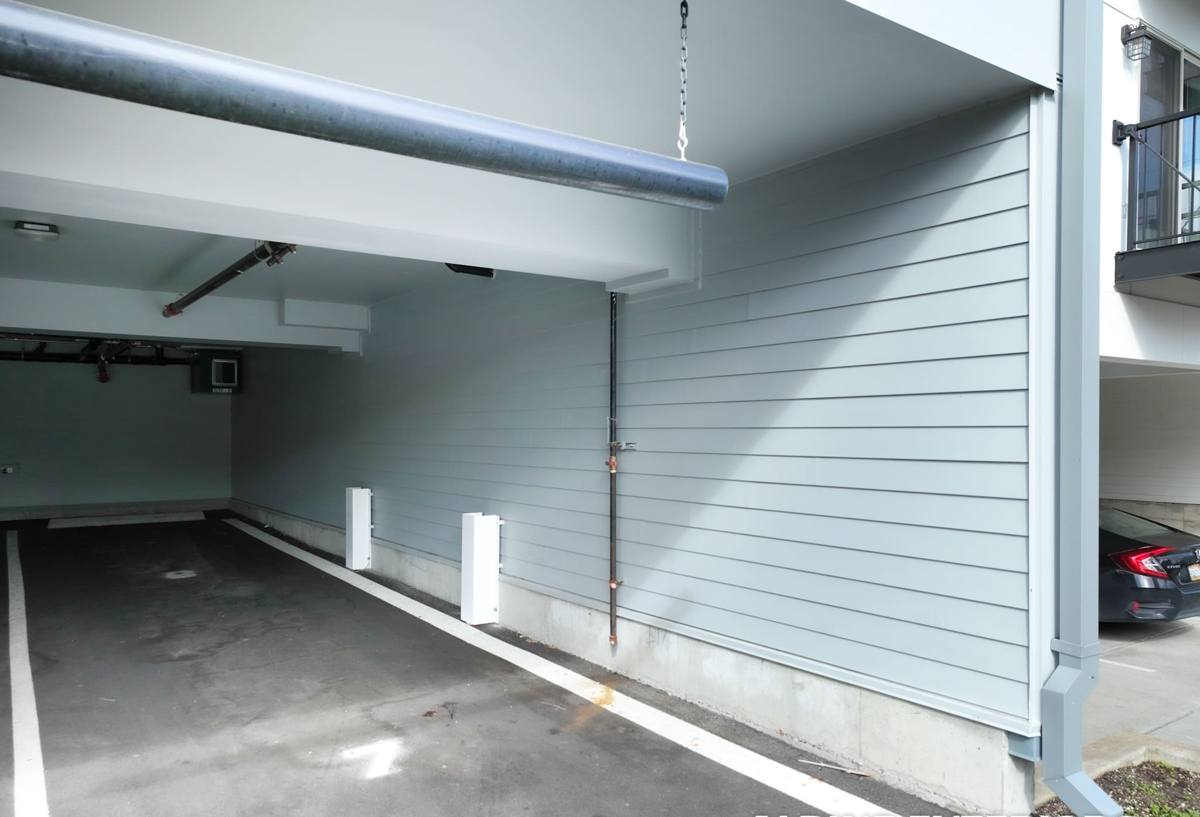
How Water Actually Gets In
Siding isn't a waterproof shell — no exterior cladding is, by design. It's the first layer in a system that's supposed to shed the majority of water while a weather-resistive barrier (house wrap or building paper) and properly flashed penetrations handle what gets through. Failure happens when that system has gaps, and in a climate like Blaine's, gaps get found fast.
Common entry points
- Butt joints and seams where siding pieces meet, especially if caulk has failed or was never the right product
- Window and door flashing that was installed out of sequence, so water runs behind the barrier instead of over it
- Fastener holes where the coating or paint has worn through, exposing bare material
- Low clearance points — where siding sits too close to grade, a deck, or a roofline — that stay wet longer after rain
- Corner boards and trim transitions where two materials meet and move differently over time
Driving rain matters here because it changes the physics. In a calm rain, water runs down a wall and off. In wind-driven rain — which is routine on exposed lots near the water in Blaine — water is pushed horizontally and even upward under laps and around trim, reaching joints and fasteners that a straight-down rain would never touch.
Why the Damage Stays Hidden
Wood-based and wood-fiber siding products absorb moisture rather than shedding it once water gets past the surface. That absorbed moisture doesn't evaporate quickly behind a wall, especially through a wet Whatcom County winter. The material swells, softens, and starts to lose structural integrity from the inside out — while the exterior paint film can still look intact for a season or two longer.
This is why a lot of siding problems get discovered during a remodel, a window replacement, or a home inspection rather than from looking at the house. Pulling a piece of trim and finding dark, spongy sheathing behind siding that looked fine from the driveway is one of the more common surprises in older Whatcom County homes.
Signs worth checking for
- Paint that's bubbling, peeling, or alligatoring in patches rather than evenly across a wall
- Siding that feels soft or spongy when pressed, particularly near the bottom courses
- Visible swelling or delamination at seams and butt joints
- A persistent musty smell in rooms along an exterior wall
- Moss or dark streaking that never seems to fully dry out between rains
Salt Air and the Moss Season: Blaine's Two Extra Stressors
Coastal salt air accelerates the breakdown of paint films and fastener coatings faster than the same product would wear inland. Salt is hygroscopic — it pulls moisture out of the air and holds it against a surface — so painted wood and wood-composite siding near the water tends to lose its protective finish sooner, which opens the door to the moisture problems above.
The moss season compounds it. Whatcom County's long stretch of overcast, damp weather keeps north-facing and shaded walls wet for extended periods, which is exactly the environment moss and mildew need to establish. Moss holds moisture directly against the siding surface, and on absorptive materials that means prolonged saturation right where it matters most — at seams, laps, and fastener lines.
Why Product Choice Changes the Outcome
Every siding material handles moisture differently, and that difference is the biggest factor in how a house performs in a climate like this one over a 20-30 year span.
| Material | How it handles moisture | Relevant risk in Blaine's climate |
|---|---|---|
| Primed wood / spruce | Absorbs water once the finish is compromised; swells and rots | High — long wet season gives little time to dry between exposures |
| Wood-fiber composite (LP-type) | Engineered to resist moisture better than raw wood, but still wood-based and dependent on intact factory coating and correct sealing at cuts/seams | Moderate-high — edge and joint sealing becomes the critical point of failure near salt air |
| Cedar | Naturally rot-resistant but not rot-proof; needs ongoing finish maintenance | Moderate-high — high upkeep cost to keep ahead of coastal weathering |
| Vinyl | Doesn't absorb water itself, but relies entirely on the barrier behind it; can trap moisture that gets behind panels | Moderate — hidden moisture behind panels can go unnoticed longer |
| Fiber cement (James Hardie) | Cement-based composition doesn't absorb and swell like wood; factory-cured finish resists coastal weathering | Low — engineered specifically for wet, coastal, freeze-thaw climates |
This is the core reason we standardized on James Hardie fiber cement and don't install LP SmartSide, vinyl, Cemplank, Allura, primed spruce, or cedar. Each of those products can perform reasonably well in the right conditions and with diligent maintenance — but Blaine's combination of salt exposure, wind-driven rain, and a long moss season is not forgiving of the maintenance gaps that inevitably happen in real homeownership. We'd rather install one product we can stand behind fully than several we'd need to caveat.
What makes fiber cement different at the material level
James Hardie siding is made from cement, sand, and cellulose fiber, cured into a dense, dimensionally stable board. Unlike wood or wood-fiber products, it doesn't rely on an intact surface coating alone to stay dry inside — the material itself doesn't swell and rot the way organic material does when moisture reaches it. Hardie's ColorPlus finish is baked on in a factory-controlled process, which gives it stronger, more consistent adhesion and UV/salt resistance than field-applied paint, and their HZ5 product line is engineered specifically for the freeze-thaw and moisture conditions common in the Pacific Northwest.
Installation Matters as Much as the Material
No siding product, including Hardie, performs to spec if it's installed wrong. A huge share of the moisture problems we see trace back to installation shortcuts rather than the material itself:
- Missing or reversed window and door flashing (flashing has to shed water over the barrier below it, not behind it)
- Siding installed with insufficient clearance to grade, decks, or roof lines
- Caulk used as a substitute for proper flashing at joints, rather than as a secondary seal
- Fasteners driven at the wrong depth or spacing, cracking the material or leaving gaps
- Cut ends left unsealed, exposing the substrate at every joint
This is why we treat installation to manufacturer spec as non-negotiable — it's the difference between a product performing for its full rated life and the same product failing early despite being the right choice on paper.
What This Means for a Whatcom County Home
If your home is inland and sheltered, some of these pressures are lighter. If it's on an exposed lot near the water, faces the prevailing wind, or has north-facing walls that stay shaded and damp much of the year, the moisture load on your siding is genuinely higher than a generic national estimate would suggest. That's worth factoring into both material choice and how often you have the exterior checked.
A basic homeowner checklist
- Walk the exterior once a year, ideally after a heavy wind-driven rain, and look for soft spots, bubbling paint, or dark staining
- Check clearance at grade, decks, and roof-wall intersections — siding should not be sitting in standing water or constant shade-dampness
- Look at caulking and seams for cracking or gaps, particularly around windows and doors
- Note any musty smell along exterior walls, especially in rooms that don't get much airflow
- Keep an eye on moss buildup on shaded or north-facing walls and have it addressed before it holds moisture against the siding long-term
The Bottom Line
Failing siding is almost never a sudden event — it's a slow accumulation of small entry points meeting a climate that doesn't let materials dry out fast enough between exposures. In Blaine, that climate includes salt air, wind-driven rain, and a moss season that can stretch for months. The material you choose and how it's installed are the two levers that actually control the outcome. We install James Hardie fiber cement exclusively because it's engineered for exactly these conditions, and we install it to manufacturer spec because the material alone isn't the whole story.
If you're seeing any of the warning signs above, or you'd just like an honest read on how your current siding is holding up, we're happy to take a look. Reach out for a free, no-pressure estimate using the form below.