 Blaine Siding
 Building on a Spit: What Makes Semiahmoo Different
Semiahmoo sits on a narrow peninsula between Semiahmoo Bay and Drayton Harbor, just a few minutes from downtown Blaine and the Canadian border. It's one of the most exposed residential settings in Whatcom County — homes here face open water on multiple sides, with very little tree cover or terrain to break the wind and salt spray coming off the bay. That exposure is part of what makes the area beautiful, and it's also exactly why exterior materials get tested harder here than almost anywhere else in the county.
We've worked on siding, roofing, windows, and decks up and down this stretch of Whatcom County, and Semiahmoo comes up again and again as a place where corners cut on materials or installation show up early — sometimes within a few years instead of a couple decades.
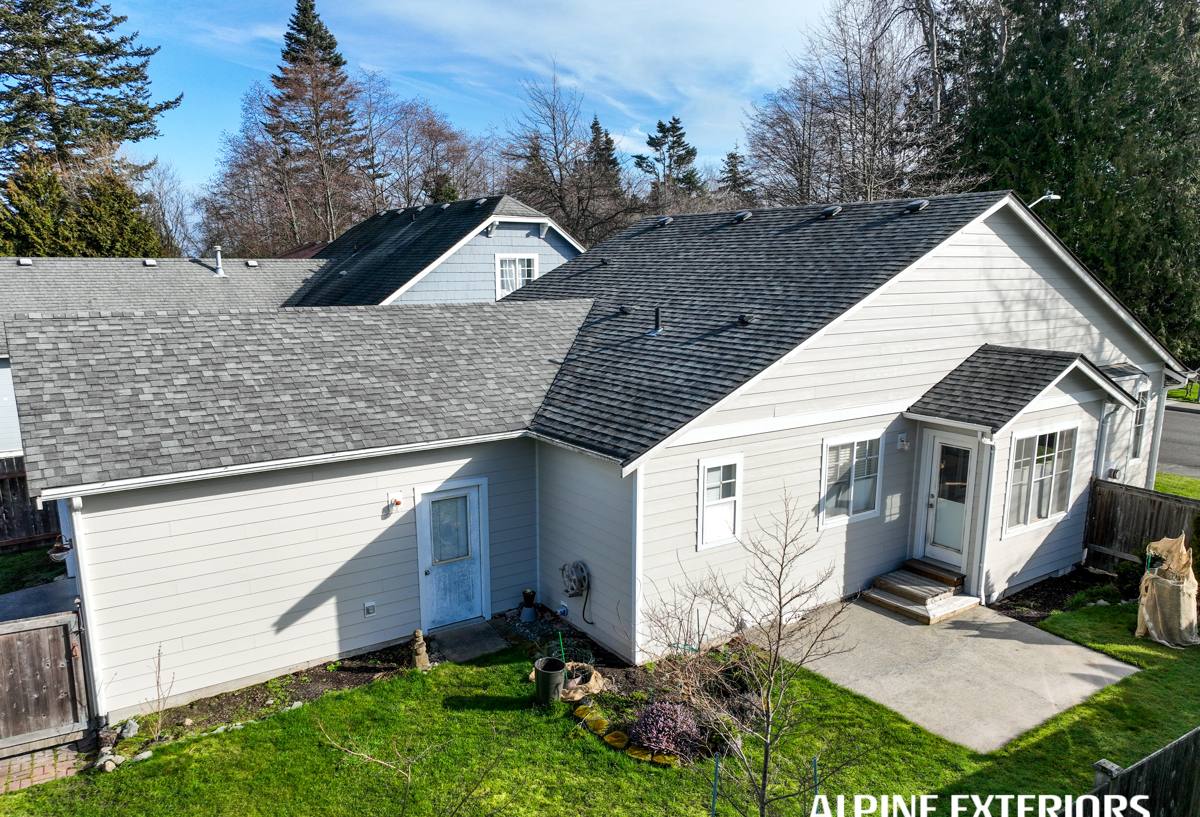
The Three Things Semiahmoo Exteriors Are Fighting
Salt Air
Airborne salt from the bay settles on every exterior surface, including siding, trim, fasteners, and hardware. Over time it accelerates corrosion in anything not rated for a marine-adjacent environment, and it degrades cheaper coatings and finishes faster than inland exposure would. This isn't a "if you're right on the water" problem only — salt drift carries well inland on a windy day, so most of the Semiahmoo peninsula gets some degree of it.
Driving Rain
Wind off the water pushes rain sideways into wall assemblies rather than letting it fall straight down and shed off. Driving rain finds every gap in flashing, every poorly caulked joint, and every seam in a siding product that wasn't built to handle wind-driven moisture. It's a different failure mode than a rainy but calm inland lot — the water is being pushed into the wall, not just running down it.
Long Moss Season
Cool, damp, low-sun conditions stretch out for much of the year in this part of Washington, and moss and algae take hold on any surface that stays consistently damp and shaded. On siding, moss growth traps moisture against the surface and can accelerate rot or coating breakdown underneath it, especially on north-facing walls and areas shaded by roof overhangs or landscaping.
Why We Only Install James Hardie Fiber Cement
Every siding product on the market makes trade-offs. In an environment like Semiahmoo, those trade-offs get exposed faster than they would somewhere sheltered and dry. That's why our company made a deliberate decision years ago to install only James Hardie fiber cement siding — not vinyl, not LP SmartSide, not Cemplank, not Allura, not primed spruce or cedar.
Here's the honest breakdown of why, product by product:
- Vinyl siding holds up reasonably well against moisture itself, but it's a thin, flexible material that can warp or distort in the temperature swings and wind loads this area sees, and its seams and J-channels are a common path for wind-driven rain to get behind the cladding.
- LP SmartSide and similar engineered wood products perform well in a lot of climates, but they're wood-based — meaning any breach in the factory coating, at a cut edge, fastener, or joint, opens the door to moisture absorption and eventual swelling or rot. In a long moss season with sustained dampness, that's a real risk over the life of the siding.
- Cemplank and Allura are both fiber cement products and share Hardie's basic moisture resistance, but we've standardized on one manufacturer so we can guarantee installation to a single, consistent spec, and Hardie's ColorPlus factory finish and warranty structure are what we've found to be the strongest in practice.
- Primed spruce or cedar can look excellent and cedar in particular has real character, but both are wood, both require diligent, recurring maintenance (repainting, sealing, inspecting for rot) to survive marine air and driving rain, and both are more vulnerable to moss and mildew taking hold than a cement-based product.
James Hardie fiber cement is non-combustible, doesn't absorb water the way wood-based products do, and its HZ5 product line is engineered specifically for wetter, harsher climates like this one — which matters more on a bay-front peninsula than it does further inland. The factory-applied ColorPlus finish is also baked and cured under controlled conditions, so it resists fading and holds up to UV and salt exposure better than field-applied paint typically does.
What Correct Installation Looks Like Here
Fiber cement is only as good as the installation behind it. In a driving-rain environment, the flashing details, water-resistive barrier, and fastener pattern matter as much as the siding itself. We pay particular attention to:
- Proper weather barrier and rain-screen detailing so any moisture that does get past the cladding can drain and dry rather than sit against the sheathing
- Correct flashing at every window, door, and roof-to-wall transition — the spots where driving rain finds its way in first
- Fastener spacing and type suited to the wind exposure on an open peninsula lot
- Proper joint and butt-seam treatment so seams don't become the weak point they can be on lower-grade materials
Cutting fiber cement also throws silica dust, so proper cutting methods and site containment matter — both for the crew's health and for keeping a clean jobsite on residential lots where neighbors are close by.
Roofing, Windows, and Decks Face the Same Exposure
Siding doesn't fail in isolation on a lot like this — the whole exterior envelope is under the same stress. Roofing takes the brunt of wind-driven rain and needs flashing and underlayment details that account for it, not just standard coverage. Windows need weatherstripping and flashing that can handle sustained wind pressure and moisture, since a poorly flashed window is one of the most common places we find hidden water damage on bay-front homes. Decks, especially uncovered ones, deal with the same moss and moisture cycle as siding, and material choice and fastener corrosion resistance matter just as much there. Because we handle all four trades, we look at a home's exterior as one connected system rather than patching one piece at a time.
Comparing Siding Options for a Semiahmoo Exposure
| Material | Moisture Behavior | Maintenance | Fit for This Location |
|---|---|---|---|
| James Hardie Fiber Cement | Doesn't absorb water; engineered HZ5 line for wet climates | Low — factory finish, occasional wash | Strong |
| Vinyl | Water-resistant surface, but seams/joints can let wind-driven rain behind it | Low, but prone to warping in wind/temp swings | Moderate |
| LP SmartSide / Engineered Wood | Vulnerable at cut edges and breaches in coating | Moderate — coating inspection needed | Moderate, higher risk in sustained damp |
| Cedar / Primed Spruce | Absorbs moisture readily if coating fails | High — recurring paint/seal cycle | Weaker without dedicated upkeep |
Cost Factors to Expect
Every Semiahmoo project is different depending on lot exposure, home size, and existing wall condition, so we won't quote a number without seeing the house. What generally moves the cost:
- Amount of existing siding removal and any sheathing repair needed underneath
- Home's wind exposure and how much rain-screen/flashing detail the specific elevations need
- Trim, fascia, and soffit work bundled into the same project
- Whether roofing, window, or deck work is scheduled alongside the siding to share access and scaffolding costs
What to Ask Before Hiring a Contractor Here
Because Semiahmoo's exposure punishes shortcuts faster than a typical inland lot, it's worth being more thorough when vetting a contractor for this specific area:
- Ask specifically how they detail flashing and weather barriers for wind-driven rain, not just standard installation
- Confirm they're a certified installer for whatever fiber cement product they're proposing
- Ask how they handle moss and algae exposure in their installation approach (ventilation gaps, rain-screen strategy)
- Get a clear scope of what's included — trim, flashing, caulking, and cleanup — not just "siding installed"
- Ask for a written warranty that covers both materials and labor, and understand who backs each part
A Local Crew That Knows This Stretch of Coastline
Whatcom County has a lot of microclimates, and a crew that mostly works dry inland lots doesn't always plan for what a bay-front peninsula home actually needs. We work throughout Blaine and the surrounding area regularly, so the flashing details, rain-screen approach, and material choices we bring to a Semiahmoo project reflect what we've actually seen hold up — and what hasn't — on homes with this exact exposure.
If you're noticing moss buildup, staining, soft spots, or aging siding on a Semiahmoo-area home, we're happy to take a look and give you a straightforward, no-pressure estimate on siding, roofing, windows, or decks — whatever the exterior actually needs.