 Blaine Siding
 Cherry Point Is a Different Kind of Exposure
Cherry Point sits out on the edge of Whatcom County, close enough to the water that salt air is simply part of daily life, and rural enough that many homes sit under tree cover or open to wind coming off the Strait of Georgia with nothing to slow it down. That combination — marine air, wind-driven rain, and shade-heavy lots — puts more stress on exterior materials than most inland neighborhoods ever see. A siding product that holds up fine forty minutes inland in a sheltered subdivision can fail years early out here.
We work throughout the Blaine area, and Cherry Point comes with its own checklist in our heads before we even get a ladder out: How close is the home to open water or exposed farmland? Is the lot shaded most of the day? What's the drainage like around the foundation? Those answers change how we approach prep, flashing, and even which James Hardie product line we spec for the job.
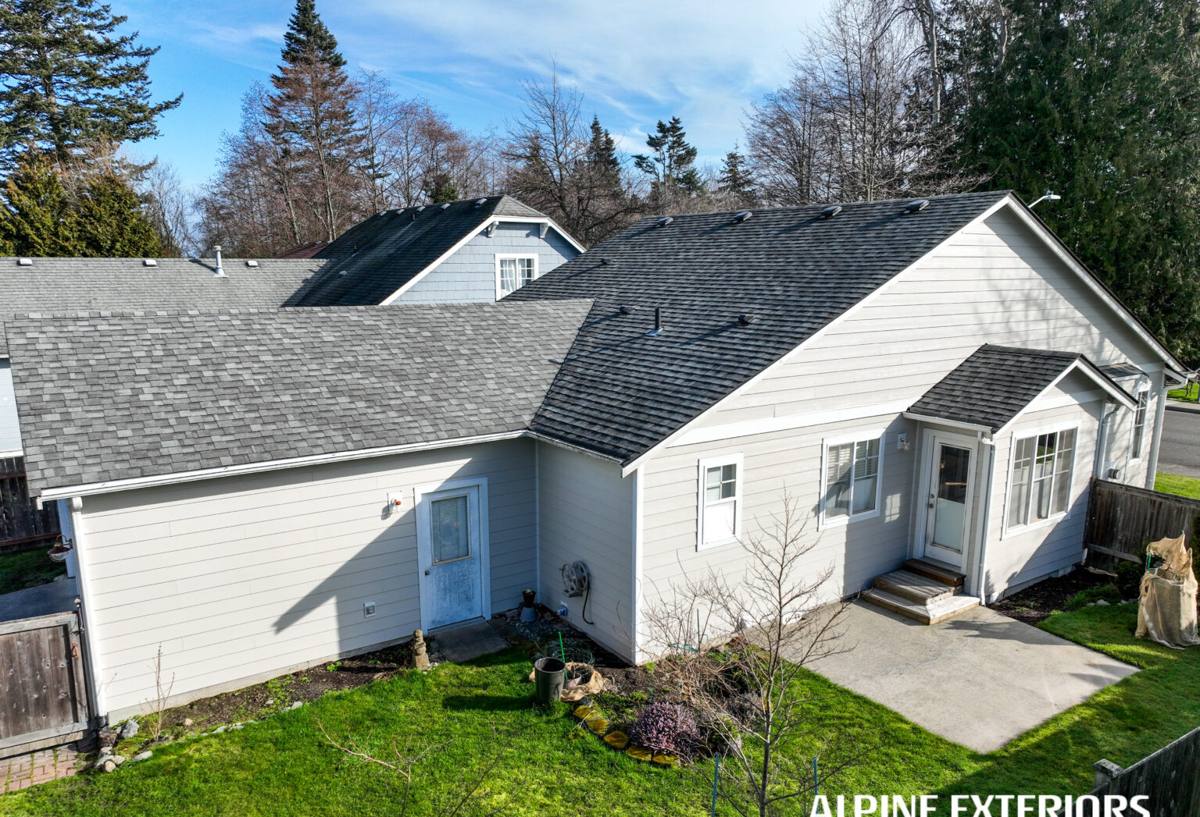
What the Cherry Point Climate Does to a House
Salt Air and Marine Exposure
Airborne salt is corrosive and it doesn't stay near the shoreline — wind carries it well inland, especially on a stretch of coast as open as this one. Salt-laden moisture accelerates corrosion on fasteners and trim, and it breaks down cheaper paint finishes faster than a manufacturer's warranty ever accounts for. Materials that aren't engineered for coastal conditions tend to chalk, fade, or show surface breakdown noticeably sooner here than they would in a drier, inland part of the county.
Driving Rain and Wind-Driven Moisture
Pacific storm systems don't just drop rain straight down — wind pushes it sideways, into seams, laps, and butt joints that were never designed to handle water arriving at an angle. Over time, wind-driven rain finds every weak point in a siding system: a poorly caulked joint, a nail popped slightly proud, a piece of trim that wasn't back-primed. Once moisture gets behind the cladding, the real damage starts, usually out of sight, in the sheathing and framing underneath.
The Long Moss Season
Shaded lots, mild temperatures, and near-constant winter moisture add up to a moss and algae season that runs much longer here than in drier climates. Moss holds water against a surface for extended periods, which is exactly the condition that rots wood trim, degrades poor-quality paint, and keeps a house perpetually damp on its north and shaded sides. A siding product's ability to shed moisture and resist organic growth matters as much as its look.
Why the Material You Choose Changes the Outcome
Not every siding product responds to this environment the same way. Some hold up well and simply need occasional cleaning. Others need active maintenance — recaulking, repainting, moisture monitoring — to avoid problems that show up as rot, delamination, or finish failure. Here's a general comparison of how common exterior materials tend to perform under Cherry Point's specific mix of salt air, driving rain, and shade:
| Material | Salt Air Resistance | Wind-Driven Rain Tolerance | Moss/Shade Tolerance | Typical Maintenance |
|---|---|---|---|---|
| Vinyl siding | Fair — can chalk and become brittle over time | Weak at seams and corners | Fair, but growth is visible on textured panels | Low, but panels aren't repairable long-term |
| Primed wood/cedar | Poor without diligent upkeep | Poor if finish fails | Poor — wood and moss are a bad mix | High — repainting and caulking cycles |
| Engineered wood (e.g. LP SmartSide) | Fair with intact finish | Moderate — edge sealing is critical | Moderate | Moderate — edge and cut-end sealing matters |
| James Hardie fiber cement | Strong — factory finish engineered for coastal exposure | Strong when installed to spec | Strong — non-organic material | Low — periodic washing |
The pattern that matters most for a property like Cherry Point: materials with an organic component (wood, wood-based engineered products) or a finish that degrades under UV and salt exposure tend to need more attention here, sooner, than they would inland. That's the exact reason we built our business around one product system instead of offering several.
Why We Install Only James Hardie
We don't sell vinyl, LP SmartSide, Cemplank, Allura, or primed wood siding, and that's a deliberate standard, not a limitation of what we know how to install. James Hardie fiber cement is our answer to the specific problems this coastline creates:
- Fiber cement composition — Hardie board is made from cement, sand, and cellulose fiber. It has no organic wood content to rot, and it doesn't warp or swell the way wood-based products can when moisture gets in.
- Non-combustible material — fiber cement doesn't contribute fuel to a fire, which matters to insurers and to homeowners on rural and semi-rural lots where defensible space is limited.
- ColorPlus factory finish — a baked-on finish applied under controlled conditions, engineered to resist fading and chalking better than field-applied paint, which is a real advantage against salt air and UV exposure.
- Climate-engineered HZ product lines — Hardie manufactures different formulations for different climate zones. We spec the moisture- and freeze-appropriate line for this part of Whatcom County rather than a generic, one-size-fits-all board.
- A strong, transferable warranty — backed by a manufacturer with decades of fiber cement experience, which matters if you ever sell the home.
None of this means other products are junk. Vinyl is inexpensive and easy to install. Engineered wood has a warmer look at a lower price point than fiber cement. Cedar has genuine curb appeal. But when we weighed installation sensitivity, long-term moisture behavior, and how a product ages against salt air and a long wet season, fiber cement was the product we were willing to put our name behind — so it's the only one we install.
How We Approach a Cherry Point Siding Job
Inspection and Moisture Check
Before we talk products or pricing, we look at what's actually happening on the house — signs of moisture intrusion around windows and trim, soft spots at the base of walls, condition of existing flashing, and how the lot drains around the foundation. On coastal and rural properties, we pay particular attention to the north and west-facing walls, which typically take the brunt of wind-driven rain and hold shade longest.
Water Management First, Siding Second
Siding is only as good as what's behind it. We install proper weather-resistant barriers, correctly lapped flashing at windows, doors, and penetrations, and rain-screen detailing where it's warranted, so that any moisture that does get past the cladding has a way to drain and dry rather than sitting against the sheathing.
Installed to Manufacturer Spec
Fiber cement performance depends heavily on correct installation — proper fastener spacing and type, correct clearances from grade and roof lines, sealed and back-primed cut edges, and joints detailed to shed water rather than trap it. A well-made product installed loosely to spec will still develop problems; that installation discipline is where a lot of the long-term performance actually comes from.
A Quick Pre-Project Checklist
- Walk the exterior and note any soft, discolored, or bubbling siding sections
- Check caulking and trim around windows and doors for gaps or cracking
- Look at the north and west walls specifically for moss buildup or lingering dampness
- Check gutters and downspouts are directing water away from siding and foundation
- Note any areas where tree limbs or vegetation sit close against the house
- Ask any contractor bidding the job which specific Hardie line and finish they're proposing, and why
Beyond Siding: The Whole Exterior Envelope
Siding doesn't work in isolation — it's one part of an exterior system that includes the roof, windows, and any attached structures like decks. We handle all four because they interact directly with each other. A roof with failing flashing at a wall intersection will feed water straight into siding no matter how well the siding itself is installed. Windows with degraded seals let moisture track down into wall assemblies. A deck ledger board attached without proper flashing is one of the most common sources of hidden rot on homes in wet climates.
For a property in an area like Cherry Point, thinking about the exterior as one connected system — rather than four separate trades — tends to produce a longer-lasting result. It also means one crew is accountable for how those systems meet, instead of pointing fingers between separate contractors after the fact.
Why a Local Crew Matters Out Here
Cherry Point isn't downtown Bellingham, and it isn't a typical suburban subdivision either — it's a mix of rural and semi-rural properties, some with long driveways, larger lots, and more direct water and wind exposure than town. A contractor who mainly works sheltered inland neighborhoods may not think to plan around that exposure the way a crew that works this stretch of coast regularly does. Knowing which walls take the worst weather, how long moss season really runs here, and how salt air behaves on this particular part of the Strait shapes real decisions on the job — product selection, flashing detail, and where we spend extra time versus where we don't need to.
Being local also means we're reachable after the invoice is paid. If something needs a look five years down the road, we're not a company that worked the county for one season and moved on.
What This Means for Your Timeline and Budget
Every property is different, but a few honest cost factors come up repeatedly on Cherry Point homes:
| Factor | Why It Matters Here |
|---|---|
| Existing moisture damage | Rural and coastal homes with long moss exposure sometimes need sheathing repair discovered only once old siding comes off |
| Access and lot size | Longer driveways and larger lots can affect material staging and crew logistics |
| Wall exposure | Walls facing prevailing wind and rain may warrant additional flashing or rain-screen detail |
| Trim and detail work | Older homes often have more custom trim, which affects labor time regardless of siding brand |
We won't know which of these apply to your home until we've actually looked at it, which is why we start every project with an on-site assessment rather than a phone-quote guess.
Get a Straight Answer for Your Property
If you're dealing with aging siding, ongoing moisture or moss issues, or you're just planning ahead for a Cherry Point home that takes more weather than most, we're glad to come take a look. We'll tell you honestly what we see, walk you through why we'd recommend James Hardie fiber cement for a property in this location, and give you a clear, no-pressure estimate — no scare tactics, no upsell script. Use the form below to request a free estimate.