 Blaine Siding
 Primed wood siding — often primed spruce or pine board, sold under various regional mill names — has been used on homes in Whatcom County for generations. It has a genuine appeal: real wood grain, a traditional look, and a lower material cost up front than most engineered alternatives. We get asked about it regularly, usually by homeowners restoring an older Blaine home or chasing a specific farmhouse look. This page explains, honestly, why we don't install it, and what we use instead.
What Primed Wood Siding Actually Is
Primed wood siding is solid or finger-jointed spruce, pine, or fir milled into lap boards or panels, then coated at the factory (or in the field) with a primer coat intended to seal the wood before final painting. The primer is not a finish — it's a base layer that still requires a full paint system, and repainting on a recurring schedule, to keep the wood protected for the life of the siding.
Done well, on a home in a mild, dry climate, with a disciplined maintenance schedule, primed wood siding can look excellent for many years. The issue for us isn't the material in a vacuum — it's the match between that material's demands and the conditions a house in Blaine actually sits in.
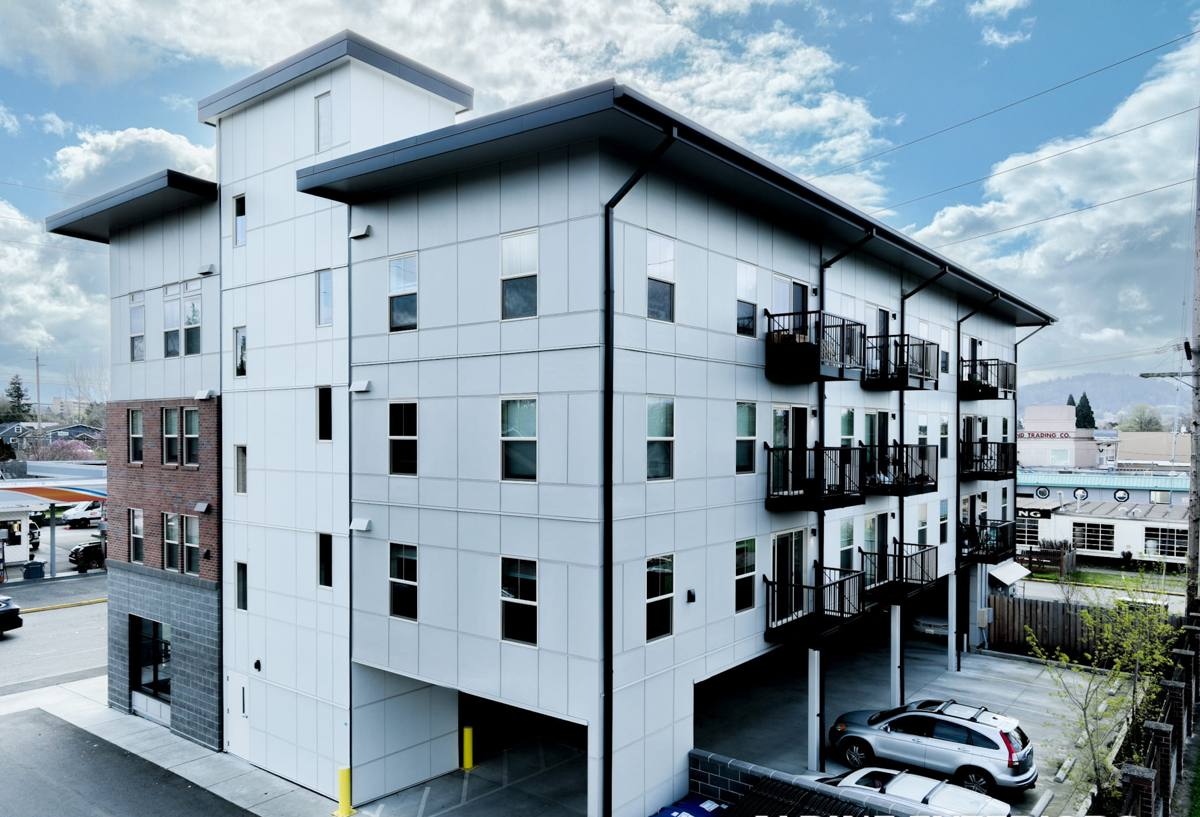
The Climate Problem: Blaine Is Not a Mild, Dry Place
Blaine sits at the very northwest corner of Washington, on Semiahmoo Bay, inside a Whatcom County climate that combines three things wood siding handles poorly over time: salt-laden marine air off the Strait of Georgia and Boundary Bay, long stretches of driving rain pushed in off the water, and an extended moss and algae season driven by cool, damp shade for much of the year. None of these individually rules out wood siding. Together, over a 20-30 year ownership horizon, they add up to a maintenance burden that most homeowners underestimate when they're standing in a showroom looking at a sample board.
Salt Air and Coastal Exposure
Homes closer to the water in Blaine and along the Semiahmoo Bay shoreline take on airborne salt that accelerates the breakdown of paint film and primer coats faster than the same product would fail further inland. Salt exposure doesn't rot wood directly, but it degrades the paint layer that's the wood's only real protection, which shortens the interval between repaints and increases the odds of a homeowner missing the window before bare wood is exposed to moisture.
Driving Rain and Moisture Cycling
Whatcom County storms frequently come with wind-driven rain rather than straight-down rainfall. That matters for wood siding because driving rain gets forced into lap joints, butt seams, and any hairline gap in the paint film — spots that stay dry in calmer climates. Wood that absorbs and releases moisture repeatedly through the wet season swells and shrinks, which is exactly the cycle that eventually cracks paint film, opens joints, and lets rot get started at the edges and end cuts.
Moss and Algae Season
Shaded north- and west-facing walls in this region can stay damp for months at a stretch. That's an ideal environment for moss and algae growth on painted wood surfaces, which holds additional moisture against the siding and accelerates paint failure in exactly the spots that are hardest to inspect and hardest to reach for maintenance.
What This Means in Practice for a Homeowner
None of this means primed wood siding "fails" on a Blaine home. It means the maintenance schedule that keeps it performing is more demanding here than in a drier, inland climate — and the consequences of falling behind on that schedule show up faster.
- Repainting realistically every 4-7 years on this coastline, sooner on southwest and water-facing exposures, versus longer intervals inland
- Caulk joints at butt seams and trim need annual inspection — this is where driving rain finds its way behind the paint film first
- End cuts and any field-cut edges need to be re-primed and sealed at install, and re-inspected over time, because factory priming doesn't reach a cut made on site
- Lower siding courses near grade, sprinklers, or downspouts need extra attention — splash-back moisture is a leading cause of rot at the bottom courses on wood-sided homes
- Shaded, north-facing walls need periodic moss and algae treatment to keep organic growth from holding moisture against the paint film
Where the Real Cost Lives
The lower purchase price of primed wood siding is real, but it's only the first entry in the cost column. The ongoing cost is labor and paint, recurring on a schedule set by this climate, for as long as the siding is on the house.
| Cost Factor | Primed Wood Siding | James Hardie Fiber Cement |
|---|---|---|
| Factory finish | Primer only — full paint system required after install | ColorPlus factory finish baked on, engineered for UV and moisture exposure |
| Typical repaint interval on this coastline | Roughly 4-7 years, often sooner on exposed walls | ColorPlus is not scheduled for repainting under normal conditions; if ever painted, standard cycles apply |
| Moisture behavior | Absorbs and releases moisture; swells and shrinks seasonally | Fiber cement does not swell, warp, or rot from moisture absorption |
| Combustibility | Combustible | Non-combustible core material |
| Warranty structure | Varies by mill; often limited on the primer, none on field paint | Manufacturer warranty on the product, transferable to a new owner |
Where Primed Wood Siding Genuinely Makes Sense
We're not going to pretend there's no legitimate case for it. On a historic restoration where matching original wood profiles is part of the project's purpose, or on a detail piece like a gable accent or trim board where a homeowner wants true wood grain and is fully signed up for the maintenance, wood siding can be the right call for someone else's scope of work. Our decision not to install it is about what we're willing to put our name behind as a full-house siding system in this specific climate — not a claim that wood siding is worthless everywhere.
Why We Install James Hardie Instead
James Hardie fiber cement siding was engineered specifically to hold up in demanding climates, and Hardie's HZ5 product line is formulated for the kind of wet, coastal, freeze-prone conditions Whatcom County sees. A few reasons it's what we put on Blaine homes:
- Moisture stability. Fiber cement doesn't absorb and release water the way solid wood does, so it isn't cycling through the swell-and-shrink pattern that eventually cracks paint film and opens seams.
- ColorPlus factory finish. The color is baked on at the factory under controlled conditions, not brushed on site, which gives a more consistent, longer-lasting finish than field-applied paint over a primer coat.
- Non-combustible core. Fiber cement doesn't burn the way wood siding does — a meaningful factor for insurance and peace of mind, independent of the coastal climate discussion.
- Climate-engineered product lines. Hardie builds region-specific formulations rather than one generic board for the whole country, which matters when the failure modes in a salt-air, high-rainfall climate are different from a dry inland one.
- Transferable warranty. A strong, manufacturer-backed warranty that transfers to a future owner is a real asset when it comes time to sell the home.
Installation Still Matters More Than the Product
We'll say the same thing on every product page on this site: no siding material, including Hardie, performs to spec if it's installed wrong. Correct fastening, proper clearances at grade and roof lines, correctly lapped and caulked joints, and flashing details that actually shed water are what make any siding system last in a climate like this one. Choosing Hardie over primed wood removes one entire category of failure — the paint-and-moisture cycle — but it doesn't replace the need for installation done to the manufacturer's specifications.
Making the Right Call for Your Home
If you're weighing primed wood siding against fiber cement for a home in Blaine or elsewhere in Whatcom County, the honest question to ask yourself is how you feel about the recurring maintenance schedule, not just the up-front price tag. A homeowner who genuinely enjoys the upkeep and wants true wood grain may be happy with that trade-off. Most homeowners we talk to, once they've priced out repainting on a 4-7 year cycle against a factory-finished alternative, decide the maintenance isn't worth it for a full-house exterior.
If you'd like to talk through your specific home, exposure, and budget, we're happy to walk the property with you and give you a straight answer — including telling you if a lower-maintenance product isn't actually necessary for your situation. Reach out for a free, no-pressure estimate and we'll go over what we'd recommend and why.