 Blaine Siding
 Custer sits inland just enough from the Strait of Georgia and Drayton Harbor to feel a little different from Blaine proper, but not enough to escape what the marine climate does to a house. Between the salt-laden air rolling off the water, the long stretch of wet months that define a Whatcom County winter, and the shade cover that a lot of Custer properties enjoy from mature fir and cedar trees, exterior siding here works harder than it does in drier parts of the state. We've spent enough time on roofs, walls, and decks in this corner of the county to know exactly what that combination does to different siding materials over ten, twenty, and thirty years — and why we made the decision to install only one type of siding on the homes we work on.
What Custer's Climate Actually Does to a House
It helps to be specific about the mechanisms at work, rather than just saying "it's wet here." Three things define the exterior-durability challenge for Custer homes:
Salt Air
Proximity to Puget Sound and the Strait means airborne salt is a real factor, not a coastal cliché. Salt accelerates corrosion of exposed metal fasteners and trim, and it interacts with certain paint and coating systems in ways that shorten their useful life. Siding and trim products need a finish that resists that chemical exposure, not just a coat of paint applied on-site.
Driving Rain
Whatcom County doesn't just get a lot of rain — a good portion of it arrives sideways, driven by wind off the water. That matters enormously for siding performance, because driving rain pushes moisture into laps, seams, and butt joints that a vertical-only rain event would never reach. A siding system's water-shedding detailing (how it laps, how it's caulked, how it flashes) matters as much as the material itself.
Long Moss and Mildew Season
Shaded, moisture-retentive conditions in Custer's tree-covered lots create a moss and mildew season that can run most of the year in the wrong spot. Any siding material that absorbs and holds moisture — even briefly, even at the cut edges — becomes a host surface for organic growth and, over years, for the wood-rot and substrate damage that follows.
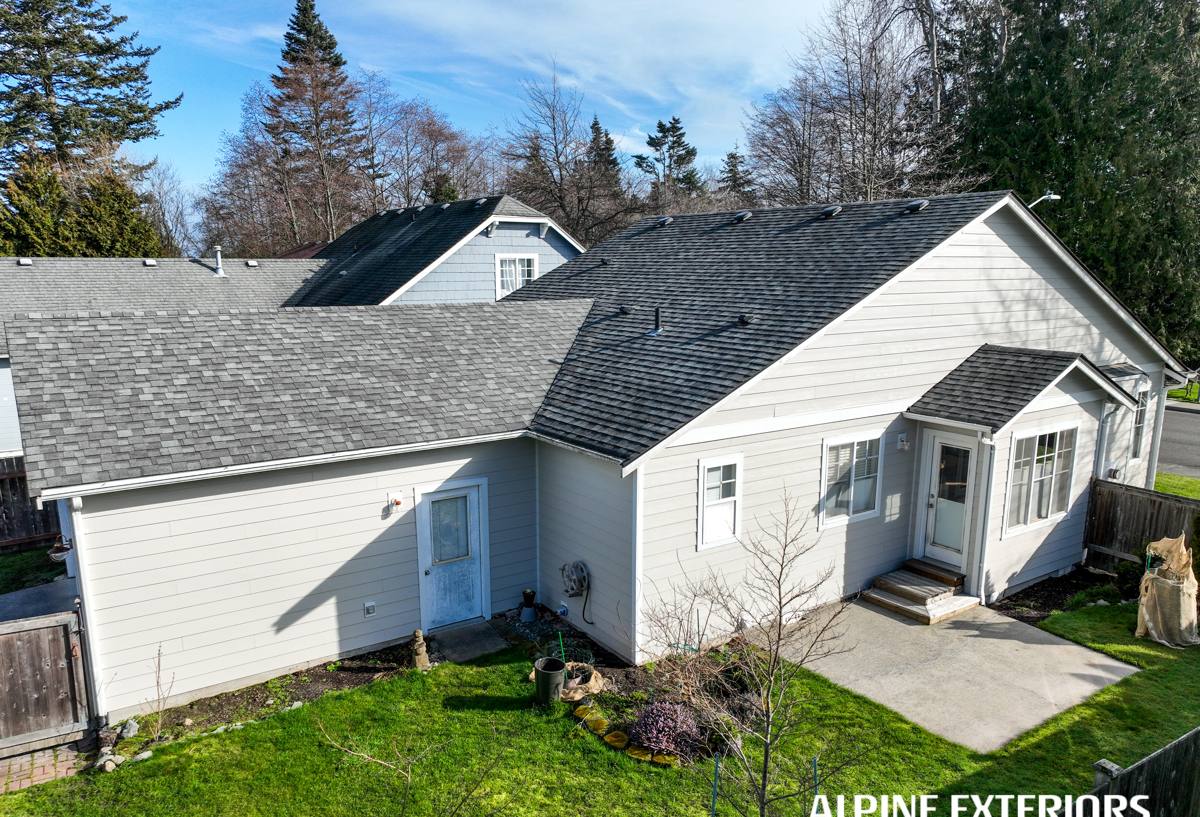
Why This Pushed Us Toward One Material
We don't install every siding product on the market, and that's a deliberate choice, not a limitation of what we're capable of doing. We install James Hardie fiber cement siding, exclusively. We don't offer vinyl, LP SmartSide, Cemplank, Allura, primed spruce, or raw cedar as options — not because those products can't be installed correctly by someone, but because after years of exterior work in this specific climate, we don't want our name on a wall material that's fighting an uphill battle against salt air and driving rain from day one.
Fiber cement, and specifically the James Hardie HZ5 product line engineered for the Pacific Northwest's wet-climate zone, is manufactured from cement, sand, and cellulose fiber. It doesn't absorb water the way wood-based products do, it doesn't corrode, and it isn't a food source for the mold and mildew that thrive in Custer's shaded, damp microclimates. It's also non-combustible, which matters more each year as wildfire smoke seasons stretch later into the Whatcom County calendar.
A Straight Comparison: What We Ruled Out and Why
| Material | Where It Struggles Locally | Why We Don't Install It |
|---|---|---|
| Vinyl siding | Warps and deforms in temperature swings; seams open under driving rain | Not rated for the wind-driven moisture load common on exposed Custer lots |
| LP SmartSide | Engineered wood absorbs moisture at cut edges and fastener penetrations | Edge-sealing has to be perfect and stay perfect for decades near salt air |
| Cemplank / Allura | Fiber cement alternatives without Hardie's regional engineering or finish warranty structure | We standardized on one manufacturer's system so our crews install to one exacting spec, every time |
| Primed spruce / cedar | Natural wood, even treated, needs recurring paint and caulk maintenance in this humidity | High ongoing maintenance burden; moss and mildew take hold fast in shaded lots |
| James Hardie fiber cement | Requires correct installation to specification (our standard) | What we install — engineered for this exact climate, factory-finished, non-combustible |
To be fair to the products we don't install: vinyl is inexpensive and low-maintenance in dry climates, LP SmartSide has real fans and a reasonable track record when detailed carefully, and cedar has an appearance a lot of homeowners genuinely love. Our decision isn't a claim that these products are defective. It's that we've chosen to build our business around the material that gives Custer homeowners the best odds of a siding job that still looks and performs well in twenty years, with the least maintenance in between.
James Hardie: What's Actually in the Product Line
James Hardie makes more than one siding profile, and picking the right one for a Custer property is part of doing this job correctly:
- HardiePlank lap siding — the most common choice, available in several exposure widths and textures (smooth, cedarmill)
- HardieShingle — for homes wanting a shingled or staggered look without the maintenance of real cedar shingles
- HardiePanel — vertical panel siding, often used for accent sections, gables, or modern-style facades
- HardieTrim — matching trim boards for a consistent, factory-finished look at corners, windows, and fascia
Every one of these is available with Hardie's ColorPlus factory finish — a baked-on, UV-cured coating applied under controlled conditions, rather than site-applied paint. That matters directly for the salt-air issue described above: a factory finish resists fading and chalking far better than field-applied paint, and it comes with its own finish warranty separate from the product warranty on the board itself.
How We Approach a Siding Project in Custer
Every property here is a little different — some Custer homes sit on open, wind-exposed acreage, others are tucked under tree cover with heavy shade and slower drying times. Our process starts with an honest look at your specific site conditions before we talk product or price:
Inspection and Assessment
We walk the exterior, check the condition of the existing siding and the sheathing underneath it, and look for signs of moisture intrusion, rot, or past repair work that needs to be addressed before new siding goes on. Siding installed over a compromised substrate fails early, regardless of how good the siding itself is.
Weather Barrier and Flashing Detail
This is the step that separates a siding job that lasts thirty years from one that fails in eight, and it's largely invisible once the project is done. Proper weather-resistive barrier installation, correct window and door flashing, and attention to every penetration point are what actually keep driving rain out of the wall assembly — the siding material is the second line of defense, not the first.
Installation to Manufacturer Specification
James Hardie publishes specific installation requirements — fastener spacing and type, minimum clearances from grade and roofing, gap and caulking details at butt joints. We install to that spec because it's what keeps the manufacturer's warranty valid and because those details are exactly what stands up to Custer's driving rain and salt exposure.
Beyond Siding: Roofing, Windows, and Decks
Siding rarely fails in isolation from the rest of the exterior envelope. We also handle roofing, window replacement, and deck construction, because a roof leak, a failed window flashing, or a deck ledger board attached without proper flashing can all undermine even a perfectly installed siding job. When we're on a Custer property for a siding estimate, we'll flag anything else we see that's putting the exterior at risk — not to upsell, but because these systems are genuinely connected.
What to Look for When Hiring for Exterior Work in This Area
- Manufacturer certification or training specific to the siding product being installed
- A clear explanation of the weather barrier and flashing plan, not just the visible siding material
- Local references or a track record of work in Whatcom County's specific climate conditions
- Written scope of work covering substrate repair contingencies, not just the siding install itself
- Proper licensing, bonding, and insurance appropriate for exterior contracting in Washington State
- A warranty structure you actually understand — both material and labor coverage
Cost Factors Worth Understanding Upfront
| Factor | Why It Affects Cost |
|---|---|
| Existing substrate condition | Rot repair or sheathing replacement adds labor and material before new siding goes on |
| Home size and wall complexity | More corners, gables, and dormers mean more cutting, trim work, and labor time |
| Siding profile chosen | Lap, shingle, and panel styles differ in material cost and installation labor |
| Trim and accent detailing | Matching HardieTrim and accent panels add cost but improve long-term finish consistency |
| Access and site conditions | Steep lots, tree cover, or limited equipment access can affect labor time |
We don't quote projects sight unseen, and we're not going to throw a number at you before we've actually looked at your house. What we can tell you honestly is that fiber cement generally costs more upfront than vinyl and is often comparable to or less than high-quality engineered wood or cedar once you factor in the maintenance those alternatives require over time.
Get an Honest Look at Your Custer Property
If you're dealing with aging siding, visible moss or moisture staining, or you're just planning ahead for a Custer home that needs to hold up to another few decades of Whatcom County weather, we're glad to come take a look. There's no pressure and no obligation — just a straight assessment of what your exterior needs and what it would take to do the job right. Use the form below to request a free estimate.