 Blaine Siding
 Siding in Lynden: A Nooksack Valley Problem, Not Just a Whatcom County One
Lynden sits close to the Nooksack River, in the low, flat farmland of northern Whatcom County near the Canadian border. That geography matters more than most homeowners realize. Valley floors like this one hold moisture differently than the hillier, more wind-exposed parts of the county. Air drains down into the valley at night and sits there, fog lingers longer over open fields, and the marine air moving in off the Salish Sea still reaches this far inland, carrying salt and driving rain with it. The result is a siding climate that's demanding in more than one way at once: sustained dampness from the valley setting, plus the wind-driven rain and moss pressure that define exterior work across this whole corner of Washington.
We install James Hardie fiber cement siding exclusively, and we handle roofing, windows, and decks alongside it. This page is specifically about what Lynden's climate does to a house and what a siding job needs to hold up against it — not a generic pitch, but a straight look at the conditions and the choices that actually matter here.
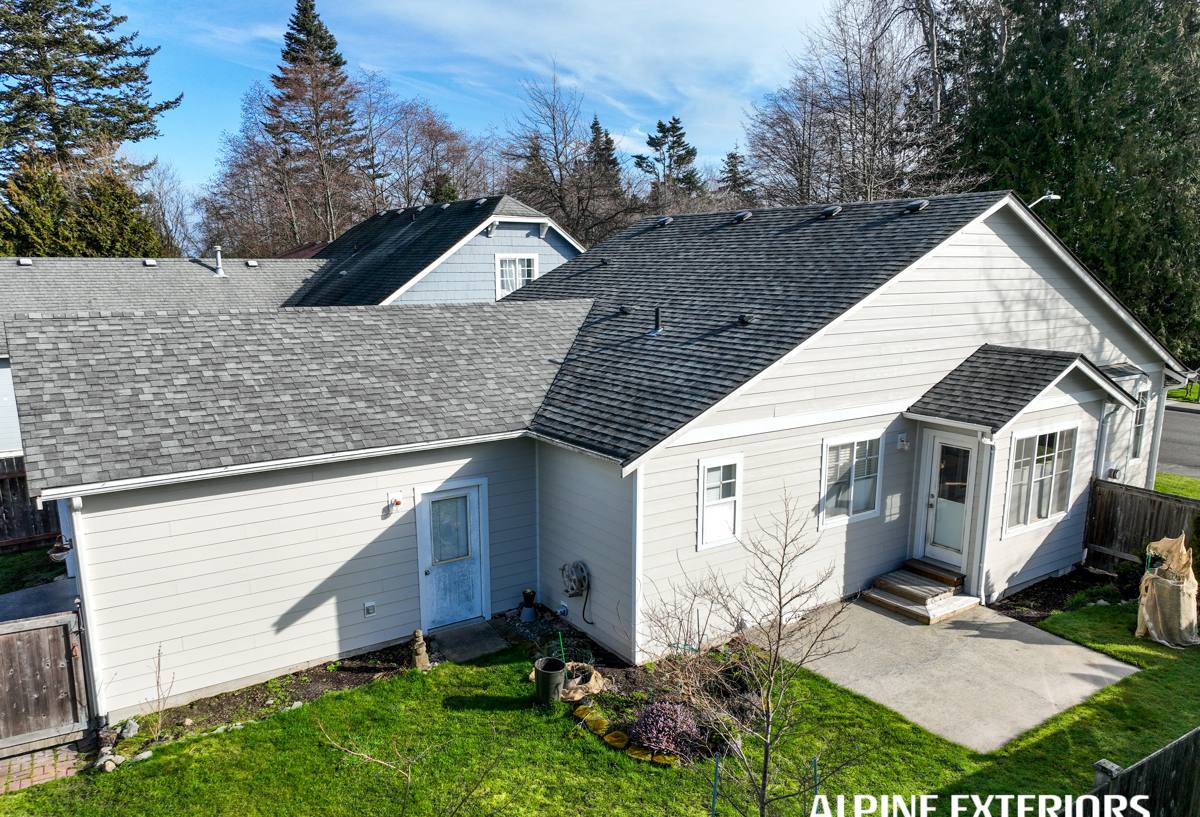
What the Nooksack Valley Does to a House
A Long, Slow-Drying Moss Season
Moss doesn't need a lot of rain to establish itself — it needs consistent moisture and shade, and the Nooksack Valley provides both for a large part of the year. Low-lying farmland traps humidity close to the ground overnight, and mature trees around older Lynden properties keep north- and east-facing walls shaded well into the day. Any siding surface that's even slightly porous, or that holds moisture against the substrate rather than shedding it, becomes a growth surface. Once moss and mildew get a foothold on a wall, they hold moisture against that surface even longer, which accelerates whatever damage was already starting underneath.
Driving Rain, Not Just Rainfall
Rain in this part of Washington rarely falls straight down. Wind pushes it sideways into wall assemblies, window flashing, and the transitions where roofs meet walls. That's a harder problem to solve than a simple rainfall total suggests, because water is finding its way in horizontally, behind trim and at seams, not just soaking a surface from above. Materials and installation details that would be fine in a calmer, drier climate can fail here specifically because of that sideways-driven moisture.
Salt Air, Even This Far Inland
Lynden isn't a coastal town, but Whatcom County as a whole sits close enough to the Sound that salt-laden marine air reaches well inland on prevailing winds. Salt speeds up corrosion on fasteners, flashing, and metal trim, and it can degrade lower-grade finishes faster than a landlocked climate would. It's a smaller factor here than it is in Blaine or Birch Bay, but it's still part of the exposure profile for exterior materials and hardware.
Freeze-Thaw on Top of All of It
Winter in the valley brings cold snaps that push temperatures below freezing after weeks of saturation. Any material that's already holding water when a freeze hits is at risk of cracking, swelling, or delaminating as that water expands. It's not the dominant threat here the way it is in colder inland climates, but combined with the valley's slow-drying humidity, it's one more reason generic, warm-climate siding products don't hold up as well as products engineered for this region.
Why We Only Install James Hardie
We used to install a broader range of siding products. We don't anymore, and that wasn't a marketing decision — it came from what we kept finding on tear-offs and service calls across Whatcom County, including plenty of jobs right around Lynden.
- Non-combustible core: Fiber cement doesn't feed a fire the way wood-based siding products can, which matters for both safety and insurance considerations.
- Factory-applied ColorPlus finish: The color is baked on under controlled factory conditions rather than brushed on in the field, which holds up longer against fading, chalking, and moisture than site-applied paint.
- Climate-engineered HZ product lines: Hardie's HZ5 formulation is built for regions with significant moisture exposure and freeze-thaw cycling — a fit for the Nooksack Valley's combination of humidity and winter cold snaps.
- Dimensional stability: Fiber cement doesn't swell, warp, or cup the way engineered wood products can when they take on moisture repeatedly through a long wet season.
- Strong transferable warranty: Hardie backs the product with one of the more robust warranty structures in the industry, provided it's installed to their spec.
We won't install LP SmartSide, vinyl siding, Cemplank, Allura, primed spruce, or cedar. Each of those products has a legitimate place in the market, and each has homeowners who are satisfied with them. But we've made a professional call that in a climate that holds moisture the way this valley does, we'd rather install one system we fully stand behind than offer a cheaper option that shifts more maintenance risk onto the homeowner years down the line.
How the Common Alternatives Actually Hold Up Here
| Product | Moisture Behavior | Maintenance Load | Typical Lifespan |
|---|---|---|---|
| James Hardie Fiber Cement | Sheds water, doesn't swell or rot | Low — factory finish, occasional wash | 30+ years with correct install |
| Vinyl | Can trap moisture behind panels at seams | Low, but prone to warping and fading | 15-25 years |
| LP SmartSide (engineered wood) | Vulnerable at cut edges and butt joints | Moderate — edges need diligent sealing | 15-30 years, highly install-dependent |
| Cedar / Primed Spruce | Absorbs moisture, especially in shade | High — regular refinishing required | 10-20 years without consistent upkeep |
These are general industry ranges, not guarantees. Actual performance always comes down to installation quality, maintenance follow-through, and how exposed a given wall is to shade, wind, and standing moisture.
Full Exterior Services for Lynden Properties
Siding rarely fails in isolation. It interacts with roofing, windows, and decking, and problems in one system often show up as damage in another. We evaluate the whole exterior together rather than treating each trade as disconnected work.
Siding
New installations, full tear-off replacements, and repair work using James Hardie fiber cement, installed to manufacturer specification with real attention to flashing, clearances, and drainage paths — the details that matter most in a valley climate that doesn't dry out quickly.
Roofing
Roof condition determines how water moves down the wall below it. A roof shedding water incorrectly, missing proper drip edge, or backing up at a valley overloads the siding and trim beneath it, regardless of how good that siding is on its own.
Windows
Window flashing and its integration with the siding plane is one of the most common failure points we find during inspections. A poorly flashed window lets wind-driven rain track behind the exterior wall, where it does damage long before it's visible on the surface.
Decks
Decks face the same rain and moss exposure as siding, plus standing water on horizontal surfaces and ground contact near grade. We build and repair decks with drainage, fastener choice, and material selection suited to a valley climate that stays damp longer than open, wind-exposed sites.
What a Siding Job Looks Like on a Lynden Home
Inspection and Assessment
We start by walking the existing siding, trim, and flashing, looking for soft spots, staining, bubbling paint, and gaps at seams and penetrations. On valley properties, we pay particular attention to shaded walls, areas near mature trees or outbuildings, and any low points where water might collect near the foundation line.
Prep and Substrate Check
Before new siding goes up, we check what's underneath it. Water-damaged sheathing gets replaced, not covered over. Skipping this step is one of the most common shortcuts in lower-cost siding jobs, and it's the reason a lot of "new" siding fails within a few years instead of lasting decades.
Installation to Spec
James Hardie products come with specific nailing patterns, clearances, and flashing requirements. Cutting corners on those details is the single biggest reason fiber cement siding underperforms in the field — the product itself is rarely the problem, the installation is.
Final Walkthrough
We walk the finished job with the homeowner, checking seams, trim, caulking, and paint lines, and go over what ongoing care looks like before we call the job done.
Cost Factors Homeowners Should Understand
We don't publish fixed prices, because every home and every scope is different, but the variables that actually drive cost on a Lynden siding project are consistent:
- Total square footage and the complexity of the home's shape — dormers, gables, and multiple stories all add labor
- Condition of the existing substrate, and whether water damage needs to be repaired before new siding goes on
- Amount of trim and corner detail involved, especially on older farmhouses and homes with custom millwork
- Whether roofing, window, or deck work is bundled into the same project
- Site access and staging space, which varies more on larger rural Lynden-area lots than on tighter in-town properties
Signs It's Time to Call
- Moss or dark staining that keeps coming back shortly after cleaning
- Soft or spongy siding when pressed, especially near the base of the wall or around window trim
- Peeling or bubbling paint, particularly on shaded, north-facing walls
- Visible gaps, separation, or cracking at seams and corners
- Warping, cupping, or swelling on existing wood-based or engineered siding panels
Why a Local Crew Matters
Siding installed correctly for an open, wind-exposed lot near the coast isn't necessarily installed the same way for a shaded, low-lying valley property near Lynden — the moisture load, drying time, and shade patterns are different even within the same county. A crew that works across Whatcom County day to day sees how those differences actually play out on real homes over a full year, not just how a product looks on install day. That's what shapes decisions like where to add extra flashing attention, which wall orientations dry out slowest, and which details are worth the extra time so a homeowner isn't dealing with a callback two winters later.
Get a Free, No-Pressure Estimate
If your Lynden home has siding that's showing moss, staining, or soft spots, or you're planning ahead for a replacement, we're glad to take a look and give you a straightforward, honest assessment. Reach out using the form below to schedule a free estimate — no pressure, no upsell script.