 Blaine Siding
 Exterior Work Built for Everson's Nooksack Valley Climate
Everson sits along the Nooksack River in Whatcom County, a few miles inland from the coastal influence that shapes so much of Northwest Washington's weather. That location gives Everson its own particular exterior challenges. Homes here don't get the direct salt-air exposure that coastal Blaine properties deal with, but they get plenty of the region's other signature problems: long stretches of driving rain, high humidity off the river bottomland, and a moss and algae season that can run most of the year on shaded or north-facing walls. Add in the freeze-thaw swings common to river valleys in winter, and you have a climate that is genuinely hard on exterior building materials, even if it doesn't look dramatic on paper.
We work throughout Whatcom County, and Everson is a regular stop for us. A lot of what we see on service calls here traces back to the same root cause: siding, trim, or roofing that wasn't matched to how wet this valley actually stays for most of the year.
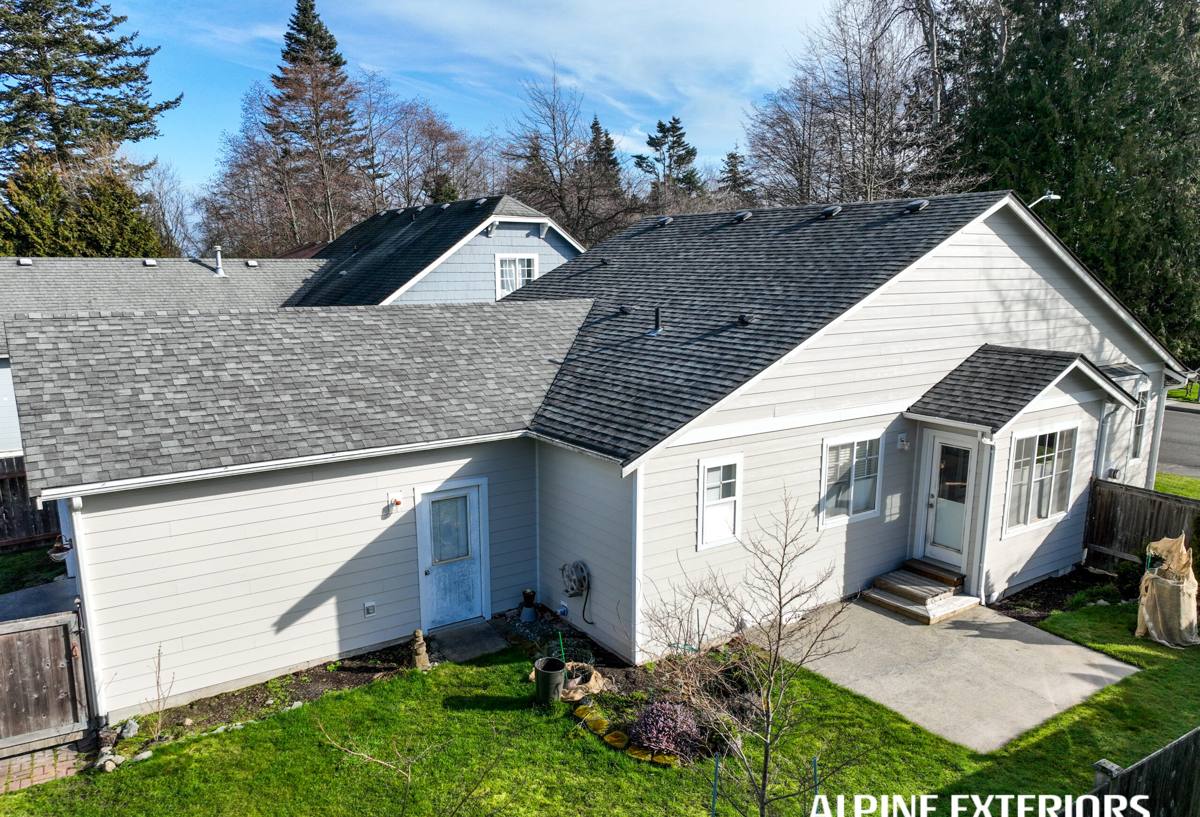
What the Local Climate Does to Siding Over Time
Moisture That Doesn't Let Up
Whatcom County gets a long wet season, and Everson's position in the Nooksack valley tends to hold humidity close to the ground longer than you'd see on higher, more exposed ground. Wood-based and engineered wood siding products absorb that moisture through cut edges, fastener holes, and any gap in the factory coating. Once water gets behind the surface, it doesn't dry out quickly here — there just isn't enough sun and wind in a typical Whatcom County winter to pull moisture back out before the next system rolls through.
Moss, Algae, and Shade
Everson has plenty of mature trees and tree-lined properties, which is part of what makes it a nice place to live — but shaded walls stay damp longer, and that's exactly where moss and algae take hold. On porous or textured siding, that growth isn't just cosmetic. It holds moisture against the surface and accelerates whatever breakdown is already happening underneath.
Freeze-Thaw and Seasonal Swings
River valleys tend to collect cold air and morning fog in a way that surrounding higher ground doesn't. When siding is already holding moisture and temperatures dip below freezing, that moisture expands. Over repeated cycles, that's what causes swelling, cracking, and delamination in materials that aren't built to handle it.
Siding Materials: How They Actually Hold Up in This Environment
We get asked a lot why we don't offer more siding options. The honest answer is that after years of installing and repairing exterior products across Whatcom County, we've seen how each one performs here specifically — not in a lab, not in a drier climate, but in Everson-type conditions.
| Material | Moisture Behavior | Maintenance | Typical Lifespan Here |
|---|---|---|---|
| Vinyl siding | Doesn't absorb water itself, but seams and gaps let moisture behind panels where it can sit | Low, but panels warp, fade, and crack over time | 15-25 years, often less with heat/cold stress |
| LP SmartSide / engineered wood | Absorbs moisture at cut edges and fastener points if not perfectly sealed and maintained | Regular caulk and paint upkeep required | Highly install and maintenance dependent |
| Primed spruce / cedar | Natural wood movement, prone to moisture absorption and rot without diligent upkeep | High — repainting, caulking, moisture checks | Varies widely, shorter without strict maintenance |
| James Hardie fiber cement | Fiber cement core resists moisture-driven swelling, cracking, and rot | Low — factory finish holds color, no painting cycle | Decades, backed by manufacturer warranty |
This is why we standardized on James Hardie fiber cement siding and don't install vinyl, LP SmartSide, Cemplank, Allura, or unfinished wood siding. It's not that those products don't have a place in construction generally — some of them are reasonable choices in drier climates or for certain budgets. It's that we're not willing to put our name on an installation we know is going to struggle against this specific valley's moisture, freeze-thaw, and moss pressure.
Why James Hardie Is What We Put on Everson Homes
James Hardie fiber cement is engineered specifically for climate zones like ours. The HZ product line is designed with the moisture, humidity, and temperature patterns of the Pacific Northwest in mind, which matters a great deal in a river valley community like Everson.
- Non-combustible core — fiber cement doesn't feed fire the way wood-based products can, which matters for both safety and insurance considerations.
- ColorPlus factory finish — baked-on color that resists fading and cracking, so you're not on a repainting schedule.
- Engineered for moisture — the fiber cement composition doesn't swell, rot, or delaminate the way wood-based sidings can when they take on water.
- Strong transferable warranty — real coverage that carries value if you sell the home, not just marketing language.
- Proven track record — decades of use in wet coastal and valley climates similar to Whatcom County.
None of that guarantees a good result on its own, though. Fiber cement is unforgiving of installation shortcuts — wrong fastener placement, missed flashing details, or incorrect clearances will undercut even the best material. That's a big part of why the crew installing it matters as much as the product itself.
How We Approach a Siding Job in Everson
Assessment First
We start by looking at the whole exterior, not just the siding. Moisture problems on a house are rarely isolated — a leaking gutter, a missing kickout flashing, or a roofline issue often shows up as siding damage somewhere else. We walk the property, check for existing rot, moss buildup, and drainage issues, and look at how sun and shade hit different walls of the house.
Moisture Management Behind the Siding
Correct installation means a proper weather-resistive barrier, correctly lapped flashing at every window, door, and penetration, and the right gap and fastening pattern per Hardie's specifications for our climate zone. This is the part of the job that's invisible once the siding is up, and it's also the part that determines whether the house stays dry for the next 30 years or starts having problems in five.
Installation to Spec
We install to James Hardie's published requirements — proper fastener type and spacing, correct clearances from grade, decking, and roof lines, and factory-finished panels and trim so the color and coating stay consistent across the whole house. That consistency matters more in Everson than it might in a drier area, because uneven finishes show weathering differences faster here.
Beyond Siding: A Full Exterior Approach
Siding doesn't work in isolation, and we don't treat it that way. We also handle roofing, windows, and decks, because these systems all interact — a roof that's shedding water wrong, a window that's not flashed correctly, or a deck ledger that's trapping moisture against the house will all eventually show up as siding or structural problems.
- Roofing — a roof in poor condition sends water where it shouldn't go, often straight down behind siding at the eaves and rakes.
- Windows — improperly flashed window openings are one of the most common sources of hidden moisture intrusion we find during siding tear-offs.
- Decks — ledger boards and deck-to-house connections are a frequent weak point for water getting behind exterior walls if not built and flashed correctly.
When we look at a house in Everson, we're looking at how all four systems work together to keep water out, not just quoting a siding replacement in isolation.
Signs an Everson Home May Need Exterior Attention
Because moisture damage often develops behind the siding before it's visible on the surface, it helps to know what to watch for:
- Soft or spongy spots when you press on siding, especially near the bottom courses
- Visible warping, buckling, or gaps between siding panels
- Peeling or bubbling paint on wood-based or engineered siding
- Persistent moss or algae staining that keeps coming back after cleaning
- Cracks around window and door trim
- Musty smells or moisture staining on interior walls that back up to exterior siding
- Siding that's noticeably faded or chalky compared to when it was installed
None of these by themselves mean you need a full re-side, but they're worth having looked at before they turn into a bigger repair.
Cost Factors for a Siding Project
Every house is different, but the same handful of factors drive most of the cost variation we see on Everson jobs:
| Factor | Why It Matters |
|---|---|
| Home size and wall complexity | More corners, gables, and dormers mean more cutting, trim work, and labor time |
| Existing siding removal | Tear-off and disposal of old material adds time versus a bare or previously-stripped wall |
| Underlying moisture or rot repair | Damaged sheathing found once old siding comes off has to be repaired before new siding goes on |
| Siding profile and finish selection | Lap width, texture, and ColorPlus color choice affect material cost |
| Trim and detail work | Window and door surrounds, corner boards, and fascia detailing add labor |
| Access and site conditions | Steep grades, tight lots, or difficult staging areas affect scaffolding and logistics |
We won't give you a number over the phone that means anything — an accurate quote requires actually looking at the house. What we can tell you upfront is that our estimates are free, and we'll walk you through exactly what's driving the price before you commit to anything.
Why a Local Crew Matters for This Kind of Work
Whatcom County's building requirements, inspection processes, and the practical realities of working in river valley communities like Everson are things you learn from doing the work here repeatedly, not from a general contractor's manual. A local crew knows which details tend to cause problems in this specific climate, has relationships with local suppliers for materials and matching trim, and is going to be around if a warranty question comes up five or ten years down the road. That accountability is worth something that an out-of-area crew passing through can't really offer.
Get a Free Estimate
If you're noticing wear on your siding, planning ahead for a replacement, or want a second opinion on a repair someone else recommended, we're happy to take a look. There's no cost and no pressure — just an honest assessment of what your Everson home actually needs, using a form below to get started.