 Blaine Siding
 Exterior Work Built for Sumas Conditions
Sumas sits at the northern edge of Whatcom County, tucked against the Nooksack River valley and the Canadian border. It's a different pocket of climate than the open coastline, but the exterior of a house here still takes a beating year-round: long stretches of steady rain, damp low-lying air that never fully dries out between storms, and a moss and algae season that can run from early fall through late spring. Add in the valley's cooler, wetter microclimate and the occasional high-water event near the river bottoms, and you've got a set of conditions that reward a well-built, well-maintained exterior and punish anything installed as an afterthought.
We're based in Blaine and work throughout Whatcom County, including Sumas and the surrounding rural and agricultural properties. A lot of what we see out here is older farmhouses, mid-century ranch homes, and newer construction mixed in with them — different ages, different problems, same regional weather working against all of them.
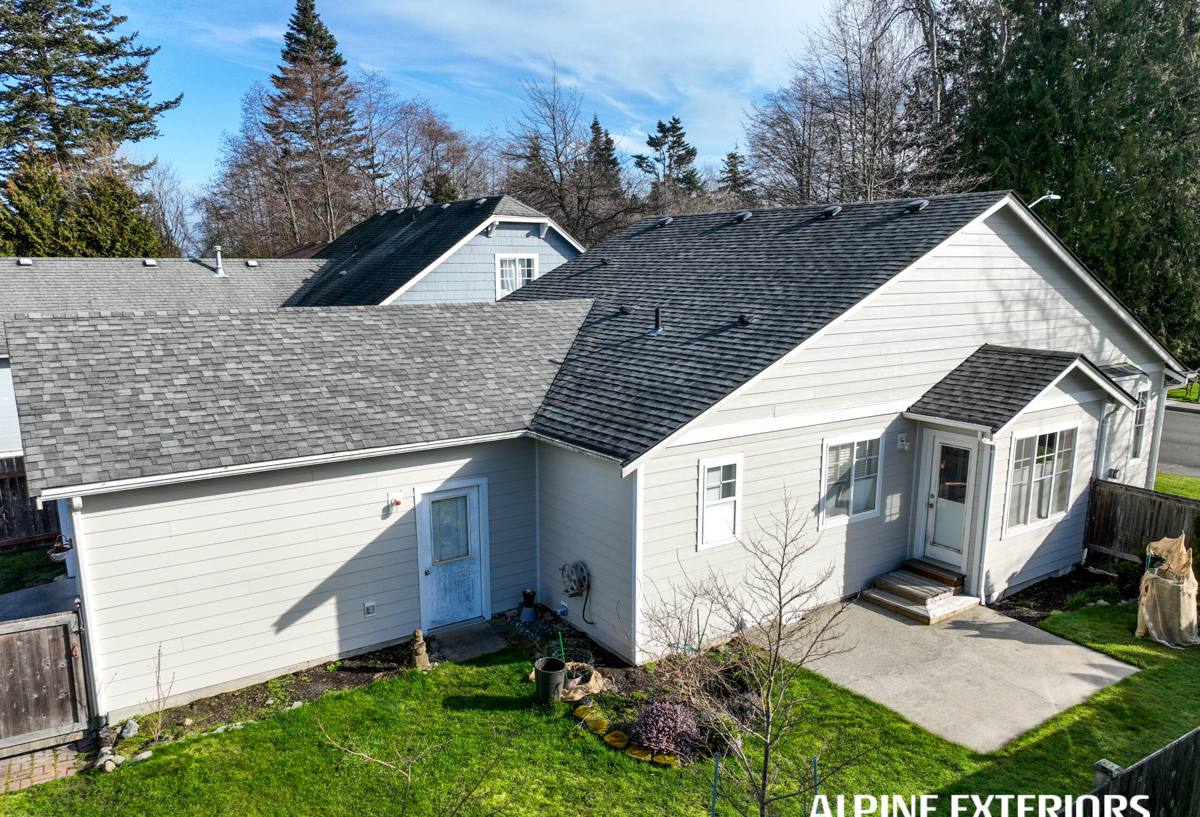
What Sumas Homes Actually Face
Persistent Moisture
This part of Whatcom County gets a steady diet of rain rather than short intense downpours — day after day of drizzle and overcast skies that keep wood, paint, and lower-grade siding materials damp far longer than they were designed to handle. Siding that can't shed water efficiently, or that absorbs moisture at the seams and cut edges, stays wet longer here than it would in a drier climate, and that's when rot, swelling, and paint failure start.
Moss, Algae, and North-Facing Walls
Shaded and north-facing walls in Sumas — especially on properties with mature trees or tucked against outbuildings — barely see direct sun for months at a time. That's exactly the environment moss and algae need. On porous or textured siding, that growth isn't just cosmetic; it holds moisture against the wall surface and accelerates whatever degradation is already happening underneath.
Temperature Swings and Freeze Cycles
The Sumas valley runs a bit cooler than areas closer to the water, and it sees more frost and the occasional hard freeze in winter. Materials that absorb water and then go through a freeze-thaw cycle are at real risk of cracking, splitting, or delaminating. This matters for siding, but it's just as relevant for decking, trim, and window components exposed to the same swings.
Flood-Prone Low Ground
Parts of the Sumas area sit in the Nooksack River's historic floodplain, and periods of high water aren't unheard of. We're not flood contractors, but it's worth knowing that any exterior material choice near low-lying ground should also hold up to occasional saturation and quick drying, not just steady rain.
Why We Install Only James Hardie Fiber Cement Siding
We made a deliberate decision years ago to install one siding product line: James Hardie fiber cement. We don't install vinyl, LP SmartSide, Cemplank, Allura, primed spruce, or cedar. That's not a marketing angle — it's a standard we hold to because of what we've seen these materials do (and not do) in exactly this kind of climate.
The Short Version of Why
- Vinyl expands, contracts, and can warp or crack in temperature swings, and it doesn't hold paint the way fiber cement does if a homeowner ever wants a color change.
- LP SmartSide and other wood-strand products are engineered wood — meaning they still rely on sealed edges and consistent maintenance to keep moisture out. In a climate this wet, that maintenance margin for error shrinks fast.
- Primed spruce and cedar are real wood, full stop. Beautiful when new, but wood siding in a high-rainfall, high-moss region needs disciplined recoating, caulking, and inspection to avoid rot — it's a genuine ongoing commitment, not a one-time install.
- Cemplank and Allura are also fiber cement and share some of Hardie's strengths, but we've standardized on one manufacturer so our crews, our installation details, and our warranty conversations stay consistent across every job.
Fiber cement doesn't rot, doesn't feed insects, and is non-combustible. James Hardie's ColorPlus factory finish is baked on under controlled conditions rather than field-applied, which matters in a region where paint often has to cure in damp, cool air. Hardie's HZ5 product line is engineered specifically for cold, wet climates like the Pacific Northwest — thicker moisture resistance and freeze-thaw performance built into the product itself, not added on-site.
What Hardie Doesn't Solve By Itself
To be fair: fiber cement siding is only as good as its installation. Improper flashing, wrong fastener placement, or siding installed too close to grade or hardscape will cause problems no matter whose name is on the product. We install to Hardie's published specifications — correct clearances, proper flashing details, and factory-cut edges sealed the way the manufacturer requires — because that's what actually determines whether a Hardie install performs for decades or causes headaches in five years.
Comparing Siding Options for a Sumas Property
| Material | Moisture Behavior in This Climate | Maintenance Load | Where It Struggles Locally |
|---|---|---|---|
| James Hardie Fiber Cement | Excellent — engineered for wet, cold Pacific Northwest conditions | Low — occasional wash, no recoating cycle | Requires correct installation to seams/flashing |
| Vinyl | Sheds water but seams and joints can trap it | Low, but limited repair/color options | Can warp with freeze-thaw and temperature swings |
| LP SmartSide / Engineered Wood | Moderate — relies on sealed edges staying intact | Moderate — edge and joint inspection needed | Damp valley air shortens the margin for maintenance lapses |
| Cedar / Primed Spruce | Absorbs moisture; needs active management | High — recoating, caulking, inspection cycles | Extended rain and shaded walls accelerate rot risk |
Roofing, Windows, and Decks for the Same Climate
Siding doesn't work in isolation — the whole exterior envelope has to handle Sumas's rain and moss season together. We handle roofing, windows, and decks alongside siding for that reason.
Roofing
Roofs in this valley deal with the same moss growth pattern as siding, plus the added stress of sustained rain finding any weak point in flashing, valleys, or penetrations. A roof that's failing quietly is one of the most common reasons siding gets damaged from the top down — we look at both together, not as separate problems.
Windows
Old, poorly sealed windows are a direct path for moisture and drafts into the wall cavity behind your siding. When we replace siding on an older Sumas home, we're often looking at the window flashing and seals at the same time, because a new siding job installed around a leaking window just relocates the problem.
Decks
Decks take the freeze-thaw and standing-moisture punishment directly, especially on shaded sides of the house where they stay wet longest. Framing, ledger board flashing, and decking material selection all matter more here than in a drier climate.
How We Approach a Sumas Project
- Walk the property and assess current siding, trim, roofing, and any moisture or moss patterns specific to the site's sun exposure and grading.
- Identify problem areas — often ground clearance, flashing details, or shaded walls with heavy growth — before talking about materials.
- Provide a straightforward recommendation, with James Hardie fiber cement as our standard siding solution, sized to the actual scope of the home.
- Install to manufacturer specification, with attention to the details that determine long-term performance in this climate — flashing, clearances, and fastening.
- Walk through the finished work and what a homeowner should watch for going forward.
Why a Local Crew Matters Out Here
Sumas is far enough from the coast, and different enough in its microclimate, that generic advice about Pacific Northwest siding doesn't always apply cleanly. A crew that works this specific corner of Whatcom County — the river valley humidity, the shaded farm properties, the older housing stock mixed with newer builds — knows what to look for that an out-of-area crew might miss. We're a Blaine-based company working this whole region, not a call center dispatching whoever's closest.
What to Ask Before Hiring Anyone for Exterior Work
- Are they licensed and insured to work in Washington, and can they show it without hesitation?
- Do they install to the manufacturer's published specifications, or their own shortcuts?
- Will they explain flashing and moisture management details, not just color and style options?
- Do they offer a written, transferable warranty on both material and labor?
- Can they speak specifically to conditions in your part of Whatcom County, not just generic siding talk?
If your Sumas home is due for new siding, a roof inspection, window replacement, or deck work, we're happy to take a look and give you a straightforward, no-pressure estimate — just fill out the form below.