 Blaine Siding
 Siding Built for California Creek's Coastal Exposure
California Creek sits close enough to the water that homes here take a steady beating from moisture, salt-laden air, and wind-driven rain most of the year. If you've lived in this part of Whatcom County for any length of time, you already know the pattern: a wet fall, a wetter winter, and long stretches where the sun barely gets a chance to dry anything out before the next system rolls through. Siding in this neighborhood isn't just an aesthetic choice — it's the first line of defense between that weather and the framing, sheathing, and insulation behind it.
We install exclusively James Hardie fiber cement siding, and we don't treat that as a footnote. It's the whole reason our crew works the way it does. Every material choice, flashing detail, and gap tolerance we use is built around giving a coastal Whatcom County home siding that actually holds up to what California Creek throws at it year after year.
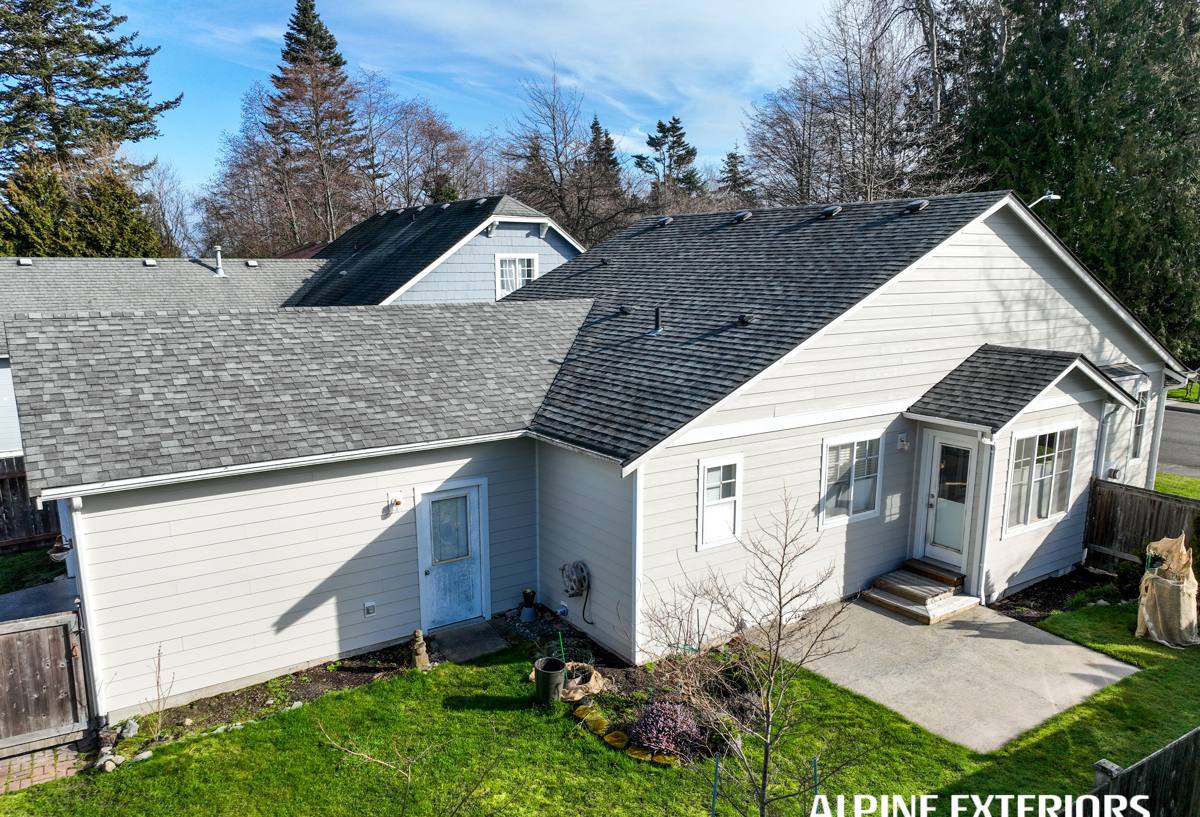
What This Climate Does to Siding Over Time
Homes near the Blaine shoreline face a combination of stresses that inland houses in the county rarely see all at once:
- Salt air corrosion — airborne salt accelerates the breakdown of fasteners, trim, and any exterior material not rated for coastal exposure.
- Driving rain — wind off the water pushes rain sideways into wall assemblies, stressing every seam, joint, and butt edge in the siding.
- Extended moss and algae season — the Pacific Northwest's damp, mild winters give moss and algae months to establish themselves on north-facing and shaded walls.
- Freeze-thaw swings — less dramatic than inland climates, but still enough cycling to open up cracks in materials that absorb water.
- UV and wind exposure — open exposure near the water means more direct sun on clear days and more wind stress overall.
None of these factors alone would ruin a house. Together, over a decade or two, they're exactly what separates siding that still looks good from siding that's cracking, staining, or rotting at the seams.
Why Moisture Is the Real Enemy
Most siding failures we see in this area don't start as one dramatic event — they start as small moisture intrusion points that go unnoticed for years. A hairline crack at a butt joint, a nail popped slightly proud of the surface, caulking that's shrunk and pulled away from a window trim. Water finds those gaps, and in a climate where things rarely get a chance to fully dry out between rain events, that moisture sits. That's when you start seeing soft spots, paint failure, and eventually structural rot in the sheathing behind the siding.
Why We Only Install James Hardie
We get asked fairly often why we don't offer vinyl, LP SmartSide, or the cheaper fiber cement alternatives like Cemplank or Allura. The honest answer is that we've drawn a line based on what holds up in this specific climate, and we'd rather stand behind one product system we trust completely than offer several and let cost pressure push customers toward the weaker option.
Fiber Cement vs. the Alternatives
| Material | Moisture Behavior | Salt Air / Coastal Fit | Why We Pass on It |
|---|---|---|---|
| Vinyl | Doesn't absorb water, but seams and panels can warp, buckle, or blow off in wind | Poor — UV and wind exposure degrade it faster near open water | Not rated for the wind-driven rain and gusts this area sees regularly |
| LP SmartSide | Engineered wood strand — vulnerable at cut edges and joints if moisture gets in | Moderate — needs meticulous caulking and edge sealing to hold up | Wood-based core carries more long-term moisture risk in a wet climate |
| Primed spruce / cedar | Natural wood — absorbs moisture, needs regular repainting | Poor to moderate — high maintenance near salt air | Maintenance burden is heavy in a climate this wet |
| Off-brand fiber cement | Similar base material to Hardie, but finish and engineering vary by manufacturer | Varies | Inconsistent factory finish quality and warranty support |
| James Hardie fiber cement | Non-combustible, dimensionally stable, resists moisture-driven warping | Strong — engineered product lines specifically for this region | What we install on every job |
James Hardie's HZ5 product line is engineered specifically for climates like ours — high humidity, heavy rain, and freeze-thaw cycling. The ColorPlus factory finish baked onto the board resists fading and chipping far better than field-applied paint, which matters a lot when your siding is facing direct salt air and UV exposure with no real off-season. It also carries a strong, transferable limited warranty, which matters to homeowners in California Creek who may eventually sell — a warranty that survives ownership changes is a real asset at closing.
How We Approach a California Creek Siding Job
Every home on the water side of Blaine gets assessed a little differently than one further inland. Before we quote anything, we look at:
- Wall orientation relative to prevailing wind and rain direction
- Existing moisture damage at trim, corners, and butt joints
- Current flashing condition around windows, doors, and rooflines
- Ventilation behind the existing siding, where accessible
- Shaded, moss-prone areas that need different maintenance expectations
Correct installation matters more here than in a drier climate. Hardie's own installation specifications call for specific gaps, fastener patterns, and flashing details — and skipping those steps is exactly how you end up with the moisture problems fiber cement is supposed to prevent. We follow manufacturer specs closely, not because it's required paperwork, but because it's the difference between siding that lasts thirty-plus years and siding that fails at year twelve.
Roofing, Windows, and Decks — The Rest of the Envelope
Siding doesn't work in isolation. On a lot of California Creek homes, the siding issues we get called out for actually trace back to a roofing or flashing problem — water working its way down from a failed roof valley or an under-flashed window and showing up as staining or soft siding well below where the leak started. Because we handle roofing, windows, and decks in addition to siding, we can look at the whole exterior envelope on one visit instead of treating siding as an isolated repair.
Where These Systems Overlap
Window replacement is a common pairing with siding work here, since old window flashing is one of the most frequent hidden moisture sources we find once siding comes off. Decks facing the water side of a property take similar coastal abuse to siding — salt air, driving rain, and constant damp shade — so it's worth having the same crew evaluate both rather than coordinating separate contractors with different standards.
Maintenance Expectations for This Neighborhood
Even with the right material installed correctly, coastal Whatcom County homes need a bit more attention than a house forty miles inland. That's just the reality of the location, not a knock on any particular siding product.
- Rinse siding annually — a simple garden hose rinse (never a pressure washer aimed directly at seams) helps clear accumulated salt residue and organic buildup.
- Watch shaded, north-facing walls — these are where moss and algae establish first; a soft wash treatment once it appears keeps it from spreading.
- Inspect caulking yearly — around windows, doors, and trim, since these are the most common failure points regardless of siding material.
- Check gutters and downspouts — overflowing gutters dump extra water directly onto siding during heavy rain events, which are frequent here.
- Look at butt joints after windstorms — a quick visual check after a significant blow can catch a loosened joint before water gets behind it.
None of this is heavy maintenance — it's closer to the same seasonal upkeep most homeowners already do, just with a bit more attention paid because of where the house sits.
Why a Local Crew Matters Here
A siding crew that mostly works inland doesn't always think about wind direction, salt exposure, or how long moss season actually runs in a given neighborhood. We work throughout Blaine and Whatcom County, which means we've seen how differently a house on California Creek's exposed side ages compared to one a few miles inland with more tree cover. That local pattern recognition shapes real decisions — where we pay extra attention to flashing, which walls need closer joint inspection, and how we set homeowner expectations for upkeep.
It also means we're not disappearing after the job wraps. Warranty support, follow-up questions, and future maintenance calls are easier to handle for a crew that's a short drive away and familiar with the area's housing stock, rather than a company that only shows up for the installation.
What a Siding Project Typically Involves
Every home is different, but a full siding replacement in this area generally follows the same sequence:
- On-site assessment of existing siding, trim, and any hidden moisture damage
- Removal of old siding and inspection of the sheathing underneath
- Repair of any rotted or compromised sheathing before new material goes on
- Installation of house wrap and flashing details at all penetrations
- Installation of James Hardie siding to manufacturer gap and fastener specifications
- Trim, caulking, and final ColorPlus touch-up as needed
- Final walkthrough and warranty documentation
The sheathing inspection step matters more here than people expect. On older California Creek homes, we sometimes find moisture damage behind siding that looked fine from the outside — another reason a full tear-off, rather than a re-side over existing material, is usually the more honest recommendation in this climate.
Getting Started
If you're noticing cracked or warped siding, moss creeping in on shaded walls, or you're just planning ahead for a home in California Creek that's due for an update, we're happy to take a look and walk you through what we're seeing. There's no pressure and no cost to get an estimate — just a straight assessment of your home's exterior and what it would take to get it set up right for the long haul.