 Blaine Siding
 Birch Bay Sits Right at the Edge of the Weather
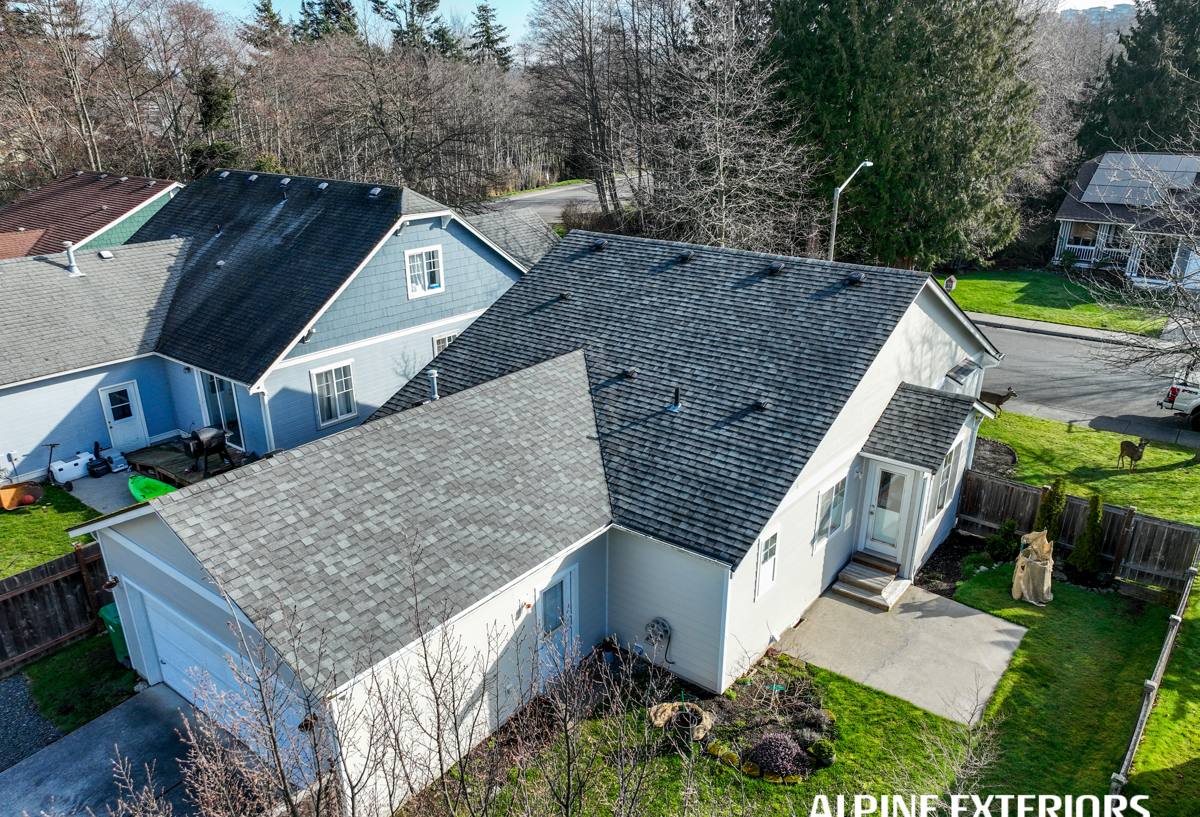
Birch Bay is one of those Whatcom County communities where the house and the water are never far apart. That's part of the appeal, but it's also why exterior materials here take more punishment than they would ten or fifteen miles inland. Homes facing the bay deal with salt-laden air moving off the water, wind-driven rain that hits siding sideways instead of running straight down it, and a shoulder season that stays damp for months at a stretch. Add the tree cover common on the lots back from the shoreline, and you get the long moss season that quietly does more damage to exterior surfaces than most homeowners realize.
None of that is unusual for this corner of Washington. But it does mean that siding, trim, and paint choices that hold up fine in a drier climate can struggle here, and it's a big part of why we install one material on every job: James Hardie fiber cement.
What Salt Air and Moisture Actually Do to a House
Salt Air
Airborne salt is corrosive and hygroscopic — it pulls moisture out of the air and holds it against whatever surface it lands on. On wood-based siding products, that means the surface stays damp longer after every weather event, which accelerates rot, delamination, and paint failure at seams and butt joints. Fasteners and trim details are usually the first place this shows up.
Driving Rain
Wind off the bay doesn't just fall on a roof — it pushes rain sideways into lap seams, window trim, and anywhere flashing is even slightly undersized. Over years, that's a slow moisture-intrusion problem more than a dramatic one, which is exactly why it's easy to miss until siding starts failing from the inside out.
Moss and Shade
Lots with mature trees or that face away from full sun stay damp longer after rain. Moss and algae take hold on north-facing walls, roof valleys, and anywhere debris collects, and they hold moisture against the surface underneath them far longer than open, sunny walls do.
Why We Install Only James Hardie Fiber Cement
We don't offer vinyl, LP SmartSide, cedar, primed spruce, or other fiber cement brands. That's a deliberate standard, not an oversight, and it comes down to how those products behave over time in exactly the conditions Birch Bay sees.
- Vinyl can warp and become brittle with UV and temperature swings, and it doesn't hold paint if a homeowner ever wants to change color.
- Engineered wood products (like LP SmartSide) are wood-based at the core — sound products when detailed and maintained correctly, but wood-based siding is inherently more sensitive to sustained moisture exposure than fiber cement, which matters more here than in a drier inland market.
- Cedar and primed spruce require ongoing refinishing, and in a marine climate with a long damp season, that maintenance window shrinks.
- Other fiber cement brands may be reasonable products, but we've standardized our crews, flashing details, and warranty process around one system so we can install it correctly every time rather than switching methods job to job.
James Hardie fiber cement is non-combustible, dimensionally stable, and manufactured with a factory-applied ColorPlus finish that's baked on rather than field-painted — which matters a great deal when salt air and UV are working against a painted surface every day. Hardie's HZ5 product line in particular is engineered for climates with more moisture exposure, and it's what we spec for homes closest to the water.
How the Installation Process Works Here
Correct installation matters more in a marine climate than almost anywhere else in the state, because the margin for error on flashing and moisture management is smaller. Our process for Birch Bay homes includes:
- An exterior assessment that looks at existing moisture damage, especially around windows, roof lines, and any north- or west-facing walls exposed to prevailing weather.
- Removal of failing siding and inspection of the sheathing underneath — this is often where hidden problems from years of moisture intrusion actually show up.
- A correctly detailed weather-resistive barrier and flashing package at every penetration, seam, and trim transition, sized for wind-driven rain rather than just vertical rainfall.
- Installation of James Hardie panels or lap siding per manufacturer fastening and clearance specifications — including the ground clearance and gutter-to-siding gaps that matter most in a wet climate.
- Trim and caulking detail work at every joint, since this is where most long-term failures start on any siding system.
We follow Hardie's published installation instructions closely, because doing so is what keeps the manufacturer's warranty intact and is also, frankly, just the right way to keep water out of a wall assembly.
Beyond Siding: The Whole Exterior Envelope
Siding doesn't work in isolation — it's one part of a system that also includes the roof, windows, and any attached structures like decks. We handle all four because they interact constantly on a coastal property:
- Roofing: A roof that's shedding water improperly or has failing flashing at valleys and penetrations sends water straight down into siding and trim below it.
- Windows: Window flashing integration is one of the most common failure points we find when we open up old siding — it's worth addressing at the same time as a siding replacement rather than after.
- Decks: Ledger board attachment and flashing where a deck meets the house is a classic moisture entry point, and one that's easy to overlook until siding starts failing right behind it.
Looking at the whole envelope at once — rather than treating siding as a standalone cosmetic project — is how you actually solve a moisture problem instead of just moving it somewhere else on the wall.
Why a Local Crew Matters in a Place Like This
Birch Bay's exposure isn't uniform — a home right along the water faces different wind and salt exposure than one a half-mile back with tree cover. A crew that works this specific stretch of Whatcom County regularly understands which walls on a given lot take the worst of the weather, where moss and algae tend to establish first, and how local permitting and inspection processes work. That's the kind of judgment that only comes from doing the work here repeatedly, not from a generic installation checklist.
What Affects the Cost of a Siding Project
| Factor | Why It Matters |
|---|---|
| Home size and complexity | More corners, dormers, and trim details mean more labor and material per square foot. |
| Existing damage | Rotted sheathing or framing found during tear-off has to be repaired before new siding goes on. |
| Siding profile chosen | Lap siding, panel systems, and shingle-style Hardie products carry different material and labor costs. |
| Trim and accessory work | Window and door trim, fascia, and soffit work are often bundled into a full exterior project. |
| Access and site conditions | Tree cover, slope, and proximity to the water can affect staging and protection requirements during the job. |
We provide a written, itemized estimate after walking the property — we don't quote sight-unseen, because the factors above vary a lot from one Birch Bay lot to the next.
What to Expect After Installation
James Hardie siding with a factory ColorPlus finish is built to reduce the maintenance burden that comes with painted wood or vinyl, but "low-maintenance" isn't "no-maintenance," especially this close to the water. Homeowners should still plan on periodically rinsing salt residue and debris off exterior walls, keeping gutters clear so water isn't overflowing onto siding below, and doing a visual check of caulking and trim joints every year or two. Hardie backs its siding with a strong transferable limited warranty, which matters if the home changes hands — a real consideration in a community where plenty of properties are second homes or eventually sold.
A Practical Checklist Before You Hire
- Ask what siding brand and product line will actually be installed, and why — not just "fiber cement" in general.
- Confirm the contractor is a licensed, bonded, insured Washington contractor and ask for the license number.
- Ask how they handle flashing at windows, roof lines, and deck ledgers — not just the field of the wall.
- Get the warranty terms in writing, both the manufacturer's and the installer's workmanship warranty.
- Ask whether they've worked on homes in your specific neighborhood or exposure zone, not just the general area.
If you're planning a siding, roofing, window, or deck project on a Birch Bay home, we're happy to walk the property and put together a straightforward, no-pressure estimate — no obligation, just an honest look at what your exterior actually needs.