 Blaine Siding
 Why Board & Batten Keeps Coming Up in Blaine
Board and batten has become one of the most requested looks for homes in Whatcom County — it reads as clean, modern, and a little bit coastal-farmhouse all at once, which fits Blaine's mix of waterfront properties and newer builds near Semiahmoo and Birch Bay Drive. But the look is only half the story. Board and batten is a vertical siding pattern, not a material, and the material you choose determines whether that pattern holds its lines for thirty years or starts telling on itself in five. In a climate that mixes salt air off Drayton Harbor and the Strait, driving winter rain, and a moss season that can run eight months out of the year, the material decision matters more here than it would somewhere dry and inland.
What "Board & Batten" Actually Means Physically
Traditionally, board and batten is wide vertical boards with narrow battens covering the seams between them. Modern fiber cement versions replicate that look either as a true two-layer system (base panel plus batten strip) or as a single engineered panel pre-scored to look like individual boards. Both approaches can look correct from the curb — the difference shows up in how water moves behind the surface, which is the part nobody notices until it fails.
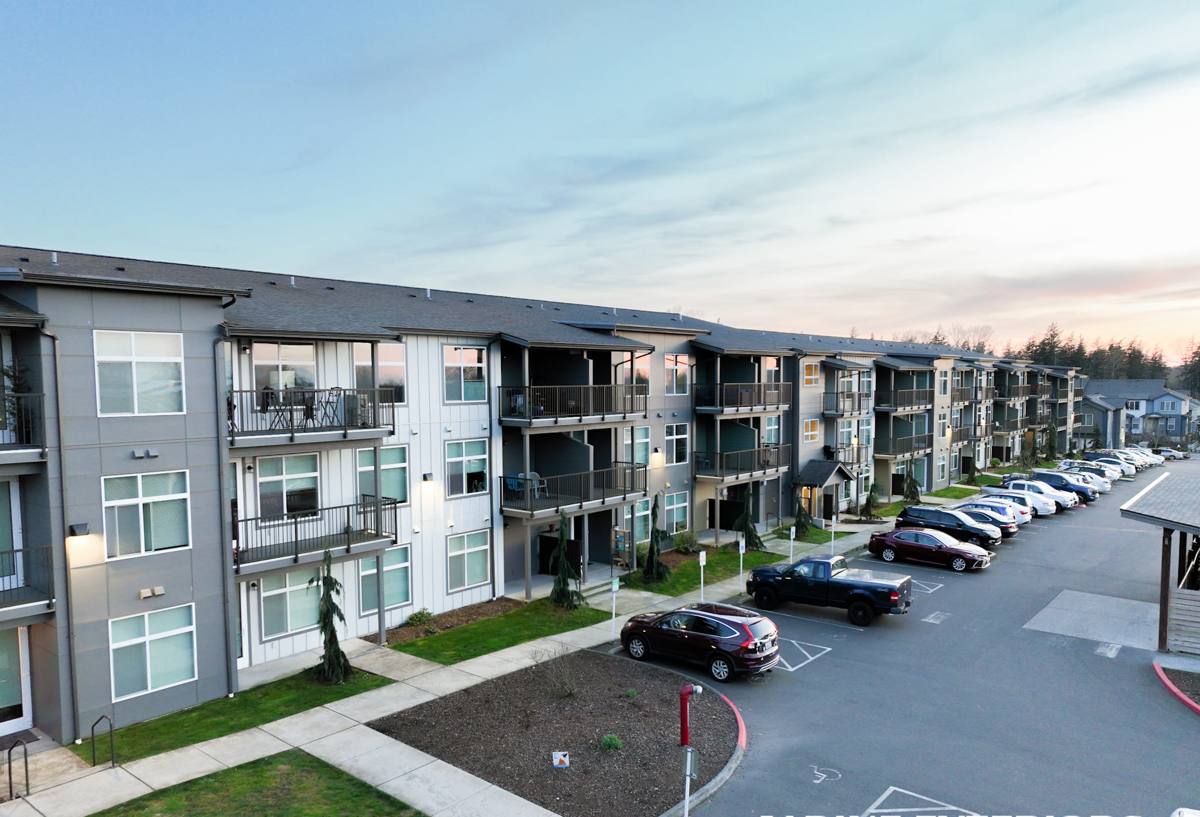
Why We Only Install This Pattern in James Hardie
We get asked to do board and batten in a lot of materials — primed wood, engineered wood panel products, even vinyl board-and-batten systems. We turn those jobs down, not because the pattern doesn't work in those materials, but because vertical siding is unusually unforgiving of moisture mistakes, and we've standardized on the one material system where we can control that risk to our own standard.
Vertical board and batten has more horizontal seams, more cut edges, and more places where water can find its way behind the cladding than a standard lap siding job does. Every batten edge, every panel-to-panel joint, every point where the siding meets a window or door trim is a spot where the material's actual water tolerance gets tested, not just its paint. Fiber cement doesn't swell, delaminate, or feed rot the way wood-based products can when moisture does get past a seam — which is the scenario that matters most on a coastal lot with wind-driven rain.
What James Hardie Gets Right for This Application
- Dimensionally stable: Hardie panels and battens don't expand and contract with humidity the way wood-based sheet products can, so seams stay tight and paint lines stay straight over time.
- Non-combustible core: fiber cement doesn't feed a fire the way wood-based siding can — a genuine factor for insurance conversations, not a marketing line.
- Factory finish option (ColorPlus): a baked-on finish applied under controlled conditions, which matters on vertical panels where every seam and batten face is visible and painted-on touch-up is harder to hide.
- Engineered for this climate: Hardie's HZ10 product line is formulated for regions like ours — heavier moisture exposure, freeze-thaw cycling, and extended damp seasons.
Where Board & Batten Jobs Actually Go Wrong
Almost none of the board and batten failures we get called to look at are material failures. They're installation failures — the same handful of mistakes, repeated by crews treating a vertical pattern like it's just lap siding turned sideways.
The Water Management Details That Matter
| Detail | Why it matters | What correct installation looks like |
|---|---|---|
| Weather-resistive barrier & rainscreen gap | Vertical panels need a drainage path behind them or trapped moisture has nowhere to go | Proper WRB plus a furring or rainscreen gap per Hardie's vertical siding instructions |
| Panel seams | Every horizontal joint is a potential water entry point | Seams flashed or backed per manufacturer detail, never just caulked and left |
| Fastener pattern | Wrong fastener spacing or type can void the warranty and loosen panels over time | Hardie-specified corrosion-resistant fasteners at the correct field and edge spacing |
| Bottom termination / kick-out flashing | Water running down a batten line needs somewhere to exit, away from the wall | Proper kick-out flashing at rooflines and a clearance gap at grade or hardscape |
| Caulking as a strategy | Caulk is a backup, not a water management plan | Flashing and drainage details do the real work; caulk fills gaps, it doesn't replace them |
None of this is exotic. It's written into James Hardie's own installation instructions for vertical siding applications. The problem is that following it takes more time and more planning than a standard lap job, and it's the first thing a rushed crew skips because the mistake doesn't show up on day one — it shows up in year three or four, after a few wet winters have had a chance to work on it.
Board & Batten Options Within the James Hardie Lineup
Homeowners are sometimes surprised there isn't just one "board and batten" Hardie product — there are a few ways to get the look, and the right one depends on the home.
Panel + Batten (True Two-Layer System)
A full fiber cement base panel with separate vertical battens installed over the seams. This is the closest to traditional board and batten and gives the deepest shadow lines, which reads especially well on farmhouse and modern-farmhouse elevations that are common in newer Blaine developments.
Single-Panel Vertical Siding
An engineered panel with the board lines scored into a single sheet. Faster to install and a bit more budget-friendly, with a flatter, more contemporary look — a good fit for clean modern facades or as an accent field rather than a whole-house application.
Mixed Elevations
A lot of the board and batten work we do isn't a whole house — it's a gable end, a porch surround, or a front elevation accent paired with horizontal lap siding elsewhere. This is where James Hardie's product range works in the company's favor: the ColorPlus finishes are formulated to match across panel, lap, and trim products, so an accent wall doesn't end up looking like an afterthought or a slightly-off patch job five years later when the field paint has weathered and the accent hasn't.
Color & Finish Considerations Specific to Vertical Applications
Vertical siding catches light differently than horizontal lap — shadow lines run up and down instead of stacking, and seams are more visible at eye level, especially on porches and lower elevations. A couple of practical notes worth factoring in before picking a color:
- Darker ColorPlus tones show batten shadow lines more dramatically, which is often the point on a board and batten accent, but it also makes any installation inconsistency more visible — another reason installation quality matters as much as the product.
- Factory-applied ColorPlus finish holds up better than field-applied paint on vertical panels specifically because there's no low-angle sun exposure hiding brush marks or roller texture the way there might be on a flat horizontal course.
- In a moss-prone climate like ours, lighter and mid-tone finishes tend to show early moss and mildew growth sooner (which is easy to wash off) versus darker tones where the same growth is less visible but still present — a maintenance consideration, not a defect.
Maintenance Realities for Vertical Fiber Cement
Board and batten in Hardie fiber cement is low-maintenance, not no-maintenance. In Whatcom County's climate, that means:
- An annual rinse to keep salt residue and moss spores from building up in batten shadow lines, especially on north-facing or shaded elevations.
- A periodic check of caulking at window and door returns — caulk is a wear item everywhere, on every siding product, and vertical applications have more linear feet of it per square foot of wall.
- Keeping gutters and downspouts functioning, since a failed gutter dumping water down a batten line concentrates moisture exactly where a vertical system is least tolerant of it.
What "Done Right" Costs, Roughly
Board and batten in James Hardie typically runs somewhat higher than standard lap siding in the same product line, mainly due to the added labor of the rainscreen detailing, seam flashing, and (on true panel-and-batten systems) the second layer of battens. It's not a small percentage difference, but it's also not the primary cost driver on most homes — the size and complexity of the elevations being sided matters more than the pattern choice itself. We'll walk through actual numbers for your home during an estimate rather than quote a number that doesn't reflect your specific elevations, trim detail, and existing wall condition.
Questions to Ask Before You Sign a Board & Batten Contract
- Will you install a rainscreen or drainage gap behind the panels, and can you point to where that's specified in the manufacturer's instructions?
- How will horizontal seams be treated — flashed, backed, or just caulked?
- What fastener type and spacing will you use, and is it what James Hardie specifies for vertical applications?
- Where does water exit at the bottom of the wall, and is there a clearance gap at grade or hardscape?
- Is the crew installing this job specifically trained on Hardie's vertical siding instructions, or just applying their standard lap siding process sideways?
If you're considering board and batten for a home in Blaine or anywhere in Whatcom County, we're happy to walk your elevations, talk through which Hardie system fits the look you're after, and put real numbers behind it. The estimate is free, there's no pressure, and you'll leave the conversation knowing exactly what correct installation looks like for your house.