 Blaine Siding
 Two Fiber Cement Products, One Real Difference
If you've gotten quotes from more than one siding contractor in Whatcom County, you may have heard two different fiber cement brand names: James Hardie and Allura. On paper, they look like similar products — both are cement-based board siding, both resist fire and rot better than wood, and both are sold as long-term siding solutions. That similarity is exactly why it's worth explaining, plainly, why we only install one of them.
This isn't a case of one product being "junk" and the other being flawless. Allura is a legitimate fiber cement manufacturer with a real factory presence in North America, and plenty of homes around the country wear it without incident. Our decision to standardize on James Hardie comes down to manufacturing scale, climate-specific engineering, factory finish warranty structure, and how those things play out over 20-30 years on a house that sits a few miles from saltwater. We'd rather tell you that directly than pretend the two products are interchangeable.
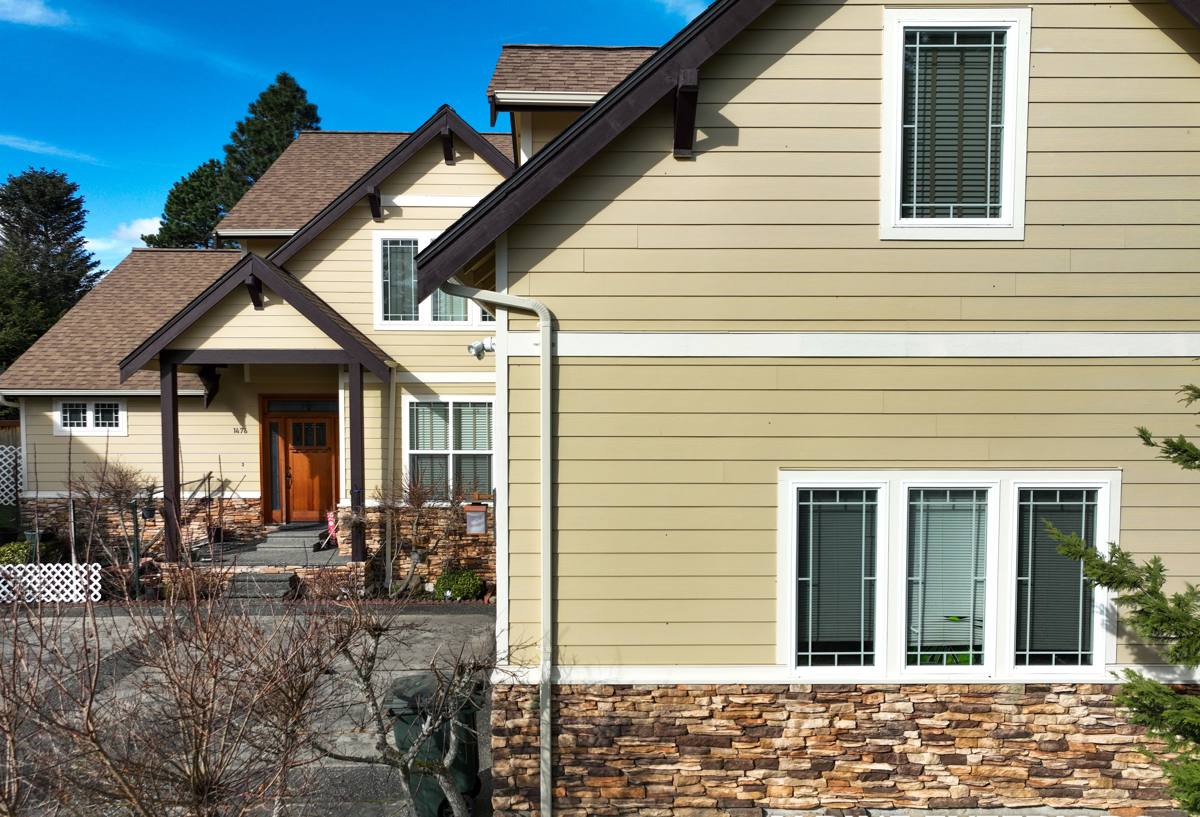
What Allura Gets Right
Credit where it's due. Allura fiber cement shares the core chemistry that makes fiber cement siding worth choosing over vinyl or untreated wood in the first place:
- It's non-combustible, which matters for insurance ratings and fire-prone conditions.
- It resists rot and insect damage far better than solid wood or engineered wood products.
- It holds paint and factory finishes better than vinyl, which softens and fades under UV exposure.
- It's manufactured to standard fiber cement board profiles, so it installs with familiar tools and techniques.
Any of that would make Allura a reasonable step up from vinyl siding for a homeowner comparing options. The issue isn't the base material — it's what happens after installation, over the specific stretch of years and weather that a Blaine home actually experiences.
Manufacturing Scale and Consistency
James Hardie is the dominant fiber cement manufacturer in North America by a wide margin, with dedicated plants, decades of formulation refinement, and a distribution and training network built specifically around getting installers certified on their system. That scale shows up in small but meaningful ways: batch-to-batch consistency in board thickness and density, tighter tolerances on factory-cut edges, and a much deeper bench of climate-specific product lines.
Allura operates at a smaller scale. That doesn't make individual boards defective, but it does mean less product-line depth and less region-specific engineering to pull from when a contractor is trying to match a product to a specific climate zone — which matters more here than in a lot of the country.
Why Whatcom County's Climate Raises the Stakes
Blaine sits on the water, and that's not a small detail when you're choosing exterior cladding. Salt air corrodes fasteners and trim faster than inland air. Driving rain off the Strait pushes moisture sideways into seams and butt joints that a drier climate would never test. And the long moss season here — wet, shaded, mild winters that never fully dry the north and west faces of a house — means anything with a weak factory finish or inconsistent water-shedding profile gets tested every single year, not just in a bad storm.
James Hardie builds specific product lines engineered around exactly this kind of exposure — HardiePlank HZ10 formulations designed for wetter, cooler climate zones, with moisture and impact performance tuned for the Pacific Northwest rather than a one-size-fits-all national spec. Allura doesn't offer the same depth of climate-zoned engineering. For a home in Blaine, that's not a paperwork distinction — it's the difference between siding that's been specifically formulated for this weather and siding that's engineered to a more general national standard.
Factory Finish: Where a Lot of Long-Term Problems Start
Almost every siding failure we get called out to inspect — on any brand — traces back to the finish, not the substrate. Paint failure lets moisture behind the board. Chalking and fading lead homeowners to repaint too early or too late. Caulk joints fail before the finish does, and water gets behind the plane of the wall.
James Hardie's ColorPlus finish is a factory-applied, baked-on finish system with its own dedicated warranty covering fading and peeling — separate from the substrate warranty. It's a two-step colorant and clear-coat process applied in a controlled plant environment, not a field-sprayed topcoat. Allura also offers factory finish options, but the finish warranty terms and the length of manufacturer track record behind them are shorter and thinner. In a climate with this much sustained moisture and UV cycling, factory finish durability isn't a cosmetic detail — it's the first line of defense for the board underneath it.
What a Weak Finish Actually Costs a Homeowner
When a factory finish underperforms, the homeowner doesn't just get a fading color. They get an earlier repaint cycle, more frequent caulk maintenance, and — if moisture gets behind the board at a failed seam — the risk of the substrate itself absorbing water it was never designed to hold long-term. That's the real cost of a weaker finish system, and it compounds every wet Blaine winter it goes unaddressed.
Warranty Structure: Read the Fine Print
Every fiber cement brand advertises a long warranty. The difference is what's actually covered, whether it's transferable, and how the manufacturer has historically handled claims at scale.
| Factor | James Hardie | Allura |
|---|---|---|
| Substrate warranty | Long-term, non-prorated in most cases | Long-term, terms vary by product line |
| Factory finish warranty | Separate ColorPlus finish warranty, decades of track record | Finish warranty offered, shorter manufacturer history behind it |
| Transferability to new owner | Transferable with documented terms | Transferability terms less established in the market |
| Manufacturer scale/claims history | Largest fiber cement claims history in North America | Smaller claims volume and shorter track record |
| Climate-zoned product lines | HZ10/HZ5 zone-engineered formulations | General national formulation |
A warranty is only as good as the manufacturer's ability to honor it at scale, years down the road, when your home has changed owners and the original paperwork is half-remembered. That's not a knock on Allura's intentions — it's a statement about which company has the longer, deeper track record of standing behind claims on homes exposed to weather like ours.
Installation Sensitivity Isn't the Deciding Factor — But It Matters
Both products are fiber cement, and both are sensitive to the same installation mistakes: wrong fastener spacing, missing rain screen gaps, caulked butt joints instead of properly flashed ones, or boards installed too close to grade. A well-trained crew can install either product correctly, and a careless crew can ruin either one. We don't want to overstate installation sensitivity as the reason we pass on Allura — it isn't. It's one more variable stacked on top of the finish, warranty, and climate-engineering gaps above, and we'd rather remove variables than manage them.
Why We Standardized on James Hardie
We install one fiber cement brand because it lets us do a few things well instead of a lot of things adequately. Our crews train specifically on Hardie's install specs, our detailing around windows, trim, and rain screens is built around Hardie's product dimensions, and when a homeowner calls us in year twelve with a question, we're not guessing which finish system or warranty terms apply to their specific board. For a coastal Whatcom County home dealing with salt air, driving rain, and a moss season that never really ends, we want the deepest climate-specific engineering and the longest finish and warranty track record available — and that's James Hardie's HZ10 product line with ColorPlus finish, not a general-purpose national fiber cement board.
Questions Worth Asking Any Siding Contractor
Whether you go with us or someone else, these are the questions that actually separate a good siding decision from a costly one:
- Is the factory finish warranty separate from the substrate warranty, and what does each actually cover?
- Is the product formulated for this specific climate zone, or is it a general national spec?
- What's the manufacturer's track record on honoring warranty claims after 10-15 years in service?
- Is the warranty transferable to a future buyer, and under what conditions?
- Does the installing crew carry manufacturer-specific training and certification on this exact product?
- What rain screen and flashing detailing does the installer use around a wet, coastal climate like Blaine's?
If a contractor can't answer those clearly, that's worth more than any brand name on the quote.
Get a Straight Answer for Your Home
Every home on a Blaine lot faces a slightly different mix of sun, shade, wind, and moss exposure, and the right siding answer depends on those specifics — not just a brand name. We're happy to walk your property, look at your current siding condition, and give you a straightforward, no-pressure estimate for James Hardie fiber cement siding built for this exact climate. Reach out using the form below to get started.