 Blaine Siding
 Dakota Creek Is a Different Kind of Exterior Environment
Dakota Creek sits in that stretch of northwest Whatcom County where Blaine's marine climate is at its most persistent — close enough to Semiahmoo Bay and Drayton Harbor that salt-laden air is a daily fact of life, not an occasional weather event. Homes here deal with a combination that's harder on exteriors than most inland Washington neighborhoods ever see: near-constant humidity, wind-driven rain off the water, and low winter sun angles that leave shaded siding damp for days at a time. None of that is dramatic on its own. It's the accumulation, year after year, that separates exteriors that hold up for decades from ones that start failing at year twelve.
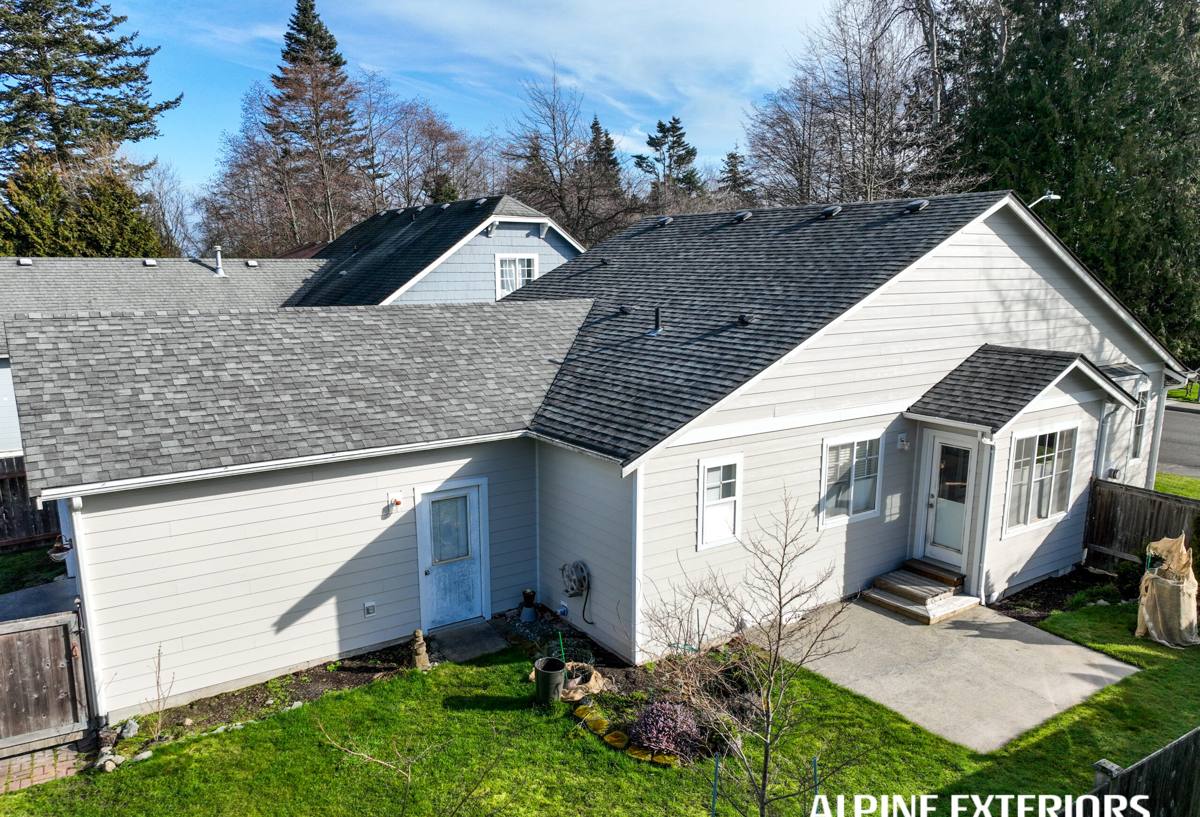
We're a local exterior crew that works this specific stretch of Whatcom County, and Dakota Creek's terrain and tree cover create their own predictable pattern of wear. Lower-lying lots near the creek corridor tend to hold moisture longer than homes up on drier ground. Mature conifer cover, which is common through this area, means more shade, more debris in gutters, and more organic growth on north- and west-facing walls. None of this is unusual for the area — it's just what building here requires you to plan for.
What Salt Air Actually Does to a House
Salt air doesn't just corrode metal — though it does that too, which is why fasteners, flashing, and hardware matter as much as the siding material itself. On painted and coated surfaces, airborne salt accelerates the breakdown of finishes, drawing moisture into seams, fastener heads, and butt joints faster than it would a few miles inland. Over time that shows up as chalking, color fade, and eventually cracking or delamination at the weakest points in a coating system.
The practical effect for a homeowner near Dakota Creek is that whatever goes on your walls needs a finish system engineered to resist that kind of exposure, and it needs to be installed with attention to every seam, corner, and penetration — because that's where salt-driven moisture finds its way in first.
Driving Rain and Wind-Driven Moisture
Blaine's weather doesn't just rain straight down. Storms coming off the Strait of Georgia push rain sideways against west- and south-facing walls, and Dakota Creek's exposure means those walls take a real beating during fall and winter storm cycles. Wind-driven rain finds gaps that vertical rain never would — behind poorly lapped siding, around under-flashed windows, at inside corners where two wall planes meet.
This is why installation detail matters as much as the product itself. A high-quality siding material installed with the wrong flashing sequence, insufficient laps, or gaps at trim will still let water in. We build in redundancy at every one of those failure points — proper weather-resistive barrier integration, correct flashing at every window and door, and lap and fastener spacing that follows manufacturer specification rather than shortcuts.
Where Water Damage Shows Up First
- Bottom edges of siding courses near grade, where splash-back and standing water are most persistent
- Around window and door trim, especially on walls facing prevailing weather
- Inside corners and butt joints where caulking has failed or was never sufficient on its own
- Under decks and around ledger board connections, where moisture gets trapped against structure
- Roof-to-wall transitions and chimney flashing, which affect siding even though they're technically roofing details
Moss Season: The Slow Damage People Underestimate
Whatcom County's moss season runs long — realistically from fall through spring, and on shaded, low-lying lots near creek corridors it can be close to year-round. Moss and algae growth on siding isn't just cosmetic. It holds moisture directly against the wall surface, keeps that surface from drying out between rain events, and on organic or fiber-based materials, that sustained dampness is exactly the condition that leads to swelling, softening, and eventual rot.
Homes with heavy tree cover, north-facing walls, or proximity to the creek's damper microclimate are the ones we see with the most aggressive moss and algae growth. It's a maintenance issue every Dakota Creek homeowner deals with to some degree, and it's a major reason material choice matters as much as it does out here — some siding materials tolerate sustained dampness far better than others.
Why We Install Only James Hardie Fiber Cement
We made a deliberate decision to install one siding system on every home we side: James Hardie fiber cement. That's not brand loyalty — it's a response to exactly the conditions described above. Fiber cement is a cement-based composite, not a wood or wood-fiber product, which means it doesn't swell, rot, or feed fungal growth the way organic materials can when they stay damp for extended periods. It's also non-combustible, which matters given Washington's increasing wildfire seasons even out here in the northwest corner of the state.
James Hardie's ColorPlus finish is baked on at the factory under controlled conditions, rather than field-applied, which gives it more consistent adhesion and UV resistance than a job-site paint job — a meaningful difference in an environment where coatings take a beating from salt air and sun exposure. Hardie also engineers regional product lines (their HZ5 line, for example) specifically for climates with the kind of moisture exposure Whatcom County sees. That's a level of climate-specific engineering you don't get from a generic siding product.
We'll say plainly: other materials have their advocates, and some are reasonable products in the right application. But we don't install vinyl, LP SmartSide, Cemplank, Allura, primed spruce, or cedar, because each comes with trade-offs — moisture sensitivity, installation tolerances, warranty structure, or long-term maintenance burden — that we don't think hold up as well against this specific climate over a 30- or 40-year ownership horizon. Standardizing on one product also means our crews install it constantly, which means fewer mistakes at the details that actually determine whether siding lasts.
Beyond Siding: Roofing, Windows, and Decks
Siding doesn't work in isolation. A roof that's shedding water improperly, windows that aren't flashed correctly, or a deck ledger that's trapping moisture against the wall will undermine even a well-installed siding job. We handle all four exterior systems — siding, roofing, windows, and decks — because on a lot near Dakota Creek, they're really one connected moisture-management system, not four separate products.
That matters most at transitions: where a roof meets a wall, where a deck ledger attaches to framing, where a window opening interrupts a wall plane. Those are the highest-risk spots on any home in this climate, and having one crew responsible for how they all tie together — rather than three or four separate contractors who never talk to each other — is one of the more overlooked ways to protect a house long-term.
Why a Local Crew Matters Here
Whatcom County's exterior conditions aren't generic Pacific Northwest weather — they're specific to being this close to the water and this close to the Canadian border, with a microclimate shaped by the Strait, Drayton Harbor, and Dakota Creek's own low-lying corridor. A crew that works other parts of Washington or comes up from out of the area doesn't necessarily know where moss builds fastest, which wall orientations take the worst of winter storms, or how a given lot's tree cover changes its drying pattern.
We work this area regularly, which means we're not guessing at flashing details or fastener spec for the conditions — we're applying what we've already seen hold up (and what hasn't) on homes with the same exposure yours has.
What Affects the Cost of a Siding Project
| Factor | Why It Matters |
|---|---|
| Removal of existing siding | Tear-off, disposal, and sheathing inspection add labor before new siding can go on |
| Underlying moisture damage | Rot or damaged sheathing found during removal must be repaired before installation continues |
| Home size and number of stories | More wall area and taller elevations increase material, labor, and staging/scaffolding needs |
| Trim complexity | Corners, window/door surrounds, and architectural detail all add labor time |
| Siding profile and color | Lap width, texture, and factory-finish color selection affect material cost |
| Site access | Tight lots, tree cover, or limited staging area near the creek can affect scheduling and labor |
A Homeowner's Exterior Checklist for This Climate
- Look at north- and west-facing walls each fall for early moss or algae growth
- Check caulking at trim, corners, and window surrounds annually — gaps let wind-driven rain in
- Keep gutters clear, especially under heavy tree cover, so overflow doesn't run down siding
- Watch the base of walls near grade for staining, softness, or paint failure
- Have roof-to-wall transitions and deck ledger connections checked periodically, not just siding itself
- Note any chalking, fading, or cracking in coatings — it usually shows up years before structural damage does
If you're seeing any of those signs on a Dakota Creek home, or you're planning ahead for a siding, roofing, window, or deck project, we're happy to take a look and walk you through what we'd recommend and why. There's no pressure and no cost to get an estimate — just a straight assessment from a crew that knows this area's climate firsthand.