 Blaine Siding
 Serving Birch Point
Birch Point sits along the water in Whatcom County, close enough to the Strait of Georgia and Semiahmoo Bay that the weather off the water shapes almost every exterior decision a homeowner makes here. We work throughout the Blaine area, and Birch Point comes with its own set of demands: salt-laden air, wind that drives rain sideways instead of straight down, and a wet season that stretches long enough to grow moss on anything that stays damp too long. Siding, trim, roofing, and windows here don't fail because they're old — they fail because they were never matched to this specific climate in the first place.
This page walks through what we see on Birch Point homes, how we approach siding and exterior work for waterfront and near-waterfront properties, and why we've standardized on one siding product instead of offering the usual menu of options.
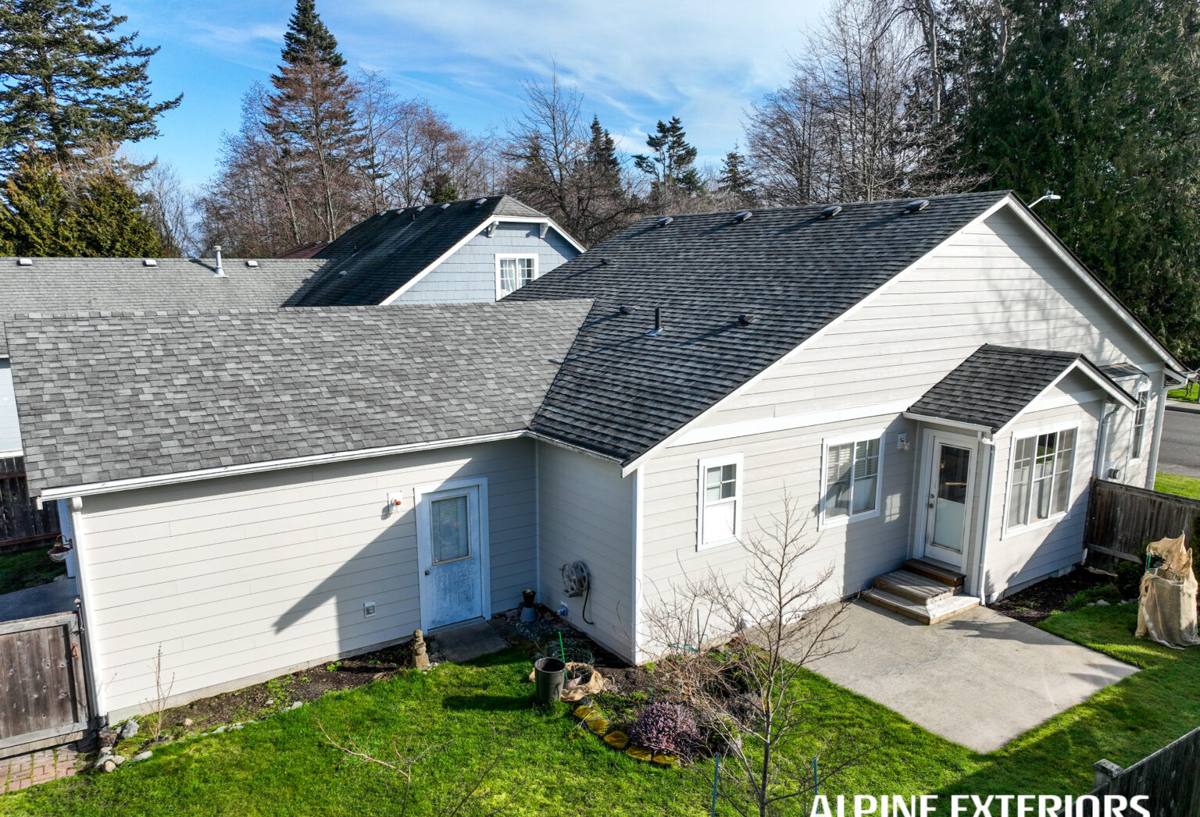
What Birch Point Homes Are Up Against
Salt Air and Corrosion
Proximity to salt water means airborne salt settles on siding, trim, fasteners, and metal flashing year-round, not just during storms. Salt is hygroscopic — it pulls moisture out of the air and holds it against whatever surface it's on. On untreated wood or on materials with exposed seams, that means a slow, steady cycle of dampness that never fully dries between rains. Over years, that cycle is what drives paint failure, fastener corrosion, and soft spots at butt joints and corners.
Wind-Driven Rain
Rain that comes in at an angle — pushed by wind off the water — behaves differently than a straight vertical downpour. It gets forced up under laps, into seams, and behind trim that would stay dry in a calmer inland location. Homes on Birch Point's more exposed sides take this directly, and it's usually the west- and northwest-facing walls that show wear first: cupped boards, lifted caulk lines, staining at seams.
A Long Moss Season
Whatcom County's wet months run long, and shaded or north-facing walls near trees or close neighboring structures can stay damp for weeks at a stretch. That's exactly the environment moss, algae, and mildew need. On porous or absorbent siding materials, that green-black staining isn't just cosmetic — it's a sign the surface is holding moisture longer than it should, which shortens the life of whatever's underneath the finish.
Why the Siding Material Choice Matters More Here Than Inland
Every siding material handles moisture differently, and in a marine environment those differences show up faster and more visibly than they would forty miles inland. Homeowners comparing options for a Birch Point property are usually weighing moisture tolerance, maintenance burden, and how a product ages under repeated wet-dry cycling — not just upfront cost.
| Material | Moisture Behavior | Salt Air Durability | Ongoing Maintenance |
|---|---|---|---|
| Vinyl | Doesn't absorb water, but seams and panel edges can flex, warp, or gap over time | Can become brittle and discolor faster under UV and salt exposure | Low, but limited repair options once warped or cracked |
| Untreated or primed wood | Absorbs moisture readily; prone to swelling, cupping, rot at seams | Vulnerable — salt accelerates paint and finish breakdown | High — regular repainting and caulk maintenance |
| Engineered wood (e.g. LP SmartSide) | Wood-based core; performs well when sealed and maintained but sensitive to cut-edge and joint exposure | Manageable with diligent upkeep, but coastal cycling adds risk at unsealed edges | Moderate to high — edge sealing and caulk inspection matter |
| James Hardie fiber cement | Non-combustible, dimensionally stable; engineered to resist moisture-driven swelling and cracking | Built for climate-specific exposure, including coastal conditions | Low — factory-cured ColorPlus finish resists fading and chipping |
Why We Install James Hardie Only
We install James Hardie fiber cement siding exclusively. We don't offer vinyl, LP SmartSide, Cemplank, Allura, primed spruce, or cedar as alternatives — not because those products have no merit anywhere, but because we've made a standard for what goes on homes in this climate, and Hardie is the one that holds up to the specific combination of salt air, driving rain, and prolonged dampness that Birch Point sees.
A few reasons this matters in a coastal setting specifically:
- Fiber cement is non-combustible, which matters given the dry-season wildfire risk that's become part of Pacific Northwest summers even in wetter coastal counties.
- Hardie's HZ5 product line is engineered for climates that see freeze-thaw cycling alongside sustained moisture — a closer match to marine Whatcom County conditions than a general-purpose product.
- The factory-applied ColorPlus finish is baked on under controlled conditions, which gives it better resistance to the fading and chipping that field-applied paint struggles with under salt exposure and UV.
- Fiber cement doesn't swell, cup, or absorb water the way wood-based products can, which directly addresses the moss and prolonged-dampness problem we see on shaded coastal walls.
- The manufacturer warranty is transferable, which matters to homeowners in a waterfront market where resale value depends partly on documented exterior condition.
We're not going to tell a homeowner that every other product is unusable — plenty of them perform fine in the right setting with the right upkeep. But we build our reputation on exteriors we install ourselves, and we'd rather stand behind one product we trust completely than offer five and hope the maintenance gets done.
How We Approach a Birch Point Siding Installation
Assessment First
Before we talk siding, we look at the whole wall assembly — house wrap or weather-resistant barrier condition, flashing at windows and doors, and any signs of trapped moisture behind the existing cladding. On a coastal property, what's happening behind the siding often matters more than what's visible on the surface.
Detailing for Wind-Driven Rain
Correct installation on an exposed site means proper flashing at every penetration, correct fastener placement and spacing per Hardie's published specifications, and careful attention to butt joints and corner details — the exact spots where wind-driven rain finds its way in if installation is rushed or generic. This is where a lot of siding problems on coastal homes actually originate: not the material, but shortcuts in how it went on.
Finish and Color Considerations
ColorPlus finishes are factory-matched and pre-caulked at the plant, which reduces the number of field-painted edges exposed to salt air and UV. For homeowners planning ahead, choosing a factory finish over a job-site painted finish is one of the simpler ways to cut future maintenance on a waterfront property.
Beyond Siding: The Whole Exterior
Siding doesn't work in isolation — it's one piece of an exterior envelope that also includes the roof, windows, and any attached decks, all of which face the same salt air and moisture exposure. We handle roofing, window replacement, and deck construction alongside siding work, which means we're looking at how flashing, trim, and water management tie together across the whole exterior rather than treating each component as a separate job. On a Birch Point property, a new roofline detail or a window replacement done without coordinating flashing to the siding plan can undo a lot of what good siding work is meant to prevent.
A Practical Maintenance Checklist for Coastal Whatcom County Homes
- Rinse salt residue off siding and trim a few times a year, especially after storms, using a garden hose — avoid high-pressure washing that can force water behind seams.
- Inspect caulk lines around windows, doors, and trim annually; recaulk before gaps let water in, not after.
- Check shaded and north-facing walls for early moss or algae growth and clean it before it spreads.
- Keep gutters clear so overflow doesn't run down siding faces and hold moisture at the base of walls.
- Trim back vegetation that keeps a wall section shaded and damp longer than the rest of the house.
- Walk the exterior after major windstorms to check for lifted flashing, loose trim, or displaced panels.
Why a Local Crew Matters
A crew that works Whatcom County's coastline regularly knows which walls on a given lot orientation take the worst of the wind-driven rain, how long moss season actually runs here, and what correct flashing detail looks like for homes this close to salt water. That's different knowledge than a general contractor working from a standard spec sheet without accounting for a marine environment. We're not guessing at how Birch Point weather behaves — we see it every season.
Get a No-Pressure Estimate
If you're weighing a siding replacement, planning a roof or window project, or thinking about a deck for a Birch Point property, we're happy to walk the exterior with you and talk through what your home actually needs. There's no pressure and no obligation — just a straight assessment from a crew that knows this stretch of coastline. Use the form below to request a free estimate.