 Blaine Siding
 Siding Built for Nooksack's Weather, Not Just Its Curb Appeal
Nooksack sits in the part of Whatcom County where the weather off the Salish Sea meets the wetter, greener conditions of the foothills. Homes here deal with a longer wet season than most of the country, periods of driving, wind-blown rain, and a near-constant low-grade humidity that keeps roofs, fences, and siding damp for days at a time. Add in salt-tinged marine air that drifts inland across this part of Whatcom County, and you have a climate that is genuinely tough on exterior building materials — not in a dramatic, storm-of-the-century way, but in a slow, grinding, year-after-year way.
That's the environment we design every siding job around. We're a local crew that works this area regularly, and we've standardized on one siding product — James Hardie fiber cement — because it's the material that holds up to this specific combination of moisture, moss, and marine air without the maintenance headaches that come with the alternatives.
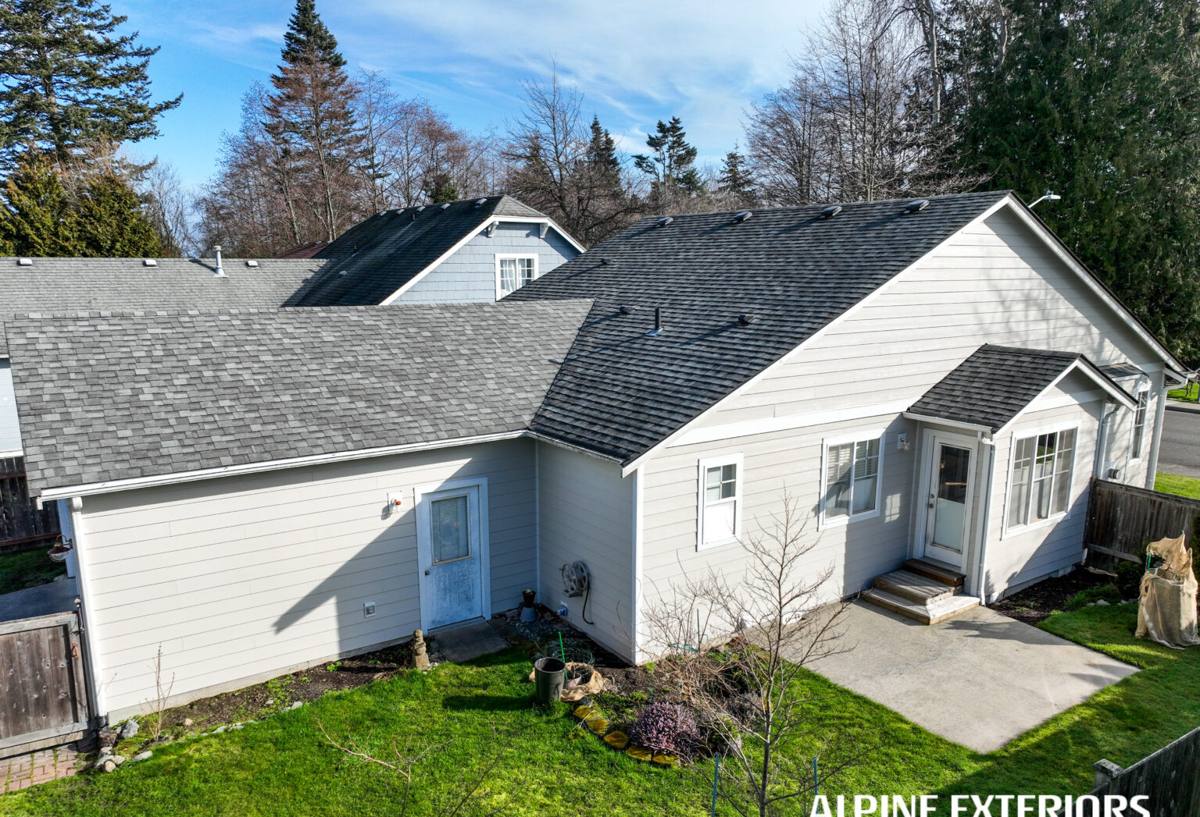
What Nooksack's Climate Actually Does to a House
Driving Rain and Wind-Driven Moisture
Whatcom County doesn't just get rain — it gets rain pushed sideways by wind off the water often enough that siding, trim, and window flashing take a direct hit. Materials that rely on paint film or a factory coating to keep water out are only as good as that coating's weakest point. Once water finds a seam, a nail hole, or a hairline crack, it doesn't evaporate quickly in this climate. It sits.
The Long Moss and Mildew Season
Shaded north walls, tree-lined lots, and the sheer number of overcast, damp days each year make Nooksack prime territory for moss, algae, and mildew growth on exterior surfaces. Wood-based sidings are especially vulnerable because moss and mildew feed on organic material — the same wood fiber that gives products like LP SmartSide or primed spruce their structure is also what moss and rot organisms are drawn to.
Salt-Influenced Marine Air
This part of Whatcom County isn't as heavily salt-exposed as an oceanfront property, but marine air off the Salish Sea reaches inland regularly, and it accelerates corrosion on fasteners, staining on painted surfaces, and general weathering on anything not built to shrug it off. Over a couple of decades, that steady low-level exposure adds up.
Why We Install Only James Hardie Fiber Cement
We get asked fairly often why we don't offer vinyl, LP SmartSide, cedar, or other lower-cost siding options. The honest answer is that we've seen how each of those materials performs in exactly this kind of climate, and we'd rather turn down a job than install something we don't think will hold up here.
- Vinyl is affordable and low-maintenance in dry climates, but it can warp or buckle with temperature swings, and it doesn't hold up structurally to wind-driven rain the way a rigid, engineered material does. It's also a petroleum-based product with a look that reads as "vinyl" up close, which matters to homeowners investing in resale value.
- LP SmartSide and other engineered wood products perform reasonably well when installation is flawless and maintenance is kept up religiously, but they're wood-based at the core. In a climate with this much sustained moisture and moss pressure, any breach in the coating or caulking creates an entry point for the exact kind of organic decay wood products are most vulnerable to.
- Cedar and primed spruce look beautiful when new, but real wood siding demands an ongoing maintenance schedule — restaining, recaulking, repainting — that most homeowners underestimate, especially in a climate that barely gives paint time to fully cure between rain events.
James Hardie fiber cement is cement, sand, and cellulose fiber. It doesn't rot, it isn't a food source for moss or mildew, and it's non-combustible. Hardie's ColorPlus factory finish is baked on under controlled conditions rather than applied on-site in variable weather, which matters a great deal in a place where you rarely get a long stretch of dry, mild days to paint in. It's not the cheapest siding on the market, but it's the one we're willing to put our name behind in this climate.
James Hardie Product Lines We Work With
Hardie makes several product lines, and part of doing this job right is matching the right line and profile to the house — not just defaulting to whatever's cheapest or fastest to install.
| Product | Common Use | Notes for Nooksack Homes |
|---|---|---|
| HardiePlank Lap Siding | Primary wall covering | Most common choice; wide range of textures and exposures |
| HardiePanel Vertical Siding | Accent walls, gables, modern facades | Popular for board-and-batten style accents |
| HardieShingle | Accent siding, gable ends | Staggered or straight-edge shingle look without cedar's maintenance |
| HardieTrim | Corners, fascia, window/door trim | Keeps trim details consistent with the siding's durability |
| HardieSoffit | Eaves and overhangs | Vented options help manage moisture in the attic space |
Hardie also engineers its lap and panel products in different climate-specific "HZ" formulations. For the Pacific Northwest, that means a formulation designed around freeze-thaw cycling and sustained moisture exposure rather than the extreme heat variants used in other parts of the country. We spec the products and fastening schedule appropriate to Whatcom County, not a generic national default.
How a Siding Project Runs in Nooksack
Assessment First
Before we talk products or pricing, we look at what's actually happening on the house — moisture readings on the sheathing where accessible, condition of the existing weather barrier, trim and flashing details around windows and doors, and any areas already showing rot, moss buildup, or paint failure. On older homes in this area, we often find that the original house wrap or building paper has degraded well past its intended lifespan, which changes the scope of the job.
Weather Barrier and Flashing
Siding is only as good as what's behind it. We install a proper weather-resistant barrier and correctly integrated flashing at every window, door, and roof-to-wall transition before a single piece of Hardie goes up. This is the step that gets shortcut most often in lower-bid jobs, and it's the step that determines whether the wall assembly actually manages Nooksack's rain load or just looks good until the next wet winter finds a gap.
Installation to Manufacturer Spec
James Hardie's warranty depends on installation following their published specifications — fastener type and spacing, minimum clearances from grade and roofing, proper caulking at butt joints, and correct field-cutting practices. We install to that spec as a baseline, not an upsell.
We Handle the Whole Exterior, Not Just Siding
Siding doesn't work in isolation. A roof that's shedding water onto a wall, gutters that overflow onto trim, or a window that's not properly flashed will undermine even a perfect siding installation. Because we also do roofing, windows, and decks, we look at a Nooksack home's exterior as one connected system rather than a series of unrelated projects. That matters most at the transitions — roof-to-wall, window-to-siding, deck ledger-to-house — where most real-world water intrusion problems actually start.
Signs a Nooksack Home Needs Siding Attention
- Persistent moss or dark streaking that returns within weeks of cleaning
- Paint that's peeling, bubbling, or chalking, especially on north- and west-facing walls
- Soft or spongy spots when you press on wood-based siding
- Visible warping, buckling, or gaps at seams and corners
- Rising energy bills that suggest the wall assembly isn't insulating or sealing as it should
- Cracked or missing caulking around windows, doors, and trim
- Siding that's original to a home built more than 20-25 years ago in wood or older vinyl
What Drives the Cost of a Siding Project
| Factor | Why It Matters |
|---|---|
| Home size and wall complexity | More corners, gables, and dormers mean more cutting, trim work, and labor |
| Extent of existing damage | Rotted sheathing or framing found during tear-off adds repair scope |
| Product line and profile | Lap width, texture, and accent details (shingle, vertical panel) vary in material cost |
| Trim and detail work | Custom trim around windows, doors, and rooflines adds labor time |
| Access and site conditions | Steep lots, mature landscaping, or limited staging area affect efficiency |
We don't quote a job over the phone with a national average — every estimate is based on an actual look at the house, because the condition behind the old siding usually matters more to the final number than the siding itself.
Why a Local Crew Matters in Whatcom County
A crew that works this specific area regularly understands things a national franchise or a contractor passing through won't: which wall orientations take the worst of the weather, how long moss really takes to come back after a wash, and what a proper flashing detail needs to look like to survive a Whatcom County winter. We're not guessing at how James Hardie performs here — we're watching it perform on homes we've already installed it on, in the same weather Nooksack gets every year.
If your home in Nooksack is due for new siding, or you're not sure whether what you're seeing is cosmetic or structural, we're happy to take a look. Reach out for a free, no-pressure estimate using the form below.