 Blaine Siding
 Board & Batten Siding, Built for Sumas Weather
Sumas sits right up against the Canadian border in the Nooksack River valley, close enough to the Salish Sea that homes here deal with a mix of coastal moisture and valley fog that most siding products were never designed for. Board and batten is one of the most popular looks we install in this corner of Whatcom County — the vertical lines read as classic Pacific Northwest farmhouse, and it works on everything from a rebuilt older home to new construction going up on the outskirts of town. But the look is only half the story. Done wrong, board and batten traps moisture behind the battens and fails early. Done right, in the correct material, it's one of the most durable siding profiles you can put on a home in this climate.
This page is specifically about board and batten siding for homes in and around Sumas — what the local weather demands from the material and the installation, and how we approach the job so it holds up for decades instead of years.
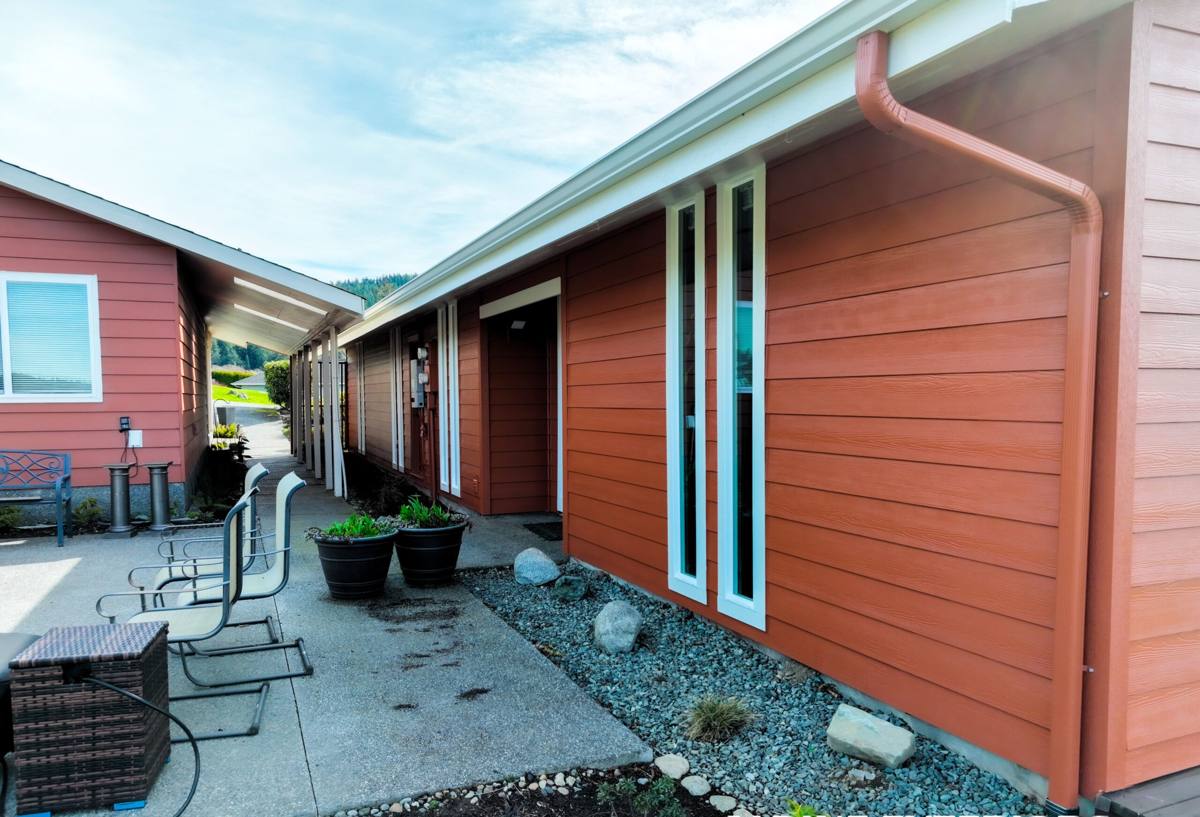
Why Sumas Homes Are Hard on Vertical Siding
Board and batten's vertical seams and exposed batten strips create more edges and joints than a standard lap profile, and every one of those seams is a place water can find its way in if the material or the install is wrong. In Sumas, three things work against that:
- Salt-influenced air. Even inland from the immediate coast, Whatcom County's marine air carries moisture and mild salinity that accelerates corrosion on fasteners and finish breakdown on lower-grade siding materials.
- Driving rain. Storms coming off the Strait push rain sideways, not straight down. That matters enormously for board and batten, because wind-driven rain gets forced into vertical seams that a purely gravity-fed water plan won't shed.
- A long moss season. Damp, shaded exterior walls in this region can stay wet for weeks at a stretch through fall and winter, which is exactly the environment moss, algae, and mildew need to establish themselves on a painted or unfinished wood surface.
None of that makes board and batten a bad choice for Sumas — it makes material selection and installation detail the whole ballgame.
Where Wood and Engineered-Wood Board and Batten Struggle
Traditional board and batten was built out of solid or primed wood, and a lot of it still is. Wood battens and boards look great going up, but they're organic material sitting in a climate that stays wet more months than it's dry. Paint film breaks down at the seams first, moisture gets behind the batten, and the board underneath starts to swell, cup, or rot from the back — often before there's any visible sign from the outside. Engineered wood siding closes some of that gap with better resin treatment, but it's still a wood-fiber core, and once the factory coating is compromised at a cut edge or a fastener hole, the core is exposed to the same moisture cycle. We don't install primed wood, cedar, or engineered wood siding for exactly this reason — in a climate like Sumas', the maintenance burden and failure risk outweigh the upfront savings.
What a Correct Board and Batten Job Actually Involves
The board and batten look is simple. Getting the water management right underneath it is not. A correctly built system has several layers working together, and skipping any one of them is where problems start:
- Weather-resistive barrier installed and lapped correctly behind the whole wall, with all penetrations (outlets, hose bibs, vents) properly flashed before the first board goes up.
- Rainscreen gap or furring strips in most applications, so any water that does get past the surface has a path to drain and the wall can dry instead of staying saturated.
- Correct board spacing and fastening that accounts for material expansion and contraction — board and batten fastened too tight, or with the wrong nailing pattern, telegraphs cracks and gaps within a few seasons.
- Batten placement and caulking at every vertical joint, done with a sealant rated for exterior movement, not a bargain caulk that shrinks and cracks in year two.
- Factory-finished material wherever possible, so the color and protective coating aren't dependent on a field-applied paint job holding up in Whatcom County's wet months.
Every one of those steps takes longer than a quick nail-and-caulk approach. That's the point — it's the difference between board and batten that looks good for two years and board and batten that looks good for twenty.
Why We Install Board and Batten Only in James Hardie Fiber Cement
We install James Hardie exclusively, and board and batten is one of the profiles where that decision matters most. Hardie's fiber cement board and batten panels and boards are non-combustible, dimensionally stable, and factory-finished with ColorPlus Technology — a baked-on finish that's far more resistant to the fading, chipping, and peeling that field-applied paint suffers through a Sumas winter. Because the color is baked into the product at the factory, seams and cut edges hold their finish far longer than site-painted wood or engineered wood siding.
Hardie also builds specific product lines engineered for different exposure conditions, including their HZ5 formulation suited to colder, wetter climates like ours. That's not marketing — it's a real difference in how the board is formulated to resist moisture-related expansion and freeze-thaw stress over the life of the siding.
Fiber cement also doesn't feed moss and mildew the way wood or wood-fiber products can. It won't stop growth from forming on the surface in a shaded, damp spot near the Nooksack, but it won't feed decay into the board itself the way organic material can once moss holds moisture against a wall for a season.
Board and Batten Material Comparison
| Material | Behavior in Sumas' Wet/Moss Climate | Finish Durability | Our Position |
|---|---|---|---|
| Primed wood | Absorbs moisture, prone to rot behind battens | Field paint, breaks down at seams first | Not installed |
| Cedar | Natural rot resistance but still organic, needs ongoing sealing | Requires refinishing on a cycle | Not installed |
| Engineered wood (LP-type) | Better than raw wood but core exposed at cuts/damage is vulnerable | Factory finish, moderate lifespan | Not installed |
| Vinyl board and batten | Won't rot, but flexes/warps and doesn't seal seams the same way | Color molded in but fades, can't repaint easily | Not installed |
| James Hardie fiber cement | Non-combustible, dimensionally stable, resists moisture-driven failure | ColorPlus factory finish, long-lasting | What we install |
How Local Moss and Rain Patterns Should Shape the Job
Two things we pay close attention to on every Sumas board and batten job, beyond just the siding material itself:
North- and west-facing walls tend to stay shaded and damp longer through the fall and winter, which is where moss and mildew take hold first. We factor that into gutter and downspout placement, roofline flashing, and how tight we run vegetation clearance recommendations near the wall — siding performs a lot better when it isn't sitting in constant shade and runoff.
Wind-driven rain exposure varies house to house depending on how open the lot is and which direction it faces relative to prevailing storms. On more exposed walls, we're more conservative with flashing details and batten sealant, because that's where a marginal install shows problems first.
Our Process for a Sumas Board and Batten Project
- On-site assessment of your current siding, wall condition, and any moisture or moss issues already present.
- Product and color selection from James Hardie's board and batten offerings, matched to your home's style and the finish performance this climate calls for.
- Written scope covering weather barrier, rainscreen approach, flashing details, and fastening — no vague "and siding installation" line items.
- Proper tear-off and wall prep including repair of any rot or damage found underneath the old siding before anything new goes up.
- Installation to manufacturer spec, which is what keeps your Hardie warranty valid and the wall performing as designed.
- Final walkthrough so you know what maintenance (if any) is actually needed going forward.
What Homeowners Should Check Before Hiring Anyone for This Job
- Do they install James Hardie specifically, and are they factory trained/certified on it?
- Will they put the rainscreen gap and weather barrier detail in writing, not just verbally?
- Do they have experience with board and batten specifically, not just lap siding — the fastening and sealant details are different?
- Can they explain how they'll handle flashing around windows, doors, and any existing moisture damage before covering it up?
- Are they familiar with Whatcom County's permitting and inspection requirements for a full siding replacement?
Why a Crew That Already Works Sumas Matters
Board and batten failures in this climate are rarely dramatic — they're slow. A batten seam that wasn't sealed right, a rainscreen gap that got skipped to save time, a weather barrier lap that ran the wrong direction. None of it shows up on day one. It shows up in year three or four as a soft spot, a stain, or a section of moss that won't go away no matter how many times it's cleaned off. A crew that's already installed siding on other homes in Sumas and the surrounding Whatcom County towns has seen which walls fight back the hardest and adjusts the install accordingly, instead of treating every house the same regardless of exposure, shade, and rain direction.
If you're weighing a board and batten replacement for a home in Sumas, we're happy to take a look, walk you through what your specific wall exposure calls for, and give you a straightforward, no-pressure estimate. There's no obligation — just a clear picture of what the job involves and what it costs.