 Blaine Siding
 Why Blaine Harbor Is a Tougher Climate for Siding Than Most of Whatcom County
Homes near Blaine Harbor sit closer to open water than almost anywhere else in Whatcom County, and that changes what siding has to survive. The same features that make the harbor a great place to live — the marine air, the water views, the exposure to wind off Semiahmoo Bay and Drayton Harbor — also mean the exterior of a house takes a steadier beating than a home ten miles inland. Salt-laden air, wind-driven rain, and a moss season that runs longer here than almost anywhere in Western Washington all work against siding that wasn't built or installed to handle them.
Salt Air and Slow Corrosion
Air moving off the harbor carries fine salt particles that settle on exterior surfaces. Over years, that accelerates corrosion in exposed fasteners, staples, and lower-grade trim, and it breaks down paint adhesion faster than it would a few miles inland. It's rarely dramatic — nobody notices salt air damage in the first year — but it shows up as chalking paint, rust bleed at nail heads, and premature failure at the most exposed elevations of a house, usually the sides facing the water and prevailing wind.
Wind-Driven Rain
Storms rolling in off the Strait of Georgia don't just drop rain straight down — they push it sideways into walls, especially on west- and south-facing exposures with a clear line to the water. Siding that isn't installed with the right water-resistive barrier, flashing, and lap spacing underneath it can let wind-driven rain track behind the cladding even when the surface looks fine. That's a slower, quieter kind of damage: rot in sheathing and framing that isn't visible until a wall is opened up.
A Long Moss and Algae Season
Whatcom County's wet season stretches from roughly October through May, and shaded, north-facing walls near mature trees can stay damp for days at a stretch. That constant moisture is exactly what moss and algae need to take hold, and once they're established on siding they hold even more water against the surface, which speeds up whatever decay process is already underway. Homes near the harbor with tree cover or limited afternoon sun tend to fight this more than homes on open, sunnier lots.
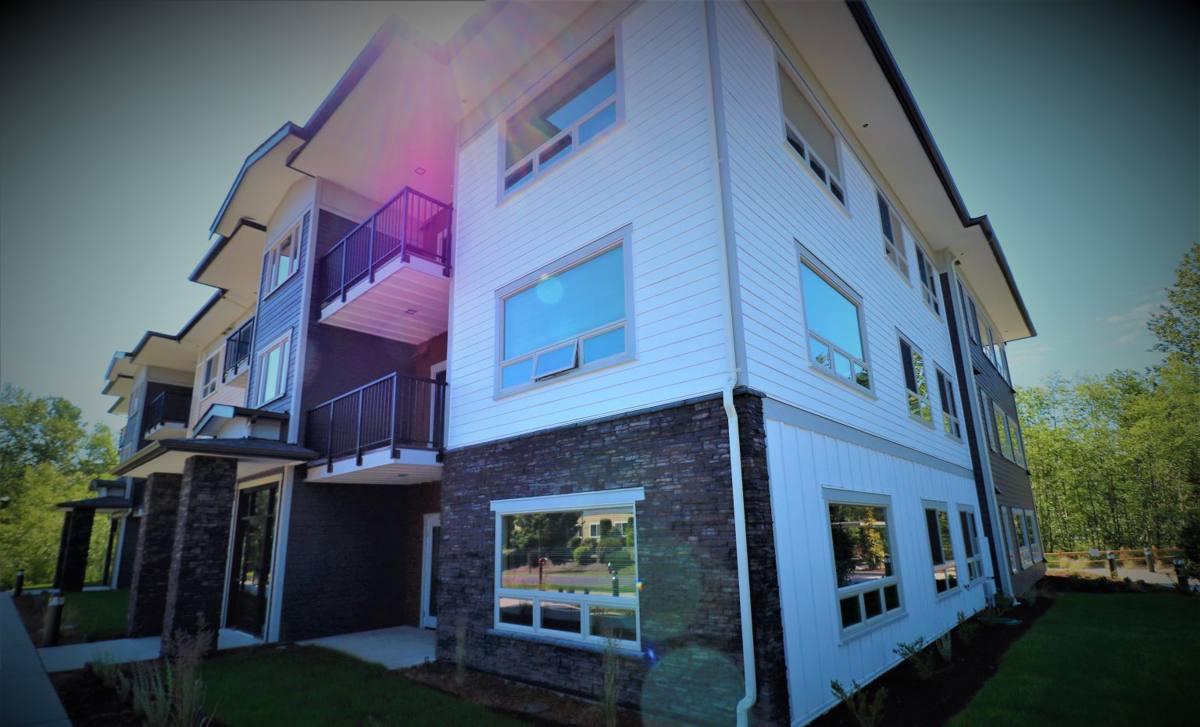
Signs Your Blaine Harbor Home Needs Replacement, Not Just a Repair
Not every issue means a full re-side. But there's a point where patching individual boards costs more in labor than it's worth, and where the underlying moisture problem has already spread past what a repair can fix. Here's what tends to signal it's time for full replacement rather than spot repair:
- Paint that's bubbling, peeling, or chalking across multiple elevations, not just one board
- Siding that feels soft or spongy when pressed, especially near the bottom courses or around windows
- Persistent staining or discoloration at seams and butt joints that returns after cleaning
- Boards that have visibly warped, cupped, or separated from the wall
- Caulk joints that keep failing no matter how often they're redone
- Moss or algae that comes back within a season or two of cleaning
- A noticeable jump in heating costs, which can point to moisture-compromised insulation behind the siding
- Visible rot at corner boards, trim, or anywhere siding meets a window or door
Why We Install Only James Hardie Fiber Cement
We don't install vinyl, LP SmartSide, Cemplank, Allura, primed spruce, or cedar. That's a deliberate standard, not a lack of options. In a climate like Blaine Harbor's, the material has to hold up to sustained moisture exposure and salt air for decades, not just look good on installation day, and fiber cement is the product we're willing to stand behind for that job. James Hardie's siding is non-combustible, doesn't swell or rot the way wood-based products can when moisture gets past the surface, and holds a factory-applied ColorPlus finish that's engineered to resist fading and cracking far longer than field-applied paint typically does.
Hardie also builds region-specific product lines rather than a single one-size-fits-all board, and for coastal Pacific Northwest climates like Blaine's, that means specifying HZ5-engineered siding designed for high-moisture, freeze-thaw conditions. That distinction matters more here than it would in a dry inland climate — it's part of why product selection and installation detailing carry real weight on a harbor-facing home.
What Correct Installation Requires in a Marine Environment
Weather-Resistive Barrier and Flashing
Everything starts underneath the siding, not at the surface. A continuous weather-resistive barrier, properly lapped and taped, along with correctly installed window and door flashing, is what actually keeps wind-driven rain out of the wall assembly. Siding is the second line of defense, not the only one — skipping or rushing this step is one of the most common reasons a siding job fails early in a wet, windy location like Blaine Harbor.
Fastener Spacing and Expansion Gaps
Fiber cement needs to be fastened and gapped according to manufacturer specification — proper nail spacing, corrosion-resistant fasteners appropriate for a marine environment, and expansion gaps at butt joints and trim so the material can move with temperature and moisture changes without cracking or buckling. In salt air especially, using the right fastener material isn't optional; the wrong fasteners corrode faster and can stain or fail well before the siding itself would.
Factory Finish Over Field Paint
ColorPlus finish is baked on in a controlled factory environment and backed by its own finish warranty, which gives it far better adhesion and UV resistance than a field-applied coat over primed board. In a location that already stresses paint through salt exposure and long wet stretches, starting with a factory finish is one less variable working against the siding's lifespan.
Choosing the Right Hardie Product Line and Profile
Not every Hardie product or profile is the right fit for every wall. Exposure, sun, and moisture load on a given elevation should inform the choice of siding line and style, not just aesthetic preference. The table below covers the main factors we walk through with Blaine Harbor homeowners during an estimate.
| Factor | Why It Matters Near Blaine Harbor |
|---|---|
| Product line (standard vs. HZ5) | HZ5 is engineered for high-moisture, freeze-thaw coastal climates and is generally the right call for exposed or water-facing elevations |
| Profile (lap, shingle, panel) | Lap siding sheds wind-driven rain differently than shingle profiles; the right choice depends on wall orientation and architectural style |
| Color | Darker ColorPlus colors absorb more heat and can show salt film differently than lighter tones; worth discussing for water-facing walls |
| Trim and fascia material | Trim should match the siding's moisture performance — mismatched trim is a common source of early failure at corners and edges |
| Existing wall condition | Hidden moisture damage found during tear-off can add scope, which is why a proper inspection happens before a final price is set |
What Drives the Cost of a Siding Replacement
Every home is different, but the same handful of variables drive most of the price difference between jobs. Square footage is the obvious one, but it's rarely the deciding factor on its own — the condition of what's underneath usually matters more.
| Cost Factor | Impact |
|---|---|
| Tear-off and disposal of existing siding | More labor-intensive on multi-layer or heavily damaged walls |
| Sheathing or framing repair | Adds cost when moisture damage is found once old siding comes off |
| Trim complexity | Homes with more corners, windows, and architectural detail take longer to trim out correctly |
| Profile and product line selection | HZ5 and specialty profiles typically cost more than standard lap siding |
| Access and site conditions | Tight lots, slopes, or limited staging area near the water can affect labor time |
Our Process, Start to Finish
- On-site assessment — we walk the exterior, check for soft spots and moisture behind existing siding, and note exposure by elevation
- Written estimate and product plan — we recommend the specific Hardie line, profile, and color based on what each wall actually faces
- Material order — siding, trim, fasteners, and weather barrier are ordered to the correct spec, not substituted for whatever's on hand
- Tear-off and inspection — old siding comes off, sheathing is checked, and any hidden damage is addressed before anything new goes up
- Weather barrier, flashing, and installation — installed in sequence and, where possible, scheduled around Blaine's wetter stretches to keep the wall assembly protected during the build
- Final walkthrough — we go over the finished job with the homeowner before calling it done
Why a Crew That Already Works Blaine Harbor Matters
A contractor who works this area regularly already understands how wind and rain behave differently on a water-facing wall than on a sheltered one, which elevations tend to hold moss longer, and how to sequence a tear-off around the area's weather rather than getting caught mid-job by a storm off the water. That local familiarity also extends to working within Whatcom County and City of Blaine permitting requirements, so the paperwork side of the job doesn't slow down the physical one. It's a smaller thing than the siding itself, but it's part of why the finished job goes smoothly instead of running into avoidable delays.
Living With Your New Siding
Fiber cement siding installed correctly is genuinely low-maintenance, but "low" isn't "none," especially this close to the water. A gentle rinse once a year keeps salt film and early algae growth from building up, and it's worth glancing at caulking around windows and trim every year or two to catch any separation early. Keeping gutters and downspouts clear matters more here than in drier parts of the state simply because of how much water this area sees over a wet season — overflowing gutters dumping water down a wall undoes a lot of what correct installation is meant to prevent.
If your siding is showing any of the wear signs above, or you'd just like an honest look at what shape your exterior is in, we're happy to come out and take a look. The estimate is free, there's no pressure to move forward, and you'll walk away knowing exactly what your home actually needs.