 Blaine Siding
 Siding Repair in Peace Arch: A Different Climate Problem Than Most of Blaine
Peace Arch sits about as close to open water and the international border as a Blaine neighborhood gets, and that location shapes what goes wrong with siding here. Homes in this part of Whatcom County take on salt-laden air off the bay and the Strait, driving rain that comes in sideways during winter storms, and a moss season that can run most of the year on shaded, north-facing walls. None of that is unique to Peace Arch on its own — but the combination, at this proximity to the water, wears siding faster than it wears in more inland parts of the county.
That's the lens we use on a repair call here: not just "what's damaged," but "what caused it, and will it happen again in the same spot." A patch that ignores the cause is a patch you'll be paying for again in two or three years.
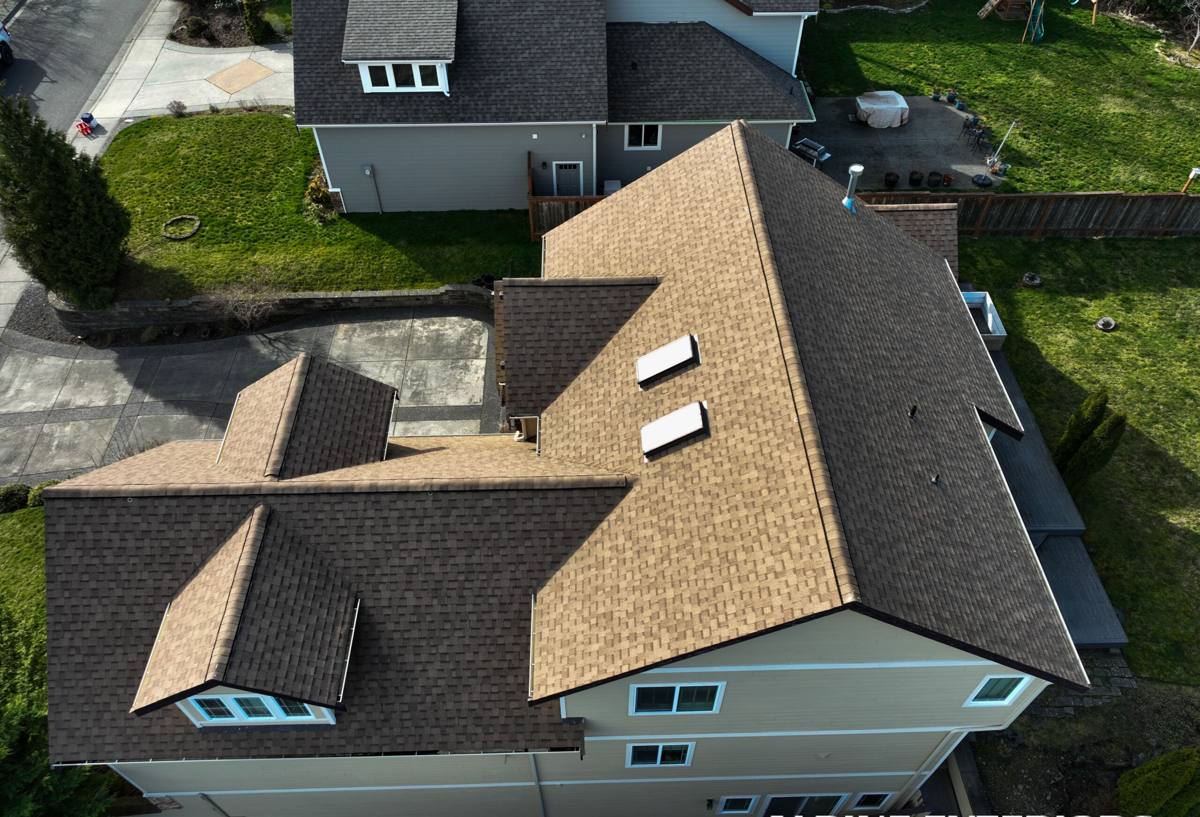
What Salt Air, Rain, and Moss Actually Do to Siding
Understanding the mechanism behind the damage is what separates a repair that lasts from one that doesn't.
Salt Air and Fastener Corrosion
Airborne salt settles on exterior surfaces and accelerates corrosion in anything metal — nail heads, trim flashing, penetrations around fixtures and hose bibs. On older installations with standard fasteners, this shows up as rust streaking, popped nail heads, and eventually boards that come loose where a corroded fastener has lost its grip. It's a slow process, which is why a board that "looked fine" can come away from the wall with light pressure.
Driving Rain and Water Intrusion
Storms moving in off the water don't fall straight down — they drive rain sideways into wall assemblies, which puts far more stress on laps, seams, and butt joints than vertical rain does. Any gap in caulking, any undersized overlap, any missing or damaged flashing becomes an entry point. Once water gets behind the siding, it doesn't dry out quickly in this climate, and that's when you start losing sheathing and framing, not just siding.
Moss and Trapped Moisture
Shaded, north- and west-facing walls hold moisture long enough for moss and algae to take hold, especially where trees or fences block sun and airflow. Moss itself doesn't eat through siding, but it holds water against the surface far longer than bare siding would dry on its own — and it's often a sign that a section isn't shedding water the way it should, sometimes because of a grading, gutter, or clearance issue that needs fixing alongside the repair itself.
Signs a Peace Arch Home Needs Siding Repair
Most repair calls we get start with one of the following. If you're seeing more than one of these at once, it's worth having someone look at the whole wall section, not just the spot that's visibly bad.
- Soft or spongy spots when you press on the siding, especially near the bottom courses
- Boards that have visibly cupped, bowed, or pulled away from the wall
- Rust streaking below nail heads or trim fasteners
- Paint that's peeling, bubbling, or failing in one concentrated area rather than uniformly
- Persistent moss or dark staining that comes back within a season of cleaning
- Gaps opening up at butt joints, corners, or around window and door trim
- Interior signs — a musty smell, discoloration on drywall, or a soft spot on trim along an exterior wall
What a Correct Repair Actually Involves
A siding repair that holds up in this climate is more than swapping a bad board for a new one. The steps that matter most:
- Find the actual water source. Damaged siding is often a symptom. We check flashing, caulking, grading, gutters, and nearby penetrations before we touch the siding itself.
- Open it up far enough to see the sheathing. If water has been getting behind the siding, the board may be the smallest part of the problem. We check for soft sheathing and, where it's compromised, that gets addressed — not covered over.
- Match or upgrade the material correctly. Patched-in siding that doesn't match the existing profile, reveal, or finish stands out and can create a new water path at the seam. Where the existing material can't be matched cleanly, we talk through the honest options rather than forcing a mismatch.
- Rebuild the water management, not just the surface. Correct flashing, proper overlap, and sealed penetrations at the repair site, done to the same standard as new construction.
- Finish it so it holds paint or factory finish. A repair that isn't properly primed or finished shows a color mismatch and starts failing again faster than the surrounding wall.
Repair or Replace? How We Decide
Not every damaged section needs a full re-side, and we don't push a full replacement when a targeted repair will genuinely hold. But there's a point where patching a wall becomes more expensive and less reliable than replacing it. Here's roughly how that decision breaks down:
| Factor | Favors Repair | Favors Replacement |
|---|---|---|
| Extent of damage | Isolated to one or two boards or a single wall section | Spread across multiple elevations or recurring in several spots |
| Sheathing condition | Dry, solid sheathing under the damaged siding | Soft or rotted sheathing found during inspection |
| Material age and match | Newer siding, matching material available | Discontinued profile, old caulked-and-painted siding, or a material we won't stand behind |
| Underlying cause | A fixable, localized water source | A systemic issue — poor original installation, missing house wrap, undersized flashing |
| Cost over time | Repair cost is a fraction of a re-side and buys real years | Repeated repairs are approaching the cost of doing it right once |
When we're on the fence, we say so. Our job on a repair call is to give you an honest read on which side of that table you're actually on, not to talk you into more work than the house needs.
Timing a Repair Around Our Weather
Whatcom County's wet season typically runs from fall through spring, with the heaviest driving rain arriving alongside winter storms. That's the worst time to have an open wall — and unfortunately, it's also when a lot of damage first becomes visible, since that's when water intrusion shows up as staining or soft spots inside. We can do emergency, weather-tight repairs any time of year, but when a repair isn't urgent, scheduling it for the drier stretch from late spring through early fall gives the work the best conditions to cure and seal properly, and gives it the most time to prove itself before the next round of storms tests it.
If you notice a problem in the middle of winter, don't wait for dry weather to call. A temporary, weather-tight fix now is far cheaper than months of hidden water intrusion while you wait for summer.
Our Process for a Peace Arch Repair Call
We already work this neighborhood regularly, so a repair visit here isn't a cold start. Our process:
- Inspection first. We look at the full elevation the damage is on, not just the spot you called about, and check the usual failure points for this area — flashing, low clearance, shaded north walls.
- A plain-English diagnosis. You get told what's actually wrong, what caused it, and what your real options are — repair, partial replacement, or a conversation about full re-siding if the wall is beyond patching.
- A written scope before we start. No surprise add-ons once the wall is open, barring something we genuinely couldn't see from the outside.
- Repair to the same water-management standard as new work. Flashing, laps, and sealing done right, not shortcut because it's "just a repair."
Why the Crew Matters as Much as the Material
Siding repair is unforgiving of shortcuts in exactly the ways that don't show up until months later — a lap installed backward, a flashing detail skipped, a fastener that's the wrong length for the substrate. A crew that already works Peace Arch and the rest of Blaine has usually already seen how the local exposure plays out on real walls: which elevations take the worst of the wind-driven rain, which yards hold moss no matter how often they're cleaned, where salt air does the most damage to fasteners and trim. That's not something you can fully substitute with general siding experience from a drier, less coastal area — it's specific to working this stretch of Whatcom County wall by wall.
When a Repair Turns Into a Material Conversation
Sometimes a repair call on an older home turns up more than one bad section, or siding that's been through enough repaint-and-recaulk cycles that patching it again isn't a good use of your money. When that happens, we'll tell you honestly, and we'll tell you what we'd put on the wall instead. We install James Hardie fiber cement exclusively — we don't carry vinyl, LP SmartSide, or primed wood siding — because in this climate, non-combustible fiber cement with a factory-applied ColorPlus finish holds up to salt air and driving rain with less maintenance and less repeat-callback risk than the alternatives. Hardie also builds specific product lines engineered for wetter, colder climates like ours, which matters more here than it would somewhere drier. If a repair does turn into a replacement conversation, that's the standard we'll walk you through — with no pressure to go further than a straight repair if that's genuinely the right call for your wall.
If you're dealing with damaged, soft, or failing siding on a Peace Arch home, we're glad to take a look and give you a straight answer on repair versus replacement — no pressure, no inflated scope. Request a free estimate below and we'll get a local crew out to walk the wall with you.