 Blaine Siding
 Roof Replacement for a Birch Point Home That Faces Open Water on More Than One Side
Birch Point sits on a piece of land that reaches out into open water just outside Blaine, and that position changes the calculus on a roof replacement in ways a typical inland Whatcom County home never has to deal with. A house set back from the shoreline usually takes weather from one general direction most of the year. A house on a point takes wind, salt spray, and driving rain from whichever direction a given storm happens to be moving, and that can shift from one side of the roof to the other within the same season. That's the starting point for how we approach a roof replacement here — not as a generic re-roof, but as a project built around how this specific stretch of coastline actually behaves.
This page covers what a correct roof replacement looks like for a Birch Point property specifically: what the local exposure demands from materials and installation detail, how our process runs from first inspection to final walkthrough, and why it matters to hire a crew that already has real, ongoing experience working this shoreline rather than one treating it as just another stop on a Blaine-area route.
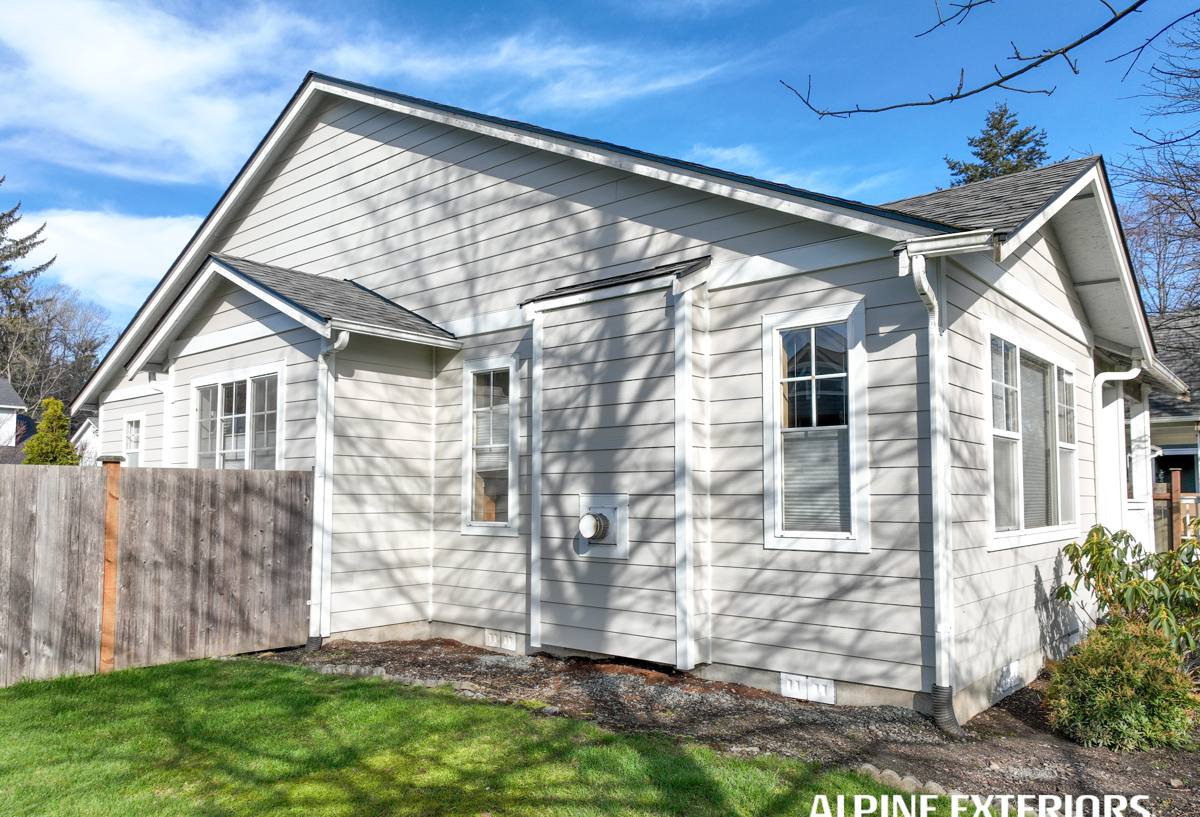
What Birch Point's Waterfront Exposure Puts a Roof Through
Salt Air With Nowhere to Hide
Homes set back from the water get some natural buffering from trees, terrain, and distance. A property on Birch Point doesn't get that buffer in the same way — salt-laden air moves across the roof more directly and more consistently than it does a few miles inland. Over years, that accelerates corrosion on exposed fasteners, flashing, and any lower-grade metal components, and it does so faster here than on a comparable roof set back from open water.
Driving Rain From More Than One Direction
Because a point of land is exposed on more than one side rather than shielded by a single ridge or tree line, wind-driven rain here doesn't reliably arrive from the same direction storm after storm. That matters most at roof edges, valleys, and every place where two roof planes meet or a roof meets a wall — details that only need to shed rain from one predictable direction on a sheltered inland lot have to handle it from several directions on a property like this.
A Long, Persistent Moss Season
Mild, damp coastal weather keeps shaded or north-facing roof slopes wet for long stretches of the year, and the marine humidity around Birch Point adds to that. Moss and algae growth on an untreated roof isn't just a cosmetic issue — trapped moisture under a moss mat works into shingle granules and roof decking over time, and a roof that still looks acceptable from the ground can be quietly losing years of service life underneath the growth.
What a Correct Roof Replacement Involves on a Property Like This
A roof replacement isn't just stripping off old material and laying down new. Done right, it's a full system rebuild from the decking up, and on a Birch Point home a few of these steps carry more weight than they would on a sheltered inland roof.
Full Tear-Off and Deck Inspection
We remove the existing roofing down to the decking rather than layering new material over old. That's the only way to find soft spots, hidden rot, or moisture damage that's been developing out of sight, which is more likely on a roof that's spent years absorbing direct salt air and wind-driven rain. Covering that kind of damage with a new roof surface doesn't fix it — it just hides it until it's worse.
Underlayment Built for Wind-Driven Rain
Standard felt underlayment is a weak match for a roof that takes rain from multiple directions. We use synthetic or self-adhered underlayment as the water barrier under the roofing material, with ice-and-water shield at eaves, valleys, and other vulnerable transitions where water is most likely to find a way in on a wind-exposed property.
Flashing at Every Transition
Most roof leaks trace back to flashing, not the open field of the roof. On a Birch Point home, valleys, chimney and vent penetrations, and every roof-to-wall transition get extra attention, since a flashing detail that only accounts for rain coming from one side won't hold up when the next storm pushes water from a different angle.
Fastening and Wind Rating
Correct nailing pattern and count, following manufacturer specification, is what keeps a roof surface from lifting under sustained wind load. That matters more here than on a sheltered lot, since a point of land generally sees higher average wind exposure than a comparable property set back from open water.
Ventilation
Balanced intake and exhaust ventilation keeps the underside of the roof deck dry, which slows moss growth from beneath the roofing material and extends its service life. A roof can look sound from the street and still be shortening its own lifespan from poor attic airflow trapping moisture underneath.
Comparing Roofing Materials for a Birch Point Property
| Roofing Material | Typical Lifespan | Fit for Point-of-Land Exposure |
|---|---|---|
| Architectural (laminated) asphalt shingles | 25-30 years | Heavier profile and better wind rating than 3-tab; the practical choice for most Birch Point homes when paired with proper underlayment and flashing |
| Premium/algae-resistant shingles | 30+ years | Worth considering on shaded or north-facing slopes given how long moss pressure lasts this close to the water |
| Standing seam metal roofing | 40-50+ years | Strong option for exposed, wind-heavy sites and sheds moss and standing moisture well, at a higher upfront cost |
| 3-tab asphalt shingles | 15-20 years | Lower cost but thinner profile and lower wind rating make it a tougher match for a fully exposed shoreline lot |
There's no single right answer for every Birch Point home — orientation, tree cover, roof pitch, and how long you plan to stay in the house all factor into which material makes sense. We walk through those trade-offs specifically during the estimate rather than defaulting to one product for every job.
What Affects the Cost of a Birch Point Roof Replacement
Bids for what looks like the same job on paper can vary by thousands of dollars, and the difference almost always comes down to real scope rather than one contractor simply charging more for identical work.
| Factor | Why It Matters Here |
|---|---|
| Tear-off vs. roof-over | Whether hidden deck damage from years of salt exposure gets found and repaired before new roofing goes on |
| Underlayment grade | How well the roof resists wind-driven rain reaching the deck from multiple directions |
| Material and wind rating | Expected lifespan and resistance to lifting in sustained coastal wind |
| Flashing scope | How completely valleys, penetrations, and wall transitions are addressed |
| Ventilation upgrades | Long-term moisture control and moss resistance from underneath the roofing |
| Roof pitch, size, and access | Labor time, staging, and safety requirements on the specific property |
A detailed, itemized estimate tells you far more about what you're actually paying for than a single lump-sum number, and it's worth asking any contractor bidding a Birch Point roof to walk through each line before you compare prices.
How Our Process Works
- In-person inspection: We walk the roof and attic in person and document current condition, exposure, and any early signs of moisture or wind damage.
- Written, itemized estimate: You get a clear bid covering tear-off, underlayment, flashing, ventilation, material selection, and cleanup — not a vague single-line number.
- Scheduling around coastal weather: We build reasonable flexibility into the timeline, since wind and rain delays are a normal part of working this shoreline rather than an excuse after the fact.
- Tear-off and deck repair: Old roofing comes off completely, and any decking damage found gets repaired before new material goes down.
- Underlayment, flashing, and roofing installation: Each layer goes on to manufacturer specification, with extra attention at valleys, penetrations, and every wall transition.
- Final walkthrough and cleanup: We review the finished roof with you and do a full site and magnetic nail sweep before calling the job complete.
Why Hiring a Crew That Already Works Birch Point Matters
A crew that regularly works roofs on Birch Point and the surrounding Blaine shoreline has already seen how salt air corrodes underspecified fasteners, how wind-driven rain finds its way through underlayment that wasn't built to handle more than one direction, and which roof slopes hold moss longest through the wet season. That's practical knowledge that shows up in the small decisions made throughout a job — decisions a crew unfamiliar with this specific stretch of water might not think to make at all.
It also matters after the job is finished. A workmanship warranty is only as good as the company standing behind it, and a contractor with an established, ongoing presence in this part of Whatcom County is the one you can actually reach a few years later if a question comes up.
A Practical Checklist Before You Choose a Roofer for a Birch Point Job
- Do they perform a full tear-off with deck inspection, not just a roof-over?
- Does the estimate specify underlayment type and roofing material, not just "new roof"?
- Is flashing work at valleys, penetrations, and wall transitions explicitly included in the bid?
- Do they carry current WA contractor licensing, liability insurance, and workers' compensation?
- Can they point to recent, real work on Birch Point or the immediate Blaine shoreline?
- Does the bid clearly separate material warranty coverage from their own workmanship warranty?
Signs a Birch Point Roof Needs Replacement Rather Than Repair
Roofs on this stretch of coastline rarely fail all at once. They give warning signs first, and catching them early is often the difference between a targeted repair and a full replacement.
- Granules collecting in gutters, signaling shingles that have worn thinner than they should have by this age
- Curling, cracking, or lifted edges, especially on the sides of the roof that take the most direct wind
- Dark streaking or moss buildup that returns quickly after cleaning, particularly on shaded or north-facing slopes
- Water staining on interior ceilings or in the attic near valleys, chimneys, or vent penetrations
- Rust staining running down from flashing or fasteners
- Visible sagging along the roofline, which can point to deck-level moisture damage underneath
- A roof approaching or past 20-25 years old with no documented replacement history
None of these automatically means a full tear-off is the only option, but each is worth a professional look before the next stretch of wet, windy weather adds to whatever damage has already started.
If your Birch Point home needs a new roof, or you're not sure yet whether repair or full replacement makes more sense, we're glad to come take a look and put together a straightforward, no-pressure estimate. Reach out using the form below to get started.