 Blaine Siding
 Board & Batten Siding Built for the Peace Arch Area
The Peace Arch area sits right up against the water at the northern edge of Whatcom County, close to the international border crossing that gives the neighborhood its name. Homes here get the same coastal exposure that defines the rest of Blaine — salt-laden air off the bay, wind-driven rain that comes in sideways during winter storms, and a moss season that can run most of the year on shaded walls. Board and batten is one of the more popular exterior looks we get asked about in this part of town, and for good reason: the vertical lines and strong shadow pattern suit the mix of craftsman, farmhouse, and modern homes that make up the neighborhood. But board and batten is also a style that punishes a careless installation faster than lap siding does, and that matters more here than almost anywhere else in the county.
This page is specifically about board and batten siding for Peace Arch homes — what the local climate demands from it, what a correct installation actually involves, and why we install it in exactly one material system: James Hardie fiber cement.
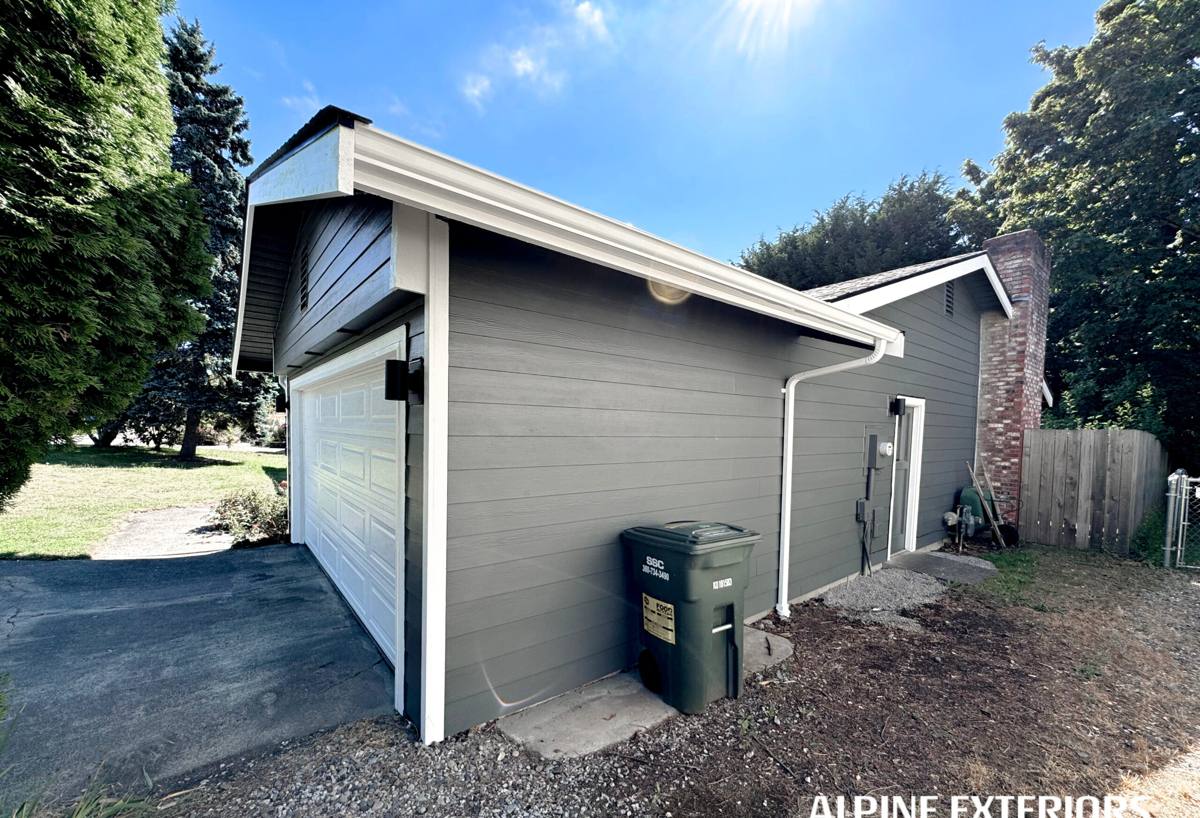
Why Board & Batten Needs Extra Attention in This Climate
Every vertical siding profile relies on the seams between boards and battens to shed water instead of trap it. That's true anywhere, but it's a bigger deal in Peace Arch because of three conditions that show up together and don't let up for long stretches of the year.
Salt Air Off the Water
Homes near the border crossing and the water are exposed to a steady dose of salt-carrying air, more than towns set further inland in Whatcom County. Salt accelerates corrosion on exposed fasteners and metal trim, and it breaks down lower-quality paint and coatings faster than a dry climate would. On a board and batten wall, where there are more vertical seams and more fastener penetrations per square foot than a standard lap job, that corrosion risk adds up.
Driving Rain
Storms coming off the water push rain sideways into wall assemblies rather than letting it fall straight down. Vertical board and batten channels water differently than horizontal lap siding does — it can actually perform very well in driving rain when it's built with a real drainage plane behind it, or it can trap water behind the battens and rot the substrate if it isn't. There's not much middle ground with this profile; the installation quality decides which outcome you get.
A Long Moss Season
Mild temperatures and near-constant moisture give moss and mildew a growing season that stretches through most of the year on shaded, north-facing walls. Vertical board and batten has more edges, more shadow lines, and more places for moisture to sit than a flat lap profile, which means those surfaces need siding and paint that resist growth rather than feed it.
What a Correctly Installed Board & Batten System Includes
Board and batten looks simple from the street — vertical panels or boards with a batten strip covering each seam — but the assembly behind that look is what determines whether it lasts twenty years or needs rework in five. A few of the details we don't skip on a Peace Arch job:
A Real Drainage Plane
Behind the siding, we build in a rainscreen gap so any moisture that does get past the battens has somewhere to go and can dry out instead of sitting against the sheathing. This is the single biggest factor in whether a board and batten wall survives driving rain long-term, and it's also the detail that's easiest for a rushed installer to shortcut.
Fastening and Batten Spacing
Battens need to land on studs or blocking with consistent spacing, using corrosion-resistant fasteners driven to the manufacturer's specified depth — not overdriven, which crushes the material and opens a path for water, and not underdriven, which leaves fasteners loose and prone to backing out over time. This is exactly the kind of fastener detail that matters more in a salt air environment than it would inland.
Flashing at Every Transition
Window and door heads, roof-to-wall intersections, and the base of the wall all need proper flashing integrated with the water-resistive barrier before the first board goes up. Board and batten's vertical lines make these transitions more visually prominent than they are on lap siding, so sloppy flashing work shows up both as a leak risk and as a visible flaw in the finished wall.
Joint and Seam Treatment
Every seam gets sealed and finished according to the manufacturer's spec, not just caulked and hoped for. On a factory-finished product this also means keeping cut edges primed and sealed so bare fiber cement isn't left exposed to Blaine's moisture.
Board & Batten Material Options — and Why We Only Install James Hardie
Board and batten shows up in several materials on the market. We get asked often enough why we only offer it in one that it's worth laying out plainly, using the same standard we hold across all our siding work.
| Factor | James Hardie Fiber Cement | Vinyl Board & Batten | Engineered Wood / Cedar |
|---|---|---|---|
| Salt air durability | Strong — non-combustible core, factory ColorPlus finish resists fading and chalking | Can become brittle and discolor faster under sustained salt and UV exposure | Vulnerable to accelerated weathering; finish needs more frequent upkeep near water |
| Driving rain / moisture behavior | Dimensionally stable; engineered HZ formulation for wet, coastal climates | Sheds bulk water but seams can allow wind-driven rain intrusion | Can swell, cup, or rot if moisture gets behind the panels or into end grain |
| Moss and mildew resistance | Factory finish and cement composition resist surface growth better than porous materials | Resists rot but can trap moisture and grow mildew film in shaded areas | More porous surface; higher susceptibility to moss and fungal growth |
| Maintenance burden | Periodic washing and caulk checks; factory finish reduces repainting needs | Low rot risk but can crack or fade and isn't repairable in sections easily | Regular repainting or resealing needed to keep moisture out |
| Fire performance | Non-combustible core | Combustible | Combustible |
| Warranty structure | Strong transferable manufacturer warranty when installed to spec | Varies widely by manufacturer and grade | Varies; often shorter on finish than on the substrate |
We won't install vinyl board and batten, LP SmartSide, Cemplank, Allura, primed spruce, or cedar. Each of those has a place in the market, and plenty of homeowners are satisfied with them in less demanding climates. But Peace Arch's combination of salt air, driving rain, and a long moss season is exactly the kind of environment where the gaps between those products and fiber cement show up soonest — usually on service calls, not on a spec sheet. We'd rather build every board and batten job on the one system we've seen hold up here than offer something cheaper that quietly shifts maintenance risk onto the homeowner a few years down the road.
Our Process for a Peace Arch Board & Batten Project
- On-site assessment. We walk the exterior, check the current siding and substrate condition, and note how sun, shade, and prevailing wind hit each wall — that matters more for board and batten than for lap siding because it affects where moss and moisture problems are most likely to develop.
- Substrate check and prep. Before anything new goes up, we confirm the sheathing underneath is sound. Any soft or water-damaged substrate found during tear-off gets addressed before new siding covers it up.
- Drainage plane and weather barrier installation. This is the layer that does the real work in driving rain, and it goes in correctly before the first batten is measured.
- Panel and batten installation. Hardie panels and battens go up to manufacturer spec — correct fastener type, spacing, and penetration depth, with flashing integrated at every window, door, and roofline transition.
- Joint sealing and finish check. Seams are sealed, cut edges are primed and sealed, and the finished wall is inspected for consistent reveal lines and clean transitions before we call the job done.
- Walkthrough. We go over the finished work with the homeowner and cover basic care so the siding performs the way it's supposed to for the long haul.
What Board & Batten Siding Costs to Install Correctly
We don't quote pricing without seeing the house, but the factors that move the number are consistent from job to job. A written estimate should walk through each of these rather than land on a single flat figure.
| Cost Factor | Why It Matters |
|---|---|
| Tear-off vs. new construction | Removing old siding and dealing with substrate repair adds labor that a bare-wall install doesn't require |
| Wall height and access | Multi-story walls, steep grades, and tight side yards near the border area increase staging and labor time |
| Substrate condition | Water-damaged sheathing found during removal needs repair before new siding goes on, which isn't always visible until tear-off starts |
| Trim and transition complexity | Homes with more windows, dormers, and roofline intersections require more flashing and cutting work |
| Batten spacing and reveal choice | Narrower batten spacing uses more material and labor than a wider reveal pattern |
| Color and finish | Factory ColorPlus finishes carry a different cost than field-primed panels finished on site |
Maintaining Board & Batten Siding in a Marine Climate
Even the right material and a correct installation still benefit from a bit of regular attention in a climate like this. A simple annual checklist covers most of what a Peace Arch homeowner needs to watch for:
- Rinse the exterior yearly to clear salt residue and organic buildup before it takes hold, especially on shaded or north-facing walls
- Check caulked seams and joints for cracking or gaps, particularly around window and door trim
- Look for early moss or mildew film on battens and reveal lines and clean it before it spreads
- Inspect fasteners and metal trim near ground level and around downspouts for early rust staining
- Keep gutters and downspouts clear so roof runoff isn't dumping extra water onto siding below
- Trim back vegetation that keeps a wall shaded and damp longer than the rest of the house
Why a Crew That Already Works Peace Arch Matters
Board and batten's performance in a coastal climate comes down to installation details that don't show up until a storm season or two has tested them — how the drainage plane was built, how the flashing was integrated, how the fasteners were driven. A crew that already works this stretch of Blaine, along the border and along the water, has seen how those details play out on real houses here, not just on a manufacturer's install guide. That experience shapes practical judgment calls on install day: which walls need extra flashing attention, which fastener spacing holds up best against the salt exposure, and where a shortcut that might pass in a drier, more sheltered town would cause a callback here. It's the difference between a board and batten installation that's technically to code and one that's actually built for where it's going.
Get a Free, No-Pressure Estimate
If you're considering board and batten siding for a home in the Peace Arch area, we're glad to take a look and walk you through what a correct installation involves for your specific house. Reach out using the form below to schedule a free, no-pressure estimate.