 Blaine Siding
 Building a Deck for the Nooksack Area's Real Conditions
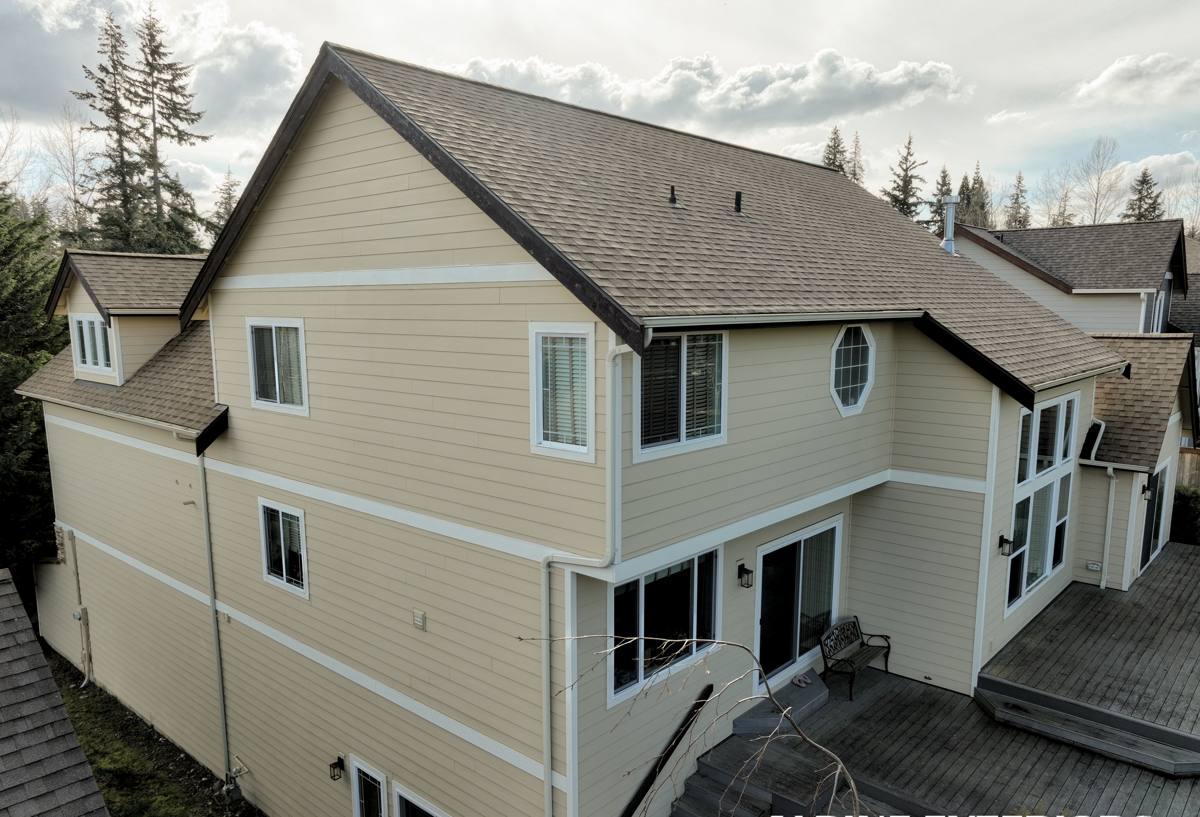
A deck in the Nooksack area near Blaine sits under a different set of pressures than a deck built forty miles inland. You're close enough to the water that salt-laden air reaches wood, metal, and finishes year-round, and you're in a part of Whatcom County that sees long stretches of driving rain followed by a moss season that can run from fall through spring. A deck built to a generic spec sheet will often look fine for the first year or two. The problems show up later — in fasteners that bleed rust through the decking, in framing that stays damp longer than it should, and in surfaces that turn green and slick before summer even arrives. Building it right the first time, with materials and details matched to this climate, is what keeps a deck safe and low-maintenance for decades instead of years.
What Salt Air and Moss Season Actually Do to a Deck
It helps to understand the specific failure points before talking about how to avoid them. These aren't abstract climate concerns — they're the actual reasons decks in this area fail early.
Salt Air and Corrosion
Airborne salt accelerates corrosion on any exposed metal — nail heads, screw shanks, joist hangers, and structural connectors. Standard electro-galvanized fasteners can start showing surface rust within a couple of seasons this close to the water. Once a fastener starts corroding, it weakens at exactly the point where it's holding structural load, and the rust often telegraphs through the decking as ugly streaking long before there's a structural issue.
Moisture and Rot
Driving rain doesn't just fall straight down — wind-driven rain gets pushed sideways into ledger connections, under railings, and into end grain and fastener holes. Wood that can't dry out between storms starts to break down from the inside, often invisibly, under decking boards or behind fascia where nobody looks until there's a soft spot.
Moss, Algae, and Slip Risk
Consistent shade, moisture, and mild temperatures are exactly what moss and algae need to establish. On smooth-surfaced boards, that growth creates a genuinely slippery walking surface, not just a cosmetic problem — and once moss gets a foothold in board gaps or fastener heads, it holds moisture against the wood and speeds up rot underneath it.
Decking Material Options for This Climate
There's no single "best" decking material — the right choice depends on how much upkeep you want to do, your budget, and how much shade and moisture exposure your specific site has. Here's how the common options compare for a Nooksack-area build.
| Material | Moisture & Moss Behavior | Maintenance | Typical Lifespan |
|---|---|---|---|
| Pressure-treated wood | Absorbs water, needs sealing to resist moss and checking | Annual cleaning, re-sealing every 1-2 years | 15-20 years with upkeep |
| Cedar | Naturally rot-resistant but still needs finish maintenance near the water | Regular cleaning, periodic oiling or staining | 15-25 years with upkeep |
| Composite decking | Doesn't absorb water like wood; surface can still grow moss/algae if not cleaned | Occasional washing, no sealing or staining | 25-30+ years, manufacturer-warrantied |
| PVC/capped polymer | Fully moisture-resistant surface, least hospitable to organic growth | Lowest — occasional rinse | 25-30+ years, manufacturer-warrantied |
We install all of these depending on what a homeowner wants, but for decks close to the water with heavy shade, we generally steer people toward composite or capped polymer boards. It's not that wood decking is a bad product — it's that in this specific combination of salt air and long wet shoulder seasons, a wood deck asks for more consistent maintenance than most homeowners actually keep up with, and a missed year or two of sealing is when problems start.
Framing, Fasteners, and Flashing — the Parts You Don't See
The decking boards are what you look at, but the framing underneath and the connection to your house are what determine whether the deck lasts. This is where corner-cutting causes the most expensive failures down the road.
Fastener Selection
We use stainless steel or high-grade coated fasteners rated for coastal exposure, not standard exterior-grade hardware. The cost difference on a typical deck is modest; the difference in corrosion resistance over 15-20 years is significant. Joist hangers and structural connectors get the same treatment — a deck is only as strong as its weakest connection point.
Ledger Board Flashing
The ledger board — where the deck attaches to your house — is the single most common source of hidden water damage on any deck, anywhere. Proper flashing keeps water from tracking behind the ledger and into your home's wall framing. In a climate with this much driving rain, we treat ledger flashing as non-negotiable, not an upgrade.
Joist Protection
Self-adhering joist tape over the tops of framing members keeps standing water off exposed end grain and fastener penetrations, which is where rot typically starts in a deck frame. It's a small material cost that meaningfully extends how long the structure underneath your decking stays sound.
Drainage and Airflow
Decks built low to the ground or over enclosed space need real attention to airflow underneath. Trapped, still, damp air under a deck is what accelerates rot in framing that would otherwise dry out fine between storms.
Permits, Footings, and Local Requirements
Most deck projects in Whatcom County require a building permit, and the requirements can vary depending on deck height, size, and whether it's attached to the house. Footing depth also matters — footings need to be set below frost depth and sized appropriately for the soil conditions on your lot, which can vary block to block in this area. We handle the permit process and inspections as part of the job rather than leaving homeowners to navigate it separately, and we won't cut corners on footings just because they're the part nobody sees once the deck is built.
Our Process, Start to Finish
- On-site assessment: We look at sun/shade exposure, drainage, existing structure (for replacements), and how the deck connects to the house.
- Material and design discussion: We walk through decking material trade-offs honestly based on your maintenance appetite and budget — not a one-size-fits-all recommendation.
- Permitting: We prepare and submit what's required and coordinate inspections.
- Demo (if replacing an existing deck): Old material removed, framing inspected for hidden rot before anything new goes up.
- Framing and flashing: Structural framing, ledger flashing, joist protection, and corrosion-resistant fasteners installed to spec.
- Decking, railing, and finish work: Final surface installed, railings set, edges and stairs finished.
- Walkthrough: We go over the finished deck with you, including what maintenance (if any) the material you chose will need.
Keeping a Deck Looking Good Through Moss Season
Even a well-built deck needs some seasonal attention in this climate. The good news is that most of it is simple and doesn't take much time if you stay ahead of it.
- Sweep leaves and debris off the deck regularly in fall — trapped organic material is what feeds moss growth.
- Rinse or wash the surface a couple of times a year, more often in heavily shaded spots.
- Keep gutters and downspouts clear so runoff isn't dumping directly onto or under the deck.
- Trim back overhanging branches and vegetation to let more light and air reach the surface.
- For wood decking, don't skip scheduled sealing or staining — this is the single biggest factor in wood deck lifespan here.
- Check railings and stair connections annually for any looseness, which can be an early sign of fastener corrosion.
Why a Crew That Already Works This Area Matters
A deck builder who mostly works drier, inland climates will often spec the same fasteners, flashing, and materials they'd use anywhere else — and it's not because they're cutting corners, it's just not what they see every day. A crew that regularly builds and repairs decks in the Nooksack area near Blaine has already seen what salt air does to the wrong-grade hardware and what a wet shoulder season does to a deck without proper flashing. That experience shows up in the decisions made before the first board goes down — the fastener spec, the flashing detail, the material conversation — not just in the finished look. It's also worth having a crew nearby for warranty follow-up or a maintenance question years down the road, rather than a company that did one job in the area and moved on.
Get a Straightforward Estimate
If you're planning a new deck or replacing one that's showing its age, we're happy to come take a look and walk you through your options honestly — no pressure, no hard sell on the most expensive material. Use the form below to request a free estimate for your Nooksack-area deck project.