 Blaine Siding
 Why Cherry Point Is a Tough Place for Siding
Cherry Point sits along the Whatcom County shoreline, exposed to open water on the Strait of Georgia and the weather that comes with it. Homes here don't deal with generic Pacific Northwest weather — they deal with a specific combination of salt-laden marine air, wind-driven rain coming off the water, and a wet season long enough to grow a healthy layer of moss and algae on anything that holds moisture. Siding that would hold up fine twenty miles inland can fail early out here, and it usually fails in predictable ways: swelling at cut edges, peeling paint, soft spots behind trim, and dark green streaking on north-facing walls that never quite dries out.
Salt Air and Moisture Load
Air moving off the water carries fine salt particles that settle on exterior surfaces and accelerate the breakdown of fasteners, caulking, and painted finishes. On siding materials that rely on a field-applied paint layer for protection, that salt exposure means faster chalking, fading, and peeling — which means repainting on a shorter cycle than a homeowner further from the shoreline would expect. Salt air also tends to keep humidity elevated even on days without rain, which matters for any siding product that isn't dimensionally stable when it absorbs moisture.
Driving Rain and Wind Exposure
Storms coming off open water rarely drop rain straight down. They push it sideways, which means the laps, seams, and penetrations in a siding system take a more direct hit here than they would on a sheltered inland wall. Flashing details and caulk joints that are marginal but "good enough" in a calmer setting show their weaknesses fast in Cherry Point — water finds the gap, and wind pressure helps drive it in.
A Long Moss and Algae Season
Whatcom County's wet season runs roughly from October through May, and shaded or north-facing walls near the water stay damp for extended stretches even when it isn't actively raining. That's exactly the environment moss and algae need. Porous or textured siding surfaces hold moisture against the material longer, which feeds organic growth and, on materials susceptible to rot, accelerates decay underneath a surface that looks fine from the yard.
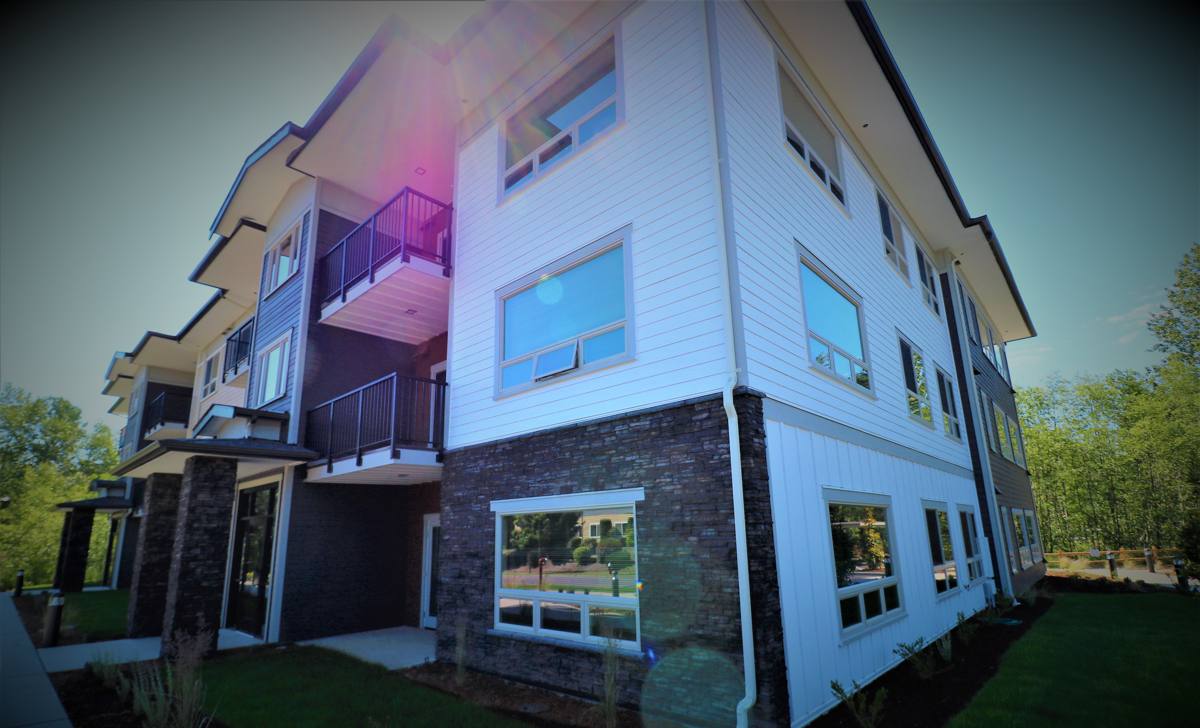
Why We Only Install James Hardie Fiber Cement Here
We've made a deliberate decision not to install LP SmartSide, vinyl, Cemplank, Allura, or bare wood siding — cedar or primed spruce. Every one of those products has legitimate uses somewhere, but none of them is what we'd choose to put on a home exposed to Cherry Point's combination of salt air, driving rain, and moss pressure. James Hardie fiber cement is what we install because it's engineered to handle exactly this kind of exposure, and because the company backs it with a warranty structure that matches how long we expect the product to actually perform.
A Non-Combustible, Dimensionally Stable Core
Hardie's fiber cement formulation is cellulose fiber reinforced cement — it doesn't expand and contract with humidity the way wood-based products do, and it doesn't provide fuel the way wood or wood-composite siding does. In a marine climate where moisture is a near-constant factor, a material that doesn't swell, warp, or delaminate when it absorbs ambient humidity is a meaningful advantage over products that do.
Engineered for This Climate Zone
Hardie makes climate-specific product lines, and the HZ5 formulation is engineered for regions with cold, wet winters and significant moisture exposure — which describes Whatcom County's marine climate well. That's not a marketing distinction; it affects the product's moisture resistance and freeze-thaw performance in a way that matters on a shoreline-adjacent property.
ColorPlus Factory Finish
Instead of relying on a coat of paint applied on-site, Hardie's ColorPlus finish is baked on in a controlled factory process before the boards ever reach a job site. That finish holds up to UV and moisture exposure noticeably better than field-applied paint, and it matters most in exactly the kind of environment Cherry Point offers — where salt air and sun accelerate the breakdown of ordinary paint. It doesn't mean zero maintenance forever, but it does mean a much longer stretch before a homeowner is looking at a repaint.
What a Correct Fiber Cement Installation Actually Involves
Fiber cement siding is only as good as the installation behind it. The product itself is durable, but a poorly installed job — wrong fastener pattern, missing flashing, panels nailed tight instead of per spec — will leak and fail regardless of what siding is on the wall. This is especially true in a wind-driven-rain environment like Cherry Point, where installation shortcuts get exposed faster than they would somewhere calmer.
| Installation Detail | Common Shortcut | Correct Practice |
|---|---|---|
| Panel gaps | Boards butted tight, no expansion room | Manufacturer-specified gap at all butt joints and terminations |
| Flashing at penetrations | Caulk used as the only barrier around vents, lights, hose bibs | Proper flashing first, caulk as a secondary seal, not the only line of defense |
| Fastener placement | Fasteners driven too high, too low, or overdriven | Fasteners placed and set per Hardie's nailing schedule for the wind/exposure zone |
| Water-resistive barrier | Reused or damaged house wrap, poor lapping | Continuous, properly lapped weather-resistive barrier under all siding |
| Bottom clearance | Siding installed tight to grade, decks, or roofing | Manufacturer-required clearance maintained at all transitions |
None of these details are visible once the job is finished and painted-looking. That's exactly why they matter — a wall that looks correct from the street can still be set up to fail behind the surface if these steps were skipped.
Our Process on a Cherry Point Home
We approach every Cherry Point project with the understanding that this is a higher-exposure site than an average inland job, and we plan the work accordingly rather than treating it as a standard install.
Assessment First
We start by walking the exterior and checking for existing moisture damage — soft trim, staining, signs of past leaks around windows and penetrations — before we ever talk about new siding. On a shoreline-adjacent property, it's common to find some degree of hidden moisture intrusion behind older siding, and that needs to be addressed before anything new goes up, not covered over.
Tear-Off and Sheathing Check
Once the old siding comes off, we inspect the sheathing underneath. Any rot or soft spots get replaced — installing new siding over compromised sheathing just hides a problem that will resurface later, and on a property exposed to this much wind-driven rain, that's not a corner worth cutting.
Weather Barrier and Flashing
A continuous, properly lapped weather-resistive barrier goes down before any siding, and flashing is installed at every window, door, and penetration — the details that matter most when rain is being pushed sideways into the wall rather than falling straight down it.
Installation to Spec
Panels or lap boards go up following Hardie's fastening and clearance requirements for the exposure zone, not a generalized approach. Trim, caulking, and touch-up finish work follow, then a final walk-through before we consider the job done.
Choosing the Right Hardie Product and Color for This Exposure
Most Cherry Point homes do well with HardiePlank lap siding in the HZ5 formulation, which is built for this climate zone's moisture and freeze-thaw conditions. Some homes are better suited to a panel or board-and-batten profile depending on the architecture, and we'll talk through that on-site rather than defaulting to one look.
On color, ColorPlus finishes are factory-cured and hold their color significantly better than field-applied paint under UV and salt exposure, which is the main reason we steer homeowners toward a factory finish rather than a field-painted option on a property this exposed. Beyond that, color choice is mostly a matter of preference and neighborhood context — we're not going to invent rules about which shades perform better here, because the finish process matters far more than the shade itself.
Living With Fiber Cement in a Moss-Prone Climate
Fiber cement is low-maintenance compared to wood siding, but "low-maintenance" isn't "no-maintenance," especially in a climate that grows moss on almost anything left damp long enough. A little seasonal attention keeps a Hardie installation looking and performing the way it should for decades.
- Rinse siding gently once or twice a year, especially shaded north-facing walls, to keep moss and algae from establishing
- Keep gutters and downspouts clear so water isn't running down the siding face during storms
- Trim back trees and shrubs near the house to improve airflow and sun exposure on shaded walls
- Inspect caulking at trim, windows, and penetrations annually and re-caulk where it's cracked or pulled away
- Watch for hairline cracks or chips at corners and impact points, and get them addressed before moisture gets behind the finish
- Avoid aggressive pressure washing directly at joints and seams — a soft wash is enough and won't force water behind the siding
Why Hiring a Crew That Already Works Cherry Point Matters
A siding crew that only occasionally works this stretch of shoreline is guessing at exposure details that a crew already familiar with the area already knows. That includes which walls typically take the worst wind-driven rain, how much clearance and flashing detail a given elevation needs, and what Whatcom County's permitting process actually requires before work starts. It also means having a crew that's still reachable after the job is done — for a caulk touch-up, a question about maintenance, or a warranty issue — rather than a contractor who was passing through the area for one project.
None of this is complicated, but it's the difference between a siding job that's technically finished and one that's actually built for the site it's on.
What Affects the Cost of a Fiber Cement Siding Project Here
Every home is different, and we'll always give a specific number after seeing the property, but these are the main factors that move the price on a Cherry Point job.
| Factor | Why It Matters |
|---|---|
| Home size and wall area | More square footage means more material and labor, the largest single driver of cost |
| Tear-off and disposal of existing siding | Removing old wood, vinyl, or damaged siding adds labor and disposal cost before new siding starts |
| Hidden moisture or rot repair | Sheathing or framing repairs found during tear-off are common on shoreline-exposed homes and add scope |
| Trim and architectural detail | Corners, window trim, and multiple rooflines take more time than a simple rectangular wall |
| Product line and profile | Lap siding, panel systems, and board-and-batten differ slightly in material and install time |
| Site access | Multi-story walls, tight lot lines, or limited equipment access can add labor time |
If you're weighing siding options for a home in the Cherry Point area, we're happy to walk the property, point out what we're actually seeing on your walls, and put together a straightforward, no-pressure estimate. There's no obligation — just a clear look at what your home needs and what it would take to do the job right.