 Blaine Siding
 Blaine Harbor's Climate Is Harder on Siding Than Most Homeowners Realize
Blaine Harbor sits where the Strait of Georgia meets the Salish Sea, and that location comes with a specific set of exterior problems. Salt-laden air moves off the water and settles on everything nearby, including the exterior walls of homes several blocks inland. Add Whatcom County's long, wet winters and the driving rain that comes off Georgia Strait storms, and you have a climate that tests siding in three ways at once: corrosion resistance, water management, and resistance to organic growth.
Moss and algae are the visible symptom. Blaine's mild, damp winters give moss months to establish itself on north-facing walls, under eaves, and anywhere siding stays shaded and moist. Once moss takes hold on a porous or poorly sealed material, it holds moisture against the wall longer, which accelerates whatever damage the material was already prone to. On a harbor-adjacent property, that cycle runs longer and starts earlier in the season than it does even a few miles inland.
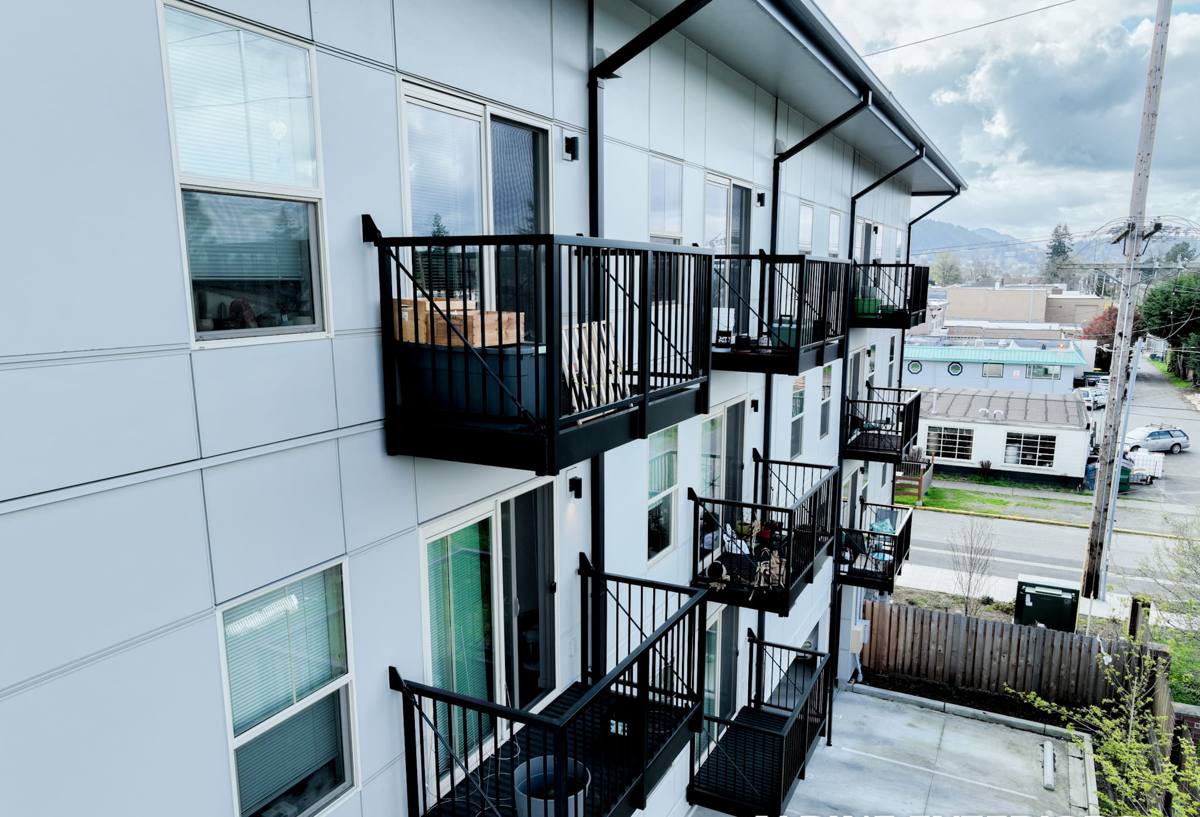
What Blaine Harbor Homes Actually Need From Their Siding
Given that combination of salt exposure, near-constant rain risk, and extended moss season, siding on a Blaine Harbor home needs to do three things well, not just one:
- Shed and manage water at every seam, joint, and penetration — not just resist a single soaking, but handle repeated wet-dry cycles for decades
- Resist the corrosive effect of salt air on fasteners, trim, and the siding material itself
- Hold a factory finish that doesn't chalk, peel, or absorb moisture in a way that feeds moss and algae growth
This is the specific reason we don't install every siding product on the market. Some materials handle one or two of these demands well and fall short on the third. On a harbor property, that shortfall shows up faster than it would somewhere drier and further from the water.
Why We Install Only James Hardie Fiber Cement
Our company installs James Hardie fiber cement siding exclusively. We don't install vinyl, LP SmartSide, Cemplank, Allura, primed spruce, or cedar. That's not a marketing position — it's a standard we settled on after weighing how each product performs against the exact conditions Blaine Harbor homes face.
James Hardie's fiber cement is non-combustible, dimensionally stable in wet climates, and finished with the company's ColorPlus factory-baked coating, which is more consistent and more resistant to fading and moisture intrusion than field-applied paint. Hardie also engineers specific product lines for different climate zones — HZ5 boards, which we use in this region, are formulated for areas with regular freeze-thaw cycles and sustained moisture exposure, which describes Whatcom County's marine climate well.
None of that means fiber cement is maintenance-free. It means it starts from a stronger baseline against the specific failure modes — moisture absorption, corrosion, coating breakdown — that a harbor climate accelerates.
How James Hardie Compares on the Factors That Matter Here
| Climate Factor | What It Does to Ordinary Siding | How James Hardie HZ5 Responds |
|---|---|---|
| Salt air | Corrodes exposed fasteners and metal trim; can degrade some coatings over years | Fiber cement itself doesn't corrode; correct installation uses corrosion-resistant fasteners and flashing throughout |
| Driving rain | Wind-driven water pushes past poorly lapped seams and caulked joints | Engineered for proper lap and gap tolerances that shed water rather than relying on sealant alone |
| Extended moss season | Porous or wood-based materials hold moisture, feeding moss and algae | Dense fiber cement composition and factory finish resist moisture absorption at the surface |
| Freeze-thaw cycling | Materials that absorb water can crack or delaminate when it freezes | HZ5 formulation is built for regions with regular freeze-thaw exposure |
What a Correct James Hardie Installation Involves
The product is only half the equation. Fiber cement siding installed without attention to water management will fail in a harbor climate almost as fast as a weaker material, because the failure point moves to the seams, fasteners, and flashing rather than the boards themselves. A correct job in Blaine Harbor conditions covers several details that are easy to skip and expensive to fix later.
Water Management Behind the Siding
Before any board goes up, the wall needs a proper weather-resistive barrier and correctly integrated flashing at every window, door, and penetration. In a climate with this much driving rain, the barrier and flashing system is what actually keeps water out of the wall assembly — the siding is the first line of defense, not the only one. Rainscreen or drainage gap approaches, where appropriate for the wall assembly, give any water that does get past the siding a way to drain and dry instead of sitting against the sheathing.
Fastening and Gaps
James Hardie publishes specific fastener spacing, penetration depth, and gap requirements between boards and at trim. Near-shore salt exposure makes fastener selection matter more than it does inland — hot-dipped galvanized or stainless fasteners are worth the marginal added cost over standard fasteners that can corrode and streak the siding over time. Gaps at butt joints and trim need to be sized and sealed per manufacturer specification, not caulked tight, so the assembly can move seasonally without cracking the finish.
Finish and Touch-Up
ColorPlus finished boards need factory-matched touch-up product at cut edges and any field-cut ends, applied correctly so the cut edge doesn't become the weak point in an otherwise sealed system. Skipping this step is one of the most common corner-cuts we see on jobs installed by crews unfamiliar with the product.
Our Process on a Blaine Harbor Home
Assessment
We start by walking the exterior and identifying what the existing wall assembly is dealing with — moss patterns, water staining, soft trim, and any signs of past moisture intrusion. On harbor-adjacent properties we pay particular attention to north- and west-facing walls, which typically take the most direct weather and the longest moss exposure.
Installation
We remove old siding down to the sheathing, correct or install the weather-resistive barrier and flashing package, and install James Hardie boards and trim to manufacturer specification for gaps, fastening, and clearances. We don't shortcut flashing details to save time, because those details are what determine how the wall performs in year eight, not year one.
Final Walkthrough
Before we consider a job finished, we walk the property with the homeowner, check touch-up work at cuts and seams, and confirm caulking and trim details are complete. We want you to understand what was done and why, not just see a finished wall.
Maintaining James Hardie Siding in a Salt Air, Moss-Prone Environment
Fiber cement reduces maintenance compared to wood, but a harbor property still benefits from a basic yearly routine. Here's what we recommend for Blaine Harbor homeowners:
- Rinse siding annually with a garden hose to clear salt residue and airborne debris before it builds up
- Check north-facing and shaded walls each fall for early moss or algae growth and treat it before it spreads
- Inspect caulking at trim, windows, and butt joints yearly — caulk is a maintenance item on any siding system and needs periodic renewal
- Keep gutters clear and downspouts directed away from the wall base to reduce splash-back moisture at the bottom course of siding
- Trim back vegetation and tree cover that keeps any wall section shaded and damp longer than the rest of the house
Why Hiring a Crew That Already Works Blaine Harbor Matters
Fiber cement installation practices don't change by region, but the judgment calls do. Knowing which walls on a Blaine Harbor property take the worst of the weather, how much clearance to leave at grade given local rain patterns, and where moss is likely to become a recurring problem comes from having worked on homes in this exact environment — not from a general fiber cement install checklist. A crew that already understands Whatcom County's marine climate makes fewer of the small decisions that turn into callbacks two winters later.
We also know this product. Installing only James Hardie means every crew member is working with one system, one set of specifications, and one finish process — not switching between five different manufacturers' installation quirks from job to job. That consistency is part of why we hold the line on installing Hardie exclusively, even when it means turning down work for products we don't stand behind.
Get an Honest Look at Your Siding
If you're weighing a siding replacement or repair on a Blaine Harbor property, we're happy to take a look and give you a straight assessment of what your home's exterior actually needs. Reach out for a free, no-pressure estimate — there's a form below to get started.