 Blaine Siding
 Deck Repair for Sumas Homes
A deck in this part of Whatcom County works harder than most homeowners realize. It sits outside through wet winters, damp springs, and shoulder seasons where moss and mildew get a head start before anyone notices. If you own a home in Sumas, chances are your deck has already shown some early warning signs — a soft board here, a wobbly rail there, dark streaking where two boards meet. None of that means the whole structure is done for. It usually means it's time for a proper repair before small problems turn into structural ones.
We repair decks throughout the Blaine and Sumas area, and the patterns we see here are consistent. Decks fail from the inside out and from the bottom up — moisture gets trapped where it can't dry, and by the time it shows on the surface, the damage underneath is often further along than it looks.
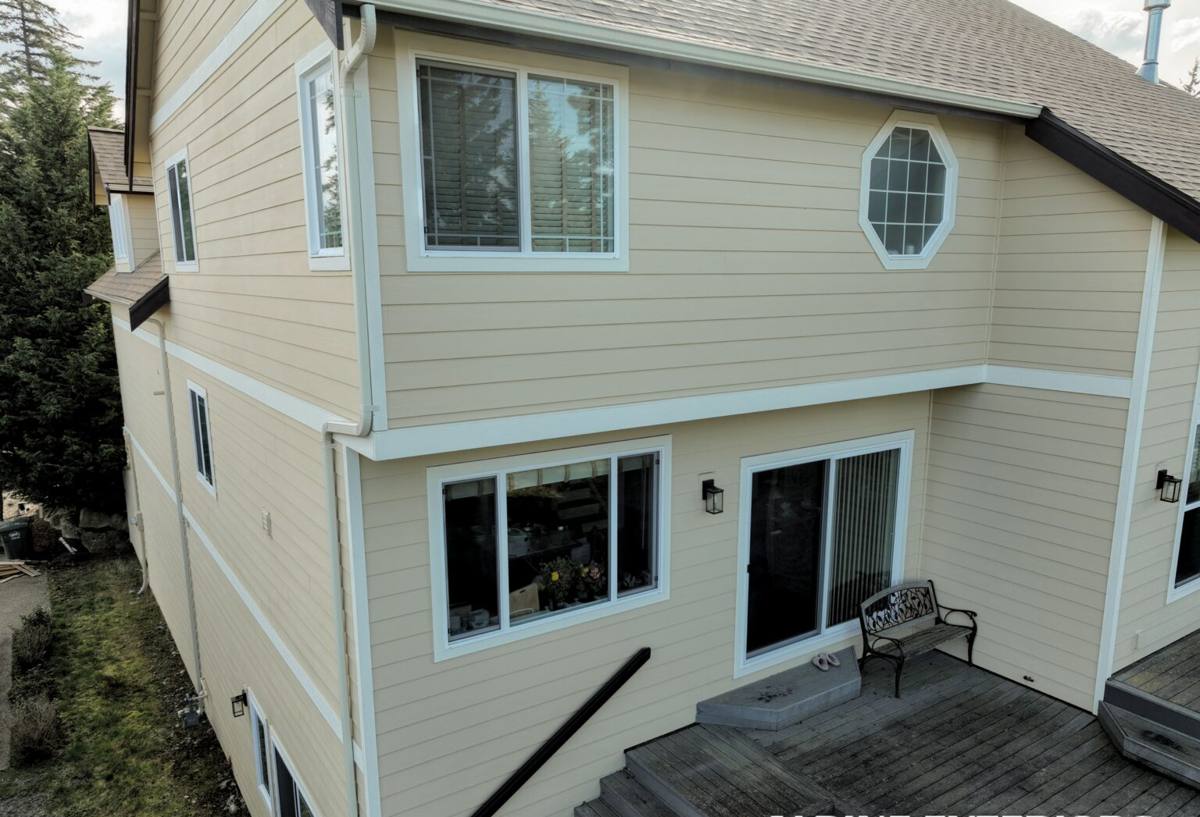
How Whatcom County Weather Wears Down a Deck
Moss and Trapped Moisture
Long stretches of overcast, damp weather give moss and algae plenty of time to establish themselves on deck boards, especially in shaded corners or under overhangs where the surface never fully dries. Moss holds moisture directly against the wood, which accelerates rot even when the boards look intact from a few feet away. It also makes the surface slick, which is a safety issue as much as a maintenance one.
Driving Rain and End-Grain Rot
Rain here doesn't just fall straight down — wind-driven rain gets pushed sideways into rail posts, stair stringers, and the cut ends of deck boards. End grain soaks up water far faster than the face of a board, which is why rot so often starts at board ends, around fastener holes, and where boards butt up against the house. Once water gets into that end grain, it travels along the wood fibers and can spread well beyond where it first entered.
Salt Air and Metal Fatigue
This stretch of the Pacific Northwest coastline carries salt air further inland than people expect, and it's hard on the metal components of a deck — joist hangers, structural screws, bolts, and flashing. Corroded fasteners lose holding strength quietly, over years, which is one reason a deck can look fine on the surface while its connections are weaker than they should be.
Signs Your Sumas Deck Needs Repair
Most deck problems give warning signs well before anything fails outright. Worth checking for:
- Boards that feel spongy or flex more than the boards around them
- Gray, weathered wood that's gone soft — a screwdriver tip should not sink in easily
- Rust streaks around screws, nails, or joist hangers
- Visible gaps opening up between the deck and the house at the ledger board
- Railings or posts that wobble when pushed
- Persistent moss, algae, or black staining that keeps coming back after cleaning
- Stairs that feel bouncy or stringers that show cracking
- Standing water that takes more than a day to dry after rain
Any one of these on its own might be minor. Several together usually mean the deck needs a real inspection, not just a pressure wash.
What a Correct Deck Repair Actually Involves
Start With the Structure, Not the Surface
A repair that only replaces the boards you can see is treating the symptom. Before we touch decking, we check the framing underneath — joists, beams, posts, and footings — because that's what actually holds the deck up. Surface boards can look presentable while the structure beneath them is compromised, and no amount of new decking fixes a weak frame.
Ledger Board and Flashing
The ledger board, where the deck attaches to the house, is one of the most common failure points we find. It's also one of the least visible, tucked behind the rim joist and often hidden by decking or skirting. Flashing at this joint is what keeps water from running behind the ledger and into the house framing. If flashing is missing, damaged, or was never installed correctly, water intrusion can go on for years before it shows up as a soft spot or a stain on an interior wall.
Decking Boards vs. Framing Repairs
Sometimes the fix really is just decking — replacing boards that have reached the end of their life while the frame underneath is sound. Other times it's the opposite: the visible decking is fine, but joists or beams need sistering, reinforcing, or replacing. A proper repair scope tells you which situation you're actually in, rather than guessing from the surface.
Repair or Replace? What Actually Drives the Decision
| Factor | Leans Toward Repair | Leans Toward Replacement |
|---|---|---|
| Framing condition | Joists and posts are solid, no rot at connections | Rot or soft spots found in multiple structural members |
| Age of the deck | Under 15-20 years, built to a reasonable standard | Original construction is decades old or undersized for current code |
| Extent of damage | Isolated boards, rails, or stairs | Damage spread across most of the deck surface and frame |
| Fastener condition | Hardware is intact, no significant corrosion | Widespread rust on hangers, bolts, and structural screws |
| Ledger/flashing | Attachment point is dry and properly flashed | Ongoing water intrusion at the house connection |
Most decks we look at in Sumas fall somewhere in between — solid framing with localized damage that's very repairable, as long as it's caught before the rot spreads further.
Our Deck Repair Process
- Inspection. We check framing, ledger, fasteners, and decking, and probe any soft or suspect areas rather than relying on a visual look alone.
- Honest scope. We tell you what's actually failing, what's still sound, and what your realistic options are — repair, partial rebuild, or full replacement — without pushing you toward the most expensive one.
- Structural work first. Any compromised framing, ledger, or flashing gets addressed before anything cosmetic happens on top of it.
- Decking and rails. Damaged boards, rail sections, or stair components are replaced with materials matched to your existing deck or your chosen upgrade.
- Fasteners and hardware. We use corrosion-resistant hardware appropriate for our climate, not whatever happens to be cheapest.
- Final check. We walk the deck with you, check for flex or movement, and confirm drainage and flashing are doing their job.
Materials We Use and Why
Pressure-treated lumber remains a solid, cost-effective choice for deck framing and is what most structural repairs call for — it's rated for ground and moisture exposure and holds up well when properly fastened and flashed. For visible decking, homeowners in this area typically choose between treated wood, cedar, and composite boards.
Wood costs less upfront but needs regular cleaning and periodic sealing to resist moss and moisture in our climate — skip that maintenance for a season or two and you'll see it in the wear. Composite decking costs more initially but resists moisture, moss growth, and splintering with far less upkeep, which is worth weighing against the higher purchase price. Neither is a wrong choice; it depends on how much maintenance you want to take on versus pay for upfront. We'll walk through the honest trade-offs for your specific deck rather than just steering you toward whatever's easiest for us to install.
Why Hire a Crew That Already Works in Sumas
Deck repair looks straightforward until you're the one doing it. Diagnosing whether rot is surface-deep or structural, tying new framing into old correctly, and getting flashing right at the ledger are places where shortcuts don't show up until years later — usually as a bigger, more expensive problem. A crew that regularly works decks in Sumas and the surrounding Blaine area already knows how driving rain, moss, and salt air behave on decks in this specific climate, and builds repairs accordingly instead of applying a one-size-fits-all approach.
Local experience also means straight answers. We're not interested in selling a full deck replacement when a targeted repair will genuinely hold up, and we're not interested in doing cosmetic patchwork over a structural problem either. Our reputation in this area depends on the repairs we do lasting, not on maximizing the size of any one job.
Ready for an Honest Look at Your Deck?
If your deck in Sumas has soft boards, rust stains, a wobbly rail, or just feels like it's past due for a real look, we're happy to come take a look and give you a straightforward assessment — no pressure, no inflated scope. Fill out the form below for a free estimate.