 Blaine Siding
 Roof Repair Built for Birch Point's Waterfront Climate
Birch Point sits along the shoreline in the Blaine area of Whatcom County, close enough to the water that homes here take on a steadier dose of marine weather than houses set further inland. Salt-tinged air works on exposed metal and fasteners year-round. Rain off the water tends to come in sideways rather than straight down. And a mild, damp climate gives moss and algae a growing season that can run most of the year on shaded roof planes. None of that means every roof problem in Birch Point calls for a full replacement — a lot of it is fixable, correctly, with a repair that addresses what actually caused the damage rather than just patching over what's visible.
This page covers roof repair specifically — what tends to go wrong on Birch Point roofs, how to tell a cosmetic issue from a real structural or moisture problem, what a correct repair job involves, and why hiring a crew that already works this stretch of the Whatcom County coastline matters more than it might inland.
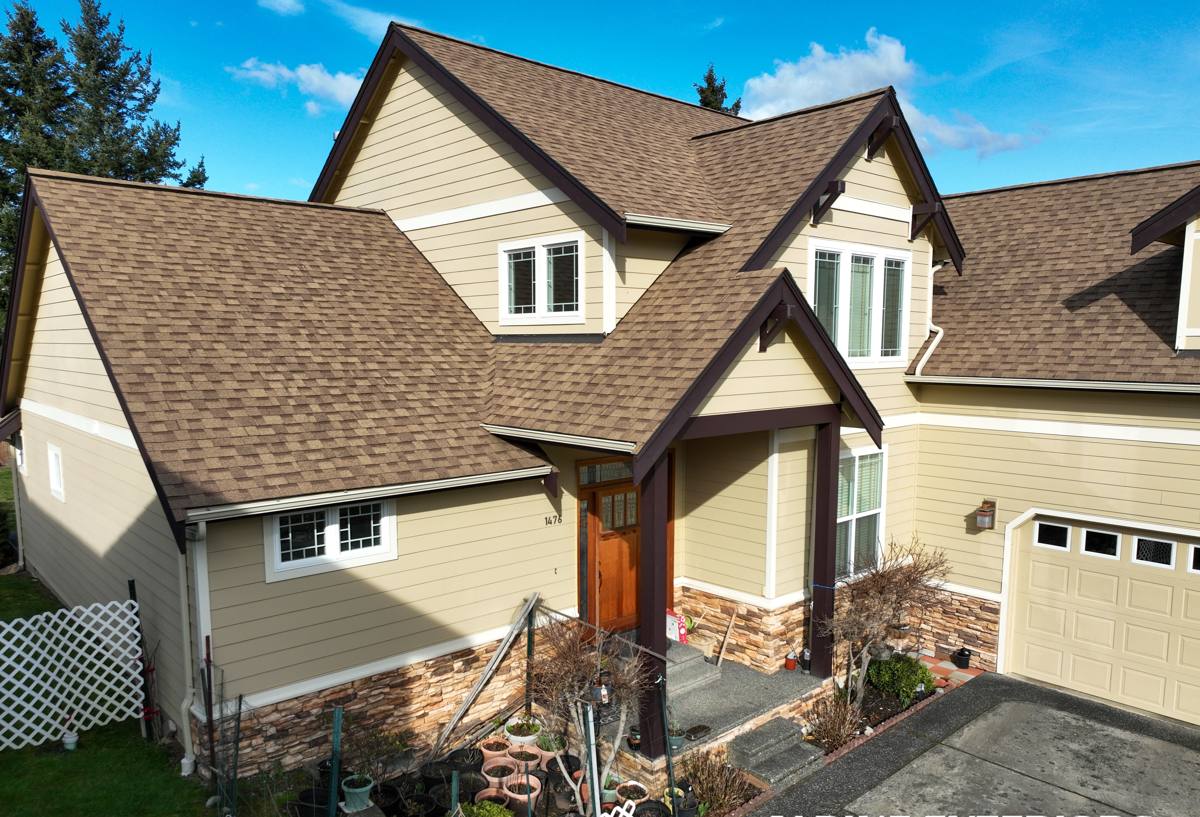
What Actually Damages Roofs in Birch Point
Salt Air and Corroding Hardware
Homes close to the water take on salt-laden air continuously, not just during storms, and that air accelerates corrosion in flashing, fasteners, and any exposed metal roof component. Corrosion rarely announces itself early — a rusted nail head or a corroded flashing seam can be quietly failing for a season or two before it shows up as a stain on the ceiling below. On a Birch Point roof, checking hardware condition is as important as checking the shingles or panels themselves.
Wind-Driven Rain
Storms coming off the water in this part of Whatcom County don't just drop rain straight down. Wind pushes it sideways and even upward into roof valleys, under shingle edges, and around chimney and vent penetrations that a straight-down rain would never reach. That's exactly where a repair that only addresses the visible symptom — a stained ceiling, a damp attic corner — can miss the actual entry point, because the water traveled sideways before it ever got inside.
A Long Moss Season
Mild temperatures and near-constant moisture give moss a growing season that runs most of the year on north-facing or tree-shaded roof planes, which describes a fair number of lots in and around Birch Point. Moss holds water against the roofing material long after a storm has passed, and it works its way under shingle edges and around fasteners in a way that gradually lifts and loosens roofing that would otherwise still have years of life left in it.
Cosmetic Wear vs. a Real Repair Problem
Not every mark or stain on a roof means the same thing, and telling the difference correctly is the actual job of a proper repair estimate — not just naming a price to fix whatever's visible.
| What You See | Usually Cosmetic | Often a Real Problem |
|---|---|---|
| Moss on a shaded slope with no staining below | Yes — routine seasonal growth | Only if it's thick enough to be lifting shingle edges |
| Granules collecting in gutters | Some granule loss is normal | Heavy, consistent loss signals aging or damaged shingles |
| Small rust spots on flashing | Isolated surface rust | Spreading corrosion or rust at seams and laps |
| Faint ceiling stain, hasn't grown | Rarely — worth confirming it's truly old | Usually — active or recent water intrusion |
| Curling or lifted shingle tabs | No | Yes — entry point for wind-driven rain |
| Soft spot or give underfoot near a valley | No | Yes — deck-level moisture damage |
Cosmetic issues can usually be monitored and addressed on a normal maintenance schedule. The right column is where a repair stops being optional, because those are the conditions most likely to turn into interior damage before the next wet season is over.
How We Diagnose a Roof Before Recommending Anything
A repair estimate that's actually worth trusting starts with a real inspection, not a guess from the ground or a quick look at whatever's easiest to see. That typically includes:
- Walking the full roof surface, not just the area near the reported leak, since water often travels before it shows up as a stain
- Checking flashing at every valley, chimney, vent pipe, and roof-to-wall transition, where the large majority of leaks in this climate actually start
- Probing the roof deck near any stained or soft-feeling area to gauge how far moisture damage has spread
- Assessing moss coverage and whether it's still surface-level or has already begun lifting shingle edges
- Checking attic ventilation and insulation for signs of trapped moisture, which can mimic or worsen a roof leak
- Reviewing the age and general condition of the roofing material to judge how many more repair cycles are realistic
We'll walk you through exactly what we find, in plain terms, before recommending a scope of work — including telling you when something doesn't need fixing yet.
Repair or Replace: How We Help You Decide
Not every roof problem in Birch Point calls for full replacement, and a repair-focused crew shouldn't default to recommending one just because it's the bigger job. The honest factors that actually drive this decision:
- How much of the roof is affected. A leak traced to one damaged flashing detail or a localized patch of failed shingles is usually a straightforward repair, even on an older roof.
- Condition of the roof deck underneath. Isolated soft spots can be cut out and replaced. Widespread deck moisture damage usually means the roofing above it has already failed broadly, and another repair just delays a replacement that's coming anyway.
- Remaining material life. A roof near the end of its rated lifespan with moss-related wear spread across several slopes is often more honestly addressed with replacement than a third or fourth round of patchwork.
- How the original installation was done. A roof with a solid underlying installation and one isolated failure point repairs cleanly. A roof with underlying shortcuts — thin underlayment, poor original flashing work — tends to develop new problems shortly after a repair, no matter how well that one spot is fixed.
We'll give you a straight answer on which category your roof falls into, including when repair is genuinely the right call, rather than steering toward whichever job pays more.
What a Correct Roof Repair Involves
Matching Materials to What's Already There
A repair means working with the existing roofing system, not just laying something new over a damaged section. Matching shingle profile, color, and exposure — or panel type on a metal roof — keeps a repair from standing out as an obvious patch and, more importantly, keeps the repaired section performing the way the surrounding roof does.
Correcting Flashing, Not Just Sealing It
A quick bead of caulk over failing flashing is a temporary fix, not a repair. Flashing that's corroded, poorly lapped, or improperly integrated with the underlayment gets replaced and reinstalled to spec — lapped and sealed the way it should have been the first time — because that's where wind-driven rain off the water finds its way in again if it isn't done right.
Addressing the Cause, Not Just the Stain
A ceiling stain is a symptom. The cause is almost always somewhere else on the roof — a lifted shingle, a failed flashing seam, a clogged valley holding water against the roofing longer than it should. A repair that only patches the spot directly above the stain, without tracing the water back to where it's actually entering, tends to resurface in the next heavy storm.
Clearing Moss Correctly, Not Just Pressure Washing
Moss removal on an older roof needs a gentler approach than a pressure washer, which can strip granules and shorten the life of otherwise sound shingles. We clear moss in a way that protects the roofing surface, and where moss has already lifted shingle edges or worked under flashing, that section gets repaired properly rather than just cleaned and left to fail again.
Cost Factors for Roof Repair in Birch Point
| Factor | What It Affects |
|---|---|
| Size and location of the damaged area | Labor time and material needed for a clean match |
| Deck condition underneath the repair | Whether it's a surface fix or includes deck replacement |
| Flashing scope | How much corroded or poorly lapped flashing needs replacing, not just resealing |
| Roof access and pitch | Staging and safety requirements for the crew |
| Material match availability | Older or discontinued shingle colors and profiles can be harder to match exactly |
| Moss and debris removal | Extent of buildup and whether it's already caused hidden damage |
These are general drivers, not a quote. An honest repair estimate comes from someone standing on your roof, not from a phone description of what you can see from the yard — two roofs with the same visible stain can have very different actual causes once someone's up there looking.
Maintenance That Extends a Repair's Lifespan
- Clear moss and debris from valleys and gutters at least once a year, more often on heavily shaded roof planes
- Trim back tree branches that keep sections of the roof shaded and damp longer than the rest
- Check attic ventilation periodically, since trapped moisture underneath the roof deck accelerates rot and moss growth from below
- Have flashing at valleys, chimneys, and vent penetrations visually checked each fall before the wettest stretch of the year arrives
- Address a new stain or soft spot right away rather than waiting to see if it gets worse — early repairs are almost always smaller and cheaper
- Keep gutters and downspouts clear so water isn't backing up against the lower edge of the roof
Why Hiring a Crew That Already Works Birch Point Matters
A crew that regularly repairs roofs along this stretch of the Whatcom County coastline has already seen how salt air corrodes underspecified hardware, how wind-driven rain finds its way through flashing that looks fine from the ground, and which roof orientations in a place like Birch Point hold moss the longest through the wet season. That's the kind of practical knowledge that shows up in the small decisions made during a repair — which section actually needs replacing versus resealing, how much ice-and-water shield a particular valley needs, which flashing details are worth the extra time so you're not calling again after the next storm off the water. We work roofs, siding, windows, and decks across this part of the county, and we treat a roof repair with the same standard we'd hold a full roofing job to, not a lesser scope because it's smaller work.
It also matters for accountability once the work is done. A repair warranty only means something if the company behind it is still reachable a year or two later, and a crew with an ongoing local presence in the Blaine area is one you can actually call back if a question comes up.
A Practical Checklist Before You Hire a Roof Repair Contractor
- Do they inspect the full roof and attic in person, not just the area near the visible leak?
- Does the estimate explain what caused the damage, not just what it costs to patch?
- Is flashing replacement scoped separately from a simple reseal, so you know which one you're getting?
- Do they carry current Washington contractor licensing and liability insurance?
- Can they point to recent, real repair work in or near Birch Point or the greater Blaine area?
- Does the estimate distinguish material warranty from their own workmanship warranty on the repair?
If you've got a stain on the ceiling, a section of moss-damaged shingles, or flashing that's seen better days, we're glad to come take an honest look and tell you plainly what it actually needs — including if that's less than you expected. Use the form below to request a free, no-pressure estimate for your Birch Point roof.