 Blaine Siding
 Metal Roofing on Sandy Point: A Different Level of Exposure
Sandy Point sits out on open water on the Whatcom County coastline near Blaine, with little to break the wind, and that changes what a roof has to deal with compared to a home set back on a sheltered inland lot. Many homes out here started as beach cabins and have since become full-time residences, but the roofs covering them still face the same conditions that shaped the neighborhood in the first place: salt-laden air moving straight off the water, rain that arrives sideways more often than straight down, and a moss season that barely lets up between wet months. Metal roofing has become one of the more common upgrades we install on Sandy Point specifically because it handles that combination better than most alternatives, but only when it's specified and installed correctly for this location. This page covers what that actually looks like.
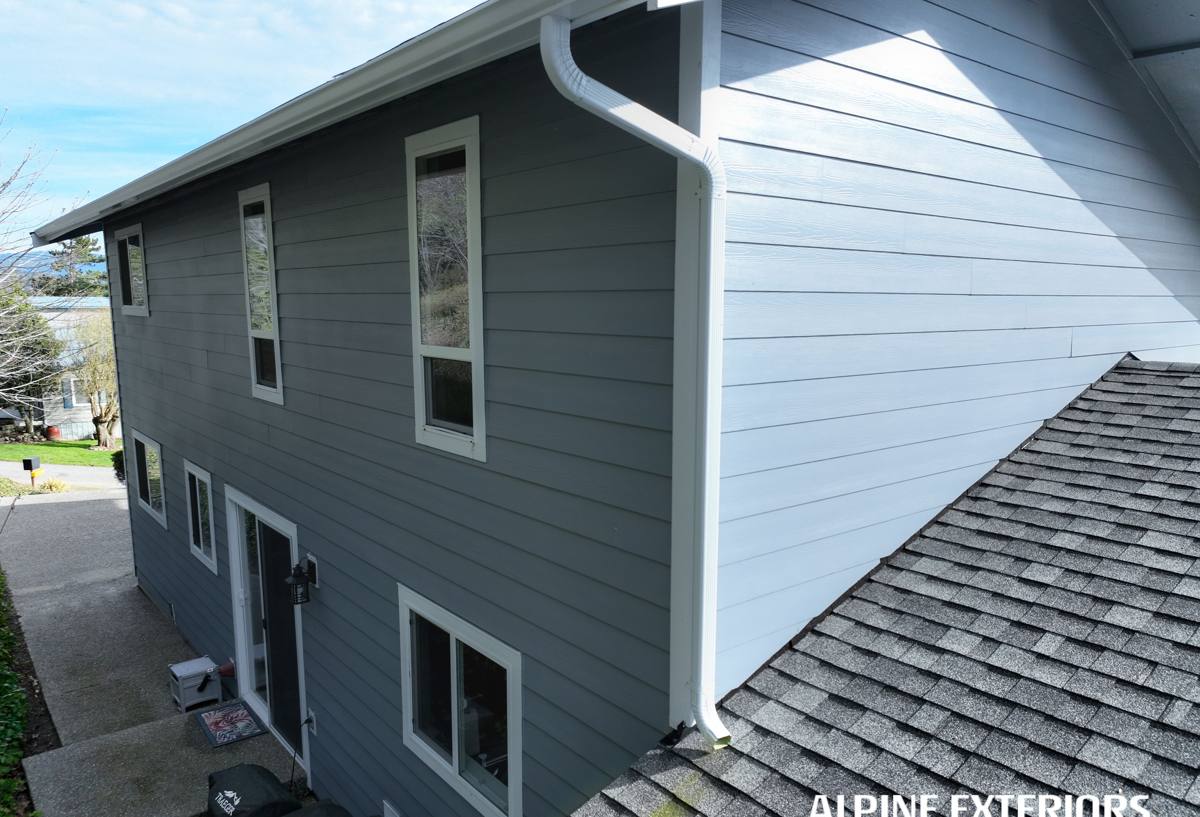
What Sandy Point's Exposure Does to a Roof
Salt Air With Nothing to Slow It Down
Because so many lots out here sit directly on or near the water with limited tree cover, salt-laden air reaches the roof deck at close to full strength rather than filtering through blocks of inland vegetation first. That accelerates corrosion on anything metal that isn't properly rated for it: fasteners, flashing, vent stacks, gutter hardware. A roofing detail that would hold up for decades on a sheltered Blaine lot a mile inland can start showing rust streaks within a handful of years on an exposed Sandy Point roof if the wrong grade of hardware went into it.
Wind-Driven Rain, Not Just Rain
Open exposure means wind has a long, uninterrupted run at these homes before it hits a roofline, and that pushes rain into laps, seams, and flashing details that would stay dry in a calmer, more sheltered setting. A roof built to a bare minimum-code standard is far more likely to leak at valleys, roof-to-wall transitions, and penetration points out here than the same roof would on a wind-sheltered inland property.
A Moss Season That Rarely Fully Breaks
Mild, damp conditions along this stretch of the Whatcom County coastline support moss and algae growth for most of the year, and shaded or north-facing roof sections are usually the first to show it. Moss holds moisture against a roofing surface, lifts edges and laps over time, and works its way under seams that aren't properly sealed. A roofing material and installation approach that doesn't account for this ends up needing far more maintenance than one that does.
Why Metal Roofing Fits This Setting
None of this means metal roofing is automatically the right call for every roof on Sandy Point, since pitch, budget, and the look a homeowner wants all factor into that decision. But as a category, metal has real advantages in this specific setting when it's specified with the right coating and installed correctly.
- Smooth, continuous surface: Fewer laps and seams for wind-driven rain to find, and less texture for moss to grip onto compared to a shingled or shake roof.
- Steep water-shedding profile: Standing seam panels in particular move water off the roof quickly, which matters when rain is coming in sideways as often as it does out here.
- Long service life when properly coated: A correctly specified coastal-rated finish can outlast several cycles of asphalt shingle replacement, reducing how often a roof goes through the vulnerable tear-off-to-dry-in window.
- Lighter weight: Less structural load than some heavier roofing materials, which can matter on older cabin-turned-year-round-home framing.
- Non-combustible surface: A factor some homeowners weigh alongside the climate considerations, particularly during dry summer stretches.
The trade-off is cost and installation sensitivity. Metal roofing done wrong, especially around fastener spacing and flashing integration, can perform worse than a well-installed shingle roof. It rewards a crew that installs it often and understands the specific demands of a directly water-exposed lot like the ones out on Sandy Point.
Metal Roofing Systems Compared
| System | How It Handles This Exposure | Typical Trade-Off |
|---|---|---|
| Standing seam (concealed fastener) | Best water-shedding performance; fasteners are hidden and protected from direct salt air | Highest material and labor cost of the metal options |
| Exposed-fastener metal panel | Sheds rain well but fastener heads are exposed to salt air and need periodic inspection | Lower upfront cost, but more long-term maintenance on fasteners and seals |
| Stone-coated steel | Textured coating adds visual variety but creates more surface for moss to catch on than a smooth panel | Higher moss-management need than smooth standing seam |
Coatings and Hardware That Actually Matter Here
The panel material is only part of the equation. The finish and the hardware holding it down often determine how the roof performs five, ten, and twenty years out.
Coastal-Rated Finishes
A quality factory-applied finish, such as a PVDF-based coating, resists fading and chalking far longer under sustained UV and salt exposure than a lower-grade painted finish. On a directly exposed roof like the ones on Sandy Point, the difference between a coastal-rated finish and a standard one shows up in color retention and coating integrity well before it shows up in any structural sense.
Corrosion-Resistant Fasteners
Standard fasteners rust faster in this air than most homeowners expect, and a rusting fastener head is one of the more common slow leaks we find on older exposed-fastener metal roofs out here. We spec fasteners and washers rated for marine exposure rather than whatever ships standard with a given panel system.
Panel Gauge and Fastening Pattern
Thinner-gauge panels and wider fastener spacing might pass a basic install, but they give wind more to work with during a storm event. On a lot with this much open exposure, we don't cut gauge or fastener spacing to save on material cost.
What a Correct Metal Roof Installation Involves
The panels get the attention because they're what's visible, but most premature metal roof failures trace back to what's underneath them.
Tear-Off and Deck Inspection
We remove the old roofing down to the deck and check for rot, soft spots, or prior water damage before anything new goes down. Installing a new metal roof over a compromised deck just hides a problem that keeps getting worse underneath it.
Underlayment
Given how much wind-driven rain this location sees, we install a high-temperature synthetic underlayment rated for metal roofing, with self-adhered membrane at eaves, valleys, and other vulnerable points as a second line of defense.
Flashing Integration
Flashing at chimneys, vent penetrations, and roof-to-wall transitions is where most metal roof leaks actually originate. We integrate corrosion-resistant flashing with the underlayment rather than relying on sealant alone to do that job over time.
Ventilation
Proper intake and exhaust ventilation keeps the underside of the deck drier, which matters for both moisture management and for controlling condensation on the underside of metal panels in a climate with elevated humidity for much of the year.
Our Process for a Sandy Point Roof
- On-site assessment. We look at the existing roof, deck condition, and exposure specific to the lot, including how open the site is to wind and water and where moss and moisture pressure show up worst.
- System and finish selection. We go over which metal system and coating fits the home's pitch, exposure, and budget, with honest trade-offs for each option.
- Tear-off and deck repair. Old roofing comes off, the deck gets inspected, and any damaged sheathing is replaced before new roofing goes down.
- Underlayment and flashing installation. This moisture barrier layer goes in first, since it determines whether the roof stays dry regardless of what's on top of it.
- Panel installation. Panels go in to manufacturer specification, with fastener spacing and seam detail matched to this level of exposure.
- Ventilation check. Intake and exhaust ventilation are confirmed to be working correctly before close-out.
- Final walk-through. We review the finished roof with the homeowner and go over maintenance expectations specific to a directly water-exposed property.
Signs a Sandy Point Roof Needs a Closer Look
- Rust staining at fastener heads, flashing, or vent stacks
- Moss regrowth within a season of cleaning, especially on shaded or north-facing sections
- Fading or chalking on a painted metal finish well ahead of its expected service life
- Loose, lifted, or oil-canning panels after a windstorm off the water
- Leaks that show up during wind-driven rain but not during calmer weather
- Visible gaps or separation at flashing points around chimneys or vents
- A roof approaching or past the coating manufacturer's rated service life
None of these automatically mean a full replacement, but each is worth a professional look before the next wet season adds to the problem rather than after.
What Affects Metal Roofing Cost on Sandy Point
Every estimate is specific to the roof, but the same factors consistently move the number.
| Factor | Why It Matters Here |
|---|---|
| Roof size and complexity | More valleys, penetrations, and roof-to-wall transitions mean more flashing detail and labor |
| Panel system chosen | Standing seam costs more upfront than exposed-fastener panel but needs less long-term fastener maintenance |
| Coating grade | A coastal-rated finish costs more than a standard painted finish but holds up longer under direct salt exposure |
| Deck condition | Rot or soft sheathing found during tear-off adds repair cost not visible until the old roof is off |
| Access and site conditions | Open, exposed lots can affect scaffolding and safety setup compared to a more sheltered site |
Why a Local Crew That Works Sandy Point Matters
A roofing crew that mostly works sheltered, inland jobs elsewhere in Whatcom County isn't wrong about roofing in general; they're just working from a different set of defaults. Fastener specs, flashing choices, and coating grades that hold up fine on a typical protected lot are often undersized for what a fully exposed Sandy Point roof takes on year after year. A crew that already works this stretch of shoreline regularly has seen which details actually fail out here, not just which ones fail in general trade literature written for a less exposed climate.
There's also the ongoing relationship that matters after the job is done. A directly exposed roof benefits from the occasional check-in, whether after a bad windstorm or a few years into a coating's service life, and that's a far easier conversation with a crew still working in the area than one that installed the roof and moved on to a different region entirely.
If you're considering a metal roof for a Sandy Point home, or want an honest opinion on whether it's the right fit for your specific roof, we're glad to come take a look. Reach out using the form below for a free, no-pressure estimate.