 Blaine Siding
 California Creek sits close enough to the water that homes here take a different kind of beating than roofs a few miles inland. Wind off the Strait, driving rain that comes in sideways, and a moss season that barely lets up from October through April all add up. When a storm cracks a ridge cap, lifts shingles, or knocks a branch through a section of roof, the repair needs to account for all of that — not just patch the hole and move on.
What Storm Damage Looks Like in California Creek
Storm damage in this part of Whatcom County rarely shows up as one dramatic event. More often it's a combination: wind gusts during a fall or winter system loosen shingle tabs or lift a section of ridge cap, then weeks of rain work into the opening before anyone notices a stain on the ceiling. Because California Creek homes sit near open water and exposed tree lines, wind-driven damage tends to hit the same vulnerable spots repeatedly — roof edges, ridge lines, and anywhere a chimney, vent, or skylight breaks up the roof plane.
Common damage we get called out for after a storm includes:
- Torn, creased, or missing shingles, usually on the windward slope
- Lifted or cracked ridge cap and hip shingles
- Flashing pulled loose around chimneys, vents, or skylights
- Branch or debris punctures from nearby trees
- Gutter and fascia damage that lets water track back under the roof edge
- Granule loss and bruising from wind-blown debris, which shows up as premature wear later even when there's no active leak yet
The tricky part is that not all of this is obvious from the ground. A roof can look intact after a storm and still have opened seams or lifted fasteners that won't leak until the next heavy rain drives water sideways under the shingle line.
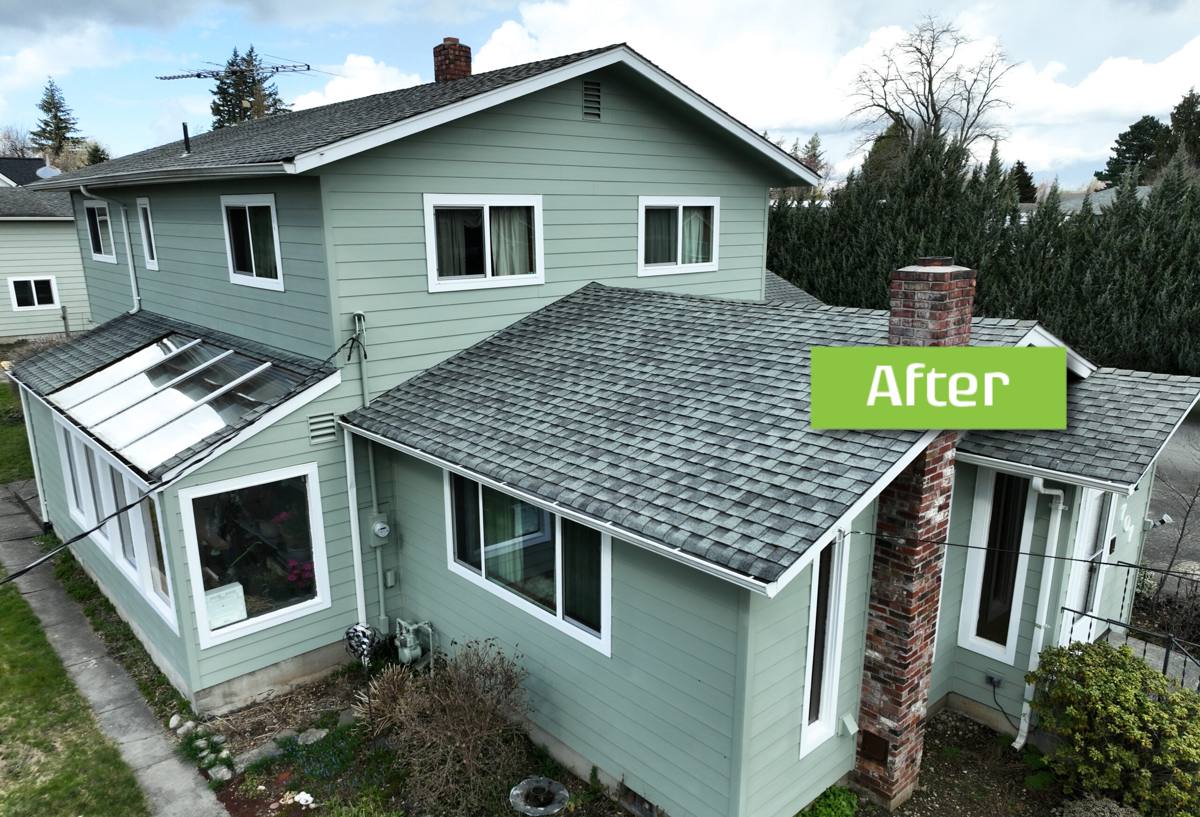
Why the Local Climate Changes the Repair
Storm repair in a place like Blaine isn't just about closing a hole. Whatcom County's marine climate — salt-laden air, near-constant humidity, and long stretches of rain punctuated by wind events — affects how a repair needs to be built to actually last.
Salt Air and Metal Components
Homes near California Creek see more airborne salt than roofs further inland, and that accelerates corrosion on exposed fasteners, flashing, and any unprotected metal. A storm repair that uses the wrong grade of flashing or exposed nails can start showing rust streaks and early failure within a couple of seasons. We use corrosion-resistant flashing and fastening appropriate for a coastal-influenced site, not just whatever matches the existing material if that material was already underperforming.
Driving Rain and Wind-Driven Water
Storms here don't just drop water straight down — wind pushes rain sideways and up under shingle edges, especially at ridges, valleys, and flashing transitions. A repair that only addresses the visible tear without re-sealing and properly lapping the surrounding courses can leave a path for wind-driven water even after the obvious damage is fixed.
Moss Season
Blaine's moss season runs long — realistically most of the fall through spring. Moss holds moisture against the roof surface, works into repair seams, and can lift shingle edges over time if it's left to grow across a patched area. Part of doing a storm repair right here is making sure the surrounding roof is clean and treated so moss doesn't undermine the new work within a year or two.
What a Correct Storm Repair Actually Involves
A lot of storm repairs get done fast and look fine for a season, then fail because the underlying work was rushed. Here's what we check and do on every storm damage call in California Creek:
- Full roof assessment, not just the obvious spot. We check the whole roof plane, not just where the damage is visible, since wind events usually stress more than one area.
- Underlayment and decking inspection. If water has been getting in for any length of time, the felt or synthetic underlayment and the decking underneath need to be checked for saturation or soft spots before new shingles go down.
- Matching materials where possible. We try to match existing shingle color and profile so the repair blends in, though on older roofs an exact match isn't always available — we'll tell you honestly if that's the case.
- Proper flashing and fastener upgrades. If the original flashing or fasteners weren't suited to a coastal environment, we upgrade them as part of the repair rather than reinstalling the same weak point.
- Re-securing surrounding courses. Storm damage often loosens shingles beyond the torn or missing ones. We re-nail and reseal adjacent courses so the repair area doesn't become the next failure point.
- Debris and moss clearing. We clear moss and debris from the repair area and nearby roof surface so the new work isn't sitting under material that holds moisture.
Repair vs. Replacement: How We Make the Call
Not every storm-damaged roof needs full replacement, and we won't push that direction just because it's the bigger job. The decision usually comes down to the roof's age, how much of it is affected, and what we find once we're actually up there.
| Factor | Points Toward Repair | Points Toward Replacement |
|---|---|---|
| Roof age | Under 12-15 years, good overall condition | Nearing or past expected shingle lifespan |
| Extent of damage | Isolated to one slope or area | Spread across multiple slopes or the whole roof |
| Decking condition | Dry, solid decking under the damage | Soft spots, rot, or repeated water staining found |
| Shingle match availability | Close match available for a clean patch | Discontinued product, mismatch would be obvious |
| Storm history | First significant damage event | Pattern of repeated storm damage over the years |
If we find rot, widespread granule loss, or a roof that's already near the end of its service life underneath the storm damage, we'll say so plainly and explain the trade-offs — including the honest cost difference between another round of repairs versus replacing now.
Insurance and Documentation
Most storm damage repairs in this area involve a homeowner's insurance claim. We document what we find with photos and a written scope before starting work, which gives you something concrete to bring to your adjuster. We're not a public adjuster and we don't negotiate your claim for you, but we can walk you through what's storm-related damage versus what's normal wear, since insurers draw that line carefully and it affects what's covered.
Our Process for California Creek Storm Calls
Because we already work in and around Blaine, we're not learning the area's exposure patterns for the first time when a storm rolls through California Creek. Our process:
- Prompt assessment. After a storm, we prioritize active leaks and structural exposure first, then schedule less urgent repairs.
- Temporary protection if needed. If a roof has an active opening and full repair can't happen immediately, we can tarp or otherwise protect the area to stop further water intrusion.
- Written scope before work starts. You'll know what we're doing and why before anyone gets on the roof.
- Repair built for the site, not a generic patch. Flashing, fasteners, and sealing methods are chosen for a coastal Whatcom County location, not just whatever's fastest.
- Follow-up recommendation. If we see signs the rest of the roof is aging out or has other soft spots, we'll tell you — even if it means a smaller job today and a bigger conversation for next year.
A Quick Homeowner Checklist After a Storm
If a storm has just come through California Creek, here's what's worth checking (from the ground — we don't recommend getting on the roof yourself):
- Check ceilings and attic spaces for new water stains or damp spots
- Look for shingle pieces or granules in gutters and around the yard
- Note any visibly lifted or missing shingles you can see from ground level
- Check gutters for damage or separation from the fascia
- Watch for water pooling near the foundation, which can point to gutter or roof-edge failure
- Take photos of anything you notice, dated if possible, for insurance purposes
Why Local Experience Matters for This Kind of Repair
Storm damage repair is one of those jobs where local knowledge actually changes the outcome. A crew that regularly works Blaine and the surrounding Whatcom County coastline knows which flashing details tend to fail first in this exposure, how aggressive moss growth gets on north-facing slopes near the water, and what a genuinely storm-related failure looks like versus a roof that was already due for attention. That local pattern recognition is part of what keeps a repair from being a temporary fix.
If a recent storm has left damage on your roof in California Creek, we're happy to take a look and give you a straight answer — repair or replace, urgent or not — along with a free, no-pressure estimate. There's a form below to get that started.