 Blaine Siding
 Why Cherry Point Roofs Take a Different Kind of Beating
Cherry Point sits right up against the water, and that changes what a roof has to deal with year-round. Homes here get salt-laden air off the Strait, wind-driven rain that finds its way under poorly lapped materials, and a moss season that can run most of the year in the shade of the fir and cedar cover common to this part of Whatcom County. None of that is unique to any one house on the point — it's the baseline every roof out here is working against, whether the owner knows it or not.
Asphalt shingle roofs in this environment tend to show their age early: granule loss from constant moisture cycling, moss rooting into the shingle mat, and edges that lift after enough freeze-thaw and wind events. Metal roofing was built for exactly this kind of exposure, which is why we see more homeowners in Cherry Point asking about it than almost anywhere else we work in Blaine.
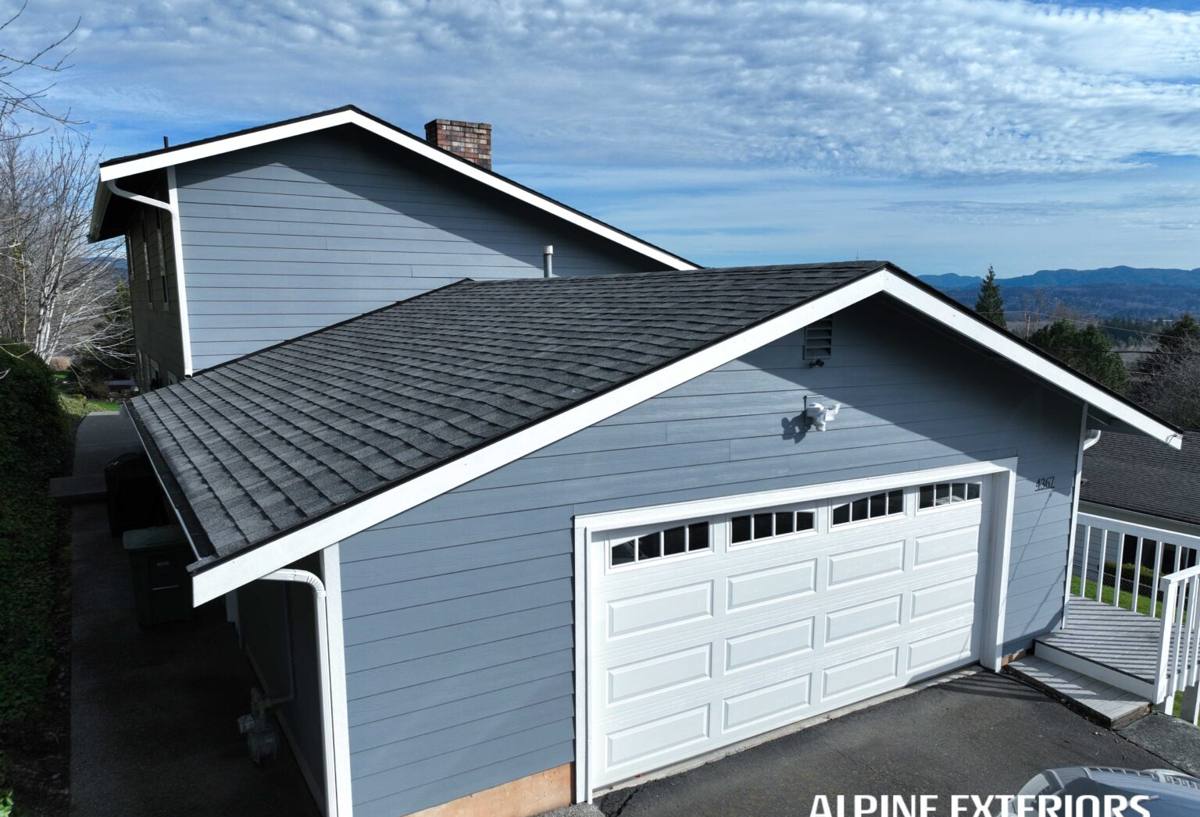
What Metal Roofing Actually Solves Here
The appeal of metal in a place like Cherry Point isn't cosmetic — it's functional. A correctly installed metal roof addresses the specific problems this climate causes:
- Moss resistance: Metal gives moss and lichen almost nothing to grab onto compared to the rough surface of shingles, so growth is slower and easier to knock back with routine cleaning.
- Water shedding: Steep-pitch metal panels with properly lapped seams move driving rain off the roof fast, instead of letting it sit and work its way sideways under wind pressure.
- Salt air durability: The right metal and finish combination resists the corrosion that salt-heavy air accelerates on unprotected fasteners and cut edges.
- Wind performance: Panels fastened correctly to a solid deck hold up better in the gusty conditions that come through waterfront properties than shingles relying on adhesive strips alone.
None of that means metal is maintenance-free — nothing on a roof in this climate truly is — but it shifts the maintenance burden from "roof is failing" to "roof needs occasional cleaning," which is a much better position for a homeowner to be in.
Choosing the Right Metal Roofing System
"Metal roofing" covers a few genuinely different products, and the right one depends on the roof's pitch, the home's style, and budget. We walk every Cherry Point homeowner through the real trade-offs rather than pushing one system for every job.
| System | How It's Fastened | Best Fit | Trade-Offs |
|---|---|---|---|
| Standing seam | Concealed clips, no exposed fasteners on the field | Waterfront and higher-exposure roofs | Highest upfront cost, but the fewest long-term failure points |
| Exposed fastener panel | Screws driven through the panel face | Budget-conscious projects, outbuildings, secondary structures | Fasteners need periodic inspection and eventual re-torquing or replacement |
| Metal shingle/shake profile | Interlocking panels, concealed fasteners | Homes wanting a traditional look with metal's durability | More seams than standing seam, so detailing at valleys matters more |
For most Cherry Point homes with direct water exposure, we lean toward recommending standing seam because it has no exposed screw heads for salt air to attack over time. That said, exposed fastener systems installed correctly and maintained on schedule still perform well — it comes down to budget, roof complexity, and how hands-on the homeowner wants to be with upkeep.
Steel vs. Aluminum
Both show up on Cherry Point roofs. Steel panels, when properly coated and with cut edges sealed, hold up well and cost less. Aluminum naturally resists corrosion without relying as heavily on the coating staying intact, which some homeowners prefer given the salt content in the air this close to the water. We'll talk through which makes sense for your specific roof rather than defaulting to one.
What a Correct Metal Roof Installation Actually Involves
A metal roof is only as good as what's underneath it and how the details are handled. This is where most of the difference between a roof that lasts decades and one that leaks in five years actually happens.
Deck and Underlayment
We check the existing deck for soft spots or rot before anything goes down — a beautiful metal roof over a compromised deck is still a problem waiting to surface. A high-temperature, self-adhering underlayment goes down as the water barrier of last resort, particularly at eaves and valleys where wind-driven rain is most likely to test the roof.
Fastening and Panel Layout
Panels are laid out to minimize seams running against the prevailing wind and rain direction where the roof geometry allows it. Fasteners, where used, are spaced and torqued to manufacturer spec — overdriven or underdriven screws are a common source of the leaks people blame on "bad metal roofing" when the metal was never the problem.
Flashing and Penetrations
Chimneys, vents, and valleys are where roofs actually fail, metal or otherwise. We flash these with the same attention whether it's a standing seam or shingle-style profile, because a roof can have flawless panels and still leak at a poorly flashed penetration.
Ventilation
Metal roofs need proper attic ventilation to perform as intended — trapped moisture underneath a metal roof in a marine climate like this one can cause condensation issues that have nothing to do with the roof surface itself. We check existing ventilation as part of the estimate, not as an afterthought.
Our Process, Start to Finish
- On-site assessment: We look at your existing roof, deck condition, ventilation, and any trouble spots you've already noticed before recommending a system.
- Written estimate: You get a clear scope and price before any work starts — no surprise add-ons mid-project.
- Tear-off and deck check: Old roofing comes off and the deck gets inspected and repaired where needed.
- Underlayment and flashing: The water-management layer goes down first, with extra attention at valleys, eaves, and penetrations.
- Panel installation: Panels go on to spec, with layout planned around your roof's exposure to wind and rain.
- Final walkthrough: We go over the finished roof with you, including what maintenance to expect and when.
- Site cleanup: Old materials and debris hauled off — we don't leave a project site looking worse than we found it.
Maintenance in a Salt Air, Moss-Heavy Climate
Metal roofing cuts down on maintenance compared to shingles, but "low maintenance" isn't "no maintenance" in a Cherry Point climate. A short annual routine keeps a metal roof performing the way it's supposed to for its full lifespan:
- Clear gutters and downspouts before the fall rains — trapped debris backs water up under eaves regardless of roofing material.
- Rinse off accumulated debris and organic buildup from valleys and low-slope sections where moss is most likely to take hold.
- Check exposed fasteners (if your system has them) for loosening or early corrosion, especially after a windy winter.
- Inspect flashing around chimneys, vents, and skylights for sealant that's dried out or pulled away.
- Trim back overhanging branches — reducing shade and debris fall slows moss growth more than any treatment applied after the fact.
What It Costs
Metal roofing costs more upfront than asphalt shingles, and the range depends heavily on system type, roof complexity, and access. Rather than quote a number that won't mean much without seeing your roof, here's what actually moves the price:
| Factor | Why It Matters |
|---|---|
| Panel system chosen | Standing seam runs higher than exposed fastener panels due to labor and material |
| Roof pitch and complexity | Steep roofs, multiple valleys, and dormers add labor time |
| Deck condition | Rot or soft decking found during tear-off adds repair cost before panels go on |
| Access | Waterfront lots with limited staging area can affect equipment and labor logistics |
| Existing layers | Removing old shingle layers versus a single-layer tear-off changes disposal and labor |
We'd rather walk your roof and give you real numbers than throw out a broad estimate that doesn't hold up once we're actually on-site.
Why Local Cherry Point Experience Matters
A roofing crew that's worked other homes in this same stretch of Whatcom County already knows how the wind comes off the water here, how bad the moss gets on north-facing pitches, and which flashing details actually hold up against this specific combination of salt air and driving rain. That's different from general roofing knowledge — it's knowing what this particular coastline does to a roof over years, not just what a manufacturer's spec sheet says on paper. It also means we're not learning on your roof; we're applying what's already worked on homes with the same exposure.
If you're weighing metal roofing for a home in Cherry Point, we're glad to take a look and give you a straight, no-pressure estimate — no obligation, just an honest read on what your roof actually needs. Use the form below to get started.