 Blaine Siding
 Why Windows Wear Out Faster in Sandy Point
Sandy Point sits right on the water, and that changes what a window has to survive. Salt-laden air corrodes hardware and dulls finishes faster than it does even a few miles inland. Driving rain off the Strait works its way into any gap in flashing or sealant that a lower-exposure home might never notice. And Whatcom County's long, damp moss season keeps humidity levels up around window frames and sills for months at a time, which is exactly the kind of environment that finds weak seals and failing glazing. None of this means windows here need to be exotic or overbuilt — it means the details of material choice, sealing, and installation matter more than they would somewhere drier and further from the shoreline.
We work on homes throughout Blaine and the surrounding coastal neighborhoods, and Sandy Point comes with its own pattern of problems: fogged double panes, corroded cranks and locks, sills that have gone soft, and heating bills that creep up every winter because the glass and frames aren't doing their job anymore. This page covers what an energy-efficient window job actually involves out here — not the generic version, the coastal version.
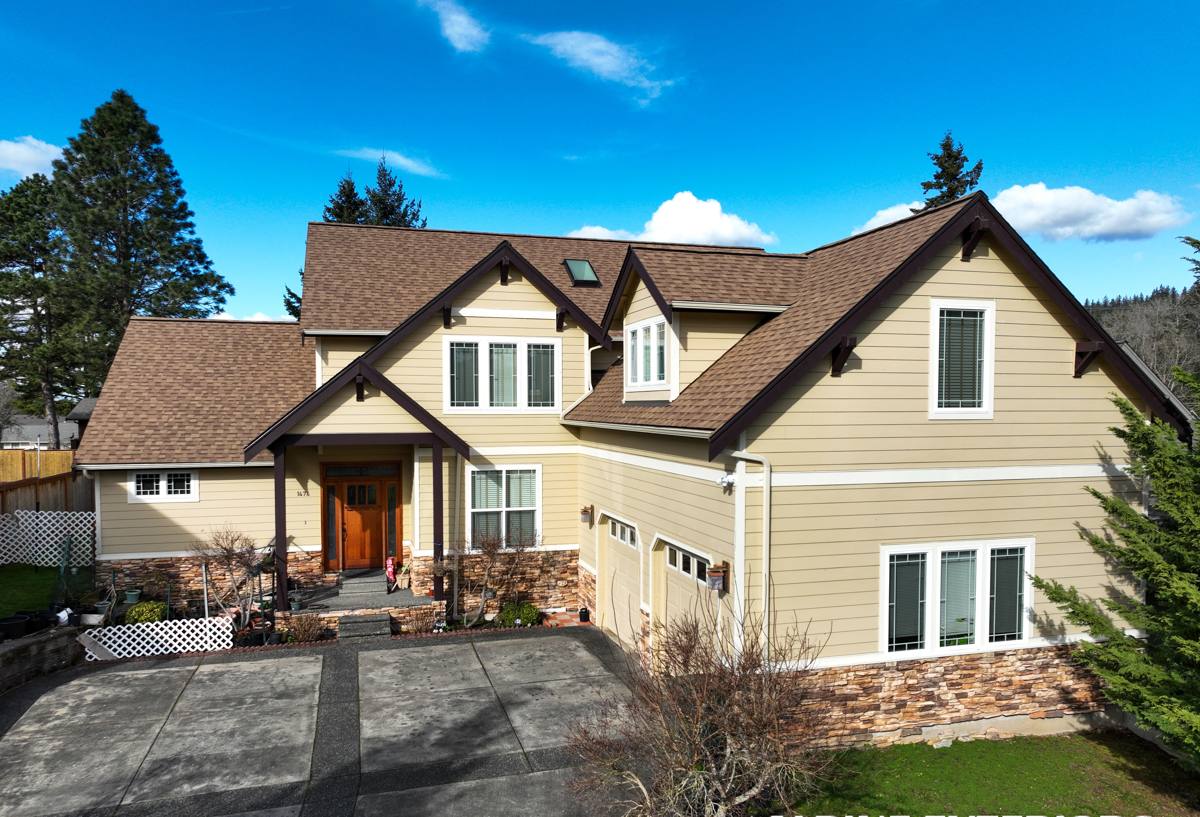
What "Energy-Efficient" Actually Means for This Climate
Energy-efficient windows aren't just about keeping heat in during the winter, though that matters plenty in a Pacific Northwest climate with a long heating season. It's also about controlling moisture and wind-driven rain, which is arguably the bigger issue for a home this close to the water.
The three numbers that actually matter
- U-factor — how well the window resists heat transfer. Lower is better. This is the number most tied to your heating bill.
- Solar Heat Gain Coefficient (SHGC) — how much solar heat passes through the glass. Matters more on south- and west-facing windows.
- Air leakage rating — how much air moves through the assembly when it's shut. This is the number most directly tied to comfort and drafts.
For a Sandy Point home, we typically recommend double- or triple-pane glass with a low-E coating and an argon or krypton gas fill between panes. The gas fill and coating do most of the thermal work; the frame material and installation quality do most of the work keeping wind-driven rain and salt moisture out of the wall assembly. A window with excellent glass performance but a poor installation will still leak air, fog prematurely, and let moisture reach the framing behind it — so the glass spec and the install quality have to be treated as one job, not two.
Frame Materials: What Holds Up Near the Water
Frame material choice matters more here than it does inland, because salt air is hard on hardware, finishes, and certain wood species. Here's how the common options compare for a coastal property like Sandy Point:
| Frame Material | Coastal/Salt-Air Performance | Maintenance | Notes |
|---|---|---|---|
| Vinyl | Good — won't corrode or rot, handles moisture well | Low — occasional cleaning | Most common choice for coastal homes on a budget; quality varies by manufacturer |
| Fiberglass | Excellent — very stable, resists expansion/contraction and won't corrode | Low | Higher upfront cost; holds up well to temperature swings and moisture cycling |
| Wood | Fair — needs a well-maintained exterior finish to keep moisture and salt out | High — repainting/resealing on a regular cycle | Best reserved for interiors or protected elevations unless clad |
| Wood-clad (aluminum or vinyl exterior) | Good — exterior cladding shields the wood from salt and rain | Moderate | Popular where a wood interior look is wanted with less coastal maintenance |
| Aluminum | Fair — can corrode over time without a quality anodized or powder-coat finish | Moderate | Thermally less efficient unless thermally broken; less common for residential coastal retrofits |
We don't push one material on every job. The right call depends on which side of the house we're talking about, how exposed that elevation is to wind off the water, and what you're trying to balance between upfront cost and long-term upkeep. A shoreline-facing window and a sheltered interior window on the same house can reasonably get different treatment.
Installation Detail Is the Whole Ballgame Here
A well-rated window installed poorly will underperform a modest window installed correctly — and that gap is wider on a property exposed to driving rain than it is somewhere sheltered. This is the part of the job that doesn't show up in a product brochure but determines whether the window still performs in ten years.
What a correct installation actually involves
- Removing the old window and inspecting the rough opening for hidden rot or moisture damage before anything new goes in
- Correct flashing sequence — sill pan, jamb flashing, and head flashing installed so water is directed out, not trapped behind the window
- Proper shimming so the window sits square and doesn't bind or rack over time as the house settles or the frame expands and contracts
- Sealing with the right sealant for the substrate and exposure, not a one-size-fits-all caulk
- Insulating the gap between the window frame and rough opening without overpacking it, which can bow the frame
- Interior and exterior trim work that sheds water away from the assembly rather than channeling it toward it
On a home exposed to wind-driven rain, the flashing and sealing details are what separate a window that lasts twenty-plus years from one that develops rot in the surrounding wall within five. This is also where a lot of budget installs cut corners — the window itself might be fine, but the installation around it isn't built for the exposure it's actually facing.
Signs Your Current Windows Are Losing the Battle
Most homeowners don't replace windows on a fixed schedule — they replace them when the signs show up. In a Sandy Point environment, watch for these:
- Fogging or a hazy film between the panes (the seal has failed and the gas fill is gone)
- Visible corrosion or pitting on hardware, cranks, or hinges
- Soft or discolored wood at the sill or surrounding trim
- Noticeable drafts near the frame even when the window is latched
- Difficulty opening, closing, or locking — frames that have swollen or warped
- A cold-to-the-touch interior glass surface in winter, even with the heat running
- Condensation forming on the inside of the glass regularly during colder months
- Rising heating bills without a clear cause elsewhere in the home
Any one of these on its own isn't necessarily an emergency. Several together, especially paired with visible moisture damage at the sill, usually means the window and the assembly around it need attention before the problem spreads into the wall.
How the Job Actually Runs
We keep this straightforward. There's no reason a window job needs to feel like a mystery.
1. Assessment
We look at each window individually, not just the house as a whole — exposure varies a lot from one elevation to another, especially on a waterfront lot. We check framing condition, current seal performance, and what's actually causing the problem before recommending anything.
2. Recommendation
We'll walk you through frame material, glass package, and where it makes sense to prioritize (often the most exposed elevation first) versus where you can reasonably phase the work over time if budget is a factor.
3. Installation
Old windows come out, the opening gets inspected and repaired if there's hidden damage, and the new window goes in with full flashing, sealing, and insulation done to the standard the exposure calls for — not a shortcut version.
4. Finish and cleanup
Interior and exterior trim gets finished, everything is sealed, and the site is cleaned up. We walk through the finished work with you before we consider the job done.
Whole-House vs. Phased Replacement
Not every home needs every window replaced at once, and we won't tell you it does. If your budget doesn't stretch to a full house in one go, it's reasonable to start with the windows taking the most direct exposure — usually the elevation facing the water and prevailing wind — and phase the rest over subsequent years. The tradeoff is that phased work means dealing with mismatched window age for a while, and you'll want to keep the same frame color and style available for the later phases. We'll tell you honestly if your specific situation is better served doing it all at once versus phasing it.
Living With Salt Air and Moss Season Afterward
New windows reduce maintenance, but they don't eliminate it in this environment. A quick rinse of exterior frames and hardware a couple times a year cuts down on salt buildup, especially on the ocean-facing side of the house. Keep weep holes at the base of the frame clear so water can drain rather than pool. During the wetter months, it's worth an occasional look at exterior caulking and trim for any early signs of gapping — catching a small sealant failure early is a five-minute fix; catching it two years later can mean repairing water damage in the wall. None of this is heavy upkeep, but it's a different rhythm than a window on a sheltered inland lot would need.
Why Local Installation Experience Matters
Window performance specs are the same on paper everywhere. What's different is how those windows actually hold up once they're on a Sandy Point wall facing the water for a few winters. A crew that's done this work along Whatcom County's coastline knows which elevations typically need extra attention to flashing, which frame materials are worth the added cost on a given exposure, and what moisture problems tend to show up first in this kind of setting. That's the kind of judgment that comes from doing the work here repeatedly, not from a product catalog.
If your windows are fogging, drafty, hard to operate, or just costing you more to heat around every winter, we're happy to take a look. We offer free, no-pressure estimates for Sandy Point homeowners — walk us through what you're seeing and we'll give you an honest read on what's needed and what it'll take to fix it right. Use the form below to get started.