 Blaine Siding
 Roofs on the Point Take a Different Kind of Beating
Point Roberts sits on its own peninsula, surrounded on three sides by Boundary Bay and the Strait of Georgia, with nothing but open water to slow down wind and weather before it reaches a roofline. That exposure, combined with Whatcom County's long wet season, means storm damage here rarely looks like a single dramatic event. More often it's an accumulation: a windstorm loosens a run of shingles, salt-laden air works on exposed fasteners and flashing over the following months, and moss quietly gets a foothold in whatever moisture the wind damage let in. By the time a homeowner notices a stain on a ceiling, the roof has usually been compromised for a while.
Storm damage repair on this stretch of the coast isn't just about patching what a storm broke. It's about recognizing that the same conditions that caused the damage are still present and will keep working on the repair unless it's done with that exposure in mind.
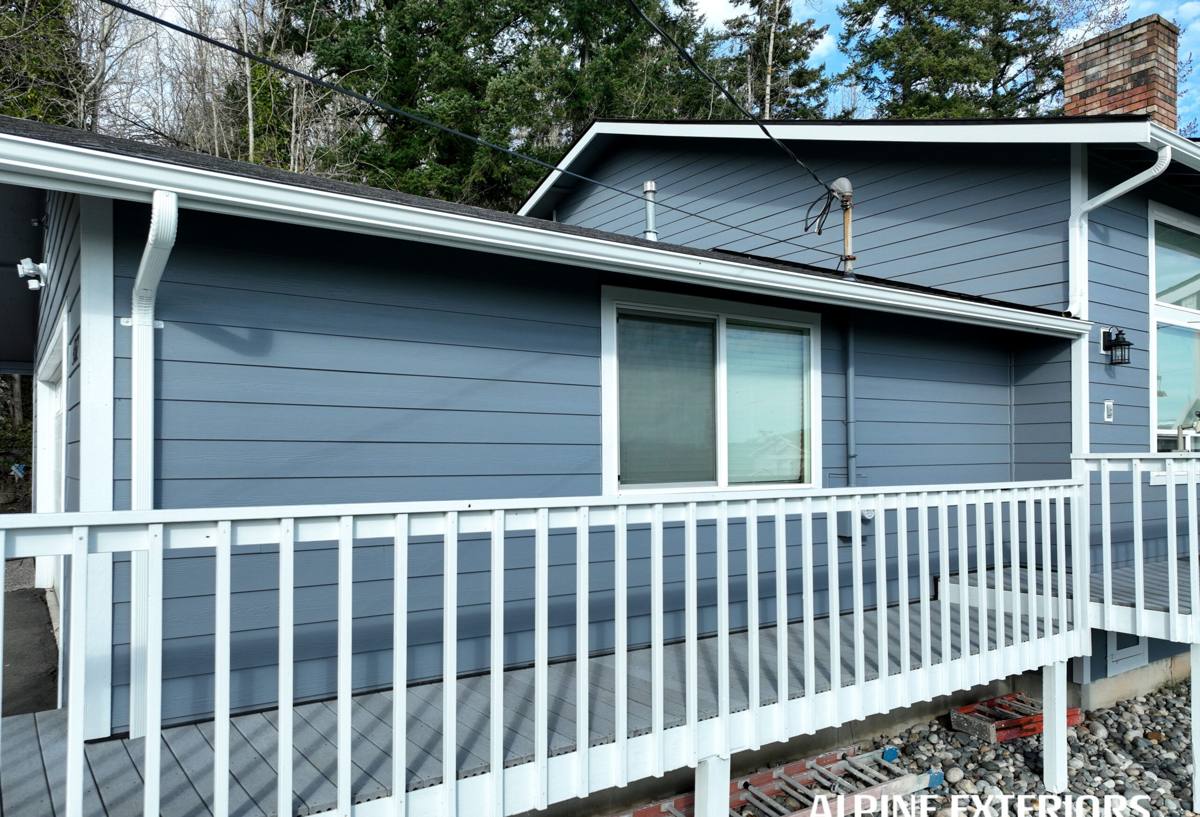
What Storm Damage Actually Looks Like on a Point Roberts Roof
Wind-Lifted and Missing Shingles
Sustained wind off the water doesn't need to be a named storm to do damage — steady gusts over a season can gradually break the seal strip on asphalt shingles, lift tabs, and eventually pull shingles loose entirely. Once a shingle's seal is broken, it rarely reseals on its own, even after the wind dies down. The damage looks minor from the ground but leaves the underlayment exposed to the next rain.
Flashing and Fastener Corrosion
Salt air accelerates corrosion on exposed metal — roof flashing, nail heads, vent boots, and any hardware that isn't rated for coastal exposure. Corroded fasteners back out or fail quietly, and corroded flashing at valleys, chimneys, and roof-to-wall transitions is one of the most common places we find active leaks that started as storm damage nobody noticed right away.
Moss, Algae, and Trapped Moisture
Whatcom County's long, damp moss season means any spot where storm damage has disrupted water flow — a lifted shingle edge, a dented ridge cap, debris caught in a valley — becomes a place for moss and algae to establish. Moss holds moisture against the roof surface far longer than the roof was designed to tolerate, which accelerates granule loss and shortens the life of the repair area specifically, even when the rest of the roof is sound.
Impact and Debris Damage
Wind off the water regularly brings down branches and debris from surrounding trees. Impact damage can crack or dislodge shingles, dent metal flashing and gutters, and puncture underlayment in ways that aren't always visible from the ground but show up as a leak weeks later during the next rain.
Why a Fast, Accurate Assessment Matters
Storm damage that goes undiagnosed doesn't stay the same size. A handful of lifted shingles left through one more rainy stretch can lead to soaked sheathing, and soaked sheathing is a different, more expensive repair than a shingle swap. The goal with a proper storm damage inspection is to catch the problem while it's still a surface repair — not after water has worked its way into the roof deck or the wall assembly below it.
An honest assessment also means telling a homeowner when damage is cosmetic and doesn't need immediate repair, not treating every wind-blown shingle as an emergency. Point Roberts homeowners deal with enough weather-related upkeep without being sold work the roof doesn't need.
What a Proper Storm Damage Repair Involves
1. Full-Slope Inspection, Not Just the Obvious Spot
Wind damage rarely stays confined to where it's visible from the driveway. A proper repair starts with checking the whole slope the wind hit, plus valleys, ridge caps, flashing points, and the roof edges, since wind uplift tends to start at edges and work inward.
2. Matching Materials, Not Just Covering the Hole
Shingles fade and granules wear over time, so a patch using brand-new shingles on an older roof can stand out and, more importantly, may not match the wind rating or thickness of what's already there. Where an exact match isn't available, we're upfront about it and discuss whether a full slope replacement makes more sense than a mismatched patch.
3. Correcting the Flashing and Fasteners, Not Just the Shingles
Replacing shingles without addressing corroded flashing or fasteners underneath just resets the clock on the same failure. Any storm repair we do includes checking and, where needed, replacing the metal and hardware in the repair area with materials suited to salt air exposure.
4. Addressing the Moisture Path
If moss or trapped debris contributed to the damage, the repair isn't finished until that moisture path is corrected — clearing debris channels, confirming proper shingle overlap and water flow, and checking that ventilation in the affected area isn't trapping additional moisture against the underside of the deck.
Repair or Replace? What Actually Drives That Decision
Not every storm-damaged roof needs to be replaced, and not every roof can be reasonably patched. The right call depends on the roof's age, how much of it is affected, and what's underneath the visible damage.
| Factor | Favors Targeted Repair | Favors Full Replacement |
|---|---|---|
| Roof age | Under 10-12 years, rest of roof in good shape | Nearing or past expected shingle lifespan |
| Extent of damage | Isolated to one slope or small area | Damage spread across multiple slopes |
| Decking condition | Dry, solid sheathing under the damage | Soft or water-stained decking found |
| Shingle match | Close match to existing shingles available | Existing shingles discontinued or badly faded |
| History of repairs | First storm-related repair on this roof | Repeat repairs to the same area over time |
Cost follows the same logic: a targeted repair to shingles and flashing on one section is a modest job, while a full tear-off and reroof is a much larger investment. We walk through which category a given roof falls into before any work starts, and why, so the decision makes sense rather than defaulting to the more expensive option.
How We Handle Storm Damage Repairs in Point Roberts
Point Roberts is a border exclave — reaching it means crossing into Canada and back, which affects how quickly some contractors are willing to respond and how they schedule material deliveries. We already build that logistics into our scheduling and material ordering for this area, so a repair here isn't treated as an afterthought squeezed in around jobs closer to Blaine.
Our process for a storm damage call is straightforward:
- Inspect the full affected slope plus adjacent flashing points, not just the reported problem area
- Document what we find with a clear explanation of cause, not just a list of symptoms
- Give a written scope and price before any work starts, including whether repair or replacement makes more sense
- Match materials as closely as possible and use corrosion-resistant flashing and fasteners suited to coastal exposure
- Confirm proper water flow and ventilation in the repaired area before calling the job finished
Why Local Experience on the Peninsula Matters
A contractor who mostly works inland doesn't always account for how much faster salt air corrodes exposed hardware, or how persistent moss pressure is on a roof that rarely gets a long dry stretch to fully shed moisture. Crews who already work Point Roberts regularly know which failure points show up first on this peninsula and build the repair to hold up against the same conditions that caused the damage, rather than just restoring the roof to how it looked before the storm.
There's also a practical side: familiarity with the border crossing for materials and crew access means fewer delays between the initial inspection and the actual repair — something that matters more when there's an active leak.
A Simple Post-Storm Checklist for Homeowners
After any significant wind event, it's worth a quick visual check before the next rain arrives. Things to look for from the ground or a safe vantage point:
- Shingles that look lifted, curled, or are missing entirely compared to the surrounding roof
- Granules collecting in gutters or at downspout outlets, which can indicate accelerated wear
- Visible dents or displacement in metal flashing, ridge caps, or gutters
- New or spreading moss and dark streaking, especially in valleys or along the north side of the roof
- Water stains on interior ceilings or in the attic after a heavy rain following a windstorm
- Debris buildup in valleys or against roof-to-wall transitions
None of these on their own necessarily means a major problem, but any of them is a reasonable trigger to get a professional look before the damage has a chance to spread.
Get a Straightforward Look at What Your Roof Needs
If a recent storm has you wondering whether your roof took real damage or just some cosmetic wear, we're happy to take a look and give you a clear, honest answer — no pressure, no inflated scope. Use the form below to request a free estimate, and we'll walk you through exactly what we find and what it would take to fix it right.