 Blaine Siding
 Roofing in Nooksack Has Its Own Set of Problems
Nooksack sits far enough inland from the Strait of Georgia that people sometimes assume salt air isn't a factor here the way it is right in Blaine. It still is, just in a slower, quieter way — moisture-laden marine air moves up the Nooksack River valley and settles into low-lying areas, and it doesn't take much of it to shorten the life of exposed metal fasteners, flashing, and ventilation components. Combine that with the amount of driving rain Whatcom County sees off the water and the long, damp shoulder seasons that let moss get a foothold on north-facing slopes, and you've got a roofing environment that punishes shortcuts. A roof replacement done right here isn't just about swapping old shingles for new ones — it's about building an assembly that can shed water fast, breathe properly, and resist the organic growth that thrives in our climate.
We've worked on homes throughout Nooksack and the surrounding rural properties, and the failure patterns we see are consistent: moss working roots into aging shingle mat, undersized or clogged ventilation trapping moisture in the attic, flashing that was never properly integrated at valleys and penetrations, and fastener corrosion in older metal roofing. None of that is exotic. It's the predictable result of a wet climate meeting materials or workmanship that weren't matched to it.
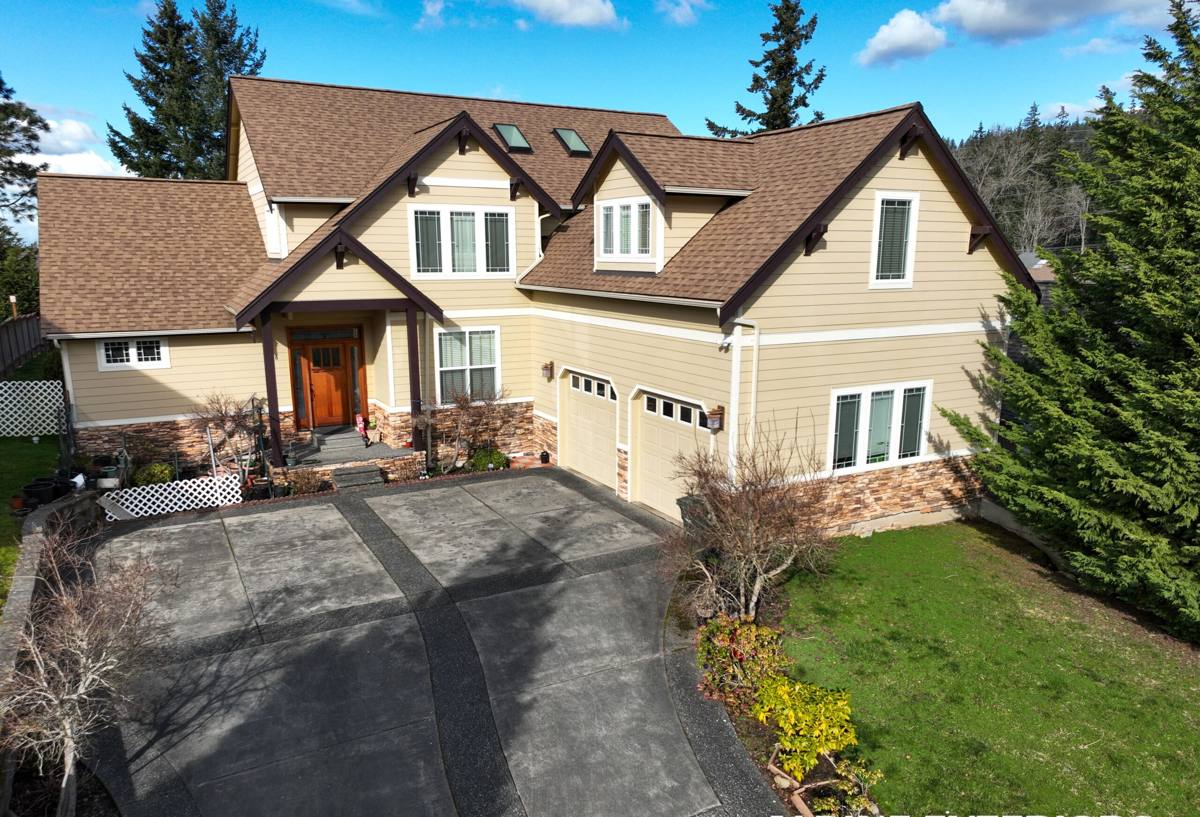
Signs a Nooksack Roof Needs Replacing, Not Patching
Not every roof problem calls for a full tear-off. But there's a point where repeated repairs stop making financial sense and start masking a bigger problem. Here's how we sort that out.
When Repair Still Makes Sense
- A localized leak from a single damaged section or a failed flashing detail
- Shingles or roofing is under two-thirds of its expected lifespan with no widespread granule loss
- Moss is present but hasn't lifted or cracked the roofing material underneath
- Decking underneath is confirmed sound with no soft spots
When Replacement Is the Honest Answer
- Multiple leaks in different areas, or leaks that keep returning after repair
- Widespread granule loss, curling, or cracked shingles across most of the roof
- Moss or moisture staining that's tracked down into the attic or soft decking
- Roofing is at or past its expected service life for the material and local exposure
- Previous repairs have layered patch on patch without addressing ventilation or flashing
If you're not sure which category your roof falls into, that's exactly what a roof inspection is for — we'd rather tell you honestly that a repair will hold for a few more years than sell a replacement you don't need yet.
What a Correct Roof Replacement Actually Involves
A roof replacement is more than the visible layer. Every component underneath it is doing work, and skipping or downgrading any of them is where premature failures come from — especially in a climate like ours.
Tear-Off and Deck Inspection
We remove the existing roofing down to the deck so we can actually see what's there, not guess. Any rot, delamination, or soft plywood gets replaced before anything new goes down. Roofing over a compromised deck just guarantees the next round of problems happens faster.
Underlayment
This is the roof's real waterproofing layer, and in a region with as much driving rain as Whatcom County gets, it matters more than most homeowners realize. We use synthetic or self-adhered underlayment appropriate to the roof's slope and exposure, with extra protection — ice-and-water-shield-type membrane — at eaves, valleys, and anywhere water tends to back up or pool.
Flashing
Flashing failures are behind a large share of the leaks we get called out for. Every valley, chimney, skylight curb, and wall intersection needs flashing that's properly lapped, sealed, and integrated with the underlayment — not just caulked over old metal and left. We replace flashing as part of a full roof replacement rather than reusing what's there.
Ventilation
An underventilated attic traps moisture, and trapped moisture is what accelerates deck rot and shortens the life of new roofing from underneath. We check intake at the eaves and exhaust at the ridge and correct the balance where the existing system falls short — this is one of the most commonly skipped steps in a cut-rate reroof.
Roofing Material Installation
Installed to manufacturer spec for nail pattern, exposure, and starter/ridge detailing — the parts of an installation that don't show up in a quick visual inspection but determine whether the roof performs through decades of Pacific Northwest weather rather than just looking finished on day one.
Material Choices for Nooksack's Climate
There's no single "best" roofing material — the right call depends on your home's structure, roof pitch, budget, and how much moss and moisture exposure the site actually gets. Here's how the common options stack up for our conditions.
| Material | Moss/Moisture Resistance | Typical Lifespan | Considerations for Nooksack |
|---|---|---|---|
| Architectural asphalt shingle | Good with algae-resistant granules | 25–30 years | Most common, cost-effective, wide color range; needs periodic moss removal |
| Metal (standing seam) | Very good — sheds moisture fast | 40–50+ years | Higher upfront cost; fastener and flashing quality is critical near salt air |
| Cedar shake | Requires ongoing maintenance | 20–30 years with upkeep | Traditional look; highest moss/moisture vulnerability without regular treatment |
| Composite/synthetic shingle | Good | 30–50 years | Impact and moisture resistant; premium material cost |
For most Nooksack homes, an architectural shingle with algae-resistant granules hits the right balance of cost, appearance, and performance against moss. For homes with more exposure or owners planning to stay long-term, metal roofing's lifespan often justifies the higher upfront investment. We'll walk through the honest trade-offs for your specific roof rather than pushing one product across the board.
Moss and Algae: Prevention Built Into the Job
Moss doesn't just sit on top of roofing — given enough time, it holds moisture against the surface and works into shingle edges, lifting granules and shortening the material's life. In a climate with as long a wet season as ours, prevention has to be part of the installation, not an afterthought.
- Algae-resistant shingle granules on shaded or north-facing slopes
- Zinc or copper strips near the ridge on roofs with heavy moss history, which release trace metals that discourage regrowth as rain washes over them
- Keeping overhanging branches trimmed back so roof surfaces get more sun and airflow
- Clean, unobstructed gutters so water isn't sitting against the roof edge
None of this makes a roof moss-proof forever, but it meaningfully extends the interval between cleanings and reduces the chance of moss-related damage showing up early.
Our Process for a Nooksack Roof Replacement
- Inspection and estimate — We assess the current roof, deck condition, ventilation, and flashing details, and give you a clear, itemized estimate with no pressure to decide on the spot.
- Material selection — We go over the trade-offs for your specific roof and budget, factoring in slope, sun exposure, and how much moss or moisture your site tends to get.
- Scheduling around weather — Roofing is weather-dependent work; we plan tear-off and dry-in around forecasted dry windows so your home isn't exposed longer than necessary.
- Tear-off and deck repair — Old roofing comes off, the deck gets inspected, and any damaged sections are replaced before we move forward.
- Underlayment, flashing, and ventilation correction — The parts that don't show but matter most get installed to spec.
- Roofing installation — Installed per manufacturer requirements for your specific material and roof pitch.
- Final walkthrough — We review the completed job with you, clean up the site thoroughly, and go over any maintenance recommendations specific to your roof and property.
Why a Crew That Already Works Nooksack Matters
Roofing crews that don't work rural Whatcom County regularly tend to default to generic specs — the kind of ventilation ratios and flashing details that work fine in a drier climate but leave gaps here. A crew that's already familiar with Nooksack's exposure knows which roof orientations collect moss fastest, how much driving rain a given valley detail needs to handle, and where marine air corrosion tends to show up first on fasteners and flashing. That familiarity shows up in fewer callbacks and a roof that's actually built for the conditions it's going to sit in for the next few decades, not just for a dry install day.
It also matters for scheduling. Roofing depends on stretches of dry weather, and a crew that knows the local weather patterns plans tear-offs accordingly instead of leaving a home exposed to a system rolling in off the water.
A Quick Pre-Estimate Checklist
Before we come out, it helps to have a rough sense of what you're dealing with. Walk your property and note:
- Roof age, if known, or approximately when the current roofing was installed
- Any active leaks and where they show up inside (ceiling stains, attic moisture)
- Visible moss, especially on shaded or north-facing slopes
- Sagging areas or soft spots you can see or feel from a ladder
- Whether gutters are clear and draining properly away from the roof edge
- Any recent storm damage — missing shingles, dented metal, displaced flashing
You don't need to climb up and inspect closely yourself — this is just so our estimate visit can start with useful context.
Get a Straightforward Estimate
If your roof is showing its age, holding onto moss it shouldn't, or you just want an honest read on how much life it has left, we're happy to take a look. The estimate is free, there's no pressure attached to it, and we'll tell you plainly whether you're looking at a repair or a replacement. Use the form below to get started.