 Blaine Siding
 Why Nooksack Siding Takes More Than a Standard Install
Homes around Nooksack sit in one of the wetter, shadier corners of Whatcom County. Between the tree cover along the river valley, the long stretch of low winter sun, and the salt-tinged air that blows in off the Salish Sea, siding here works harder than it does almost anywhere else in the state. Add a moss season that can start in October and still be going strong in June, and you have a climate that punishes any siding product installed without real attention to moisture management.
That combination — driving rain, persistent shade, and coastal humidity — is exactly why the siding material and the installation details matter more here than they would on a dry, open lot. Get either one wrong and you're looking at trapped moisture, soft trim, streaking, and premature paint failure within a few years instead of a couple of decades.
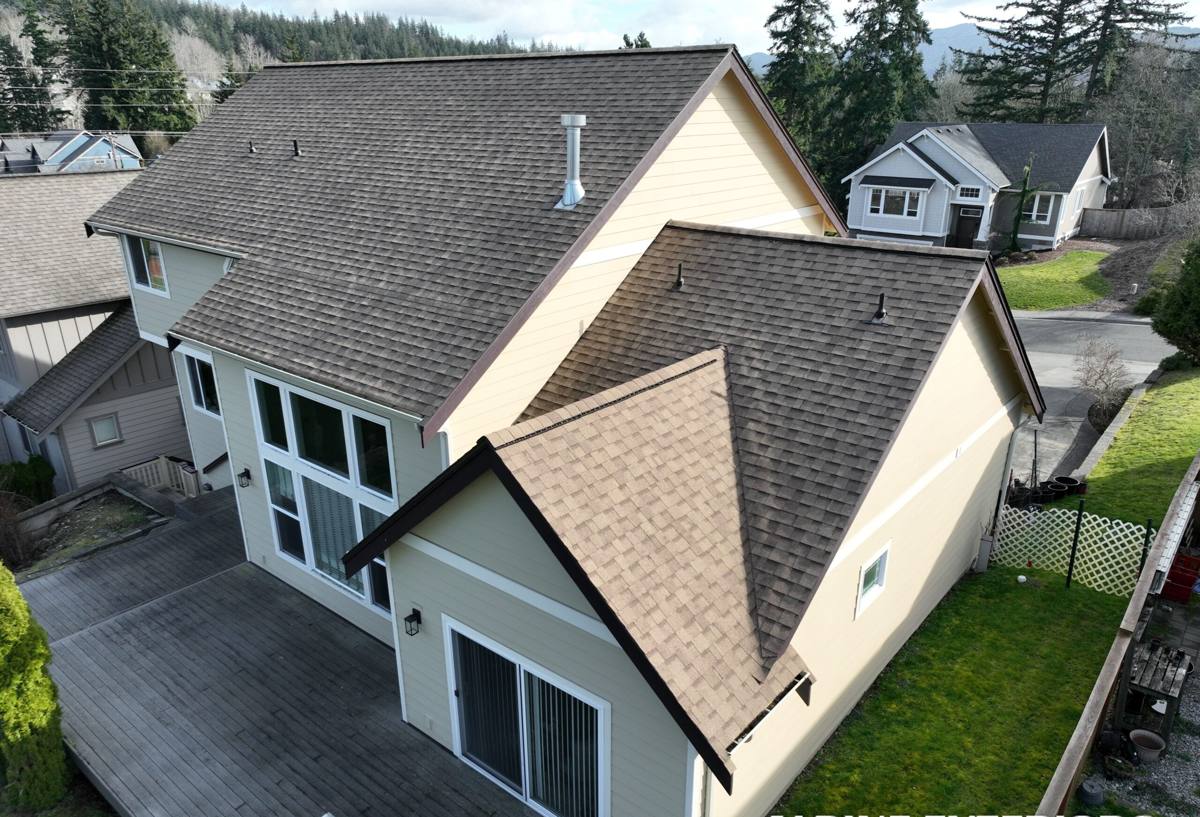
What Nooksack Homes Actually Need From Their Siding
Moisture Resistance That Doesn't Rely on Paint Alone
A lot of siding failures in this region aren't caused by rain hitting the wall — they're caused by rain that gets behind the wall and has nowhere to go. Whatever material goes on a Nooksack home needs to shed bulk water at the surface, manage the water vapor that does get through, and dry out fully between storms. In a climate with this many wet days back to back, "dries eventually" isn't good enough.
Resistance to Moss, Mildew, and Algae Growth
Shaded, damp siding is an ideal surface for moss and algae to take hold, especially on north- and west-facing walls that stay wet longest after a storm. The siding material itself won't stop biological growth entirely, but a dense, factory-cured surface gives moss and mildew far less to grip onto than a porous or field-painted surface does — and it makes routine cleaning safer and easier when growth does show up.
Stability Through Repeated Wet-Dry Cycles
Wood-based products swell when they take on moisture and shrink as they dry. Repeated over years of Whatcom County's wet winters and drier summers, that cycling opens joints, telegraphs through paint, and eventually warps boards. Siding on a Nooksack home needs to hold its shape through that cycle year after year, not just survive the first one.
Why We Install Only James Hardie Fiber Cement
We standardized on James Hardie fiber cement siding for every home we side, including in the Nooksack area, and we don't install vinyl, LP SmartSide, Cemplank, Allura, or primed wood siding. That's not a marketing position — it's a practical one, built around what actually holds up in this climate.
Fiber cement is dimensionally stable, non-combustible, and resistant to moisture-driven swelling and rot in a way that engineered wood and untreated wood products aren't. James Hardie specifically offers a factory ColorPlus finish that's baked on and warranted against fading and peeling, along with HardieZone engineering that accounts for regional moisture and temperature patterns rather than treating every climate the same. For a wet, shaded, coastal-influenced area like Nooksack, that combination is the difference between siding that needs attention every couple of years and siding you can largely forget about.
We're not going to tell you other products are worthless — vinyl is inexpensive and low-maintenance in the right setting, and engineered wood has real fans. But we've made a professional call: in this climate, with the moisture and moss pressure this area sees, fiber cement done right is what we're willing to put our name on.
What a Correct Fiber Cement Installation Involves
Fiber cement siding is only as good as the installation behind it. James Hardie's own warranty is conditioned on installation to their published specifications, and in a wet climate like this one, the details that get skipped are usually the ones that cause problems first.
- Correct starter strip placement and consistent bottom clearance off decks, patios, and grade
- Proper weather-resistant barrier and flashing integration at every window, door, and penetration
- Manufacturer-specified fastener type, spacing, and embedment depth — not just "close enough"
- Minimum 1/4-inch clearance and back-priming or factory-sealed edges where boards meet roofing, decking, or masonry
- Properly sized gaps at butt joints and trim, caulked with a high-quality, paintable sealant rated for exterior use
- Field-cut edges primed or sealed before installation, not left raw and exposed to weather
- Ventilation gap behind the siding where the wall assembly calls for a rainscreen approach
Skip any one of these on a Nooksack home and you've built a path for water to get behind the siding — at which point the material's inherent moisture resistance stops mattering, because the water is already past it.
Our Process for a Nooksack Fiber Cement Project
1. On-Site Assessment
We walk the exterior and look specifically at moisture history: staining, soft trim, existing moss patterns, gutter performance, and grading around the foundation. Shaded walls and low-lying yards near the river valley get extra attention here, since that's where problems tend to concentrate.
2. Product and Line Selection
James Hardie offers different plank profiles, panel options, and ColorPlus colors. We help match the product line and exposure to the home's design and the specific exposure conditions on each elevation — a shaded, wind-sheltered wall and a wide-open, rain-driven wall don't always need identical treatment.
3. Tear-Off and Substrate Check
Old siding comes off, and we inspect the sheathing underneath for rot or existing moisture damage before anything new goes up. Covering a compromised substrate with new siding just hides the problem — we fix what's underneath first.
4. Installation to Manufacturer Spec
Weather barrier, flashing, fastening, clearances, and joint treatment are all installed to James Hardie's published requirements, not shortcuts. This is also where the warranty protection actually comes from — Hardie backs the product, but correct installation is what keeps that backing valid.
5. Final Walkthrough
We check caulking lines, clearances, and finish quality before calling the job done, and we walk you through basic care specific to your home's exposure — which walls will need moss attention first, where gutters need to stay clear, and what normal weathering looks like versus something worth a call.
Living With Fiber Cement in a Moss-Prone Climate
Correctly installed James Hardie siding is low-maintenance, not zero-maintenance. In Nooksack's climate, that mostly comes down to a few habits:
- Rinse shaded or moss-prone walls annually with a garden hose and soft brush — avoid high-pressure washing directed at joints and seams
- Keep gutters clear so overflow doesn't run down the siding face and feed moss growth
- Trim back vegetation and tree limbs that keep a wall shaded and damp longer than necessary
- Re-caulk joints if you notice gaps or cracking, rather than waiting for water intrusion to show up inside
- Watch for any soft spots at the base of walls near grade, decks, or downspouts — these are the first places moisture problems show up
What Affects the Cost of a Fiber Cement Project
| Factor | Why It Matters in Nooksack |
|---|---|
| Home size and elevation count | More wall area and more corners/trim details mean more material and labor |
| Existing siding removal and substrate repair | Wet-climate homes more often need sheathing repair once old siding comes off |
| Plank profile and ColorPlus finish selection | Different exposures and colors carry different material costs |
| Trim, flashing, and detail work | Proper flashing at windows, doors, and roof lines takes more time but is what prevents leaks |
| Site access and lot conditions | Shaded, sloped, or heavily landscaped lots near the river valley can affect staging and labor time |
We provide a written estimate after seeing the home in person — broad ranges without an on-site look aren't useful to you, and we'd rather give you an accurate number than a fast one.
Why Hiring a Crew That Already Works This Area Matters
Nooksack's wet, shaded, moisture-driven conditions aren't unique in the abstract, but they do reward experience. A crew that regularly works homes around Blaine and the surrounding Whatcom County valleys already knows which elevations tend to hold moisture longest, how local moss patterns typically develop, and where the small installation details matter most given the amount of standing rain and shade a given wall will see. That's the kind of judgment that doesn't come from a spec sheet — it comes from having sided enough homes in this exact climate to know where problems actually start.
It also matters for warranty follow-through. James Hardie's product warranty depends on correct installation, and a local crew with a track record in this area is one you can actually reach if a question comes up five or ten years down the road — not a name from an out-of-area sales franchise that installed once and moved on.
Ready for a No-Pressure Estimate
If you're weighing a siding replacement on a Nooksack-area home, we're happy to take a look, walk you through what your specific walls and exposure actually need, and give you a straightforward written estimate — no pressure, no sales script. Use the form below to get started.