 Blaine Siding
 Point Roberts Puts Windows Through More Than Most Homes Ever See
Point Roberts sits on its own little peninsula off the bottom of Boundary Bay, surrounded on three sides by salt water, with nothing between most homes and the open marine air but a stand of trees or a stretch of bluff. That exposure is part of why people love living there — but it's also why windows in Point Roberts age differently than windows fifteen miles inland. Salt-laden air corrodes hardware, driving rain off the Strait finds every weak seam, and the long gray moss season here keeps wood, vinyl, and glazing surfaces damp for months at a time. A window that's rated fine for a catalog spec sheet can still fail early in this environment if it isn't installed with this specific climate in mind.
We install windows throughout Blaine and Whatcom County, and Point Roberts jobs get treated as their own category — not because the work is fundamentally different, but because getting it right here requires paying closer attention to water management, material choice, and hardware than a typical inland install does.
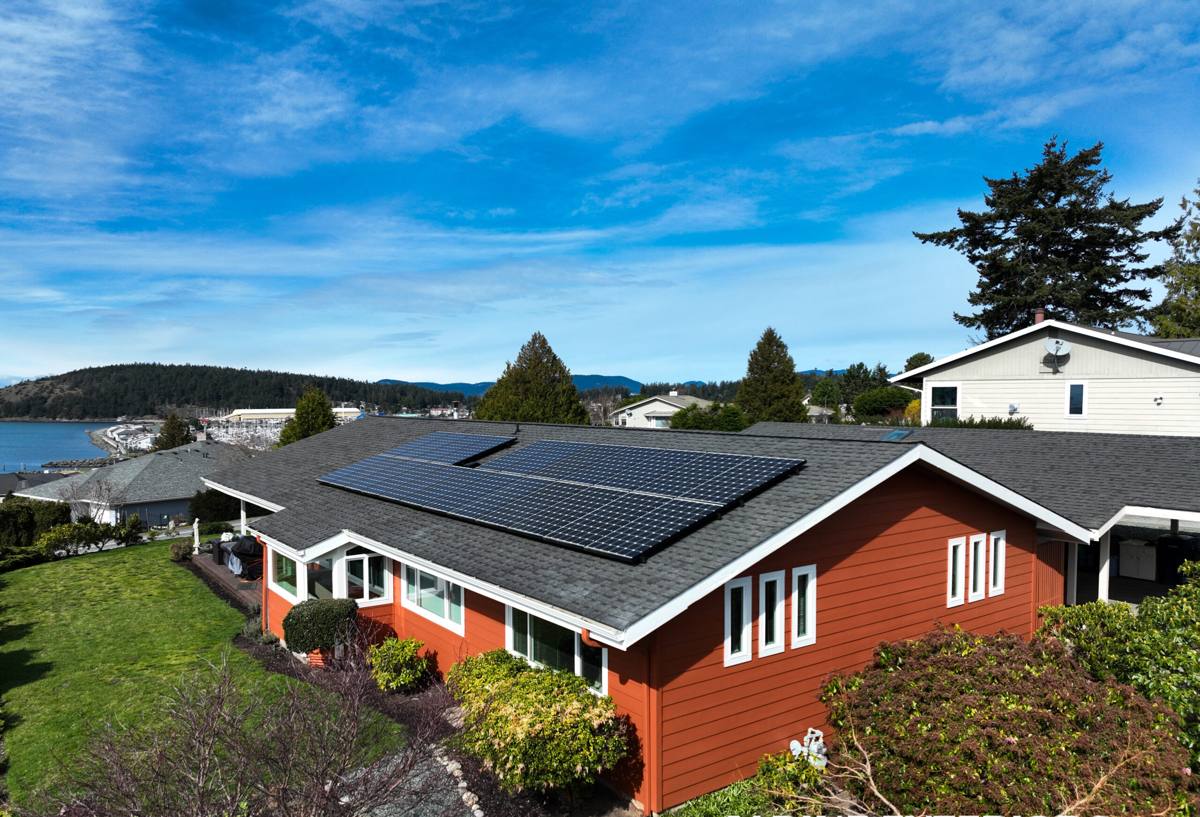
What the Marine Climate Actually Does to a Window Over Time
Salt Air and Hardware
Salt in the air settles on metal surfaces — window locks, hinges, cranks, and screen frames — and speeds up corrosion well beyond what you'd see even a few miles from the water. Cheaper hardware finishes can start pitting or seizing up years before the glass unit itself has any problem. This is a hardware-quality and installation-detail issue as much as a glass issue, and it's one of the first things we look at when we're pricing a job in Point Roberts.
Driving Rain and Wind-Driven Water
Storms coming off the Strait of Georgia don't just drop rain straight down — wind pushes it sideways, into every joint, nailing flange, and trim gap. A window opening that's flashed and sealed correctly sheds that water. One that's caulked-and-hoped instead of properly flashed will eventually let water track behind the trim and into the wall framing, often long before anyone notices a drip inside.
The Long Moss Season
Whatcom County's moss season runs long, and Point Roberts, being that much more exposed to damp marine air, tends to stay wet later into the year than homes further inland. Moss and algae don't just grow on roofs — they take hold on north-facing sills, in window tracks, and in any wood trim that isn't shedding water properly. Beyond looking bad, sustained dampness is what rots wood sills and frames and what eventually lets water find its way past seals that were fine when they were new.
Signs Your Windows Are Losing That Fight
- Fogging or a permanent haze between panes — a sign the seal on a double- or triple-pane unit has failed
- Locks, cranks, or hinges that feel gritty, stiff, or corroded compared to how they used to operate
- Soft or discolored wood at the sill or the bottom corners of the frame
- Drafts you can feel with a hand near the frame on a windy day, even with the window latched
- Moss or dark staining building up in the tracks or on the sill faster than you can keep it cleaned off
- Visible daylight or gaps around the trim from outside
Any one of these on its own might just mean a repair or a re-caulk. Several at once, especially on the weather side of the house, usually means the window itself — or the way it was originally installed — has reached the end of its useful life.
What a Correct Installation Actually Involves
Window installation looks simple from the outside — old unit out, new unit in — but the parts that determine whether it holds up for twenty-plus years in a place like Point Roberts happen before the new window ever goes in the opening.
Removal Without Hidden Damage
We pull the old unit carefully and check the rough opening while it's exposed — sill, framing, and sheathing all get inspected for water damage or rot before anything new goes in. In a marine climate, this step catches problems that a quick swap-and-caulk job would just seal back over.
Flashing and Water Management
Proper flashing — sill pan, side flashing, and head flashing installed in the correct order (a shingle-style lap, so water always sheds outward and down) — is what actually keeps wind-driven rain out, not caulk alone. Caulk is a backup layer, not the primary defense.
Air Sealing and Insulation
The gap between the window frame and the rough opening gets sealed and insulated correctly — not overpacked with expanding foam, which can bow a frame out of square, and not left with gaps, which cost you heat and let moisture-laden air condense inside the wall cavity.
Level, Plumb, and Square
A window that's out of square binds, doesn't lock tightly, and wears its weatherstripping unevenly. Shimming it correctly at install is a five-minute detail that prevents years of problems.
Interior and Exterior Trim
Trim gets finished so it sheds water on the exterior and looks right on the interior, with attention to caulk lines and paint or stain that will actually hold up to the coastal humidity here.
Choosing Materials That Make Sense for This Location
There's no single "best" window material — the right choice depends on exposure, budget, and how much upkeep you want to take on. Here's how the common options actually perform in a Point Roberts setting:
| Frame Material | How It Handles This Climate | Maintenance |
|---|---|---|
| Vinyl | Doesn't corrode or rot; handles salt air and moisture well; can look less premium on high-end homes | Low — occasional cleaning |
| Fiberglass | Very stable in temperature swings and moisture, strong resistance to warping; higher upfront cost | Low |
| Wood-clad | Attractive interior wood look with an exterior cladding that protects against weather; cladding integrity at joints matters more here than inland | Moderate — watch cladding seams and interior wood over time |
| Bare wood | Classic look but requires diligent upkeep in a damp, salt-air, long-moss-season environment; we generally don't recommend it for direct marine exposure | High |
| Aluminum | Strong and slim sightlines, but prone to corrosion and condensation in coastal marine air unless it's a thermally-broken, marine-rated product | Moderate to high depending on grade |
For most Point Roberts homes, vinyl or fiberglass frames with corrosion-resistant (often stainless or coated) hardware give the best combination of performance and low upkeep. Where a wood or wood-clad look is important to the homeowner, we talk through the added maintenance honestly before it goes on the order.
Glass Packages Worth Considering
Double-pane, low-E glass with argon fill is a solid baseline for this climate and covers most homes well. Triple-pane adds meaningful sound and thermal performance, which some owners value given how much wind and weather this location sees, but it comes at added cost and weight — worth discussing based on which side of the house the window faces and what it looks out on.
Our Process
- On-site assessment — we look at existing windows, framing condition, and exposure on each elevation of the house
- Honest recommendation on materials and glass package, with trade-offs explained plainly
- Written estimate with no pressure to decide on the spot
- Scheduling that accounts for weather windows — we don't open up rough openings ahead of an incoming storm
- Removal, inspection of the opening, flashing, and installation done to manufacturer spec
- Interior and exterior finish work, cleanup, and a final walkthrough with you
Why Local Experience with Point Roberts Homes Matters
Point Roberts is a bit of a logistical outlier — it's a U.S. peninsula reached by road through Canada, which means material deliveries and crew scheduling need to be planned for, not figured out on the fly. A crew that already works this area knows how to plan a job so the right materials and the right number of hands show up on the day they're needed, without a job sitting half-finished because a delivery got delayed.
Beyond logistics, a crew that's done windows on this stretch of coastline knows what actually fails first out here — which is usually hardware corrosion and sill-level water intrusion rather than glass failure — and builds the installation around preventing those specific problems, not generic ones.
What Affects the Cost
| Factor | Why It Matters |
|---|---|
| Number and size of openings | More or larger windows mean more material and labor time |
| Frame material | Vinyl is typically the most budget-friendly; fiberglass and wood-clad cost more upfront |
| Glass package | Double-pane low-E vs. triple-pane changes both material cost and thermal performance |
| Condition of the rough opening | Rot or water damage found during removal adds repair work before the new window goes in |
| Access and site conditions | Second-story or hard-to-reach openings take more time and equipment |
| Trim and finish work | Matching existing trim profiles or upgrading finish materials affects the total |
We don't publish a flat per-window price because these variables genuinely change the number — but we'll walk your house with you and give you a clear, itemized estimate before any work starts.
Before You Call a Contractor: A Quick Checklist
- Note which windows are drafty, foggy, hard to open, or visibly damaged
- Check for soft wood, staining, or moss buildup at sills and bottom corners
- Have a rough idea of your budget range and priorities (energy performance, noise, appearance, low maintenance)
- Ask any contractor you're considering how they handle flashing and water management, not just brand and price
- Confirm they've worked in Point Roberts or a similarly exposed coastal area before
- Get the scope and materials in writing before agreeing to anything
If your windows in Point Roberts are showing their age — fogging, drafts, corroded hardware, or moss creeping into the tracks — we're glad to come take a look. We offer free, no-pressure estimates, and we'll tell you honestly whether you need full replacement or just some targeted repair. Use the form below to get started.