 Blaine Siding
 Ferndale's Weather Is Harder on Windows Than Most Homeowners Realize
Ferndale sits close enough to the water that homes here deal with a specific combination of weather stress: salt-laden air drifting in off the Salish Sea, wind-driven rain that comes at windows sideways rather than straight down, and a wet season that stretches on long enough to grow moss on roofs, siding, and window sills alike. None of these things are dramatic on their own. What they do is compound, quietly, year after year, until a window that looked fine from the driveway is actually failing at the seal, the flashing, or the frame.
We work on homes throughout Whatcom County, and Ferndale comes with its own version of this problem. It's close enough to Blaine and the coast to catch the same salt exposure and driving rain, but it also has a lot of homes from different building eras — older wood-frame houses with original or early-replacement windows, and newer construction where builder-grade windows were never really built for this exposure in the first place. Both situations end up needing the same honest look at what's actually happening at the window opening, not just what the glass looks like.
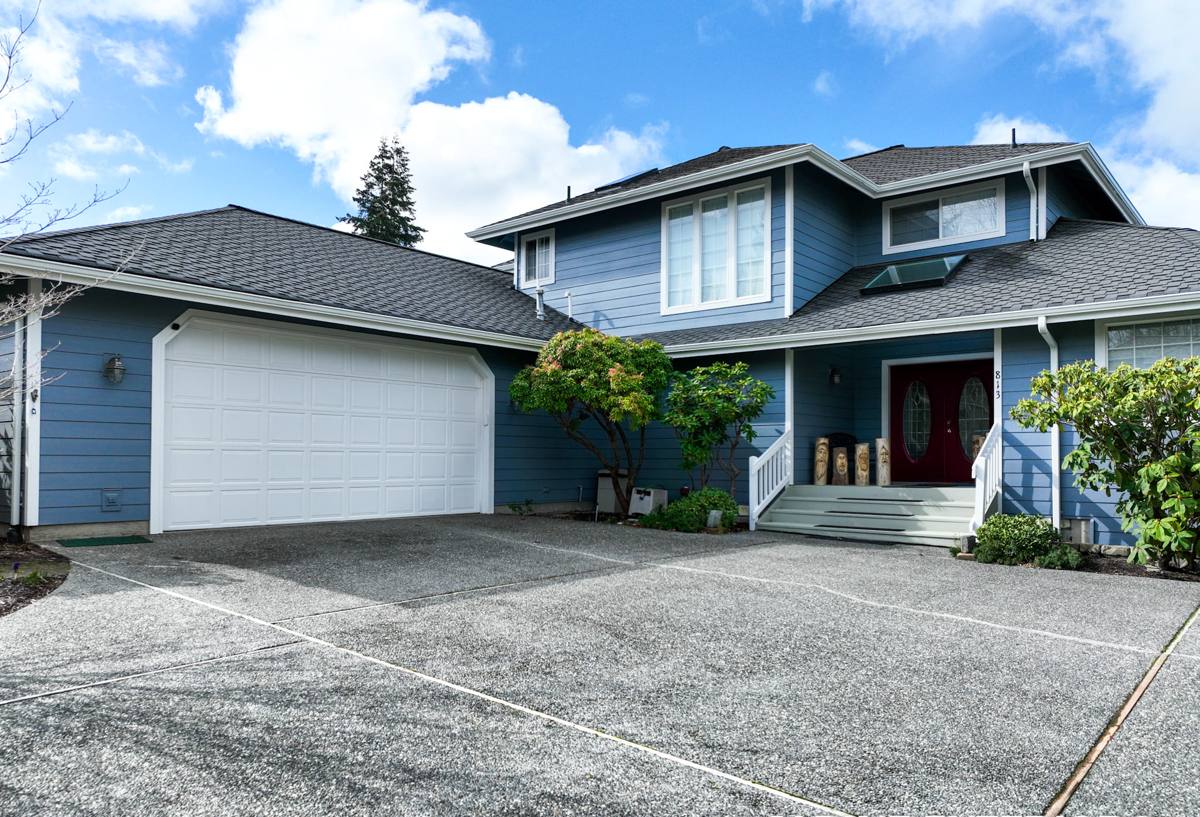
What Salt Air, Driving Rain, and Moss Season Actually Do to a Window
Salt Air and Hardware
Salt in the air accelerates corrosion on anything metal — window balances, hinges, screen frames, and especially fasteners. Aluminum-framed windows are particularly vulnerable to pitting and oxidation over time in this environment, and even good vinyl and fiberglass windows can fail early if the screws, cladding nails, or flashing tape used to install them weren't rated for it. A window can have perfectly good glass and still be on its way out because the hardware holding it together is corroding from the inside.
Driving Rain and Flashing
Rain that comes in at an angle doesn't just hit the glass — it drives against the top and sides of the window frame, looking for any gap in the flashing or sealant to get behind. Once water gets behind a window frame, it doesn't dry out quickly in this climate. It sits in the wall cavity, working on the framing lumber and sheathing long before it ever shows up as a stain on the interior wall.
The Long Moss Season
Whatcom County's extended damp season means anything that stays wet, stays wet for a while. Window sills, the bottom corners of frames, and any horizontal trim around a window are prime spots for moss, algae, and mildew to take hold. That growth holds moisture against the wood or vinyl even longer, which is exactly the wrong thing for a window that's already fighting corrosion and water intrusion.
Signs a Ferndale Home's Windows Need Attention
Most window failures give warning signs well before a frame is visibly rotten or a pane is cracked. Homeowners in this area should watch for:
- Fogging or a permanent haze between double-pane glass — the seal has failed and the insulating gas or air gap is gone
- Soft or spongy wood at the sill, especially at the corners where water pools
- Visible moss, algae, or dark streaking on the sill or lower frame
- Drafts or a noticeable temperature difference near the window on windy days
- Windows that are difficult to open, close, or lock — a sign the frame has shifted or swollen
- Paint or finish that's bubbling, peeling, or chalking faster on window trim than on the surrounding wall
- Visible corrosion or white powdery residue on aluminum frames or hardware
- Water staining on interior drywall or wood trim below or beside a window
Any one of these can be minor. Two or three together, especially on a window facing the prevailing weather, usually means the window and its flashing are due for a real look — not just a re-caulk.
What a Correct Window Replacement Actually Involves
A window replacement is easy to do poorly and not obviously wrong until a few rainy seasons later. In a climate like this one, the parts that don't show — flashing, sealant, and how the new window ties into the wall's water barrier — matter more than the window itself.
Removal and Opening Inspection
Once the old window is out, the opening gets inspected before anything new goes in. This is the point where hidden rot, soft sheathing, or old failed flashing gets found. Installing a new window over a compromised opening just repeats the same failure on a schedule.
Flashing and Moisture Management
This is the step that determines whether the replacement actually solves the driving-rain problem or just resets the clock. A correct install uses a sloped sill pan so any water that gets past the window drains back out instead of pooling, integrates the side and head flashing with the home's existing weather-resistive barrier in the right shingle-lap order, and uses sealants and tapes rated for the temperature range and UV exposure this area sees.
Insulation and Air Sealing
The gap between the window frame and the rough opening needs to be filled with a low-expansion foam or backer rod and sealant — not packed with fiberglass insulation alone, which does little to stop air movement and can hold moisture against the frame.
Interior and Exterior Finish
Trim, caulking, and paint or stain get finished to shed water rather than trap it against the frame, and any exterior wood trim gets treated with the salt air and moss exposure in mind, not just for looks.
Choosing Window Materials for Salt Air and Sustained Rain
There's no single "best" window material for every home, but some hold up better than others in this specific combination of salt air, rain, and damp shoulder seasons. Our standard is to recommend what actually performs here, not whatever is cheapest to install.
| Frame Material | Salt Air / Corrosion Resistance | Maintenance Needs | Typical Cost Range | Best Fit |
|---|---|---|---|---|
| Vinyl | Good — won't corrode or rust | Low; occasional cleaning | Lower to mid | Most homes prioritizing value and low upkeep |
| Fiberglass | Very good — stable and rot-resistant | Low | Mid to higher | Homes with heavy sun/rain exposure or larger window sizes |
| Wood-clad (exterior clad, wood interior) | Depends on cladding integrity — vulnerable if cladding is breached | Higher; cladding seams need monitoring | Higher | Homeowners wanting a wood interior look, willing to maintain it |
| Aluminum | Poor in this climate — prone to pitting and corrosion over time | Higher long-term | Lower to mid upfront | Generally not our recommendation for this exposure |
We're not against aluminum or wood-clad windows as products — they have real uses elsewhere. Our concern in Ferndale and along this stretch of coast is specifically about long-term corrosion and moisture behavior. For most homes here, vinyl or fiberglass gives the best combination of durability and reasonable upkeep, which is why we lead with those recommendations rather than whatever has the lowest sticker price.
Full-Frame Replacement vs. Insert Replacement
Not every window needs to come out down to the studs. If the existing frame and flashing are sound, an insert (pocket) replacement — where the new window fits into the existing frame — can be a faster, less invasive option. But if there's any sign of water intrusion, rot, or flashing failure, an insert replacement just seals a problem behind a new window instead of fixing it. Part of our estimate process is being honest about which situation a given window is actually in, rather than defaulting to whichever method is quicker to install.
Our Process, Start to Finish
- On-site assessment — we look at each window's condition, the surrounding trim and siding, and any signs of moisture or corrosion, not just the glass.
- Honest recommendation — full-frame or insert replacement, and which materials make sense for that window's exposure and your budget.
- Written estimate — clear pricing with no vague allowances buried in the fine print.
- Careful removal and opening inspection — checking for hidden rot or old flashing failures before anything new is installed.
- Correct flashing and sealing — sill pans, integrated weather barrier tie-in, and sealants suited to this climate.
- Finish work — trim, caulking, and touch-up so the install looks as good as it performs.
- Walkthrough — we show you what was done and answer questions before we consider the job finished.
Timing the Work Around Ferndale's Weather
Window replacement involves an open wall for at least part of a day per opening, which means weather timing matters. We plan installs around realistic dry windows rather than the calendar, and we sequence multi-window jobs so no opening sits exposed longer than necessary. During the wettest stretch of the year, that sometimes means scheduling around forecasts more tightly than a homeowner might expect — that's a deliberate choice to protect the work, not a delay for its own sake.
Why a Crew That Already Works Ferndale Matters
Window replacement done right depends on understanding the specific conditions a house faces — which direction catches the worst of the driving rain, how much salt exposure a given block typically sees, and how long moisture tends to linger on north-facing or shaded elevations. A crew that already works in and around Blaine and Ferndale has seen these patterns repeat across different homes, which shapes decisions on flashing detail, material choice, and scheduling before a single window is pulled. That local familiarity doesn't replace good technique, but it does mean fewer surprises and fewer callbacks.
Questions Worth Asking Before You Commit
- Will you inspect the opening for hidden rot or flashing failure before installing the new window?
- What flashing method and materials do you use, and are they rated for coastal exposure?
- Is this a full-frame or insert replacement, and why is that the right call for this window?
- What's the warranty on materials versus the warranty on the installation labor itself?
- How do you plan around rain when the wall is open?
A contractor who answers these clearly and specifically, rather than in generalities, is a good sign. Vague answers about flashing or moisture management are worth a second opinion.
If your Ferndale home has windows showing any of the signs above, or you're simply ready to stop losing heat and dealing with drafts every winter, we're happy to take a look. Estimates are free, there's no pressure, and you'll get a straight answer about what your windows actually need — just fill out the form below to get started.