 Blaine Siding
 Everson's Climate Is Harder on Siding Than Most Homeowners Realize
Everson sits inland along the Nooksack River, but "inland" doesn't mean protected. Whatcom County still gets marine air moving in off Puget Sound and the Strait of Georgia, which means siding here deals with a mix of salt-laden moisture, long stretches of driving rain, and the kind of persistent dampness that keeps moss and algae growing for most of the year. Add river-valley humidity, shaded lots surrounded by trees and farmland, and the freeze-thaw swings that hit inland Whatcom County harder than the immediate coastline, and you've got a climate that punishes any siding product with a weak moisture strategy.
This isn't a marketing angle — it's why we approach every Everson siding job differently than we would a job in a drier climate. Wood-based products swell and rot where water sits against them. Vinyl chalks, warps, and gaps at the seams. The siding on an Everson home needs to shed water aggressively, resist the moss and mildew that come with prolonged shade and humidity, and hold its shape through repeated wet-dry, cold-warm cycles year after year.
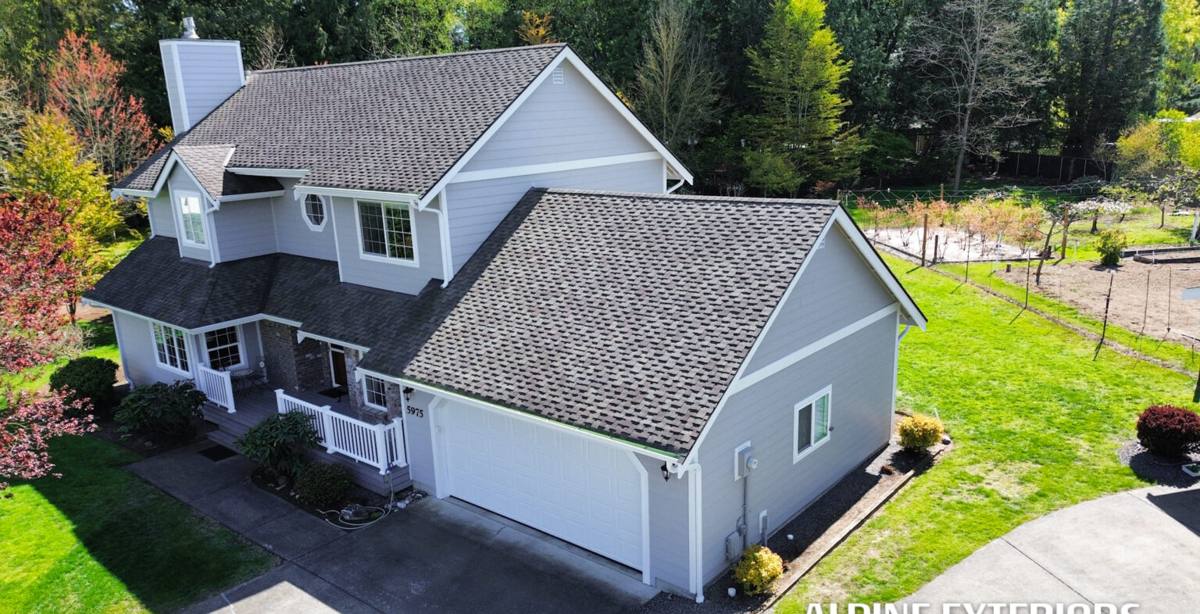
What Correct Siding Installation Actually Involves
Most siding failures we get called out to inspect aren't product failures — they're installation failures. The siding itself is often fine; the water management behind it wasn't done right. A correct installation is a system, not just boards nailed to a wall.
Tear-Off and Sheathing Inspection
Once the old siding comes off, we inspect the sheathing underneath before anything new goes up. In a climate like Everson's, it's common to find soft or water-stained sheathing behind old caulk-dependent siding, especially around windows, corners, and low-slope trim details where water had years to work its way in. Any compromised sheathing gets replaced before we move forward — covering rot with new siding just hides the problem.
Weather-Resistive Barrier and Flashing
Behind every board we install is a continuous weather-resistive barrier, properly lapped so water sheds downward and outward instead of tracking behind the siding. Flashing at windows, doors, deck ledgers, and roof-to-wall intersections gets integrated into that barrier in the correct order — flashing first, barrier lapped over it, siding last. This is the detail that separates siding that lasts twenty-plus years from siding that fails at year eight.
Fastening and Fit
James Hardie fiber cement has specific fastening requirements — nail placement, spacing, and depth all matter, and over-driving or under-driving fasteners is one of the most common installation mistakes we see from crews that don't work with the product regularly. We also maintain the manufacturer's required clearances at grade, roof lines, and decks so the bottom edge of the siding never sits where it can wick up standing water.
Why We Install Only James Hardie Fiber Cement
We don't install vinyl, LP SmartSide, primed spruce, cedar, or other fiber cement brands like Allura or Cemplank. That's a deliberate standard, not a limitation of what we're capable of installing. Vinyl is inexpensive and easy to install, but it's a petroleum-based product that expands, contracts, and can crack in cold snaps, and it offers no real fire resistance. Engineered wood products like LP SmartSide perform reasonably well when installation and maintenance are perfect, but any gap in caulking or paint maintenance lets moisture into the wood strand core, and once that happens, repair usually means replacement, not patching.
James Hardie's fiber cement is cement, sand, and cellulose fiber — it doesn't rot, it doesn't support pest damage the way wood-based products can, and it's non-combustible, which matters in a region where wildfire smoke and drought summers have become a normal part of the year even here in wetter Whatcom County. The ColorPlus factory finish is baked on in a controlled environment rather than field-applied, which gives it more consistent coverage and a longer service life than site-painted siding. For a climate that punishes weak moisture management, it's the product we're willing to put our name behind.
Choosing the Right Hardie Product Line for Everson's Exposure
Not every Hardie product is engineered the same way for every climate. Hardie builds its HZ5 and HZ10 formulations for different moisture and freeze-thaw profiles, and choosing correctly matters more in a river-valley, high-humidity area like Everson than it does somewhere dry.
| Product | Best Use | Why It Fits Everson |
|---|---|---|
| HardiePlank Lap Siding | Most homes, traditional lap look | Widest color and texture range; strong track record in wet Pacific Northwest climates |
| HardiePanel Vertical Siding | Modern facades, accent walls, gable ends | Fewer horizontal seams for water to track along on shaded, damp elevations |
| HardieTrim Boards | Corners, window and door trim, fascia | Non-combustible, moisture-stable trim that won't rot the way wood trim does under constant drip lines |
| HZ5 vs HZ10 Formulation | Matched to regional climate zone | We specify the formulation engineered for Pacific Northwest moisture exposure, not a generic version |
Our Installation Process, Start to Finish
- On-site assessment. We walk the home, check existing siding and trim for moisture damage, and note shaded or low-airflow areas that see heavier moss growth.
- Written scope and product selection. We spec the right Hardie product line, profile, and color for the home and the specific exposure of each elevation.
- Tear-off and sheathing repair. Old siding comes off, sheathing is inspected, and any soft or damaged material is replaced before we move forward.
- Weather barrier and flashing installation. Continuous barrier, properly lapped and integrated with flashing at every penetration.
- Siding installation to manufacturer spec. Correct fastening, clearances, and butt-joint treatment throughout.
- Caulking, trim, and paint touch-up. Factory-finished ColorPlus siding needs minimal field painting, which reduces long-term maintenance.
- Final walkthrough. We review the finished work with the homeowner before calling the job complete.
Cost Factors for Everson Siding Projects
Every home is different, so we don't quote broad numbers without seeing the house, but these are the factors that most affect the price of a siding job in this area.
| Factor | Impact on Cost |
|---|---|
| Sheathing or framing repair needed | Increases cost; more common on older homes with a history of moisture intrusion |
| Home size and number of stories | More siding area and access equipment for taller walls |
| Trim and detail complexity | Multiple gables, dormers, and window trim add labor time |
| Siding profile chosen | Lap widths, textures, and vertical panel accents vary in material cost |
| Existing siding removal | Full tear-off costs more than installing over a properly prepared surface, but is usually the right call for lasting results |
Maintenance and Moss Prevention Through a Long Wet Season
Fiber cement doesn't rot or feed moss growth the way wood-based siding can, but no siding is entirely maintenance-free in a climate as wet as Whatcom County's. A few habits go a long way toward protecting the investment:
- Trim back trees and shrubs so siding gets airflow and sunlight, especially on the shaded side of the home
- Rinse siding annually with a garden hose to clear pollen, dirt, and early moss growth before it takes hold
- Keep gutters clear so overflow doesn't run down siding faces or pool at the base of walls
- Check caulking at trim joints and penetrations every couple of years and re-caulk where it's cracked or pulling away
- Address any soft spots, discoloration, or bubbling paint promptly rather than waiting for a full inspection cycle
Signs Your Everson Home Needs New Siding
- Visible warping, buckling, or gaps between boards
- Soft spots when you press on the siding, especially near the bottom courses or under windows
- Paint that's peeling or bubbling repeatedly despite repainting
- Persistent moss or algae staining that comes back within months of cleaning
- Rising energy bills that suggest the wall assembly behind the siding is no longer performing
- Visible rot at corners, trim, or anywhere siding meets the roofline or a deck ledger
Why Hiring a Crew That Already Works Everson Matters
A siding crew that only occasionally works this far into Whatcom County can miss the details that matter here — how much shade a north-facing wall gets from surrounding trees, how aggressively moss establishes itself on a shaded gable, how the river valley's humidity behaves differently than the immediate coastline. We work this area regularly, which means we're not guessing at product selection or flashing details specific to this climate. We also carry manufacturer training on James Hardie products specifically, rather than treating fiber cement as one more material among many we occasionally install.
If your Everson home's siding is showing its age, or you're planning ahead for a replacement, we're happy to take a look and give you an honest read on what it needs. Reach out for a free, no-pressure estimate using the form below.