 Blaine Siding
 Everson's Climate Doesn't Forgive a Careless Siding Job
Everson sits inland in Whatcom County's Nooksack Valley, surrounded by farmland and river bottom, but "inland" doesn't mean sheltered here. The same marine-influenced weather that soaks the rest of the county reaches Everson too — long stretches of driving rain from fall through spring, damp air that moves up the valley, and enough shade from tree lines and river-bottom humidity to keep moss going strong for a good part of the year. None of that is exotic weather. It's just persistent, and persistent moisture is exactly what exposes a siding job that wasn't done right.
We install James Hardie fiber cement siding exclusively, and we work Everson regularly as part of our Whatcom County service area. This page is about what that combination — this specific product, on homes in this specific area — actually requires to hold up, not a generic rundown of what fiber cement is.
Why James Hardie Is the Right Fit for This Climate
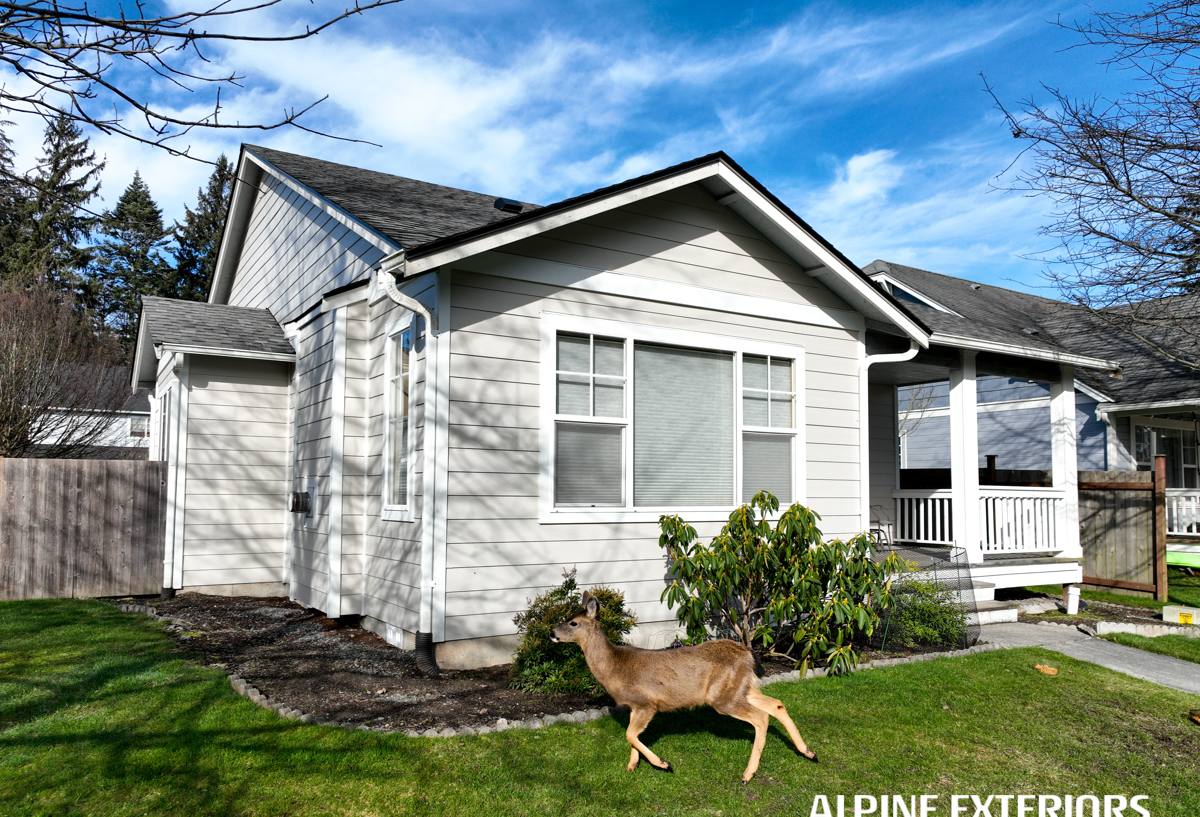
Fiber cement's core advantage over wood-based siding is that it doesn't feed the problem moisture creates. James Hardie boards are non-combustible and manufactured from cement, sand, and cellulose fiber, which means they don't swell, rot, or delaminate the way primed wood or engineered wood products can once water finds a way in. In a valley climate like Everson's, where humidity lingers and full drying stretches between rain events can be short, that resistance to moisture-driven decay is the difference between siding that looks the same in year fifteen and siding that's already showing soft spots by year seven.
The HZ5 Climate Engineering
James Hardie engineers its boards by climate zone, and homes in this region call for the HZ5 product line, built for areas with real freeze-thaw cycling and sustained wet seasons. That's not a marketing distinction — it affects the board's moisture management and how it's meant to be installed, including clearances and fastening. Using the correct HZ line for Whatcom County, rather than a generic version of the product, is one of the baseline decisions that separates a job installed to spec from one that just looks similar off the truck.
ColorPlus Finish and Long-Term Appearance
Most Hardie siding installed today carries the factory-applied ColorPlus finish rather than field paint. That finish is cured under controlled conditions before it reaches the site, which matters in a climate where field-applied paint has to fight wet weather and short drying windows to cure properly. For Everson homeowners who don't want to be repainting an exterior every several years, that factory finish is a real practical advantage, not just a color convenience.
What a Correct James Hardie Installation Actually Involves
The board itself is only part of the equation. Most of the siding failures we get called out to inspect in this region aren't failures of the material — they're failures of installation detail, and those show up years later as moisture damage that could have been avoided.
Flashing and Water Management Behind the Boards
Every window, door, and penetration needs proper flashing integrated with a weather-resistant barrier before a single board goes up. Fiber cement is durable, but it isn't waterproof armor — water that gets behind poorly flashed openings will find sheathing and framing eventually, and the siding on top won't stop that from happening. This step is invisible once the job is finished, which is exactly why it's the step that gets rushed on lower-bid jobs.
Clearance and Fastening
Hardie's installation specifications call for specific ground clearance, and closer attention where siding meets roof lines, decks, and grade. Fastener placement, spacing, and depth all matter — over-driven nails crack the board's edge and create a moisture entry point that isn't visible until the finish starts failing around it. Correct field-cut edges also need to be sealed, since a factory finish only protects what was finished at the factory.
Joints, Caulking, and Expansion
Fiber cement expands and contracts less than wood, but it still needs joints treated correctly — the wrong caulk, or caulk applied to a joint that should have been left to shed water naturally, causes more problems than it solves. Getting this right requires knowing the product, not just knowing siding in general.
Drainage Plane Behind the Boards
Most current James Hardie installations in wet climates like this one are set up with a drainage plane behind the boards, giving any moisture that does get past the cladding a path to drain and dry rather than sitting against the sheathing. On a valley lot with limited sun exposure on shaded elevations, that drainage detail matters more than it would on a south-facing wall that dries out between storms. It's a detail that's easy to skip and impossible to see once the siding is up, which is exactly why it belongs in a written scope before work starts, not left to be assumed.
Our Process on an Everson Project
We run every project the same way, whether it's a full re-side or a section repair:
- Site walk and assessment — we look at existing siding condition, sheathing exposure where boards have already failed, drainage around the foundation, and sun/shade exposure on each wall.
- Written estimate and product plan — HZ5 board selection, ColorPlus color, and trim details specified before any material is ordered.
- Removal and substrate check — old siding comes off and we inspect sheathing and framing for hidden rot before covering it back up with new material.
- Weather barrier and flashing — installed to manufacturer spec around every opening and penetration.
- Board installation — fastened, clearanced, and joined to James Hardie's published specifications for this climate zone.
- Final walkthrough — we go over the finished exterior with the homeowner before calling the job done.
We don't shortcut the substrate check to save a day. Whatcom County homes that have had siding on them for a couple of decades often have some degree of hidden moisture damage behind the old material, and finding it before new siding goes back over it is the whole point of doing the tear-off carefully.
What We See on Older Everson Homes
A lot of the calls we get from this area involve homes with primed wood, older engineered wood, or aging vinyl that's showing its age. Common patterns include soft or bubbling siding near ground contact and downspouts, moss and algae staining on north- and shade-facing walls that never fully dry between rain events, and caulking that's cracked and separated at trim joints, letting water track behind the material. None of these are unique to Everson, but the valley's combination of shade, river humidity, and a long wet season means they tend to show up sooner here than they would on a drier, sunnier lot.
Cost Factors on an Everson Siding Project
| Factor | Why It Matters Here |
|---|---|
| Home size and wall complexity | More corners, gables, and dormers mean more cuts, more flashing detail, and more labor time |
| Substrate condition | Hidden rot found during tear-off adds sheathing repair before new siding can go on — common on older homes in this area |
| Product line and texture | HZ5 lap, shingle, and panel options price differently; texture affects both material cost and finish appearance |
| Trim and accent work | Matching trim boards, fascia, and window surrounds adds scope beyond just the field siding |
| Access and site conditions | Tree cover, fencing, or tight lot lines around a property can affect staging and labor time |
We walk through these specifics on-site rather than quoting a flat per-square-foot number sight unseen, since two homes of the same size can have very different scopes once substrate condition and trim detail are factored in.
Why a Crew That Already Works Everson Matters
Siding work in this part of Whatcom County means accounting for a wet season that can stretch scheduling, a rural setting where lot access and staging vary property to property, and enough local jobs completed to know which walls in this region tend to fail first and why. A contractor who treats Everson as just another stop on a route covering half the state doesn't have that same accumulated read on how homes here actually age.
Local knowledge also shows up in less visible ways than climate alone. Permitting requirements, inspection timing, and how a jurisdiction handles a re-side versus new construction all vary, and a crew that pulls permits in this county regularly moves through that process without it becoming a scheduling surprise mid-project. The same goes for scheduling around the wet season itself — a crew unfamiliar with how many workable days a Whatcom County winter actually offers will often quote a timeline that looks fine on paper and then slips once the first multi-day rain system moves through. We build weather contingency into the schedule from the start rather than treating it as an excuse after the fact.
Maintaining Hardie Siding in This Climate
- Rinse siding gently once or twice a year to keep moss and algae from taking hold, especially on shaded north-facing walls
- Keep gutters clear so overflow doesn't run down the face of the siding repeatedly
- Trim back vegetation and tree limbs that keep walls damp and shaded longer than necessary
- Inspect caulking at trim and window joints every year or two and recaulk where it's cracked or pulled away
- Watch ground-contact areas near downspouts, decks, and grade for any softening or staining
- Address any impact damage or cracked boards promptly rather than letting an exposed edge sit through a wet season
None of this is heavy maintenance — Hardie siding is chosen specifically because it demands less than wood-based alternatives — but a little seasonal attention goes a long way toward getting the full lifespan out of the material in a climate that doesn't dry out often.
If your Everson home's siding is aging, showing moisture damage, or you're planning ahead for a full re-side, we're happy to walk the property and put together a free, no-pressure estimate.