 Blaine Siding
 Fiber Cement Siding Built for Everson's Weather
Everson sits inland from the coast, but the weather here still answers to the same marine system that soaks the rest of Whatcom County. Wind off the water carries salt-tinged air further inland than most homeowners expect, and it combines with long stretches of driving rain and short, damp winters to create conditions that punish the wrong siding choice. Add a moss season that can run from late fall through spring, and you have a climate that rewards a rigid, moisture-stable exterior and quietly destroys anything that isn't.
We install fiber cement siding — specifically James Hardie products — because it holds up to that combination better than the alternatives we've worked with over the years. This page focuses on what that looks like specifically for homes in and around Everson: what the climate actually does to siding here, what a correct installation requires, and how our process works from first estimate to final walkthrough.
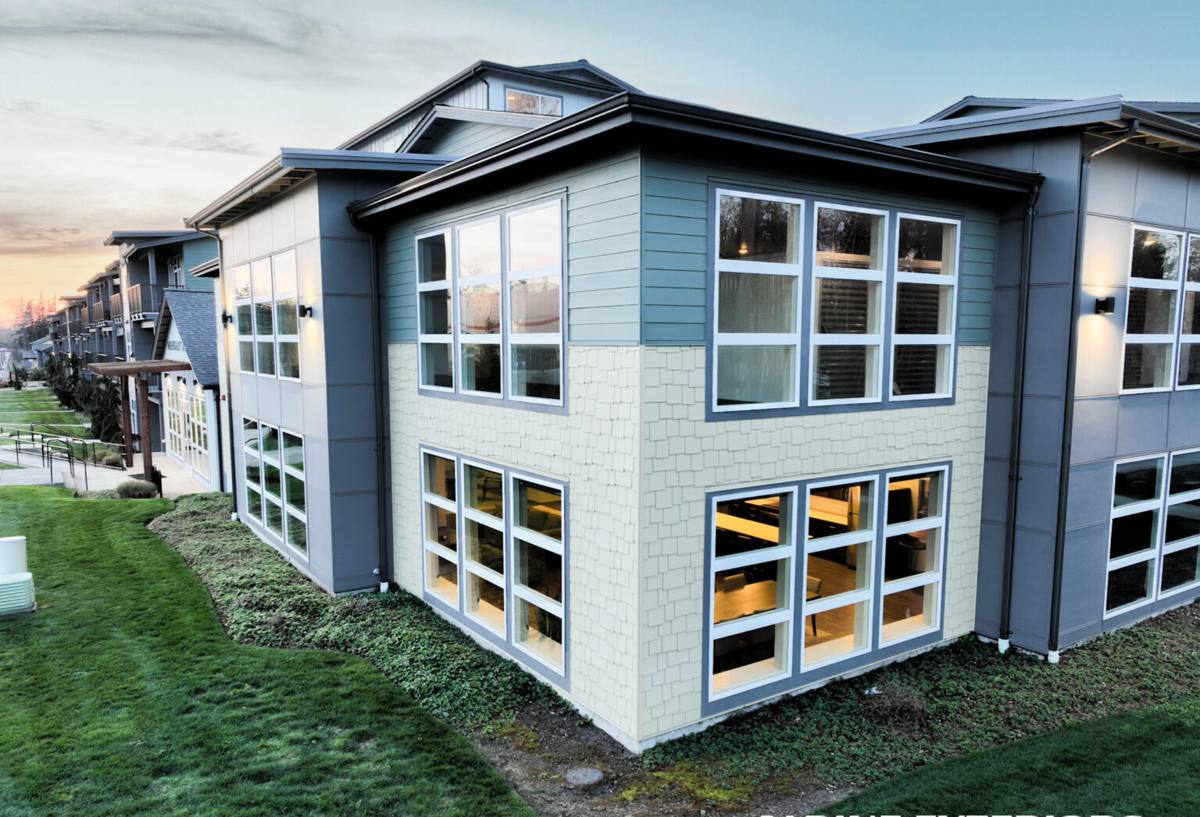
What This Climate Does to the Wrong Siding
Every siding material fails in its own way. Understanding the failure mode is what tells you whether a product is right for this area.
- Constant moisture cycling. Whatcom County doesn't get one big storm and dry out — it gets weeks of low-grade wet weather. Materials that absorb and release moisture repeatedly are the ones that swell, delaminate, or rot first.
- Moss and organic growth. Shaded north- and west-facing walls, common on lots with mature trees, stay damp long after the rest of the house has dried. Porous or wood-based siding gives moss and mildew something to hold onto; dense fiber cement does not.
- Salt-influenced air. Even away from the immediate shoreline, marine air moving inland accelerates corrosion on fasteners and trim metal, and it degrades unprotected wood grain over time.
- Temperature swings. Cold, wet nights followed by intermittent sun cause repeated expansion and contraction. Materials with poor dimensional stability eventually crack, cup, or pull away from fasteners.
None of these are dramatic, single-event failures. They're slow, cumulative problems that show up as soft spots, peeling paint, and swollen trim five to ten years after installation — often just past the point where a homeowner is still thinking about their siding at all.
What a Correct Fiber Cement Installation Actually Involves
Fiber cement siding is only as good as the installation behind it. James Hardie's own warranty is tied to installation meeting their specifications, and in a wet climate like this one, skipping steps is exactly what leads to the trapped-moisture problems people blame on the siding itself.
The details that matter most here
- Weather-resistive barrier and rain screen gap. A properly installed drainage plane behind the siding lets any moisture that does get past the surface find its way back out instead of sitting against the sheathing.
- Correct fastener pattern and type. Fiber cement needs the right nail or screw type, spacing, and depth — over-driven fasteners crack the board and create entry points for water.
- Proper clearances. Hardie specifies minimum gaps between siding and roofing, decks, and grade. In a region with this much rain, those clearances are what keep splashback and standing moisture away from the bottom courses.
- Flashing and caulking at every penetration. Windows, doors, hose bibs, and vent penetrations are where most water intrusion actually starts, not the field of the siding itself.
- Factory-finished ColorPlus panels, cut and handled correctly. Field-painted cut edges need to be sealed; ColorPlus finish resists the fading and chalking that plain-painted siding shows first in this kind of light and moisture.
This is the part of the job that doesn't show up in a photo — it's underneath the finished wall. It's also the part that determines whether a homeowner gets 30-plus years out of their siding or is dealing with soft trim and moisture stains in year eight.
How Fiber Cement Compares to Other Siding Options
We get asked fairly often why we don't install vinyl, LP SmartSide, or other fiber cement brands. Here's the honest comparison, based on how each product actually performs in a wet, moss-prone climate like Whatcom County's.
| Material | Moisture Behavior | Moss / Organic Growth | Long-Term Maintenance |
|---|---|---|---|
| James Hardie fiber cement | Dimensionally stable, doesn't absorb and swell | Dense surface resists growth better than porous materials | Occasional wash; ColorPlus finish resists fading |
| Vinyl siding | Doesn't rot, but warps/cracks in temperature swings and loses seal at seams | Grime and moss can build in overlaps and channels | Low, but replacement (not repair) is common when damaged |
| LP SmartSide (engineered wood) | Wood-based; vulnerable at cut edges and joints if not maintained | More organic material for moss/mildew to colonize | Regular caulk and paint upkeep required |
| Primed spruce / cedar | Absorbs moisture readily; prone to swelling and rot without diligent upkeep | Highest susceptibility of the group | Frequent repainting and sealing |
Vinyl and engineered wood aren't necessarily bad products in every climate — they're just not the trade-off we're willing to put our name behind here. Wood-based products in particular ask a homeowner to stay on top of caulking and repainting every few years, which is a lot to ask in a place where the weather works against you for most of the year. Fiber cement asks much less of the homeowner over time, which is the whole point.
Signs Your Current Siding Is Already Losing the Battle
Before we ever talk about a full replacement, it's worth knowing what to look for. A lot of siding problems in this area are visible well before they become structural.
- Soft or spongy spots when you press on the siding, especially near the bottom courses or under windows
- Visible moss or dark streaking on north- and west-facing walls that returns quickly after cleaning
- Paint that's peeling, bubbling, or chalking faster than it should on a wall that's just a few years old
- Cupping, warping, or gaps opening up between boards
- Rust streaks running down from fasteners or trim
- Visible daylight or drafts around window and door trim
- A musty smell in an interior room that backs up to an exterior wall
Any one of these on its own might just need a repair. Several of them together, especially on an older wood or engineered-wood exterior, usually means the underlying moisture barrier has been compromised and it's time to talk about a real replacement rather than another round of patching.
What Drives the Cost of a Fiber Cement Job in Everson
We don't publish flat prices because every home is different, but these are the factors that actually move the number up or down on a fiber cement project in this area.
| Factor | Why It Matters |
|---|---|
| Home size and wall complexity | More corners, gables, and dormers mean more cutting, flashing, and labor time |
| Condition of existing sheathing | Rot or moisture damage found once old siding comes off adds repair scope before new siding goes on |
| Siding profile chosen | Lap siding, shingle-style panels, and board-and-batten each price differently in materials and labor |
| Trim and accent work | Window and corner trim, fascia, and accent bands add detail work beyond flat wall coverage |
| Access and site conditions | Tree cover, tight lot lines, and multi-story walls affect scaffolding and staging time |
The only way to get a real number is a site visit — anything quoted over the phone without seeing the house is a guess.
Our Process for Everson Projects
- On-site evaluation. We walk the exterior, check current siding condition, and look at trouble spots like grade clearance, roof-to-wall transitions, and shaded moss-prone walls.
- Written estimate. A clear scope of work and price, with the siding profile and color options discussed up front.
- Tear-off and sheathing check. Old siding comes off and we inspect the sheathing underneath before anything new goes up — this is where hidden moisture damage gets caught and addressed, not covered over.
- Weather barrier and rain screen installation. The drainage plane goes in correctly before a single piece of Hardie board is hung.
- Fiber cement installation to spec. Correct fasteners, clearances, and flashing at every penetration, following James Hardie's installation requirements.
- Final walkthrough. We go over the finished job with the homeowner before calling it done.
Why It Matters to Hire a Crew That Already Works This Area
A crew that regularly works Whatcom County knows which walls on a typical lot stay shaded and damp longest, how much clearance actually holds up against this area's rain volume, and where moss tends to establish first. That's not something you learn from a manual — it's something you learn from doing the work here repeatedly. It also means a faster, more accurate estimate, because we're not guessing at how the regional climate will treat a given installation choice.
We install James Hardie fiber cement exclusively because, installed correctly, it's the product that holds up best against this specific combination of driving rain, marine air, and moss — not because it's the easiest or cheapest option on paper.
If your Everson home has siding that's showing its age, or you're planning ahead before a problem gets worse, we're happy to take a look and give you a straight answer. Fill out the form below for a free, no-pressure estimate.