 Blaine Siding
 Building Decks in Everson the Right Way
Everson sits inland from Blaine but shares the same weather pattern that shapes every outdoor structure in this part of Whatcom County: long stretches of driving rain from fall through spring, a humid marine air mass that never fully dries out, and a moss season that can run six months or more depending on how much sun a yard gets. A deck built here isn't just a place to put a barbecue and some chairs — it's a structure that has to shed water fast, resist slow moisture intrusion, and keep its footing solid through freeze-thaw cycles that hit the ground more often than most homeowners realize.
We've built and repaired enough decks around Everson and the rest of Whatcom County to know exactly where things go wrong first. This page walks through what a correctly built custom deck actually involves here, not the generic version you'd get from a national deck-building franchise that's never dealt with our rain totals.
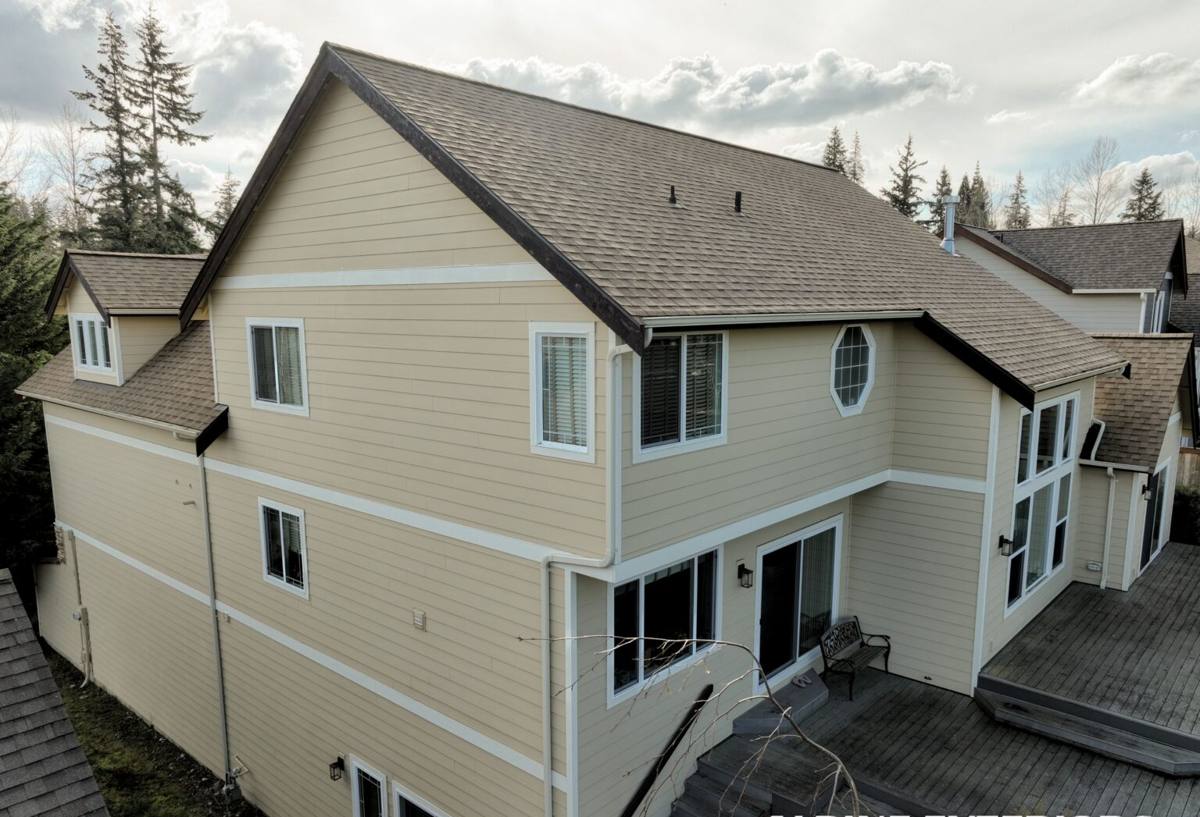
What Local Weather Does to a Deck Over Time
The problems we see on old or poorly built decks in this area follow a pattern. It's rarely one dramatic failure — it's a slow accumulation of small mistakes that moisture and time eventually expose.
Moisture that never fully leaves
Whatcom County doesn't get a hard, dry summer the way inland climates do. Wood, fasteners, and even composite decking stay damp longer here than in most of the country, which means anything installed without proper airflow underneath or gaps between boards will trap moisture against itself. That's where rot starts on wood decks and where mold and algae take hold on any decking material, wood or composite.
Moss and algae growth
Given enough shade and dampness, moss will colonize a deck surface the same way it colonizes a roof. Beyond looking bad, moss holds water against the decking board and becomes slippery and genuinely dangerous underfoot, especially on stairs. Deck orientation, board spacing, and material choice all affect how much of a moss problem a homeowner will be dealing with every winter.
Ground movement and footings
Everson's soil, like much of the low-lying ground near the Nooksack River valley, holds water and can shift seasonally. Footings that aren't poured to the correct depth and diameter for local frost lines will settle unevenly over a few years, which is why you'll sometimes see an older deck with a noticeable lean or a step that's no longer level.
Framing and Substructure: Where Cheap Decks Fail First
The decking boards get all the attention, but the framing underneath is what actually determines whether a deck lasts 10 years or 30. This is also the part of the job that's invisible once the project is finished, which unfortunately makes it the easiest thing for a corner-cutting crew to skimp on.
- Footings sized and set below the local frost depth, not just poured to whatever looked deep enough that day
- Joists and beams rated for our region's snow and wind load, not the bare minimum code allows
- A proper flashing and moisture barrier at the ledger board where the deck meets the house — this single detail is responsible for more hidden rot and water damage claims than almost anything else in deck construction
- Joist tape or a moisture barrier on top of every joist to stop water from wicking into the wood through fastener holes
- Stainless steel or coated structural hardware rated for exterior, high-moisture use
- Proper spacing and slope so water actually runs off the deck surface instead of pooling
None of this is exotic. It's standard, correct construction practice — but it takes longer and costs more in materials than skipping it, which is exactly why it gets skipped by crews chasing the lowest bid.
Choosing the Right Decking Material for This Climate
There's no single "best" decking material — there's a best material for a given budget, a given amount of sun exposure, and a given tolerance for maintenance. In a wet, moss-prone climate, those trade-offs matter more than they would in a drier region.
| Material | How it handles our climate | Maintenance | Typical lifespan |
|---|---|---|---|
| Pressure-treated wood | Affordable, but needs consistent sealing to resist moisture and moss in shaded yards | Annual cleaning and re-sealing recommended | 10-15 years with upkeep |
| Cedar | Naturally rot-resistant and handles moisture well, but still needs periodic finish maintenance to keep its color and shed water | Cleaning and refinishing every 1-2 years | 15-20 years with upkeep |
| Composite decking | Resists rot outright, but can still grow surface algae/moss in shaded, damp spots without cleaning | Periodic washing, no sealing or staining | 25-30 years |
| PVC/capped polymer | Fully resists moisture absorption, best option for heavily shaded or low-airflow sites | Occasional washing | 25-30+ years |
For lots in Everson with heavy tree cover or limited afternoon sun — common along the river valley — we lean toward composite or capped polymer decking specifically because it doesn't give moisture anywhere to soak in. On more open, sun-exposed lots, cedar or a well-maintained pressure-treated deck is often the more cost-effective, perfectly durable choice. We'll walk your specific site conditions with you before recommending either way — this isn't a one-size answer.
Railings, fasteners, and hardware
Everything exposed to weather on a deck — railing brackets, screws, joist hangers, post bases — should be stainless steel or a coated exterior-rated fastener. Standard interior-grade hardware will streak, corrode, and eventually fail years before the decking itself wears out, and it's one of those details a homeowner can't easily inspect after the fact.
Our Process for a Custom Deck Build in Everson
We keep the process straightforward because most of what determines a good outcome happens in the planning and framing stages, not in flashy finish work.
1. On-site assessment
We walk the actual lot — sun exposure, drainage direction, soil condition, and how the deck will tie into the house — before anything is designed. This is also when we talk through material options honestly based on how much sun and shade your specific yard gets.
2. Design and permitting
Whatcom County and local jurisdictions require permits for most custom deck builds, particularly anything attached to the house or built above a certain height. We handle the permit process and design the structure to meet current code, including proper footing depth and railing height requirements.
3. Framing and structural work
This is where the ledger flashing, footing depth, joist spacing, and moisture barriers all get done correctly the first time — the part of the job that doesn't show but matters most.
4. Decking, railing, and finish work
Once the frame is inspected and solid, we install the decking material, railings, and any stairs, making sure board spacing and drainage slope are correct for our rainfall.
5. Final walkthrough
We go over maintenance expectations for whatever material was installed, so there are no surprises about what upkeep looks like a year or five years down the road.
Maintaining a Deck Through Moss Season
Whatever material a deck is built from, a little seasonal attention keeps moss and moisture from becoming a bigger problem than they need to be. This is the same checklist we give our own Everson-area clients.
- Sweep leaves and debris off the deck surface regularly in fall — trapped organic matter is what feeds moss growth
- Rinse the deck surface periodically through the wet season, especially in shaded areas, to keep moss spores from establishing
- Check that gaps between boards haven't filled with debris, which blocks drainage and airflow underneath
- Inspect the ledger board area at the house connection once a year for any signs of water staining or soft wood
- Re-seal wood decking on the manufacturer's recommended schedule — don't wait until it looks obviously weathered
- Look at footing and post areas for any signs of settling or movement after a hard winter
Why Hire a Crew That Already Works in Everson
A deck contractor who only builds in drier climates will design and build to specs that don't account for what six months of Whatcom County rain and shade actually do to a structure. We already know which lots in this area hold moisture longest, which framing details actually matter here versus in a drier region, and which materials are worth the upfront cost given how long moss season runs. That local familiarity shows up in fewer callbacks, fewer surprises, and a deck that's still solid well after the novelty of a new build has worn off.
We also stand behind our own framing and installation work, which matters more in a climate where hidden moisture damage can take a couple of years to show up. Getting it right the first time is cheaper than fixing it later — for us and for you.
If you're planning a custom deck in Everson or anywhere else in the Blaine and Whatcom County area, we're happy to walk your property and give you an honest, no-pressure estimate. Use the form below to get started — there's no obligation, and we'll tell you straight what your specific lot and budget call for.