 Blaine Siding
 Building a Deck That Holds Up in Ferndale
Ferndale homeowners deal with a specific mix of conditions: marine-influenced air moving in off the Strait, long stretches of driving rain through fall and winter, and a moss season that can run from October well into spring. A deck built without those conditions in mind will look fine for a year or two and then start showing problems — soft spots near the house, green film on the walking surface, fasteners bleeding rust, railings that wobble because the posts were never properly anchored. We build decks in this area specifically for what this climate does to wood, fasteners, and finishes over time, not just for how the deck looks on install day.
This page covers what a deck built for Ferndale actually needs, what separates a correct build from a fast one, and how our process works from first visit to final walkthrough.
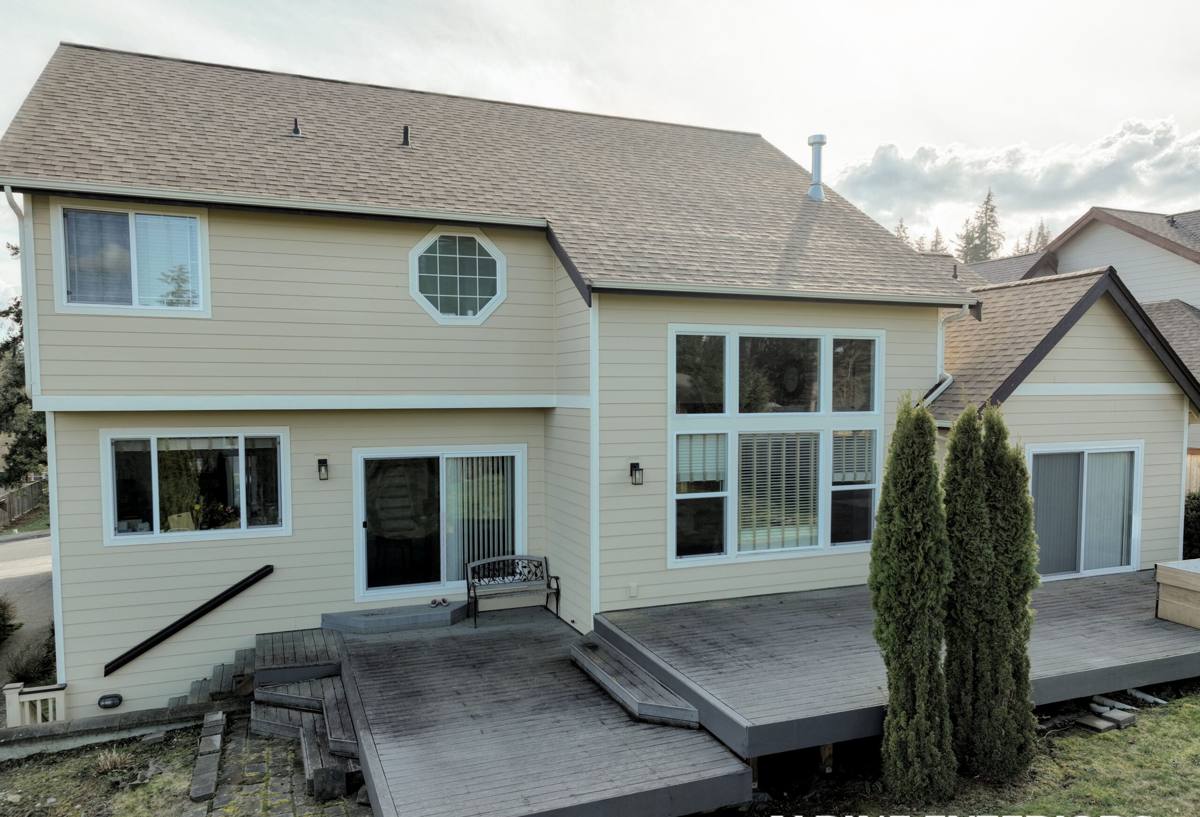
What Whatcom County Weather Does to a Deck
Salt Air
Even a few miles inland from the water, homes in this part of Whatcom County get enough salt-laden air to accelerate corrosion on unprotected metal. Standard zinc-coated screws and brackets can start rusting within a couple of seasons. Over time that shows up as staining around fastener heads, streaking down decking boards, and — in the worst cases — structural hardware that's lost integrity where you can't see it, at the ledger board or post bases.
Driving Rain
Rain that comes in sideways during a storm gets pushed into places a lot of builders don't think about: behind fascia boards, into the ledger-to-house connection, under railing posts that weren't properly flashed. Water that gets in and can't get back out is what rots framing from the inside, long before the surface boards show any damage.
Moss Season
Shaded decks, north-facing decks, and anything under tree cover in this area will grow moss and algae during the wet months. Beyond being a slip hazard, moss holds moisture against the decking surface far longer than open air would, which shortens the life of wood decking and can stain composite boards if it's left to sit.
What a Correct Deck Build Actually Involves
A deck is really two things stacked on top of each other: the structure you can't see (framing, footings, ledger connection, hardware) and the surface you can (decking, railings, stairs). Most of what determines whether a deck lasts 10 years or 30 happens in the part nobody looks at.
Framing and Structure
- Footings sized and set below frost depth per current code, not guessed at
- Ledger board attached to the house with proper flashing and through-bolted (not just lag-screwed) where it carries structural load
- Joists spaced to the decking manufacturer's spec — composite and wood often call for different spacing
- Corrosion-resistant, code-rated hardware at every connection — hangers, post bases, and fasteners rated for treated lumber and coastal exposure
- A drainage gap and airflow path under the deck so moisture doesn't sit trapped against framing
Surface and Finish
- Decking material matched to how the space will actually be used and how much sun or shade it gets
- Railing posts properly through-bolted to framing, not just screwed to a rim joist
- Stairs built to code for rise, run, and railing height
- Fastening pattern that won't telegraph rust stains or cupping over time
Decking Material Comparison
There's no single "best" decking material — it depends on budget, how much upkeep you want to do, and how much sun or shade the deck gets. Here's how the common options actually compare for a climate like this one:
| Material | Upfront Cost | Maintenance | Moisture Behavior | Typical Lifespan |
|---|---|---|---|---|
| Pressure-treated wood | Lowest | Annual cleaning, periodic sealing/staining | Prone to cupping and splinters if not resealed | 10–15 years with upkeep |
| Cedar | Moderate | Regular sealing to maintain color and resist moss | Naturally rot-resistant but still needs finish | 15–20 years with upkeep |
| Composite (capped) | Higher | Occasional washing, no sealing/staining | Won't rot, but can hold surface moisture if shaded — needs airflow underneath | 25–30+ years |
| PVC | Highest | Lowest — occasional washing only | Fully waterproof, doesn't absorb moisture | 30+ years |
We install all of these. Our job is to tell you honestly which one fits your situation — a shaded, north-facing deck that grows moss every winter is a different conversation than a sunny south-facing one, and the right hardware and airflow details matter more than the brand name on the boards.
Our Process for a Ferndale Deck
1. Site Visit and Assessment
We look at sun exposure, drainage around the foundation, existing structure if it's a rebuild, and how the space will actually be used — dining, hot tub, grilling, just a place to sit. That shapes both the layout and the material recommendation.
2. Design and Permitting
Most deck projects in Whatcom County require a permit, especially anything attached to the house or built above a certain height. We handle the permit application and make sure the design meets current code for footings, guardrails, and stair geometry before anything gets built.
3. Framing
This is where the long-term durability of the deck gets decided. Proper ledger flashing, corrosion-resistant hardware, correct footing depth, and joist spacing matched to the decking material all happen here — and it's the stage that's hardest to fix later if it's done wrong.
4. Decking, Railings, and Finish
Surface installation, railing systems, stair construction, and any trim or fascia work. We fasten with a pattern and hardware chosen for the material and the local climate, not whatever's fastest.
5. Final Walkthrough
We walk the finished deck with you, cover basic maintenance for whatever material you chose, and make sure everything meets both code and your expectations before we call it done.
Why a Crew That Already Works This Area Matters
A deck built by a crew that only occasionally works in Whatcom County can still look right on the day it's finished — the problems it develops show up two or three winters later. Knowing how driving rain moves around a house in this area, which hardware actually holds up to salt-influenced air over time, and how much moss pressure a shaded deck will see changes real decisions: flashing details, fastener selection, drainage under the structure, and which decking material is worth the extra cost for a given site. We're based in Blaine and work Ferndale and the surrounding communities regularly, so those aren't theoretical concerns — they're what we plan around on every project.
Cost Factors to Understand Before You Budget
Deck pricing varies a lot based on size, material, and site conditions. Rather than quote a number that won't match your project, here's what actually drives the cost up or down:
| Factor | Effect on Cost |
|---|---|
| Decking material (wood vs. composite vs. PVC) | Largest single variable — composite and PVC cost more upfront but less over the deck's life |
| Height above grade | Taller decks need more substantial footings, framing, and stair/railing work |
| Site access and grading | Difficult access or sloped/uneven ground adds labor time |
| Railing style | Cable, glass, and composite railing systems cost more than standard wood or metal baluster railing |
| Attachment to existing structure | Rebuilds or additions tying into an older house sometimes need extra work to bring the ledger connection up to current code |
| Permit and inspection requirements | Larger or higher decks typically require more inspection steps, which affects timeline more than cost |
A Simple Maintenance Checklist
Whatever material you choose, a little seasonal attention goes a long way in this climate:
- Sweep debris and standing leaves off the deck before wet weather sets in each fall
- Wash the surface at least once a year to remove moss and algae buildup before it stains or gets slick
- Check railing posts and stair stringers for movement once a year
- Reseal or restain wood decking on the schedule the product calls for — don't wait until it looks gray and dry
- Confirm the gap under the deck is still clear and not blocked by plantings or stored items, so airflow keeps doing its job
- Look at fastener heads periodically for early rust staining — it's easier to address early than after it's spread
Repairs and Rebuilds
Not every project is new construction. A lot of the calls we get in Ferndale are for decks that are 15–20 years old and starting to show their age — soft boards near the house, railings that have loosened, or framing that was never properly flashed to begin with. Sometimes that means a full rebuild; sometimes it means replacing the decking surface while the framing underneath is still sound. We'll tell you honestly which situation you're in rather than defaulting to the bigger job.
If you're planning a new deck or dealing with one that's past its prime, we're happy to take a look and give you a straightforward, no-pressure estimate. Use the form below to get started.