 Blaine Siding
 Why Dakota Creek Roofs Wear Out Faster Than People Expect
Dakota Creek sits close enough to the water and open farmland around Blaine that roofs here take a different kind of beating than roofs twenty miles inland. It isn't one dramatic event that kills a roof out here — it's the steady combination of salt-laden air off the Strait, wind-driven rain that gets pushed sideways under poorly sealed edges, and a moss season that seems to stretch longer every year. Add in the shade from mature fir and cedar trees common on Whatcom County lots, and you've got a roof surface that stays damp longer than it should after every storm.
None of that means a roof in Dakota Creek is doomed to fail early. It means the installation has to account for those conditions from the start — fastener choice, flashing detail, underlayment, and ventilation all matter more here than they would in a drier climate. A roof installed the same way you'd install one in Eastern Washington will not perform the same way once it's sitting through a Whatcom County winter.
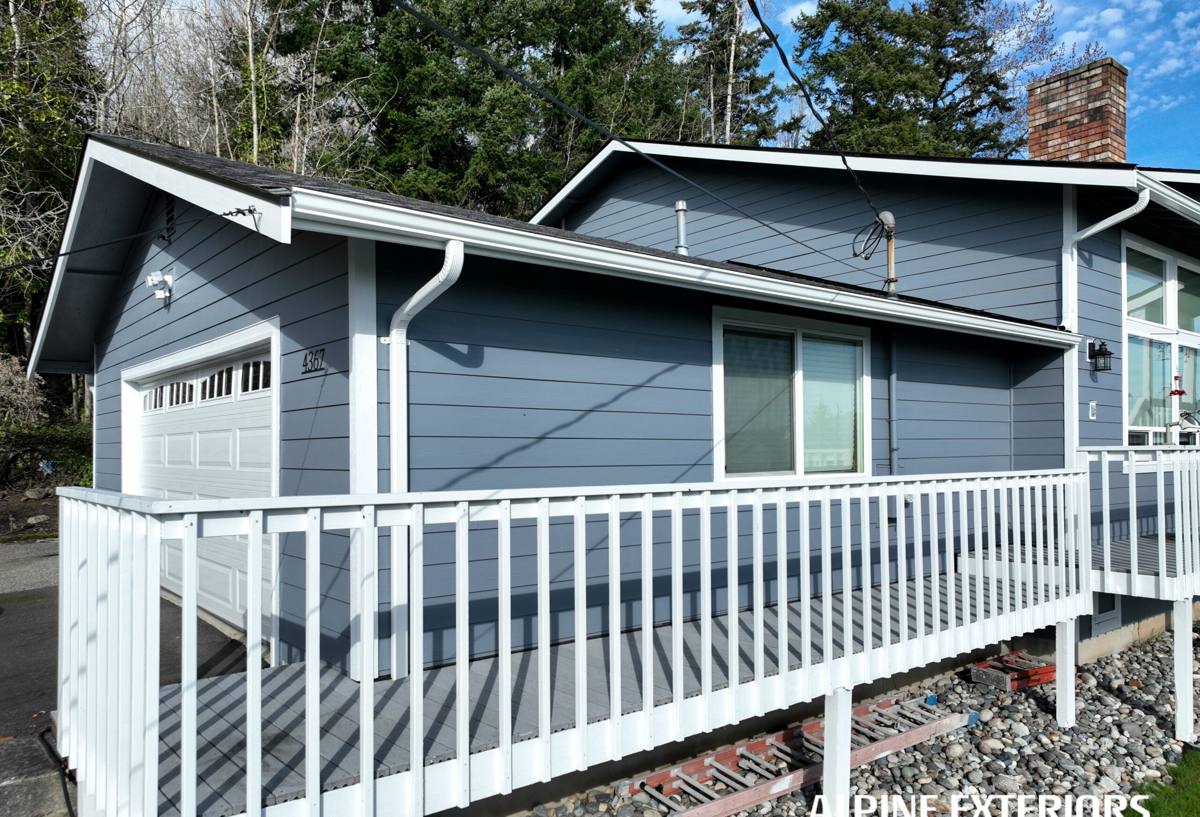
What Salt Air, Rain, and Moss Actually Do to a Roof
Each of these factors attacks a roof differently, and understanding that helps explain why certain installation choices matter more here than a sales brochure will tell you.
- Salt air accelerates corrosion on exposed metal — nails, flashing, vent boots, and gutter hardware — which is why fastener and flashing material choice is not a place to cut corners near the water.
- Driving rain gets pushed uphill under shingle laps and around penetrations during wind events, which means underlayment and flashing details have to assume water will reach places gravity alone wouldn't take it.
- Moss and algae growth thrives on north-facing slopes and shaded sections that stay damp for days after a storm. Moss doesn't just look bad — its root structure lifts shingle edges and holds moisture against the roof deck, which is how small leaks start.
A new roof installed correctly won't eliminate these pressures, but it will be built to shed water fast, resist corrosion, and slow down moss colonization far longer than a roof that was installed to a bare minimum standard.
What a Correct New Roof Installation Actually Involves
"New roof" sounds simple, but the difference between a roof that lasts and one that fails early usually isn't the shingle brand — it's what's underneath and around it. A proper installation on a Dakota Creek home includes:
- Full tear-off to bare decking, with the deck inspected and any soft, delaminated, or water-damaged sheathing replaced before anything new goes down.
- Ice-and-water shield or a comparable self-adhering membrane at eaves, valleys, and around every penetration — the places wind-driven rain is most likely to find a way in.
- A synthetic underlayment across the full roof deck, not just the code-minimum areas, given how much time this climate gives water to sit on a roof surface.
- Corrosion-resistant flashing at all walls, chimneys, skylights, and roof-to-wall transitions, with step flashing and counter-flashing installed as separate components rather than relying on caulk to do the job.
- Balanced intake and exhaust ventilation, so the attic isn't trapping moisture that condenses and rots the deck from underneath.
- Proper nailing pattern and fastener placement matched to the manufacturer's wind-rating requirements, not just "close enough."
Skip any one of these and the roof might still look fine for a year or two. The problems that show up from cut corners in this climate tend to surface as slow leaks, soft decking, and premature granule loss — not immediately, but on a timeline that's frustrating for the homeowner and expensive to fix once it starts.
Our Process, Start to Finish
1. On-Site Assessment
We walk the roof, check the attic for existing moisture or ventilation problems, and look at the specific exposure your home has — how much shade, which slopes face the prevailing weather, and whether moss or algae staining is already showing up. This tells us more about what your roof actually needs than a quick look from the ground ever could.
2. Straightforward Estimate
You get a written scope that spells out tear-off, decking repairs (if needed), underlayment, flashing, material, and ventilation work — no vague line items. If we find deck damage once tear-off starts, we show it to you before replacing it, not after it's billed.
3. Tear-Off and Deck Inspection
Old roofing comes off down to the deck. This is the point where hidden problems — rot, old leaks, undersized ventilation — become visible, and it's the only honest time to fix them.
4. Underlayment, Flashing, and Material Installation
We install the water barrier and flashing details first, since those do the real work of keeping water out, then install the roofing material to manufacturer specification for wind and fastening.
5. Cleanup and Final Walkthrough
Job site is cleaned of debris and swept for stray nails, and we walk the finished roof with you so you know what was done and what to expect going forward.
Roofing Material Options for Dakota Creek Homes
There's no single "best" roofing material for this area — the right choice depends on your home's roof pitch, your budget, and how much long-term maintenance you're willing to do. Here's an honest comparison of the options we install most often in this climate:
| Material | Performance in Salt Air & Rain | Moss Resistance | Typical Lifespan |
|---|---|---|---|
| Architectural asphalt shingle | Good, with proper flashing and corrosion-resistant fasteners | Moderate — benefits from algae-resistant granules | 25–30 years |
| Standing seam metal | Excellent when using coated, marine-grade fasteners and flashing | High — steep, smooth surface sheds moss more effectively | 40–50+ years |
| Composite/synthetic shake | Good, does not absorb water like wood shake | Moderate to high, depending on product | 30–40 years |
| Cedar shake | Requires diligent maintenance near salt air; higher moisture absorption | Low without regular treatment | 20–30 years with upkeep |
We don't push cedar shake as a first recommendation for homes with heavy shade or close water exposure — not because it's a bad-looking material, but because the maintenance burden to keep it performing well in this specific climate is significant, and the moisture behavior makes it a harder product to warranty confidently long-term. That's a professional judgment call based on how this material behaves here, not a knock on the product itself.
Cost Factors Homeowners Should Understand
We won't give you a number without seeing the roof, but these are the variables that actually move the price on a new roof installation in this area:
| Factor | Why It Matters |
|---|---|
| Roof size and pitch | Steeper roofs take longer to work safely and require more fall protection setup |
| Deck condition | Rotted or delaminated sheathing found at tear-off adds material and labor |
| Number of penetrations | Each vent, skylight, and chimney needs individual flashing work |
| Material choice | Asphalt, metal, and composite products differ significantly in material cost |
| Ventilation upgrades | Adding intake or exhaust venting where none previously existed adds scope |
| Access and layout | Trees, tight lot lines, and multi-story sections affect staging and labor time |
Be cautious of any quote that's dramatically lower than others you've received — in this climate, that's usually a sign that underlayment coverage, flashing detail, or deck repair allowances have been trimmed out of the scope, not that you found a better deal.
Why Local Experience in This Area Actually Matters
A crew that works Blaine and the surrounding Whatcom County neighborhoods regularly knows which roof orientations in Dakota Creek tend to hold moss longest, which flashing details fail first under wind-driven rain off the Strait, and how much attic ventilation a home actually needs given the humidity here versus a drier inland climate. That's not knowledge you get from a manufacturer's install guide — it comes from seeing how roofs in this specific area age over time, including the mistakes that show up in roofs installed by out-of-area crews who didn't build in the right margin for this weather.
It also means we're not going anywhere. If a flashing detail needs a look five years from now, or a warranty question comes up, you're calling a crew that's still working in your neighborhood — not chasing down a company that did one storm-chasing job and left.
Signs Your Current Roof May Be Past the Point of Repair
Not every roof problem means a full replacement, but these signs usually point that direction rather than another round of patching:
- Granule loss heavy enough that shingles look bare or patchy in sunlight
- Soft spots or noticeable give when walking the roof deck
- Daylight visible through the roof deck from inside the attic
- Moss growth that's returned within a year or two of cleaning
- Multiple past repairs in different areas rather than one isolated spot
- Shingles curling, cupping, or cracking across large sections rather than a few spots
If you're only seeing one or two of these, a repair may still make sense — we'll tell you honestly if that's the case rather than push a full replacement you don't need yet.
After Installation: What Keeps a New Roof Performing
A correctly installed roof still benefits from basic upkeep, especially given how long moss season runs here. Keep gutters clear so water isn't backing up under the eaves, trim back overhanging branches that keep sections of roof shaded and damp, and have the roof looked at after any major windstorm to check flashing and fastener integrity. None of this is complicated, but skipping it is how a well-installed roof loses years off its expected lifespan.
If you're weighing a new roof for a Dakota Creek home, we're glad to come take an honest look and walk you through what your specific roof needs — no pressure, no inflated urgency, just a straight assessment. Use the form below to request a free estimate.