 Blaine Siding
 Roofing in Cherry Point: A Climate That Doesn't Let Up
Cherry Point sits along the Strait of Georgia coastline in Whatcom County, just outside Blaine, and it takes a different kind of beating than roofs a few miles inland. The marine air here carries salt off the water, the rain season runs long and steady rather than coming in a few hard storms, and the heavy conifer cover that gives these properties their privacy also keeps roofs shaded, damp, and slow to dry out. Put those three things together — salt air, driving rain, and a moss season that can stretch across most of the year — and you get a roof that ages differently than one in a drier, more open part of the county.
None of that means a roof out here is doomed. It means the replacement has to be built with those conditions in mind from the start, not just re-covered with whatever went up last time.
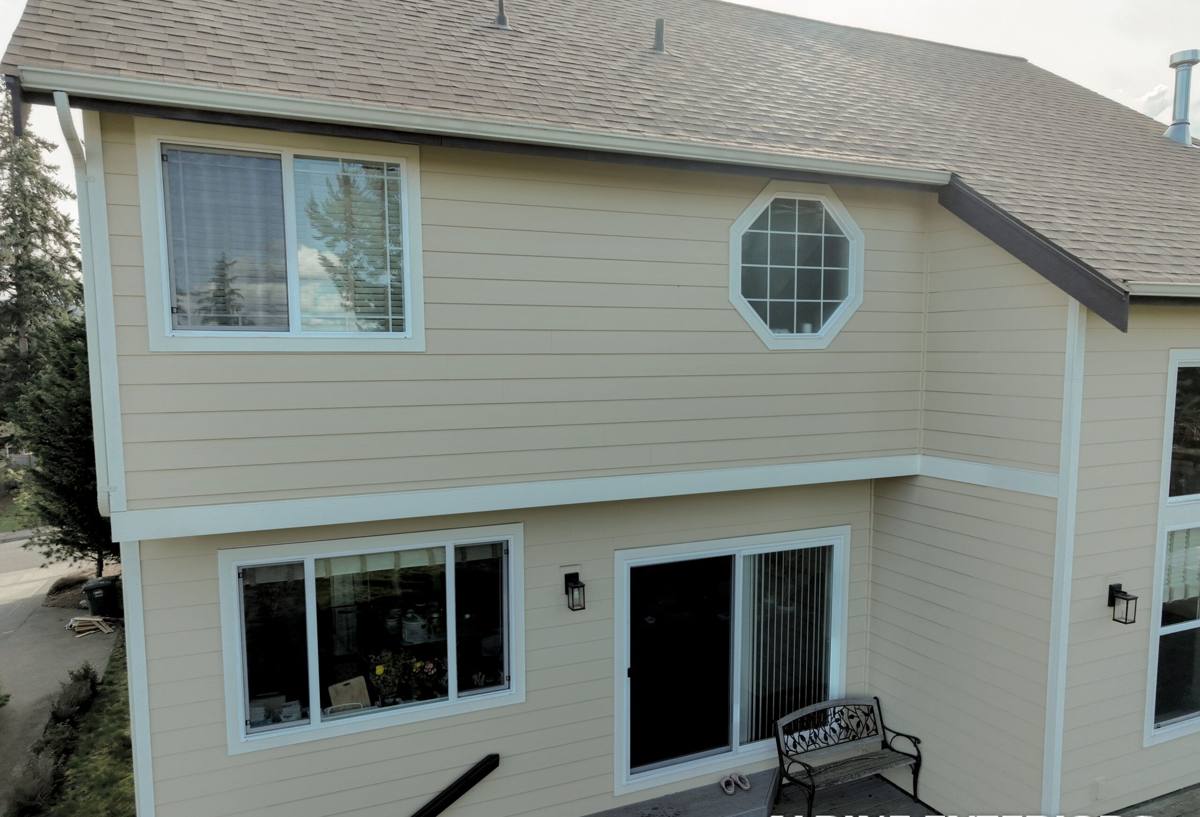
How This Climate Actually Shows Up as Roof Damage
Before we talk about replacement, it helps to know what's actually happening under the surface. In Cherry Point, we typically see damage patterns that track directly back to the local climate:
- Moss and algae staining on north-facing and shaded slopes, where tree cover keeps shingles wet longer between rain events
- Lifted shingle edges where moss has taken hold and worked its way under the tabs, breaking the seal
- Corroded fasteners and flashing, especially on homes closer to the water, where salt-laden air accelerates rust on exposed metal
- Granule loss from the near-constant freeze-thaw and wet-dry cycling typical of a Pacific Northwest marine climate
- Valley and low-slope leaks where debris from surrounding trees collects and holds moisture against the roofing material
A roof that's showing several of these at once isn't a candidate for another round of patching — it's telling you the underlying system is wearing out.
Signs a Cherry Point Roof Needs Full Replacement, Not Another Patch
Homeowners often ask us to look at "one leak" and find the real story is a roof near the end of its service life. Here's what tends to separate a repair job from a replacement job on the properties we see out here:
- Shingles are cupping, curling, or cracking across large sections of the roof, not just one spot
- You're finding granules building up in gutters and downspouts season after season
- Moss has grown under the shingle tabs, not just on the surface — this holds moisture against the deck year-round
- Soft spots, sagging, or visible give when walked on, which points to compromised decking
- Leaks have shown up in more than one location, or in a new spot after a prior repair
- Flashing around chimneys, vents, or valleys is rusted through or pulling away
- The roof is at or past its expected lifespan for this climate, even if it looks "okay" from the ground
What a Correct Roof Replacement Involves Out Here
Tear-Off and Deck Inspection
We remove the old roofing down to the deck rather than layering over it. That's the only way to actually see the plywood or sheathing underneath — and in a wet, shaded climate like Cherry Point's, hidden deck rot is common under roofs that looked fine from the outside. Any soft or delaminated sections get replaced before anything new goes down.
Underlayment and Water Barrier Placement
A synthetic underlayment across the full roof, with self-adhering ice-and-water barrier at eaves, valleys, and around penetrations, gives a second line of defense against the wind-driven rain typical of this coastline. Valleys in particular need this attention here, since they're where tree debris and standing moisture concentrate.
Ventilation Balanced for Moisture Control
Ridge and soffit ventilation isn't just an attic comfort issue — proper airflow helps the underside of the roof deck dry out between rain events, which slows both rot and moss regrowth. A roof that traps moisture underneath will show algae and moss problems again within a few seasons no matter what shingle you put on it.
Corrosion-Resistant Flashing and Fasteners
Given the salt content in the air this close to the water, we use flashing and fastener materials chosen for corrosion resistance rather than whatever is cheapest at the yard. This matters more here than it would on a roof twenty miles inland.
Material Selection for Moss and Algae Exposure
Algae-resistant shingle lines (built with copper-infused granules) and proper metal roofing options both perform noticeably better under Cherry Point's shade-and-moisture conditions than standard-grade materials. We'll walk through the honest trade-offs for your specific roof and tree exposure rather than pushing one product across every job.
Comparing Roofing Materials for a Coastal, Shaded Property
| Material | Moss/Algae Resistance | Typical Lifespan Here | Maintenance Needs |
|---|---|---|---|
| Standard 3-tab asphalt | Low — no built-in algae resistance | Shorter end of range under heavy shade | Higher — more frequent moss treatment |
| Algae-resistant architectural asphalt | Good — copper granules slow regrowth | Solid mid-to-long range with proper ventilation | Moderate — periodic inspection and cleaning |
| Standing seam metal | Very good — sheds moisture, little surface for growth to grip | Long, with proper installation | Low — mostly gutter and fastener checks |
| Synthetic/composite shingle | Good, varies by product line | Long, but installation quality matters more | Moderate |
There's no single "right" answer for every home — a heavily shaded, tree-covered lot and a more open, wind-exposed lot near the water can call for different choices even a few hundred feet apart. We base the recommendation on your specific roof's sun exposure, pitch, and tree cover, not a one-size-fits-all package.
Our Replacement Process, Start to Finish
- On-site inspection — we walk the roof, check the attic side for moisture and ventilation issues, and identify problem areas specific to your property's shade and exposure
- Written estimate and material discussion — honest options with real trade-offs, no pressure toward the most expensive line
- Tear-off — full removal down to the deck, with daily site cleanup so debris isn't left sitting on landscaping or driveways
- Deck repair — any rotted or delaminated sheathing is replaced before underlayment goes down
- Underlayment, water barrier, and ventilation work — installed to the standard described above, not skipped to save time
- Roofing installation — shingles, metal, or the chosen material installed to manufacturer spec, including flashing details around every penetration
- Final walkthrough and cleanup — magnetic sweep for stray fasteners, gutter check, and a walk-through of the finished roof with you
- Warranty paperwork — manufacturer and workmanship warranty documentation provided in writing
Why a Crew Already Working Cherry Point Matters
Cherry Point isn't downtown Blaine — many properties sit on larger, wooded parcels with long driveways, mature tree cover, and access that a crew unfamiliar with the area has to figure out on the fly. A crew that already works this stretch of Whatcom County knows how to stage equipment and materials on tighter or tree-lined sites without tearing up a yard, and knows which roof orientations in this area tend to fail first — the shaded north slopes, the valleys collecting fir needles, the flashing closest to the water.
There's also a scheduling reality: this area gets long stretches of wet weather, and a roof replacement needs a real dry window to be done right. A local crew plans around that instead of rushing a tear-off ahead of rain because they're only in the area for a few days. And because we're not a storm-chasing outfit passing through after a weather event, we're still local when a warranty question comes up two, five, or ten years down the road.
Whatcom County permitting is also part of the job on most full replacements — a local crew handles that process as a normal part of the estimate rather than treating it as a surprise or an add-on.
Cost Factors for a Cherry Point Roof Replacement
Every roof is priced on its own specifics, but the variables that move the number the most on properties out here are consistent:
| Factor | Why It Matters |
|---|---|
| Roof size and pitch | More surface area and steeper slopes mean more material and labor time |
| Number of existing layers | Extra tear-off work if the roof was previously layered rather than fully replaced |
| Deck condition | Hidden rot from long-term moisture exposure adds sheathing replacement cost |
| Material choice | Standard asphalt, algae-resistant asphalt, and metal carry different material and labor costs |
| Site access and tree cover | Long driveways, tight staging areas, or heavy tree canopy can affect labor time |
| Roof complexity | Chimneys, skylights, dormers, and multiple valleys all add flashing and labor detail |
We'll break these down specifically for your roof in the estimate rather than quoting a flat number off the roof's square footage alone.
Keeping Moss From Coming Back After Your New Roof Goes On
A correct installation gives you a strong head start, but Cherry Point's shade and moisture mean ongoing upkeep still matters. A few habits go a long way:
- Keep gutters and valleys clear of fir needles and debris, especially heading into fall
- Trim overhanging branches where practical to let more sun and air reach the roof surface
- Have the roof looked at every couple of years rather than waiting for a visible leak
- Avoid pressure washing shingles — it strips granules and shortens the roof's life; a gentle low-pressure wash or approved treatment is safer
- Watch for granule buildup in gutters as an early warning sign, not just visible moss
If your roof is showing wear from Cherry Point's salt air, rain, and moss, we're glad to take a look and give you a straight answer about repair versus replacement — no pressure, no upsell. Fill out the form below for a free estimate from a crew that already knows this stretch of the coast.