 Blaine Siding
 Why Blaine Harbor Roofs Wear Differently Than Roofs Inland
Houses along Blaine Harbor sit in one of the harder spots in Whatcom County to keep a roof healthy. You've got salt-laden air coming straight off Semiahmoo Bay and the Strait, wind-driven rain that doesn't fall straight down, and a wet season that stretches long enough to grow a healthy carpet of moss on anything that holds shade or moisture. None of that is unique to one house — it's the deal with living this close to the water in this part of Washington. But it does mean a roof that would be fine in a drier, more sheltered part of the county can start showing problems here years earlier than expected.
Metal roofing handles that combination better than most materials, but only when it's the right metal, installed the right way, with the right details at the edges and penetrations. That's the part that gets skipped when a crew treats a harbor-front install the same as any other job.
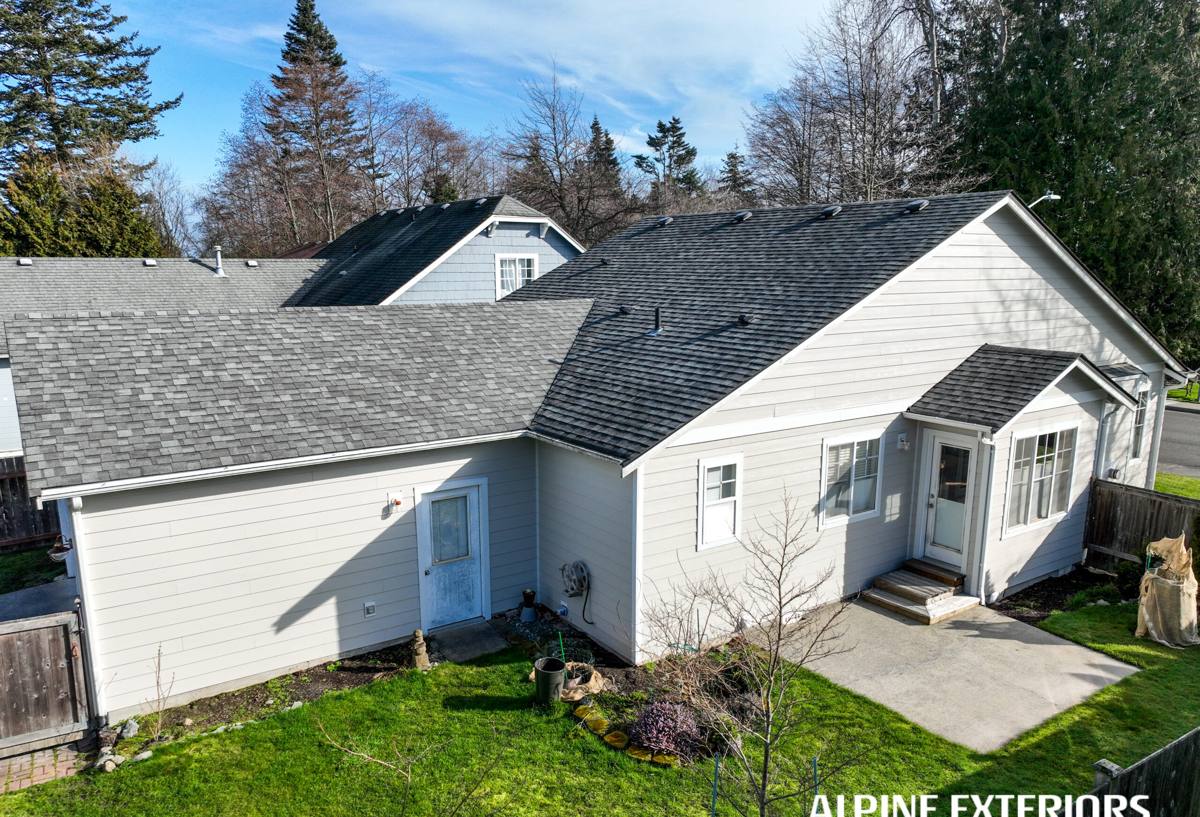
What Salt Air, Driving Rain, and Moss Actually Do to a Roof
Salt Air
Airborne salt is corrosive to bare or poorly coated metal, and it settles on everything nearby — fasteners, flashing, gutters, even the cut edges of panels. Left unaddressed, it accelerates rust and pitting, especially at cut edges, screw heads, and anywhere two dissimilar metals touch and start a galvanic reaction.
Driving Rain
Wind off the water pushes rain sideways and up under laps, flashing, and fastener heads that would stay dry in a calmer inland setting. A roof detail that "should" shed water in a straight-down rain can still leak here if the laps and flashing weren't built with wind-driven water in mind.
Moss and Sustained Moisture
Long wet seasons and shaded, north-facing slopes give moss and organic growth plenty of time to establish. On roofing materials that trap moisture against the surface, that growth holds water longer, which accelerates wear underneath it — even on materials that resist rot outright, trapped debris blocks drainage and adds unnecessary weight and staining.
Why Metal Is a Strong Fit for This Location
Done correctly, metal roofing addresses most of what makes this stretch of coastline tough on a roof:
- A continuous, non-porous surface gives moss and algae far less to grip compared to a textured, granular surface.
- Properly coated panels shed wind-driven rain efficiently when laps and seams are engineered for it, not just laid flat.
- Modern coastal-grade coatings and alloys are built specifically to resist salt-air corrosion — but not all metal roofing products are rated for it, which is where a lot of harbor-area installs go wrong.
- Metal sheds snow and debris cleanly and doesn't absorb water the way organic materials can.
The trade-off is that metal roofing is unforgiving of shortcuts. A standing seam roof installed with the wrong fastener, the wrong underlayment, or flashing details built for a calmer climate will underperform — sometimes leaking sooner than a well-installed asphalt roof would have. The material isn't the whole story; the install is.
Choosing the Right Metal for a Saltwater-Adjacent Home
Not every metal roofing product is built for salt exposure, and this is where homeowners near the harbor need to ask pointed questions before signing a contract.
| Material | Salt-Air Suitability | Notes for This Area |
|---|---|---|
| Galvanized steel | Fair, with limits | Zinc coating protects steel but wears down faster under sustained salt exposure than galvalume or aluminum; needs a quality paint system on top. |
| Galvalume steel | Good | Aluminum-zinc coating holds up well in coastal air and is a common, cost-effective standard for standing seam panels here. |
| Aluminum | Excellent | Naturally corrosion-resistant and doesn't rust; often the preferred choice for homes sitting closest to the water, at a higher material cost. |
| Uncoated or budget-grade steel | Poor | We don't install this on harbor-facing homes — the maintenance burden and early corrosion risk aren't worth the upfront savings. |
Fasteners, clips, and flashing metal matter just as much as the panel itself. Mixing incompatible metals — say, a standard steel screw against an aluminum panel — sets up galvanic corrosion right where you least want a failure point. We match fastener and flashing metal to the panel system on every install, not just on request.
Standing Seam vs. Exposed Fastener Panels
Both systems can work near the water, but they perform differently over time, and the right choice depends on the roof's exposure and the homeowner's maintenance appetite.
| Factor | Standing Seam | Exposed Fastener |
|---|---|---|
| Fastener exposure | Concealed under the seam — no exposed penetrations for salt air or rain to attack | Screws penetrate the panel face; gaskets wear over time and need periodic checking |
| Wind-driven rain performance | Strongest option; interlocking seams resist water intrusion under pressure | Adequate on moderate exposures, more vulnerable on harbor-facing slopes |
| Upfront cost | Higher | Lower |
| Long-term maintenance | Minimal once installed correctly | Gasket and fastener inspection recommended every few years |
For homes with a direct, unshielded view of the water, we generally recommend standing seam. For homes set back or shielded by trees and terrain, a well-installed exposed fastener system can still be a sound, more budget-friendly choice.
The Installation Details That Actually Prevent Problems
Most metal roof failures we get called to fix near the water trace back to a handful of overlooked details, not the panels themselves.
Underlayment
A high-quality synthetic or self-adhered underlayment matters more here than in drier parts of the county — it's the backup layer that has to perform if wind-driven rain ever gets past the panel laps.
Flashing at Penetrations and Edges
Chimneys, vents, valleys, and roof-to-wall transitions are where leaks actually start. Flashing needs to be sized, lapped, and sealed for sideways rain, not just vertical runoff.
Ventilation
Proper attic and roof ventilation keeps condensation from forming under the panels — a real risk in a consistently damp climate, and a common cause of hidden deck rot that has nothing to do with the roof surface itself.
Fastener and Clip Selection
Coastal-rated fasteners and clip systems resist corrosion far longer than standard hardware. This is a small cost difference upfront and a significant one over 20-plus years.
Our Process for a Blaine Harbor Metal Roof
- On-site assessment — we look at exposure direction, existing deck condition, ventilation, and how close the home sits to open water.
- Material recommendation — panel type, alloy, and coating matched to that specific exposure, not a one-size answer for the whole area.
- Tear-off or overlay decision — based on the condition of the existing roof deck and code requirements, not just what's fastest.
- Installation — underlayment, flashing, panels, and fasteners installed to manufacturer spec and built for wind-driven rain, not just standard runoff.
- Final walkthrough — we check seams, flashing, and penetrations with the homeowner before calling the job done.
What Affects the Cost of a Metal Roof Near the Water
| Factor | Why It Matters Here |
|---|---|
| Panel material and coating | Aluminum and premium coastal coatings cost more than standard galvanized steel but reduce long-term corrosion risk |
| Roof complexity | More valleys, dormers, and penetrations mean more flashing work, which is where labor time and leak risk both concentrate |
| Tear-off vs. overlay | Removing an old roof and repairing any deck damage adds cost but avoids trapping moisture problems underneath |
| Panel profile (standing seam vs. exposed fastener) | Standing seam costs more upfront but needs less long-term maintenance in a salt-air setting |
| Access and roof pitch | Harbor-area lots with steep pitches or tight access can add labor time |
We give straightforward, itemized pricing during the estimate — no inflated numbers to negotiate down from, and no vague allowances that turn into surprises mid-project.
Keeping a Metal Roof Healthy in This Climate
A correctly installed metal roof near Blaine Harbor needs less maintenance than most materials, but "less" isn't "none." A simple seasonal routine goes a long way:
- Clear moss, needles, and debris from valleys and low-slope sections at least once a year, especially after the wet season
- Check gutters and downspouts for buildup that can back water up under the roof edge
- Have flashing and sealant at penetrations visually inspected every couple of years, or after any major windstorm
- Watch for streaking or staining near fasteners, which can be an early sign of a coating or hardware issue worth catching early
- Trim back overhanging branches that keep sections of roof shaded and slow to dry
Why It Matters That We Already Work in Blaine Harbor
A crew that's worked roofs along this stretch of Whatcom County already knows which slopes catch the worst of the wind-driven rain, how fast moss comes back on shaded pitches, and which materials actually hold up against the salt air instead of just being sold as "coastal rated." That's the difference between a roof that's engineered for this specific location and one that was installed the same way it would be forty miles inland.
If you're weighing a metal roof for a home in or near Blaine Harbor, we're happy to take a look and walk you through what your roof actually needs — no pressure, no upsell, just a straight assessment and a written estimate.