 Blaine Siding
 Fiber Cement Siding on the Blaine Harbor Waterfront
Blaine Harbor is the working waterfront of the town — the marina and shoreline district where Drayton Harbor opens out toward Semiahmoo Bay. Homes here sit closer to open water than almost anywhere else in Blaine, and that proximity changes what a siding job needs to hold up to. Salt-laden air moves off the harbor daily, storms off the water push rain sideways into walls instead of straight down, and the moss season that's already long across Whatcom County runs even longer on shaded, damp harbor-facing lots. A siding material that performs fine three or four miles inland doesn't automatically perform the same way a few hundred feet from the water.
This page is about one thing: fiber cement siding, installed correctly, on homes in and around Blaine Harbor. We install James Hardie fiber cement exclusively — no LP SmartSide, no vinyl, no Cemplank, no Allura, no primed spruce, no cedar. That's not a marketing position. It's a professional standard we settled on after years of pulling old siding off harbor-adjacent homes and seeing exactly which materials failed early and why.
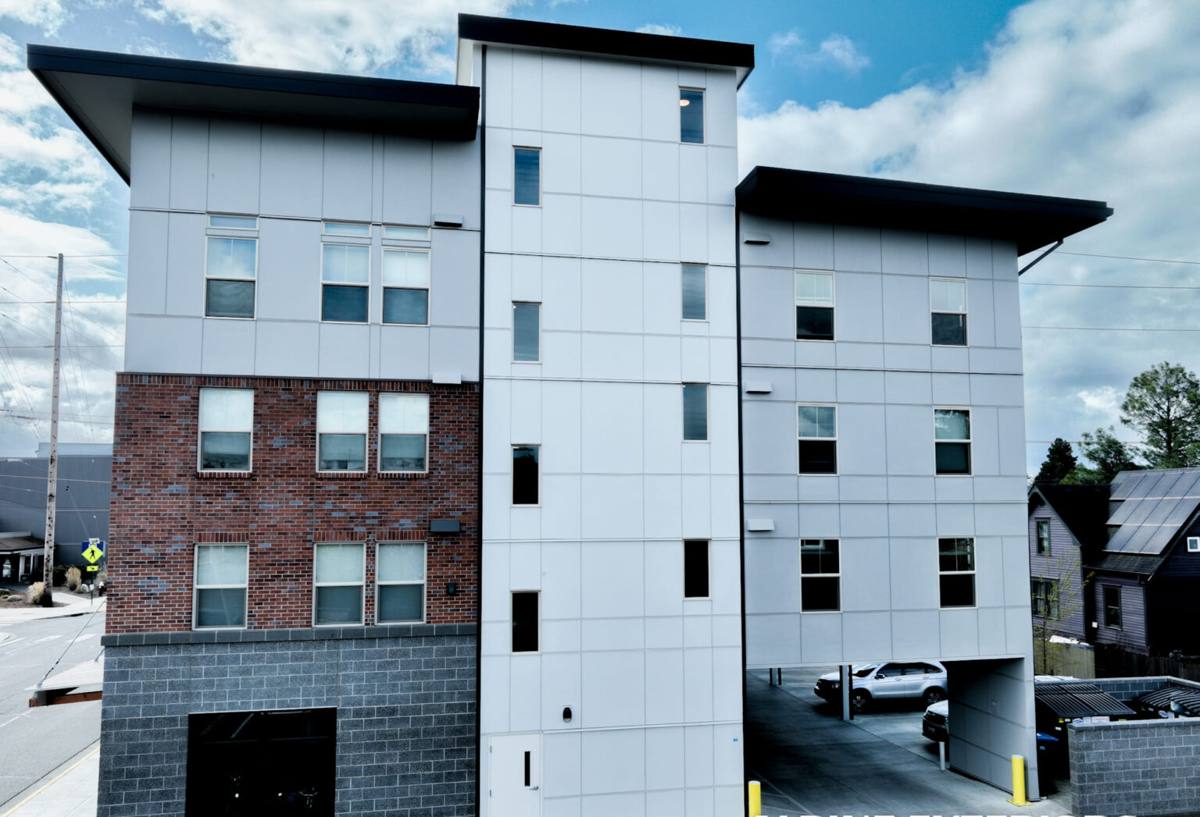
What Salt Air, Driving Rain, and Moss Do to a Harbor-Facing Wall
Salt Air at the Water's Edge
Air moving across Drayton Harbor carries a steady load of salt, and homes closest to the water take the heaviest dose of it. Salt accelerates corrosion in fasteners, flashing, and any exposed metal trim, and it breaks down lower-grade paints and coatings faster than a drier inland setting would. On a harbor property, the finish on the siding and the corrosion resistance of the hardware behind it aren't cosmetic details — they're the difference between a wall that still looks and performs well in fifteen years and one that's already showing rust streaks and chalky paint.
Wind-Driven Rain Off the Water
Storms coming across open water don't drop rain straight down onto a harbor-facing wall — wind pushes it in sideways, with enough force to test every seam, joint, and flashing detail on that side of the house. That's a heavier moisture load than the same storm delivers to a sheltered, inland lot, and it's exactly the kind of pressure that finds gaps a rushed installation would leave behind. Walls facing the harbor directly typically need more attention to flashing and drainage than walls on the sheltered side of the same house.
A Moss Season That Barely Breaks
Mild temperatures and near-constant humidity already give Whatcom County a long moss season, and the added moisture off the harbor stretches it further on shaded, north-facing walls near the water. Any siding material with surface porosity gives moss and mildew a place to establish, and once it's rooted in a joint or a seam, it holds moisture against the wall even longer. Harbor-area homes with mature trees or tight lot spacing tend to see it first and worst on the sides that get the least direct sun.
What Fiber Cement Siding Actually Is
Fiber cement siding is made from a mix of portland cement, sand, and cellulose fiber, cured into rigid, dimensionally stable panels and boards. Unlike wood-based siding, it doesn't have an organic wood core that can absorb water, swell, and eventually rot from the inside out. Unlike vinyl, it doesn't rely on thin plastic that can warp, crack, or fade under UV exposure. And because it's largely mineral-based, it doesn't burn the way wood-based products do. Those material properties matter everywhere, but they matter more on a harbor lot, where the combination of salt, sustained moisture, and wind-driven rain is a tougher test than most inland siding installations ever face.
Not all fiber cement is engineered the same way, though. Panel thickness, moisture resistance, and factory finish quality vary by manufacturer, and those differences show up over time in how well a product resists cracking, moisture intrusion, and finish failure. That's the reason we don't treat "fiber cement" as a single interchangeable category and install whichever version is cheapest.
Why We Only Install James Hardie Fiber Cement
We used to install a broader range of siding products. We stopped after seeing, repeatedly, which materials held up on harbor-adjacent and coastal properties in this county and which ones started developing problems within a handful of years.
- Non-combustible core: Fiber cement doesn't feed a fire the way wood-based siding can, which matters for both safety and, often, insurance considerations.
- Factory-applied ColorPlus finish: The color is baked on under controlled factory conditions instead of brushed on in the field, and it holds up far longer against salt exposure, fading, and chalking than site-applied paint.
- Climate-engineered HZ product lines: Hardie's HZ5 formulation is built for regions with heavy moisture exposure and freeze-thaw cycling, which describes waterfront Whatcom County well.
- Dimensional stability: Fiber cement doesn't swell, cup, or warp the way engineered wood products can after repeated wetting off the harbor.
- Strong transferable warranty: Hardie backs correctly installed siding with one of the more substantial warranty structures in the industry.
We won't install LP SmartSide, vinyl siding, Cemplank, Allura, primed spruce, or cedar. Each of those products has a legitimate place in the market, and plenty of homeowners elsewhere are satisfied with them. But on a harbor-facing lot dealing with daily salt air and wind-driven rain, we've made a professional call to put our name behind one system rather than offer a cheaper option that quietly shifts long-term maintenance risk onto the homeowner.
What a Correct Installation Requires This Close to the Water
Fiber cement only performs the way it's engineered to when it's installed to spec, and on a Blaine Harbor property, the installation details carry more weight than they would a few miles inland.
- Rain screen drainage gap: A small cavity behind the siding lets any moisture that gets past the exterior surface drain and evaporate instead of sitting against the wall sheathing.
- Corrosion-resistant fasteners, correctly spaced: Salt air is hard on standard fasteners over time; Hardie specifies fastener type and spacing for a reason, and loose spacing or the wrong fastener is one of the more common causes of early failure we find on tear-offs.
- Properly lapped house wrap and flashing: Every seam and penetration needs to shed water downward and outward, especially on the wall facing the harbor directly.
- Sealed butt joints and trim transitions: Open or poorly sealed joints are where salt-laden moisture finds its way behind the siding first.
- Clearance from grade and hardscape: Harbor lots often have decks, patios, or grading close to the house; siding needs proper clearance so splash-back and standing moisture don't sit against the bottom courses.
None of this is exotic — it's the manufacturer's own installation spec, followed consistently rather than shortcut on the parts that are hardest to inspect once the job is finished and the crew has moved on.
Choosing a Panel Style and Finish for a Harbor Property
Panel and Profile Options
Hardie's fiber cement system comes in several profiles, and the right one depends on the home's age and style as much as the climate. Lap siding with a traditional reveal suits many of the older homes in and around the harbor district; board and batten gives a more vertical, modern look that works well on newer builds; and shingle-style panels can match a more traditional coastal look on homes where that fits the neighborhood. All three carry the same core material properties — the choice is aesthetic and architectural, not a durability trade-off.
Color and Finish Near Salt Air
Because ColorPlus finish is factory-applied and baked on rather than brushed on site, it resists fading and chalking better than field-applied paint in a salt-air environment — which matters more here than on an inland home that doesn't take the same daily exposure. Darker colors absorb more heat and can show fading sooner than lighter tones in any climate, so it's worth weighing that trade-off against the look a homeowner wants, especially on walls that face the water and get the most direct sun and salt exposure combined.
Comparing Siding Materials for Blaine Harbor Conditions
| Material | Moisture Behavior | Maintenance in Salt Air | Typical Longevity Here |
|---|---|---|---|
| James Hardie fiber cement | Dimensionally stable, resists swelling and warping | Low; factory finish resists fading and chalking | 30+ years with correct installation |
| Vinyl siding | Can warp or distort with heat and wind loading over time | Low upfront, but seams and fasteners are exposure points near the water | Variable; shorter on harbor-facing walls |
| LP SmartSide / engineered wood | Wood-based core is moisture-sensitive at cut edges and joints | Moderate; edge sealing and caulk upkeep matter more here | Depends heavily on installation quality and upkeep |
| Cedar / primed wood | Absorbs and releases moisture readily | High; regular refinishing needed in salt-laden, wet air | Shorter without consistent, disciplined maintenance |
Our Fiber Cement Installation Process
We start with an on-site walk of the existing exterior, looking specifically at how the current siding has handled moisture and salt exposure, and checking for hidden damage behind it — something that's more common on older harbor-area homes than homeowners often expect. From there we put together a clear, written scope covering panel style, color, and any substrate repair the tear-off reveals, before any contract is signed. During installation, drainage detailing, fastener corrosion resistance, and flashing at every seam and penetration are treated as standard practice on a harbor property, not optional upgrades. We walk the finished job with the homeowner before calling it done.
Why Hiring a Crew That Already Works Blaine Harbor Matters
A crew that regularly works this stretch of the Blaine waterfront already knows how differently a harbor-facing wall ages compared to one set back from the water, even on the same street. That shows up in the small decisions — how much attention a given wall gets during flashing, which fastener grade gets used, where extra drainage detailing pays off — and those decisions are what separate a fiber cement job that looks fine for a season from one that's still performing decades later.
A Simple Checklist Before Hiring for Siding Work Near Blaine Harbor
- Ask what siding material they install and why, and whether it comes with a written, transferable warranty
- Confirm current Washington contractor licensing and active liability insurance
- Ask how they handle a harbor-facing wall taking direct wind-driven rain versus a sheltered elevation on the same house
- Ask about fastener and hardware corrosion resistance specifically for salt-air exposure
- Get a clear, written scope of work, including how substrate damage found during tear-off will be handled, before signing anything
If you're weighing siding options for a home in or near Blaine Harbor, we're glad to walk the exterior with you and give an honest read on what it actually needs. Reach out using the form below for a free, no-pressure estimate.