 Blaine Siding
 Why Sumas Homes Need Windows Built for This Climate
Sumas sits at the edge of Whatcom County, close enough to the Salish Sea and the foothills that homes here take on a mix of weather most window manufacturers never design for on paper. Salt-laden air drifts in off the water, driving rain comes sideways during fall and winter storms, and the damp, low-light stretch from November through March keeps moss and mildew active on anything that stays wet too long. Windows are one of the first places that combination shows up — not as a dramatic failure, but as a slow, steady breakdown of seals, frames, and hardware that homeowners often don't notice until a draft, a fogged pane, or a soft spot in the trim gives it away.
A window that was installed correctly for a drier climate, or installed without much attention to flashing and drainage, tends to underperform here years before it would in a milder or drier region. That's the gap we work to close: windows and installation methods matched to what Sumas actually throws at a house, not a generic install done the same way it would be in Phoenix or Denver.
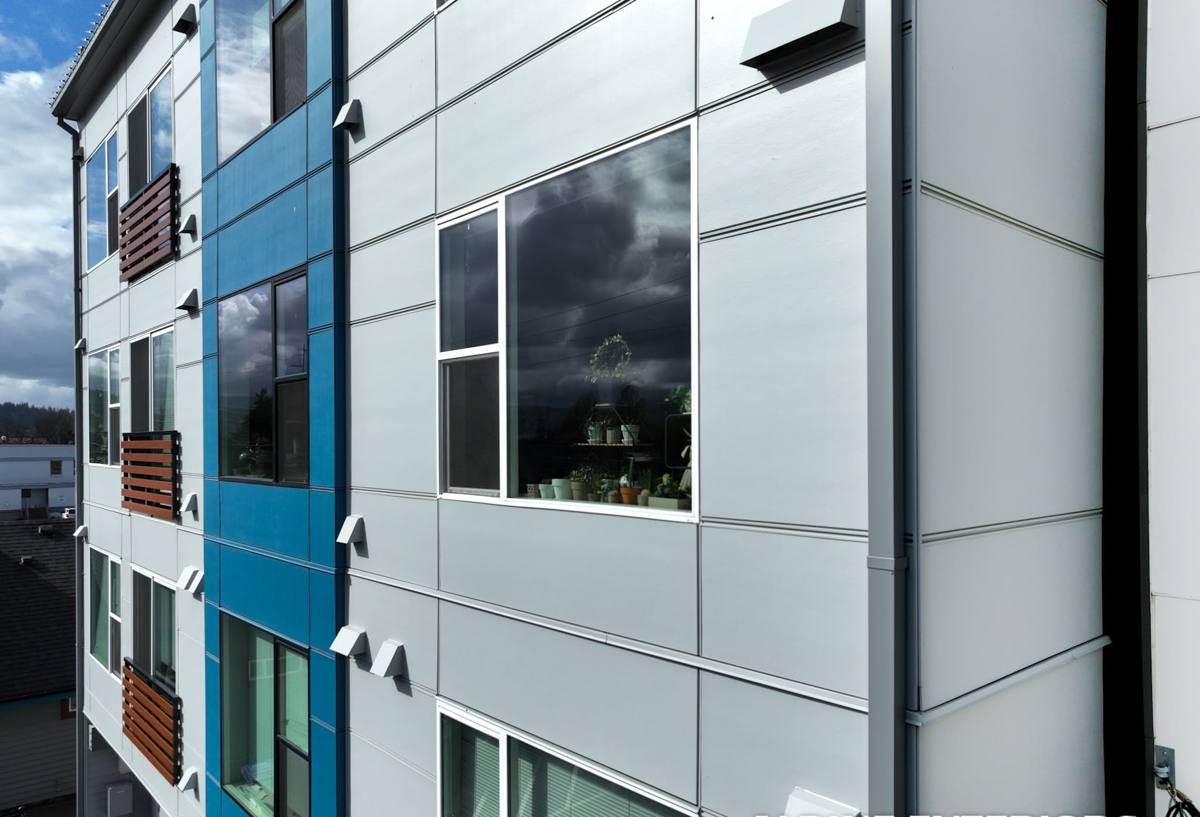
Signs Your Sumas Home's Windows Need Replacing
Window failure in this climate is usually gradual. By the time it's obvious, moisture has often already reached the framing around the window, which turns a window job into a larger repair. Watch for these signs:
- Condensation or fogging between the panes of a double-pane window — the seal has failed and the insulating gas has escaped
- Visible moss, algae, or dark streaking on the sill, frame, or siding directly below the window
- Drafts you can feel near the frame even when the window is fully latched
- Wood trim or sills that feel soft, spongy, or show paint bubbling
- Windows that are difficult to open, close, or lock — frames can warp slightly as moisture cycles in and out
- A noticeable rise in heating costs without any other explanation
- Noise from outside that seems louder than it used to be, which often points to failing seals or gaskets
Any one of these on its own isn't necessarily urgent. Two or three together, especially paired with visible staining or moss on the exterior wall, is usually a sign the window and possibly the surrounding wall assembly need a closer look.
What a Correct Window Replacement Job Involves
Swapping in a new window is the easy part. What actually determines whether that window performs for the next 20-plus years in a climate like this happens in the details around it.
Flashing and Water Management
Every window opening needs a flashing sequence — sill pan, side flashing, and head flashing — installed in the correct shingle-lap order so that any water that gets past the exterior cladding is directed back out, not into the wall cavity. This is the single most common shortcut we see in older or poorly done installs, and it's almost always invisible until a wall starts to rot from the inside.
Air Sealing and Insulation
The gap between the window frame and the rough opening needs to be sealed with the right materials — typically a low-expansion foam or backer rod and sealant, not just caulk smeared around the trim. Overfilled or underfilled gaps both cause problems: too little insulation leaves a cold spot and draft, too much expanding foam can bow the frame and affect how the window operates.
Level, Plumb, and Square
A window that's out of square will bind, won't seal evenly, and will wear out its hardware faster. This matters more on older Sumas homes where original framing has shifted slightly over the decades — a straight swap without shimming and checking the opening can leave a brand-new window performing like an old one.
Exterior Trim and Sealant
The final sealant bead around the exterior trim is what stands between the window and the next driving rainstorm. It needs to be a proper exterior-grade sealant, tooled correctly, with weep holes left clear so any incidental moisture can drain rather than pool.
Choosing the Right Window Frame Material
Frame material affects how a window handles moisture, temperature swings, and salt-influenced air over time. There's no single right answer for every home — it depends on the home's age, exposure, and budget.
| Frame Material | How It Handles This Climate | Maintenance | Typical Lifespan |
|---|---|---|---|
| Vinyl | Good moisture resistance, won't rot or corrode; can expand/contract with temperature swings | Low — occasional cleaning | 20-30 years |
| Fiberglass | Very stable in temperature and humidity changes, strong resistance to warping | Low | 30-40+ years |
| Wood-clad (wood interior, metal or vinyl exterior) | Handles interior climate well; exterior cladding protects wood from rain and salt air, but any breach in the cladding seal exposes wood to moisture | Moderate — cladding seams need periodic inspection | 20-30 years, dependent on cladding integrity |
| Aluminum | Durable but conducts heat and cold, and is more prone to condensation without a thermal break | Low, but watch for corrosion near salt air over time | 20-25 years |
For most Sumas homes, we lean toward vinyl or fiberglass frames because they hold up to moisture cycling without the maintenance burden of a material that depends on an intact exterior seal. Wood-clad windows can still be the right call for a home where matching a specific architectural look matters — we just make sure the homeowner understands the added upkeep that comes with it.
Glass Package Matters Too
Beyond the frame, the glass itself makes a difference in this climate. Double-pane windows with a low-E coating and argon gas fill are the practical standard here — they cut down on heat loss during cold, wet stretches and reduce condensation on the interior glass surface, which is a common complaint in homes with older single-pane or early double-pane windows.
Our Process for a Sumas Window Replacement
- On-site assessment — We look at the existing windows, the condition of the framing around them, and any signs of past moisture intrusion before recommending anything.
- Accurate measurement and product selection — Every opening gets measured individually. Older homes often have openings that are slightly out of standard sizing, and we account for that rather than forcing a stock size.
- Removal and opening inspection — When we pull the old window, we check the sheathing and framing underneath for rot or damage before installing anything new. This is where hidden problems get caught early instead of getting sealed back up.
- Proper flashing and installation — Sill pan, flashing, shimming to level and square, and correct air sealing, in that order.
- Exterior finish work — Trim, sealant, and paint or caulk matching as needed so the finished window looks right and sheds water correctly.
- Walkthrough — We show the homeowner the finished work, confirm the windows operate smoothly, and answer questions about care going forward.
Why Local Experience in Sumas Matters
A crew that regularly works in Sumas and the surrounding Whatcom County area already knows what to expect from the local building stock — the age range of homes, common framing quirks, and how moisture tends to find its way into walls in this particular mix of rain, humidity, and seasonal moss growth. That familiarity shortens the assessment phase and reduces surprises mid-project.
It also means accountability. A contractor based out of the area, working out of Blaine and serving nearby communities like Sumas, has a reputation to maintain with neighbors and repeat customers — not a one-time job before moving on to the next city. That's worth factoring in when you're comparing bids, especially for a job where the quality of work you can't see — the flashing, the sealing, the framing check — matters more than the parts you can.
What Affects the Cost of Window Replacement
Every home is different, but a few factors consistently drive cost up or down on a Sumas window project:
| Factor | Effect on Cost |
|---|---|
| Number of windows replaced at once | Bundling multiple windows in one project reduces per-window labor cost |
| Frame material chosen | Vinyl is typically the most affordable; fiberglass and wood-clad cost more upfront |
| Condition of the existing opening | Rot or framing damage found during removal adds repair time before the new window goes in |
| Window size and configuration | Large picture windows, bay windows, or custom shapes cost more than standard double-hung sizes |
| Access and height | Second-story or hard-to-access windows take more time and equipment |
| Full-frame vs. insert replacement | Full-frame replacement (removing down to the framing) costs more than an insert but is often necessary when the existing frame has moisture damage |
We give a straight number after seeing the actual openings — not a phone-quote guess — because the condition behind the trim is the biggest variable, and it's not something we can judge accurately from a description alone.
Keeping New Windows Performing Through Whatcom County Winters
A correctly installed window still benefits from a little seasonal attention:
- Rinse frames and sills periodically to keep salt residue and grime from building up on the exterior finish
- Check and clear weep holes on the exterior of the frame so drainage paths don't get blocked by debris or moss
- Inspect exterior caulking once a year, typically before the fall rains start, and touch up any cracked or separated sealant
- Wipe down interior sills if condensation appears during cold snaps, and run bathroom or kitchen exhaust fans to reduce indoor humidity
- Keep gutters and downspouts clear so water isn't overflowing directly onto window trim below
None of this is time-consuming, but skipping it is how a good installation slowly turns into a problem a decade earlier than it should.
If your Sumas home has windows showing any of the signs above, or you're simply planning ahead before the next wet season sets in, we're glad to come take a look. The estimate is free, there's no pressure to sign anything on the spot, and you'll get a straight answer about what your windows actually need — a full replacement, a repair, or nothing at all yet. Use the form below to get started.