 Blaine Siding
 Storm Damage in Sumas: What Whatcom County Weather Does to a Roof
Homes in the Sumas area take a steady beating from weather that most of the country never deals with. It isn't usually one dramatic event that ruins a roof out here — it's the accumulation. Driving rain pushed sideways by wind off the water finds every weak seam. Damp marine air keeps roof surfaces wet longer after every system that moves through, which is exactly the condition moss and algae need to get established. And because Whatcom County rarely gets a hard, dry stretch to let a roof fully recover, minor damage that would be a non-issue somewhere drier tends to compound here.
When a windstorm does roll through, it's rarely working on a roof in perfect condition. It's working on shingles already softened by months of moisture, ridge caps already loosened by moss growth underneath them, and flashing that's been flexing with every freeze-thaw cycle of a long, wet winter. That combination is why storm damage repair in this area has to be approached differently than a quick patch job — you're not just fixing what the wind did, you're fixing what the wind exposed.
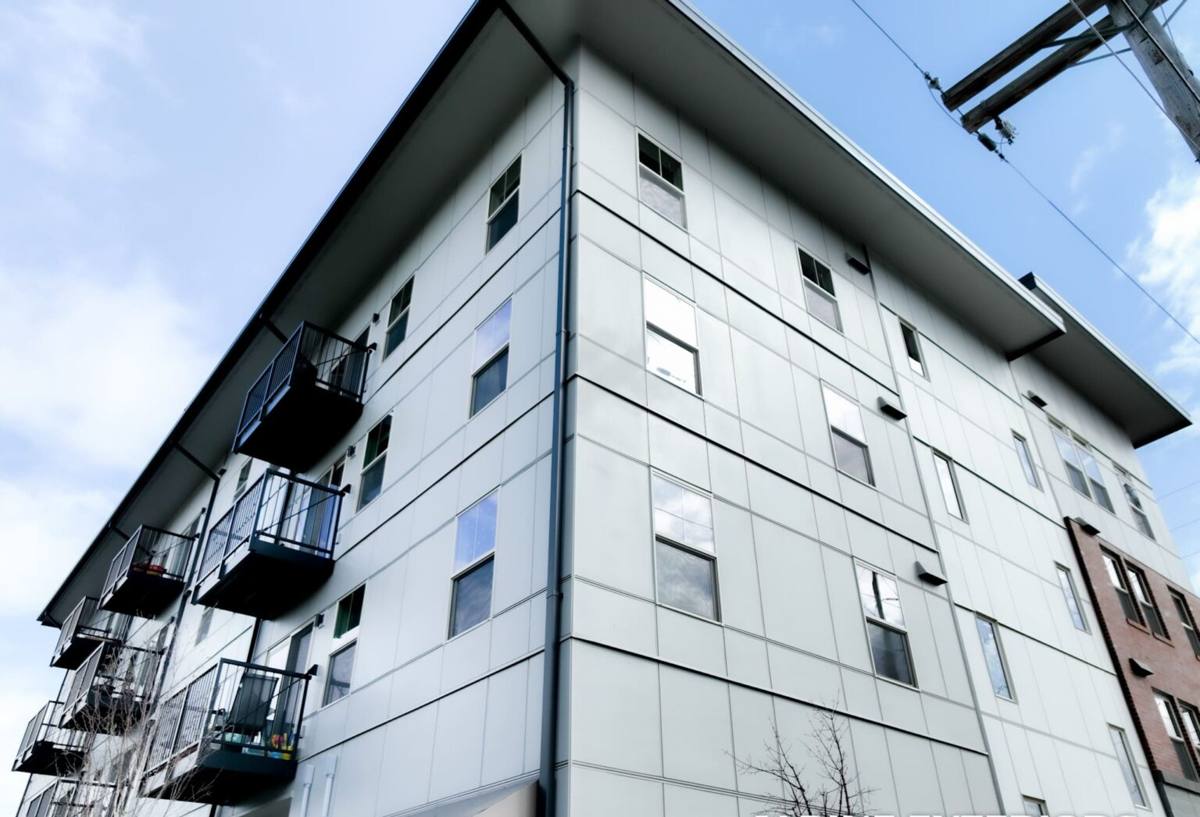
Recognizing Storm Damage Before It Becomes a Bigger Problem
Some storm damage is obvious. A lot of it isn't, especially from ground level. After any significant wind or rain event, it's worth checking for the following:
- Missing, cracked, or curled shingles — especially near ridges, edges, and valleys where wind uplift concentrates
- Granules collecting in gutters or at downspout outlets, which signals accelerated shingle wear
- Lifted or bent flashing around chimneys, vents, and skylights
- Bare or thin patches where moss has been stripped away, exposing worn shingle underneath
- Soft or spongy spots when walking a roof, indicating trapped moisture in the decking
- New or worsening water stains on interior ceilings or in the attic
- Debris — branches, needles, moss clumps — packed into valleys or against roof-wall intersections where water can back up
- Gutters pulled away from the fascia or sagging under storm debris
None of these guarantee a major problem, but any one of them is a reason to get a roof looked at rather than waiting for the next storm to make the decision for you.
What a Correct Storm Damage Repair Actually Involves
Diagnosing the full extent, not just the visible damage
The most common mistake in storm repair isn't bad workmanship — it's an incomplete diagnosis. A missing shingle is easy to spot and easy to replace. What's harder to see is whether wind-driven rain got underneath the surrounding shingles during the time they were compromised, whether the underlayment took on moisture, or whether the decking itself has started to soften. A repair that only addresses what's visible from the ground can leave hidden moisture working on the structure underneath for months before it shows up as a stain on a ceiling.
Matching materials so the repair actually blends and performs
Shingle color runs, granule blends, and even profile depths change over the years a roof has been in place. A patch that doesn't match structurally as well as visually can create its own weak point — a slightly different shingle thickness or exposure can leave a seam that catches wind or channels water differently than the surrounding field. On older roofs, sourcing a reasonable match sometimes matters more to long-term performance than to appearance.
Fixing the underlying cause, not just the symptom
If moss growth contributed to the failure, replacing shingles without addressing the moss and the moisture conditions that let it take hold just resets the clock on the same problem. A correct repair looks at drainage, ventilation, and any organic growth in the surrounding area, not only the storm-damaged section itself.
Our Process, Step by Step
- Inspection first, no assumptions. We walk the roof (weather permitting) and check the attic from inside where access allows, looking for both storm damage and any pre-existing conditions that made it worse.
- A plain-English explanation of what we found. You get told what's actually damaged, what's just cosmetic, and what can wait — not a scare-based sales pitch.
- A written scope and estimate before any work starts. You know what's being repaired, with what materials, and roughly what it will cost before you commit to anything.
- Repair or replacement, matched to the damage. Localized wind damage gets a targeted, properly integrated repair. Widespread or repeated damage gets an honest conversation about whether repair still makes sense.
- Clean tie-in with existing roofing. Flashing, underlayment, and shingle courses are integrated into the surrounding roof, not just overlaid on top of it.
- Site cleanup. Old materials, nails, and debris are cleared — we don't leave a storm-damaged roof looking like a storm-damaged job site.
- Final walk-through. We confirm the repair with you before considering the job finished.
Repair or Replace? Weighing the Real Factors
Not every storm-damaged roof needs to come off. But a repair that's patched over a roof already near the end of its service life is money spent without solving the underlying problem. These are the factors that actually drive the decision:
| Factor | Leans Toward Repair | Leans Toward Replacement |
|---|---|---|
| Age of roof | Under 12–15 years, otherwise sound | Nearing or past expected service life |
| Extent of damage | Isolated to one section or slope | Scattered across multiple areas of the roof |
| Decking condition | Solid, dry, no soft spots found | Soft, delaminated, or water-stained decking |
| Moss/algae history | Minor, surface-level growth | Established growth affecting multiple areas |
| Material availability | Reasonable match available | Discontinued or badly weathered material, poor match |
| Storm damage frequency | First significant event in years | Repeated storm damage claims on the same roof |
As a general guide, a contained storm repair on an otherwise healthy roof is often a low-to-mid four-figure job, while damage that involves decking replacement or spans a large section of roof climbs well beyond that. We'll always give you the real number in writing before work starts rather than a rough guess up front.
Materials and Methods We Rely On for Storm Repairs
Given how much moisture this region deals with, we lean toward materials and details that are forgiving of the climate rather than just the cheapest match:
- Self-adhered ice and water shield in valleys, eaves, and around penetrations — the areas that take the most wind-driven rain
- Algae-resistant shingle products where a full section is being replaced, to slow the return of the growth that likely contributed to the original damage
- Properly lapped step and counter-flashing at walls and chimneys, rather than sealant-dependent patches that fail again within a season or two
- Ridge and hip caps rated for higher wind exposure, since these are consistently the first thing to fail in a windstorm
- Ventilation checks as part of any larger repair, since poor attic ventilation accelerates the moisture and moss problems common in this climate
We don't push premium products where a standard, well-installed repair will genuinely hold up — the goal is a repair that matches the actual severity of the damage and the realistic demands of a Whatcom County roof, not an upsell.
Insurance Claims and Storm Damage: What Homeowners Should Know
Wind and storm damage is often covered under standard homeowners' policies, but coverage details, deductibles, and what counts as "storm damage" versus "wear and maintenance" vary by policy and insurer. We're glad to document what we find with a clear written inspection report that you can bring to your insurer, and to walk through the scope of repair in plain terms. We don't handle the claim itself or promise a specific outcome — that's between you and your insurance company — but a clear, honest inspection report tends to make that conversation a lot more straightforward.
Why a Crew That Already Works Sumas Makes a Difference
Storm damage repair isn't the place for guesswork, and it isn't the place for a crew that's never dealt with this region's particular combination of wind, rain, and moss before. A contractor who works Blaine and the surrounding Whatcom County area regularly has already seen how local weather patterns tend to damage roofs, which materials actually hold up here, and which quick fixes tend to fail within a year. That familiarity shows up in smaller ways too — recognizing moss-driven wear versus storm damage at a glance, knowing which flashing details consistently give this area trouble, and not treating every repair as a first-time experiment.
It also matters after the repair is done. A local crew is easy to reach if something needs a second look after the next storm, rather than a name from out of the area that's hard to track down once the invoice is paid.
Get a Straight Answer About Your Roof
If a recent storm has you wondering whether your roof took real damage or just cosmetic wear, the fastest way to know is a straightforward inspection — no pressure, no obligation. Fill out the form below and we'll take a look and give you an honest read on what's going on and what it would take to fix it right.