 Blaine Siding
 Roofing Built for the Sumas Climate
Homes out toward Sumas deal with a specific combination of weather that a lot of roofing crews from outside the area simply don't plan for. Whatcom County sits close enough to the Strait of Georgia and the Salish Sea that salt-laden air works its way inland, and it combines with long stretches of driving rain and a moss season that can run eight months or more in a shaded valley lot. On top of that, Sumas sits low near the Nooksack River floodplain, which means more morning fog and slower-drying roof surfaces than you'd see on a hillside or open lot closer to town.
None of that is a reason to panic about your roof. It's a reason to make sure the materials, the ventilation, and the installation details are matched to this specific environment instead of a generic spec sheet. A roof that's correctly built for Sumas conditions will shed moss growth faster, resist the granule loss that driving rain causes over time, and hold its seal against wind-driven water at eaves and valleys — the places where most leaks actually start.
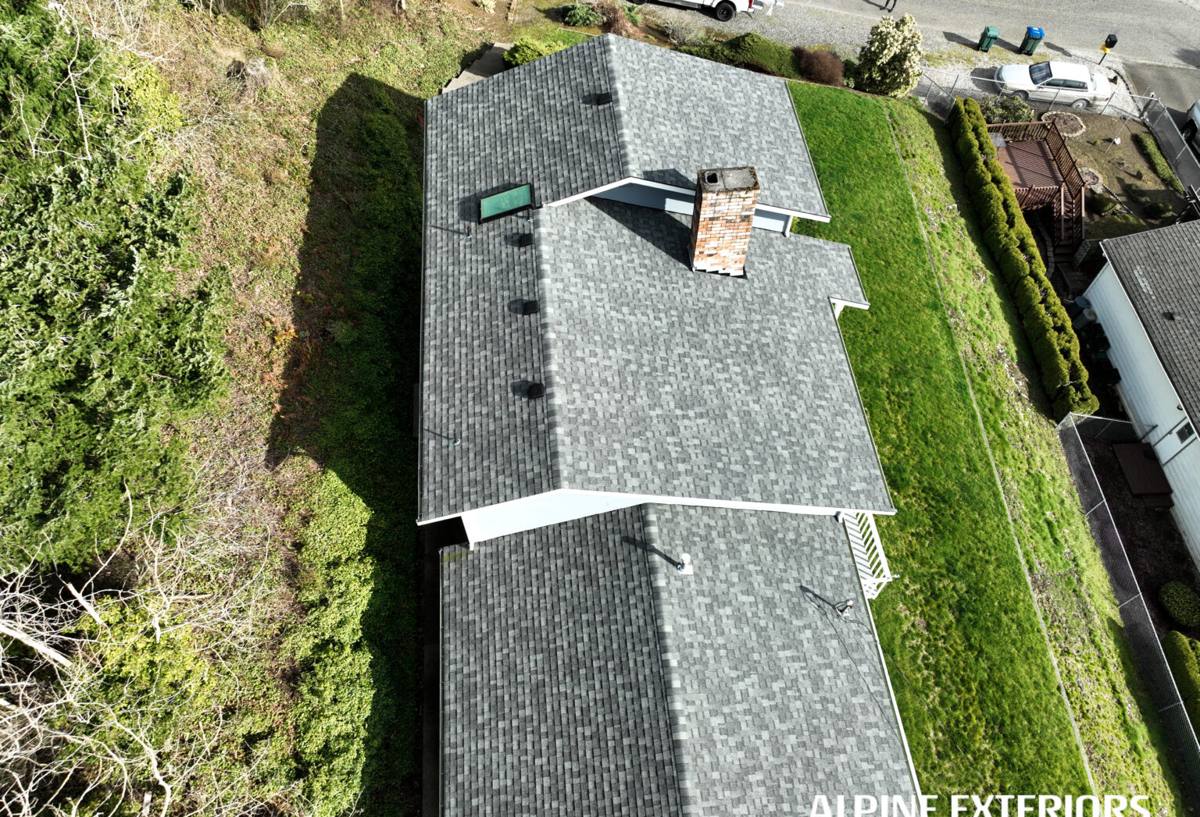
Signs Your Sumas Roof Needs Replacement, Not Another Repair
Most homeowners call us after a repair, not before one. That's normal — a single leak or a missing shingle doesn't mean the whole roof is done. But there's a point where patching stops making financial sense and a full replacement becomes the honest recommendation. Here's what we actually look for:
- Granule loss heavy enough that you can see bare asphalt mat in valleys or on south- and west-facing slopes
- Moss growth that's lifted shingle edges rather than just sitting on the surface (surface moss is cosmetic; lifted edges let water underneath)
- Soft or spongy decking felt through the roof surface, especially near valleys, chimneys, or old skylights
- Multiple past repairs in different areas — a sign the underlayment and flashing system as a whole has aged out
- Shingles nearing or past 20-25 years old, regardless of how they look from the ground
- Daylight visible through the attic decking, or consistent damp insulation after rain events
If you're only seeing one or two of these, a repair is often the right call and we'll say so. Replacement gets recommended when the underlying roof system — not just the surface — has reached the end of its service life.
Repair vs. Replacement: A Quick Comparison
| Situation | Repair Usually Makes Sense | Replacement Usually Makes Sense |
|---|---|---|
| Age of roof | Under 15 years | 20+ years, especially with 25-year shingles |
| Leak pattern | Single, isolated source (flashing, boot, valley) | Multiple leak points across different roof planes |
| Moss condition | Surface growth, shingles still flat and sealed | Moss under shingle tabs, lifted or curling edges |
| Decking condition | Solid, no soft spots | Soft, delaminated, or visibly stained decking |
| Repair history | First or second repair | Third-plus repair in different areas of the roof |
What a Correct Roof Installation Actually Involves
A roof is a system, not a layer of shingles. Skipping steps in this system is exactly how a roof that looks fine in year one starts leaking by year five — often in a valley Whatcom County rain and moss made worse. A properly installed roof includes:
Tear-Off and Deck Inspection
We remove old roofing down to the deck rather than layering over it. That's the only way to actually see what shape the plywood or plank decking is in, and it's the only way to catch soft or delaminated sections before they get covered up for another 20 years.
Underlayment and Ice-and-Water Protection
Synthetic underlayment goes down across the full roof, with self-adhered ice-and-water membrane at the eaves, valleys, and any roof-to-wall transitions — the spots where wind-driven rain and ice-dam-style backup are most likely to force water under the shingle line. This detail matters more in a climate with sustained rain events than it does in drier parts of the state.
Flashing at Every Penetration
Chimneys, vent pipes, skylights, and wall step-flashing are where the vast majority of roof leaks originate — not the open field of shingles. Correct flashing, properly lapped with the underlayment and shingle courses, is non-negotiable.
Shingle or Panel Installation to Manufacturer Spec
Nail placement, exposure, and starter course installation all affect wind resistance and warranty validity. We install to the manufacturer's published specification, not a shortcut version of it.
Ridge and Attic Ventilation
Balanced intake and exhaust ventilation keeps the attic temperature and moisture level in check, which slows moss regrowth on the roof surface and prevents condensation issues inside the attic — a real concern in a foggy, low-lying area like Sumas.
Material Options for Sumas Homes
There's no single "best" roofing material — the right choice depends on your home's roof pitch, your budget, and how much long-term moss and moisture resistance you want to pay for up front. Here's an honest comparison of the options we install most often in this area:
| Material | Typical Lifespan | Moss/Moisture Resistance | Notes |
|---|---|---|---|
| Architectural (dimensional) asphalt shingle | 25-30 years | Good, especially with zinc/copper strips at the ridge | Best balance of cost and performance for most homes in this climate |
| 3-tab asphalt shingle | 15-20 years | Fair | Lower upfront cost, shorter lifespan under sustained rain exposure |
| Standing seam metal | 40-50+ years | Excellent — moss struggles to gain a foothold | Higher upfront cost, sheds moisture and moss debris very effectively |
| Synthetic/composite shake | 30-40 years | Good | Higher cost, good option for homes wanting a cedar look without cedar's moisture upkeep |
We do not install cedar shake as a standard offering. It's a legitimate material with a real aesthetic, but it demands a maintenance schedule (regular treatment, careful moss control, periodic inspection) that most homeowners in a climate this wet don't want to keep up with year after year. If you specifically want that look, synthetic shake gives you the appearance with far less upkeep — we're happy to talk through the trade-offs honestly.
Our Installation Process
- On-site inspection and estimate. We walk the roof (or use a ladder/drone assessment depending on pitch and access), check the attic from inside where possible, and give you a written estimate with material options.
- Material selection. We go over the comparison above in the context of your specific roof — pitch, shade exposure, and budget — so you're choosing based on your house, not a sales pitch.
- Scheduling around weather. Roofing in this part of Whatcom County means planning around rain windows. We schedule tear-off in sections so your home is never left exposed longer than necessary.
- Tear-off and deck repair. Old roofing comes off, decking is inspected, and any soft or damaged sections are replaced before anything new goes down.
- Underlayment, flashing, and installation. Full underlayment, ice-and-water membrane at vulnerable areas, new flashing, and shingle or panel installation to spec.
- Ventilation check. Ridge and soffit ventilation is confirmed or upgraded so the new roof isn't fighting trapped moisture from day one.
- Final walkthrough and cleanup. We walk the job with you, answer questions about care and warranty, and make sure the site — including a magnetic nail sweep — is left clean.
Ventilation and Moisture Management Matter More Here
A roof surface that dries out between rain events sheds moss and lasts longer than one that stays damp. In a low-lying, foggy area like Sumas, that drying window is shorter than it is in drier parts of Washington, which makes attic ventilation and roof-plane airflow a bigger factor in how long your roof actually lasts — not just how it performs on paper. Balanced intake at the soffits and exhaust at the ridge keeps warm, moist attic air from condensing against the underside of the decking, which protects the roof from the inside as much as good shingles and flashing protect it from the outside.
Why a Crew That Already Works Sumas Makes a Difference
Roofing crews that mainly work drier or more urban parts of the state don't always build in the extra moss-prevention and moisture detailing that pays off here. A crew that regularly works Blaine, Sumas, and the rest of Whatcom County already knows which roof details matter most in this exact climate, understands local permitting and inspection expectations, and isn't learning the region's weather patterns on your project. That familiarity shows up in the small decisions — where extra ice-and-water membrane goes, how ventilation gets balanced, which fastening pattern holds up best against sustained wind-driven rain — that a generic install often skips.
Roof Care Checklist for Sumas Homeowners
- Have moss growth treated or removed before it lifts shingle edges — don't wait for it to look bad from the street
- Keep gutters clear, especially heading into fall storm season, so water isn't backing up under the eaves
- Trim back overhanging branches to cut down on shade, debris, and the damp conditions moss needs to spread
- Schedule a roof inspection after any major windstorm, not just on a fixed yearly schedule
- Check attic ventilation isn't blocked by insulation piled against soffit vents
- Address small leaks immediately — in this climate, a small leak left alone rarely stays small
Get a Straightforward Estimate
If your roof is showing its age, or you just want an honest opinion on whether repair or replacement makes more sense for your Sumas home, we're glad to take a look. Fill out the form below for a free, no-pressure estimate — we'll walk the roof, explain what we find in plain terms, and give you options that actually fit your home and this climate.