 Blaine Siding
 Why Birch Bay Roofs Take a Different Kind of Beating
Birch Bay sits right on the water, and that changes what a roof has to deal with compared to a home a few miles inland. Wind off the Salish Sea hits shingles and flashing at an angle most manufacturers never tested for. Salt-laden air accelerates corrosion on metal flashing, fasteners, and vents. Driving rain gets pushed sideways under roof edges and around penetrations instead of falling straight down. And the long, damp Whatcom County season keeps moss and moisture active on north-facing slopes for months at a stretch. None of this means a Birch Bay roof is doomed to fail early — it means storm damage repair here has to account for conditions a generic roofing crew from outside the area might not think to check.
We work on roofs in this stretch of Whatcom County regularly, so we're not guessing at what the wind, salt, and moss do to a roof over time. That's the difference between a repair that holds and one that fails again at the next windstorm.
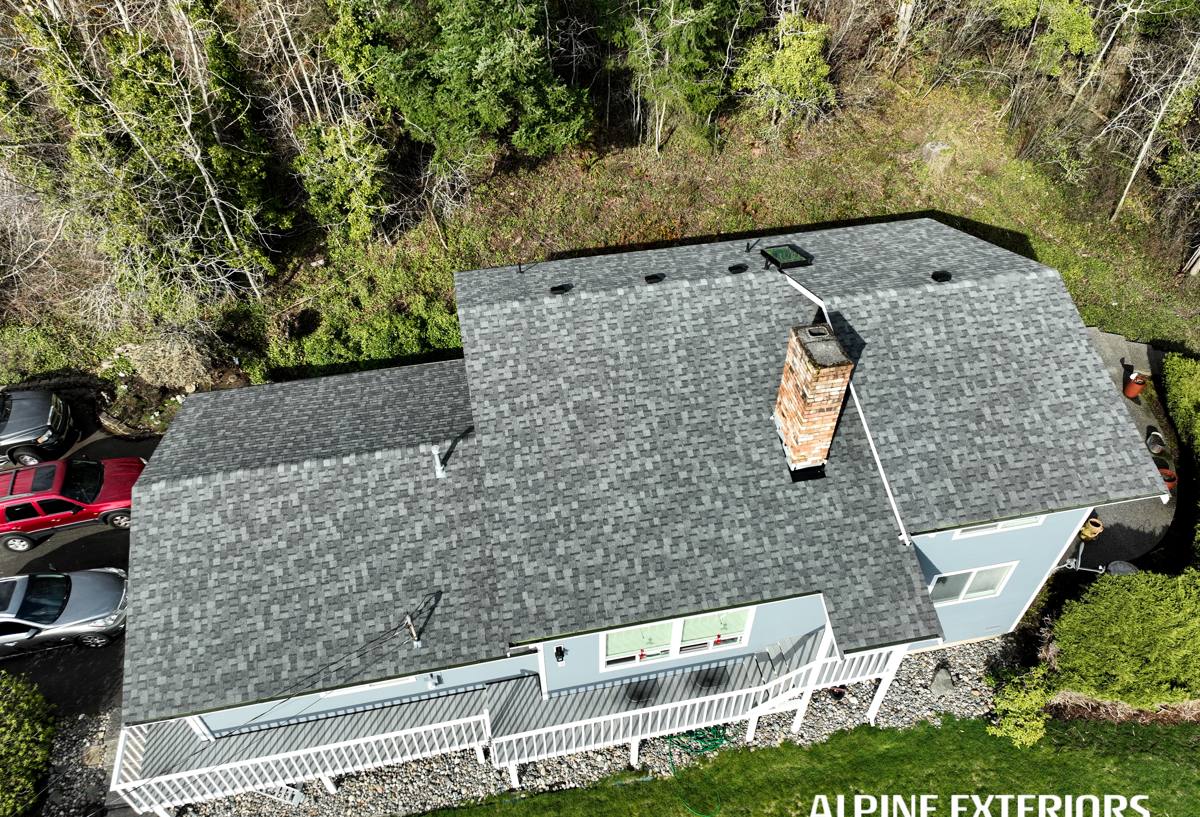
What Actually Counts as Storm Damage
Not every roof problem after a storm is obviously storm-related, and not everything a homeowner assumes is storm damage actually is. Sorting that out correctly matters for the repair itself and for any insurance claim. Common storm-related issues we see around Birch Bay include:
- Shingles lifted, cracked, or torn loose by wind gusts, especially along ridges and roof edges where uplift is strongest
- Flashing pulled away or bent at chimneys, skylights, and roof-to-wall intersections
- Granule loss and bruising from wind-driven debris, which weakens a shingle's ability to shed water even when it looks intact
- Water intrusion where wind-driven rain forced moisture under shingles or around vent boots
- Gutter and fascia damage that lets water back up under the roof edge
- Punctures or dents from branches and debris carried by high wind
Separately — and this trips people up — moss buildup and general wear from years of damp weather are maintenance issues, not storm damage, even though they often get discovered during a storm inspection. A honest contractor will tell you which is which instead of billing everything as "storm related."
Damage That's Easy to Miss From the Ground
A lot of storm damage isn't visible from the driveway. Lifted shingle tabs, cracked seals, and bent flashing often only show up on a close, on-roof inspection. Waiting until a leak appears inside the house usually means the damage has already been active for a while.
The Cost of Waiting on a Repair
A damaged section of roof rarely stays a small problem on its own. Once water has a path under the roofing material, it tends to keep finding that path with every rain event — and in this part of Washington, rain events aren't rare. What starts as a lifted shingle or a gap in flashing can turn into wet insulation, staining on interior ceilings, or soft decking underneath the roofing. In a marine climate, moisture that gets trapped doesn't dry out quickly between storms the way it might in a drier region, which gives mold and wood rot more time to take hold.
There's also a practical, non-technical reason to move quickly: most homeowners insurance policies expect storm damage to be reported and addressed within a reasonable window after the event. Waiting months to get a repair scheduled can complicate a claim, even when the damage clearly traces back to a specific storm.
What a Correct Storm Repair Actually Involves
Inspection Before Anything Gets Touched
A proper repair starts with identifying the full extent of the damage, not just the spot that's obviously broken. That means checking the surrounding shingles, the underlayment where it's exposed, the flashing at every penetration nearby, and the decking underneath if there's any sign of water having gotten through. Repairing only the visible damage while ignoring a compromised area two feet away just means a second repair call later.
Matching Materials, Not Just Patching
Roofing materials weather and fade over time, so a patch using the wrong shingle color, profile, or age can stand out and — more importantly — may not seal or perform the same as the surrounding material. Where an exact match isn't available, we'll tell you honestly what your options are rather than installing something that looks off or behaves differently in wind and rain.
Flashing and Underlayment Get Real Attention
Flashing failure is one of the most common causes of repeat leaks after a storm repair, usually because it was reused or re-bent instead of replaced. Given the salt air and wind exposure in Birch Bay, we default to replacing damaged flashing rather than trying to reseal it, and we check that underlayment is intact and properly lapped before any new shingles go down.
Ridge and Valley Details
Ridges and valleys concentrate more wind stress and more water volume than a flat plane of roof, so storm damage tends to show up there first and repairs there have to be done carefully. These areas get extra attention during both inspection and repair, since a shortcut here is usually where the next leak starts.
Our Process, Start to Finish
- Initial assessment: We inspect the roof (and the ground-level indicators like gutters and downspouts) to identify what's actually damaged and how extensive it is.
- Clear explanation and documentation: You get a plain-English rundown of what's wrong, what needs to happen, and photos/notes that are useful if you're filing an insurance claim.
- Scope and timeline: We tell you what the repair involves, roughly how long it will take, and what materials will be used — including where an exact shingle match isn't possible.
- The repair itself: Damaged materials come off, decking and underlayment are checked and addressed if needed, and new materials go on with attention to flashing, fastening, and sealing appropriate for a wind- and salt-exposed roof.
- Cleanup and final check: Debris is cleared, and we walk the repair area with you before calling the job done.
Repair or Replace? What Actually Decides It
Not every storm-damaged roof needs a full replacement, and not every roof is a good candidate for another round of patching. The right call depends on a handful of factors working together, not any one thing in isolation.
| Factor | Favors Repair | Favors Replacement |
|---|---|---|
| Extent of damage | Isolated to one section or a few spots | Spread across multiple slopes |
| Roof age | Well within its expected service life | Already near the end of its expected lifespan |
| Decking condition | Solid, no rot found underneath | Soft or rotted decking discovered during inspection |
| Moss and algae history | Minor, manageable with treatment | Long-term buildup that's degraded the material underneath |
| Prior repairs | First repair on this roof | Repeated patch jobs in the same areas |
| Insurance coverage | Claim covers repair scope | Adjuster's scope supports full replacement |
We'll give you a straight answer on where your roof falls, including telling you when a repair is genuinely the right, cost-effective choice rather than pushing a bigger job than you need.
Working With Your Insurance Claim
We're not a public adjuster and we won't pretend to be one, but we do work with homeowners through the claims process regularly. That generally means providing clear photo documentation, a written scope of the damage, and being available if your adjuster has questions about what we found. What we won't do is inflate a scope of work to match a settlement number or describe pre-existing wear as storm damage — that's not good for you long-term, and it's not how we do business.
Why Hiring a Crew That Already Works in Birch Bay Matters
A roofing crew that mostly works inland doesn't necessarily know how differently salt air treats fasteners and flashing, or how much longer moss stays active on a shaded, damp roof this close to the water. That's not a knock on their skill — it's just a different set of conditions than what they see day to day. Working regularly in and around Blaine and Birch Bay means we're not learning the local quirks on your roof; we already know them.
What to Check Before You Hire Anyone for Storm Repair
- Do they inspect the whole roof, or just the spot you pointed out?
- Will they put the scope of work and materials in writing before starting?
- Do they carry proper licensing and insurance for roofing work in Washington?
- Can they explain, in plain terms, why a repair versus replacement makes sense for your roof?
- Are they willing to document damage clearly enough to support an insurance claim?
- Do they have experience with the wind and moisture conditions specific to a waterfront Whatcom County property?
After the Repair: Keeping the Next Storm From Undoing the Work
A good repair holds up better with a little upkeep. Keeping gutters and downspouts clear prevents water from backing up under roof edges during the next heavy rain. Addressing moss before it spreads — rather than after it's colored half the roof — protects the shingles underneath from the moisture moss traps against the surface. And a periodic look at flashing and exposed metal, given the salt air here, catches early corrosion before it becomes a leak. None of this needs to be elaborate, but a roof near the Birch Bay shoreline holds up noticeably better with occasional attention than one that's left alone until the next storm forces the issue.
If a recent storm has left your roof damaged — or you're just not sure whether what you're seeing is storm-related or ordinary wear — we're happy to take a look. Reach out using the form below for a free, no-pressure estimate; there's no obligation, and you'll get a straight answer about what your roof actually needs.