 Blaine Siding
 Semiahmoo's Climate Is Harder on Siding Than Most Homeowners Realize
Semiahmoo sits right where Semiahmoo Bay and Drayton Harbor meet the open water, which means homes here take on weather that inland Whatcom County properties simply don't deal with. Salt-laden air moves off the water and settles on exterior surfaces daily, not occasionally. Combine that with the driving, wind-pushed rain that comes through this corridor most of the year and a moss and algae season that can run eight months or longer in shaded, north-facing exposures, and you have a climate that is genuinely tough on building materials.
Most siding products aren't engineered with this specific combination in mind. Salt air accelerates corrosion on fasteners and trim. Wind-driven rain doesn't fall straight down — it gets pushed sideways into laps, seams, and butt joints that were only designed to shed water falling vertically. And constant moisture plus filtered sunlight under trees or on shaded elevations is exactly what moss and algae need to take hold. Siding replacement in Semiahmoo isn't just a cosmetic project; it's a chance to correct a mismatch between the original material and the environment it's been sitting in.
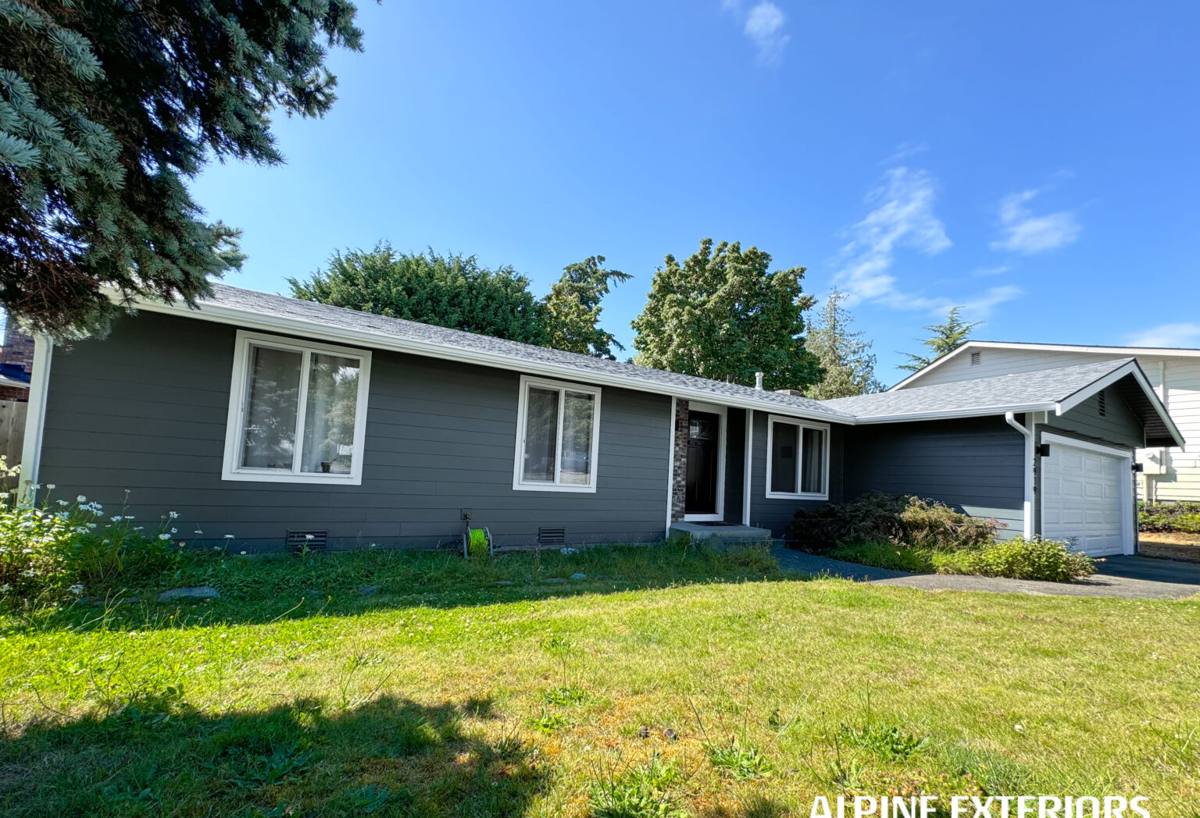
Signs Semiahmoo Siding Is Losing the Fight
Because the damage here tends to be moisture- and organic-growth-driven rather than sudden, it's easy to miss until it's advanced. Walk your exterior and look for these signs, especially on the sides of the home that face the water or stay shaded:
- Persistent green or black staining that comes back within weeks of being cleaned
- Soft, spongy, or crumbling spots when you press on the siding, particularly near the bottom courses and around window trim
- Paint that's bubbling, peeling, or failing faster than the rest of the house
- Visible gaps, warping, or cupping in individual boards or panels
- Rust streaking below nail heads or metal trim pieces
- A musty smell near exterior walls, or interior drywall staining on the same wall line
- Caulk that's cracked, shrunk, or pulled away from joints and trim
Any one of these on its own might just mean a cleaning or a caulk touch-up. Several together, especially on a home more than 15-20 years old, usually means the siding system itself — not just the surface — has started to fail.
What a Correct Siding Replacement Actually Involves
Replacing siding on a Semiahmoo home is not a matter of stripping old boards and nailing up new ones in the same pattern. Given the salt air and rain exposure, the assembly behind the siding matters as much as the siding itself. A correct job includes:
Tear-off and substrate inspection
Once the old siding is off, we inspect the sheathing and framing underneath for rot, soft spots, or prior moisture damage. This is often the first real look anyone has had at the wall assembly in decades, and it's where hidden problems from years of wind-driven rain intrusion get found and fixed before they're sealed back up.
Water-resistive barrier and flashing
A weather-resistant barrier goes over the sheathing, with flashing detailed at every window, door, deck ledger, and penetration. In a location that gets sideways rain as often as Semiahmoo does, flashing details are what actually keep water out — the siding itself is the second line of defense, not the first.
Proper fastening and clearances
Corrosion-resistant fasteners matter in salt air; standard fasteners can start rusting years before they should. We also maintain correct clearance between the bottom of the siding and grade, decks, or roof lines, since tight clearances are one of the most common causes of moisture damage we see on older homes near the water.
Trim, caulking, and finish details
Joints, corners, and trim are sealed and finished to shed water rather than trap it. This is also where a factory-finished product has a real advantage over anything that needs field paint to be weather-ready — more on that below.
Why We Install Only James Hardie Fiber Cement Siding
We standardized on James Hardie fiber cement for every siding replacement we do, including here in Semiahmoo, and we don't install vinyl, LP SmartSide, cedar, primed spruce, or other fiber cement brands. That's a deliberate call based on how these products actually perform over years of exposure to salt air and constant moisture, not a sales position.
Fiber cement is non-combustible and dimensionally stable — it doesn't expand and contract with humidity the way wood-based products do, which matters in a climate where the air is rarely fully dry. James Hardie's ColorPlus factory finish is baked on under controlled conditions, which gives it more consistent, more durable weather resistance than field-applied paint, and it's backed by a color warranty in addition to the product warranty. Hardie's HZ5 product line is engineered specifically for climates with significant moisture exposure — exactly the profile Semiahmoo has.
We're not going to tell you every other product is unusable — vinyl, engineered wood, and cedar all have legitimate uses. But for a Semiahmoo exterior facing salt air, driving rain, and heavy moss pressure year after year, we've seen enough of how each material actually ages here to know which one we're willing to put our name behind.
How the Common Options Actually Hold Up Near Semiahmoo Bay
| Material | Salt air behavior | Moisture/moss resistance | Long-term maintenance |
|---|---|---|---|
| James Hardie fiber cement | Non-combustible, dimensionally stable, resists salt-driven degradation | Doesn't rot; factory finish resists moss staining better than field paint | Periodic washing; repaint interval much longer than wood |
| Vinyl siding | Can become brittle and fade faster under coastal UV and salt exposure | Won't rot, but seams and laps can trap moisture behind the panel | Low, but panels can warp or crack and are hard to color-match if replaced |
| LP SmartSide / engineered wood | Wood-strand core is vulnerable if the factory seal is compromised by salt/moisture cycling | Prone to swelling and edge damage if water gets past seams | Requires diligent caulk and paint upkeep to avoid moisture intrusion |
| Cedar / primed spruce | Natural wood absorbs moisture readily; salt air accelerates weathering | Highest moss and rot risk without frequent sealing | Most maintenance-intensive; regular refinishing required |
Cost Factors for a Semiahmoo Siding Replacement
Every home is different, so we don't quote broad numbers without seeing the house, but the factors that actually move the price are consistent:
| Factor | Why it matters here |
|---|---|
| Substrate condition | Homes with hidden moisture damage from years of driving rain need sheathing or framing repair before new siding goes on |
| Home size and wall complexity | More corners, dormers, and trim details mean more flashing and labor |
| Siding profile and accessories | Lap width, trim style, and factory finish level all affect material cost |
| Access and site conditions | Waterfront lots, decks, and landscaping can affect staging and scaffolding needs |
| Existing exterior removal | Multiple layers of old siding or extensive moss/mold remediation adds time |
How Our Process Works
We start with an in-person walk-around of the home, looking specifically at the exposures that take the worst of the salt air and driving rain — usually the water-facing and shaded elevations. We check for the failure signs above, look at trim and flashing conditions, and talk through what the current siding is telling us about how the wall has been performing.
From there we put together a scope that covers tear-off, any substrate repair we expect to find, water-resistive barrier and flashing work, and the Hardie product line and finish that fits the home. We walk you through color and profile options, give you a clear written estimate, and schedule around weather windows that make sense for this stretch of the county — driving rain doesn't stop a properly sequenced job, but it does dictate when certain steps happen.
During installation, we don't skip the parts that don't show once the siding is up: flashing details, fastener choice, and clearances. Those are exactly the things that determine whether a Semiahmoo home's siding lasts 10 years or 40.
Maintenance After Installation
Fiber cement lowers the maintenance burden considerably, but it's not maintenance-free, especially this close to the water. A yearly rinse to keep salt residue and organic growth from building up, prompt attention to any caulk or trim wear, and keeping gutters and downspouts clear so water isn't sheeting down the wall will keep a Hardie exterior performing the way it's designed to for decades.
Why Local Experience in Semiahmoo Matters
A crew that's worked this specific stretch of shoreline knows which elevations take the worst of the wind-driven rain, where moss pressure is heaviest, and how salt air behaves differently here than it does a few miles inland in Blaine proper. That's not something you get from a general contractor working from a standard spec sheet — it comes from having actually inspected and replaced siding on homes dealing with these exact conditions.
If your Semiahmoo home's siding is showing staining, softness, or failing paint, or if you're just planning ahead for a replacement done right the first time, we'd like to take a look. Request a free, no-pressure estimate using the form below and we'll walk the exterior with you and tell you honestly what we find.